1863
Shaft sinking begins
Sinking of the Puits Hottinguer commences on 26 May 1863 under the Houillères d'Épinac concession.
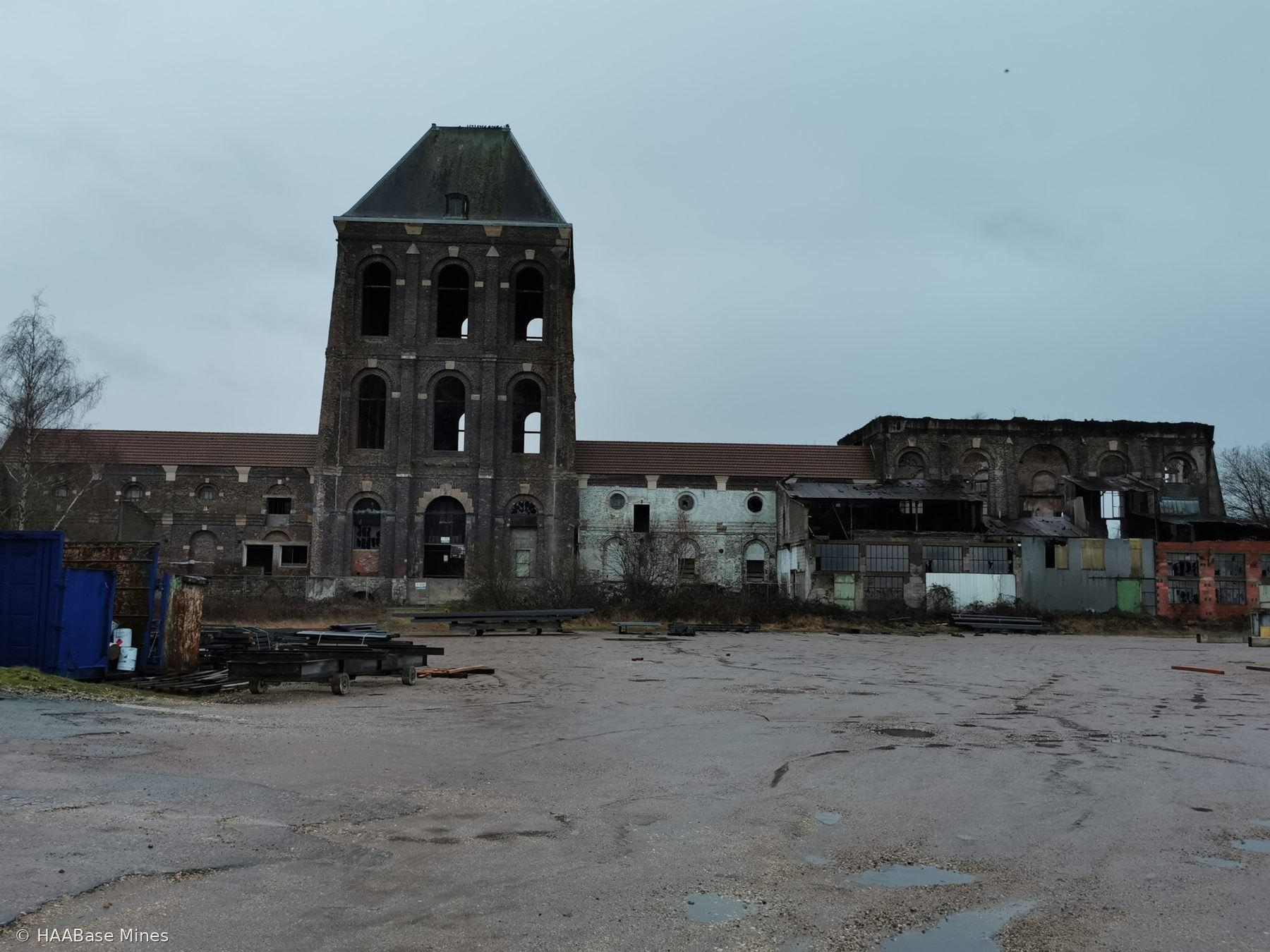
Unique classified coal mine headframe and tower complex at Épinac, now under long-term heritage restoration by the commune.
This record is based on the research currently available to HAABase Mines. It has not yet completed the site's formal source-by-source fact-checking process, so the history and timeline should be regarded as a well-researched provisional account and may be refined as further evidence is reviewed.
The Puits Hottinguer at Épinac, in the north of the Saône-et-Loire department, was one of the principal coal workings of the Houillères d'Épinac and is unique in France. Shaft sinking began on 26 May 1863, and coal was reached on 17 November 1871 at 618 metres depth, making the shaft the deepest mine in France at the time of its commissioning. The defining feature of the site was its atmospheric extraction system, devised by engineer and director Zulma Blanchet, in which a piston travelling inside a tube 1.60 metres in diameter and 558 metres long — machined at Le Creusot — raised four and a half tonnes of coal in seven minutes per ascent.
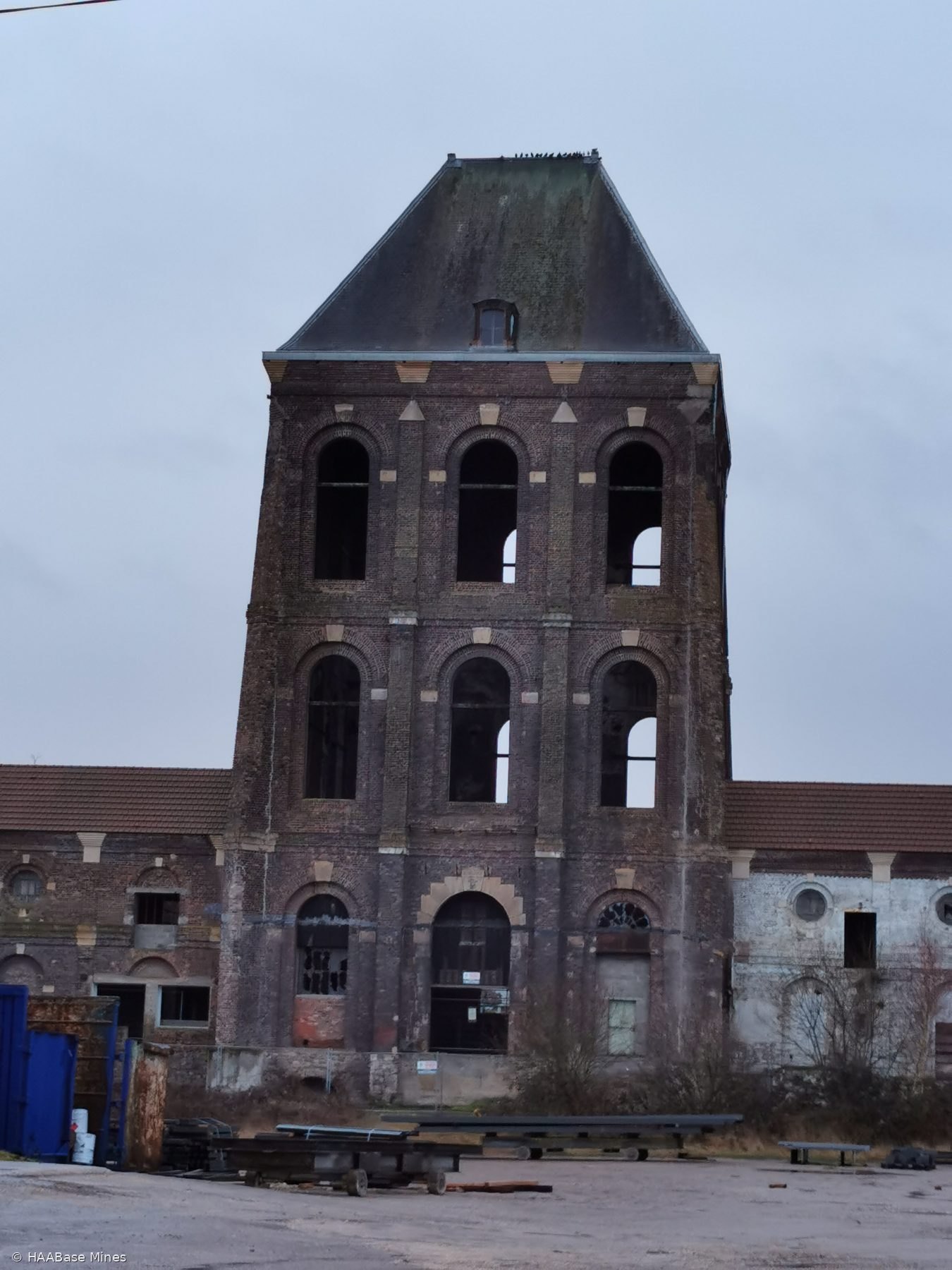
To house these tall and complex installations, a Malakoff tower was built between 1872 and 1876, a form common in Germany but unique in France, combining the headframe and winding machinery within a single masonry building. Extraction by the tube ceased in 1887 following the death of Blanchet; cable winding continued until the shaft closed in 1936. An on-site power station, built in 1910, supplied electricity to Autun and Meursault.
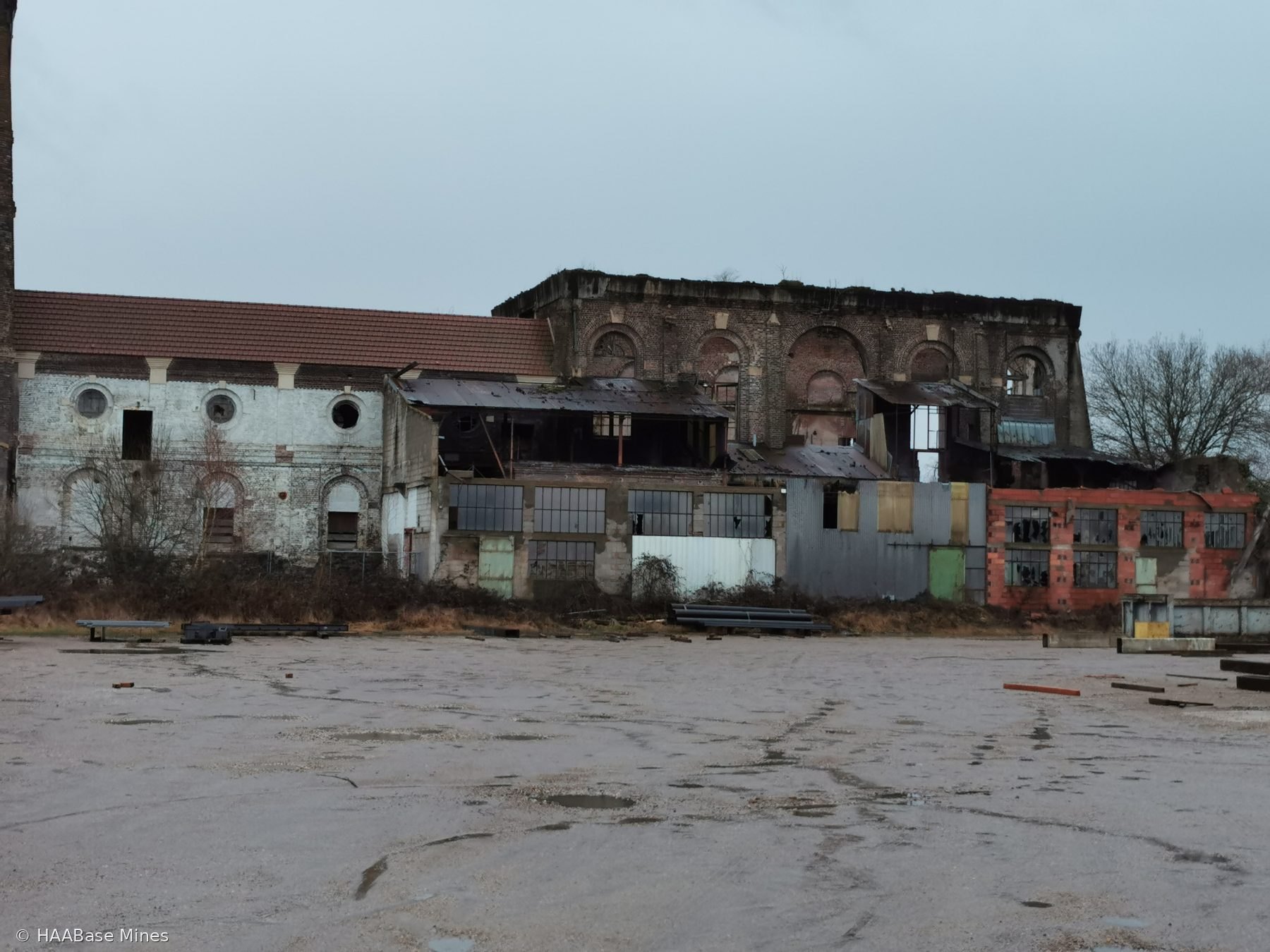
After the closure, the buildings were purchased by the paint company Bitulac in 1948. A partial fire on 12 March 1989 damaged one wing, and the site was abandoned in 1998. Listed as a monument historique in 1992 and upgraded to classified status in October 2022, the site has been owned by the commune of Épinac since 2010 and is undergoing phased restoration.
Coal extraction at Épinac, long known as Épinac-les-Mines, was conducted under the Houillères d'Épinac concession over several generations. The Puits Hottinguer was the most technically remarkable of the shafts in this field, and its history is substantially documented from the earliest stages of sinking through to post-closure restoration.
Shaft sinking began on 26 May 1863. Progress was slow in the early years: by 1868 the shaft had reached 447 metres without finding workable coal. Coal was finally encountered on 17 November 1871 at 618 metres depth, within a seam four metres thick, reached after driving a cross-measure drift at the bottom of the shaft. At its commissioning the Puits Hottinguer was the deepest mine shaft in France.
Because conventional cable winding systems of the period could not reliably operate at such depths, the director Zulma Blanchet devised an atmospheric extraction system. The shaft, 4.25 metres in diameter, was divided into four compartments: the tube, ladderways, ventilation, and cable extraction. The atmospheric tube consisted of 485 steel-plate rings of eight millimetres thickness, with a total weight of 342,025 kilograms and a diameter of 1.60 metres, manufactured at Le Creusot. The pistons were in wood sealed with leather gaskets; the cage in steel had three decks. Ministerial authorisation for the atmospheric system was granted on 10 June 1873. The tube was installed during the mid-1870s, and the first successful trial run on 23 July 1876 saw the piston travel 558 metres in twenty minutes.
To contain the tall atmospheric machinery, a Malakoff tower was constructed between 1872 and 1876. This masonry building, unique in France, combined the headframe and the winding machinery in a single body, a form then common in Germany and Belgium. The central tower is square in plan, with four elevations each pierced by semicircular-arched openings on three levels, and two lateral wings extending on each side.
Before 1884, production remained modest: the atmospheric system proved difficult to operate reliably, an initial 40-horsepower steam engine was insufficient, and the seams encountered were not of high quality. Around 1884–1885, new discoveries at the 618-metre level improved the prospects and the atmospheric system settled into more reliable service. In 1880, a more powerful machine manufactured at Saint-Étienne was installed, substantially reducing lifting times. However, following the death of Blanchet in 1887, atmospheric extraction was abandoned and all winding thereafter was by cables. The tube was subsequently repurposed for ventilation and was dismantled in 1906; the tower received a new timber headframe and a steam winding engine, with extraction conducted by two cages in the remaining space.
In 1910 an electric power station was constructed on the site; it supplied current to Autun and Meursault. The colliery continued production through the early decades of the twentieth century. Basin-wide output records show 1,500 tonnes and 150 workers in 1838, growing to 191,500 tonnes and 1,215 workers by 1913, with a wartime peak of 292,545 tonnes in 1917 and still around 250,000 tonnes in 1928. The Puits Hottinguer ceased extracting coal definitively in 1936, thirty years before the complete closure of the Épinac coalfield. The basin produced its last coal at the Veuvrottes site on 28 February 1966.
At closure the surface installations were largely demolished elsewhere across the basin, but the masonry buildings of the Puits Hottinguer — the Malakoff tower, its two wings, the power station, and ancillary structures — were not demolished. They were purchased in 1948 by Bitulac, a paint manufacturer, which occupied the site and erected additional warehouses and offices. The company's presence preserved the fabric of the buildings while also partially altering them. On 12 March 1989 a fire in one of the pavilions caused serious damage to a wing, and the site was abandoned entirely in 1998, leading to deterioration through exposure and vandalism.
The heritage significance of the Puits Hottinguer had been recognised from an early date: it received visitors in the late nineteenth century, and in 1893 the Société de l'Industrie Minérale de France held its annual congress in Burgundy with the Hottinguer as its sole site visit. The mining company exhibited materials at the Paris Universal Exhibition of 1878. The tower was inscribed as a monument historique by arrêté of 26 November 1992. The commune of Épinac acquired the site in 2010. A rehabilitation committee involving the commune, the state, the DRAC, and heritage associations debated a multi-year restoration programme. Clearance work began in late 2012; an insertion training scheme from April to December 2013 repaired vaulting and roof timbers in the lateral wings; and in spring 2014 the company Dufraigne completed restoration of the four wings attached to the tower. Exterior renovation of the tower itself was carried out between 2015 and 2017. The site was upgraded from inscription to full classification as a monument historique by arrêté of 11 October 2022, covering the mine shaft and power station in their entirety. The commune's long-term project envisages the installation of artistic and cultural enterprises on the site, together with an eight-hectare photovoltaic plant on adjacent former storage ground. The surviving structures today are the Malakoff tower, its two wings — one of which was still without a roof in the early restoration period — a truncated chimney stack, the power station remains, and other ancillary ruins.