Site overview

The Puits Cuvelette, or siège Cuvelette, is a former coal-extraction site at Freyming-Merlebach in the Moselle. The two shafts — Cuvelette Nord and Cuvelette Sud — were sunk between 1930 and 1933 by the Compagnie des mines de Sarre et Moselle to exploit fatty and flame coals lying south-west of the existing Merlebach workings. Extraction began in 1934, the site having been planned by administrator Ernest Cuvelette, for whom it is named.

Peak daily output reached 3,250 tonnes, against an original design capacity of 1,600 to 1,800 tonnes. In 1960 the siège Cuvelette was merged with the siège Merlebach; extraction at Cuvelette ceased in 1966, and the final exploitation of the dressants (steep seams) ended in March 2001. Both shafts remained open for ventilation and service thereafter.

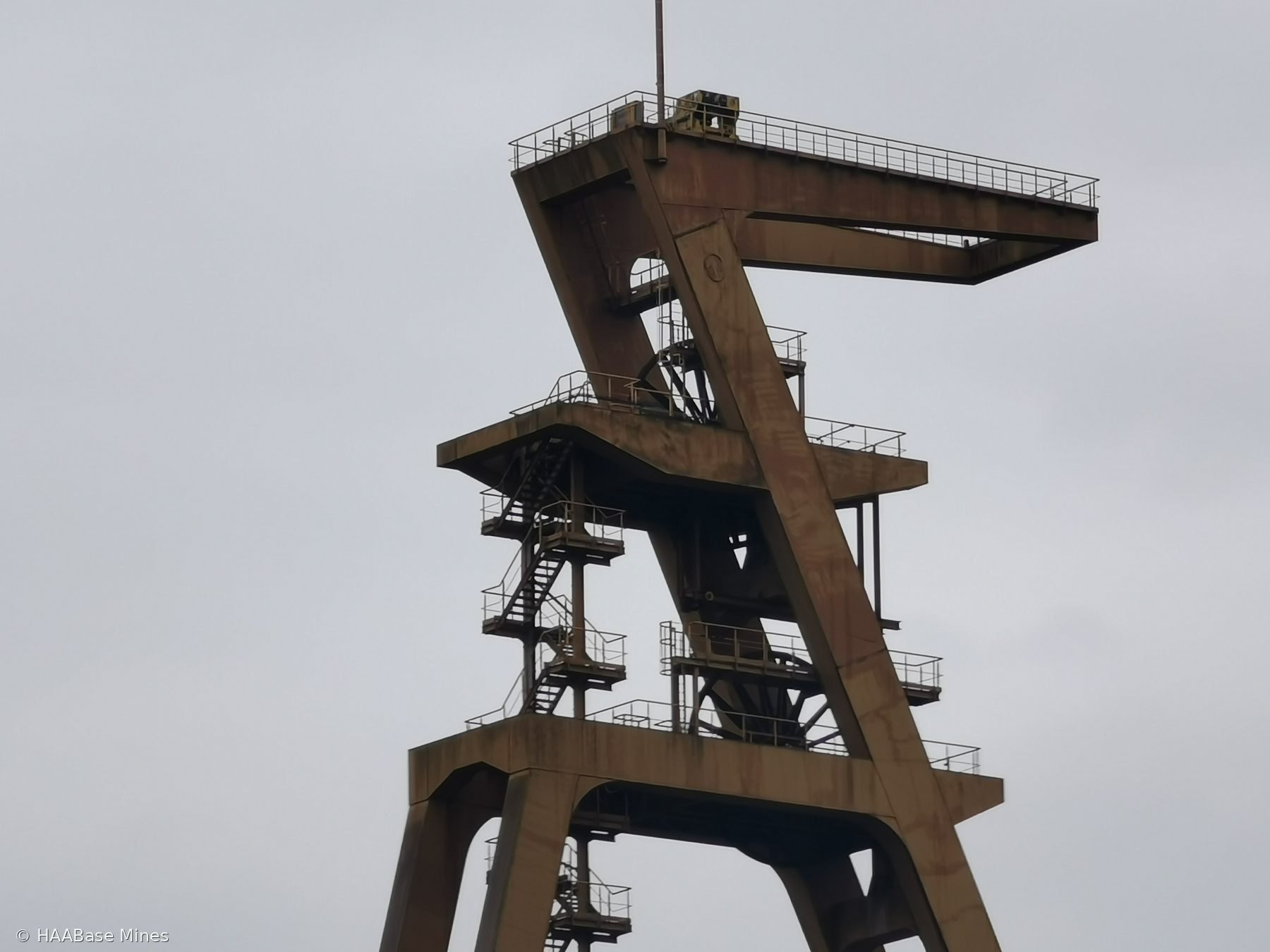
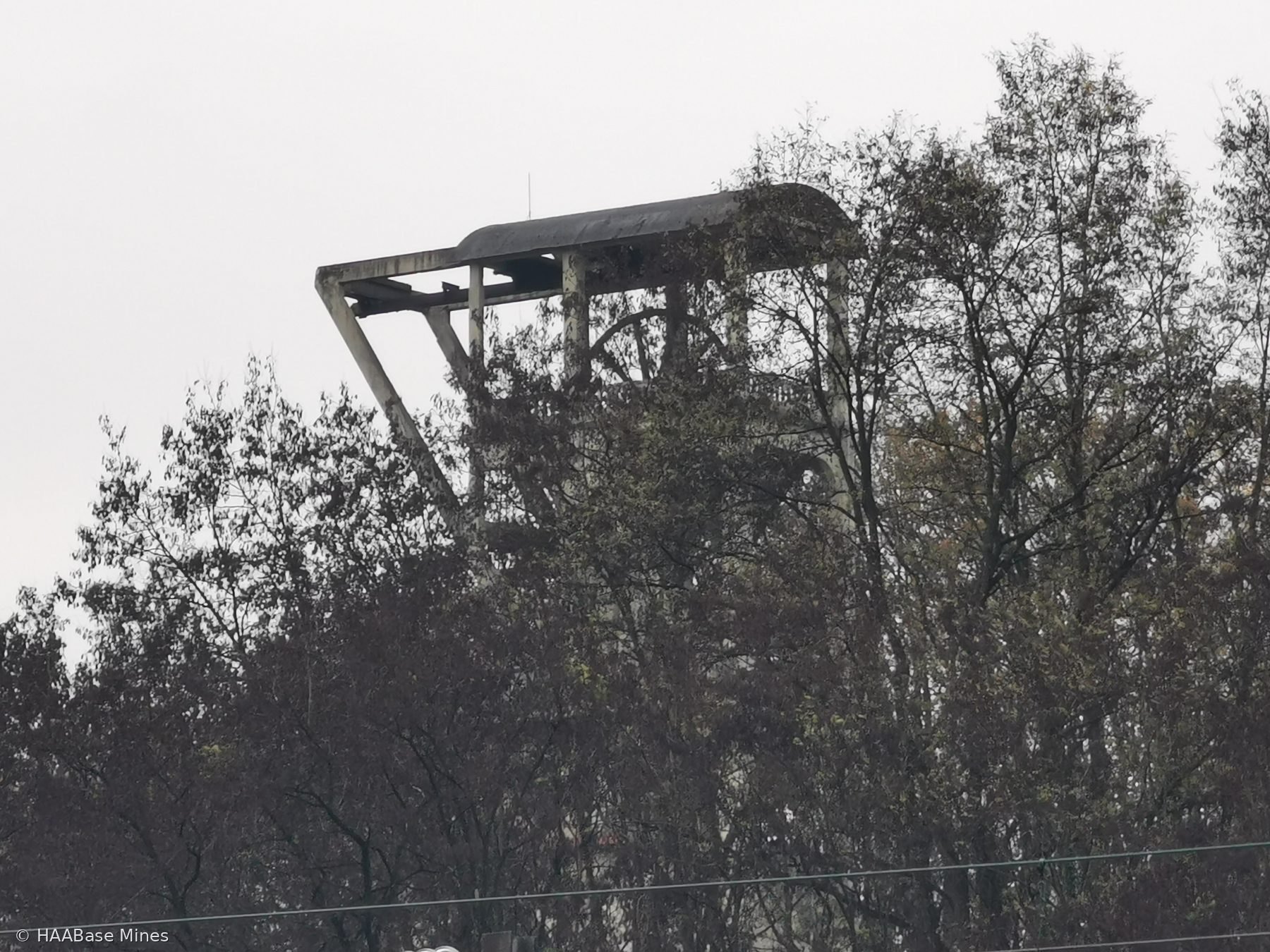
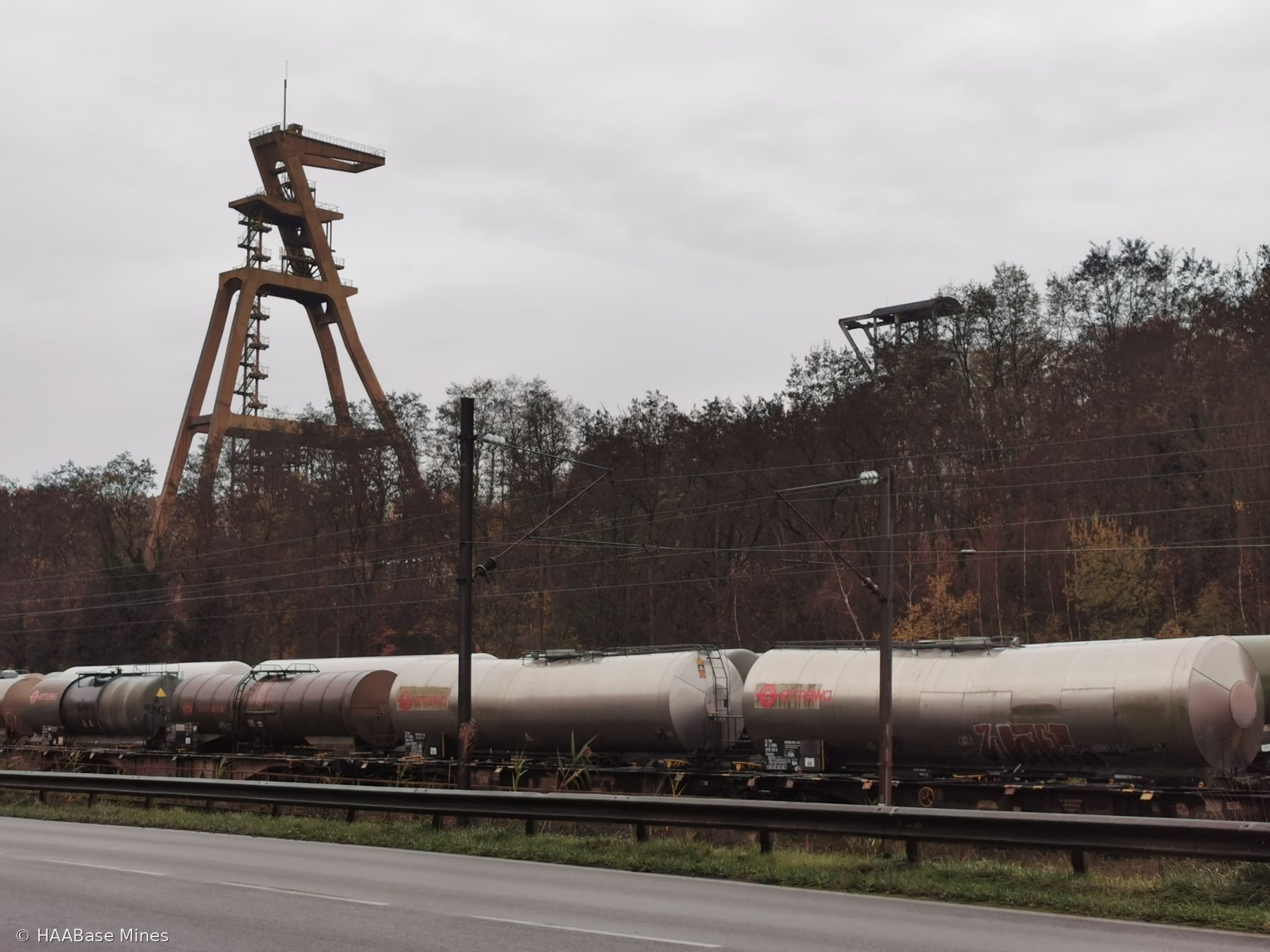
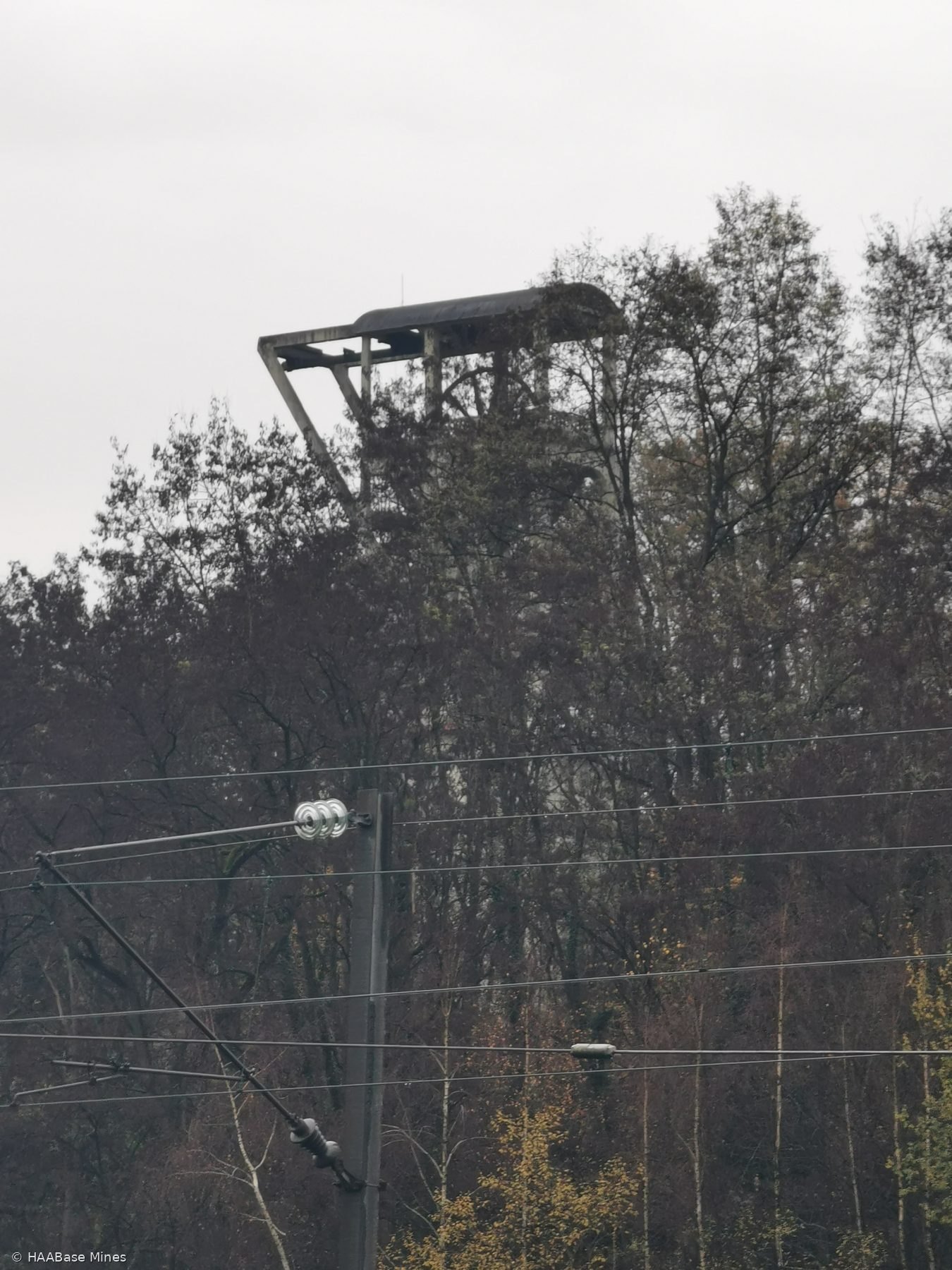
Puits Cuvelette Sud was backfilled in 2003 and puits Cuvelette Nord in 2006. The concrete headframe of puits Cuvelette Sud, constructed between 1930 and 1932, is the last reinforced concrete headframe standing in the Lorraine coalfield and was inscribed as a monument historique on 22 October 1992. The metallic headframe of puits Cuvelette Nord, replaced in 1991, survives in part owing to its subsequent use for telecommunications antennas.

Set within a settled former mining landscape at Freyming-Merlebach, the surviving headframes read as prominent remnants rising above later urban and industrial surroundings.

Map & photo

Siège Cuvelette mine headframe or winding tower site
Photograph taken: 15 November 2025
Map markers and directions links are provided for location reference only and do not indicate public access or permission to enter a site.

History

In 1928, the Conseil d'Administration of the Compagnie des mines de Sarre et Moselle instructed engineer Jacques de Vernejoul to plan a new colliery south-west of puits no 5 (Vouters 1) to extract the fatty and flame coals of the Cuvelette sector, which had been partially worked from Merlebach before the First World War but whose exploitation had been curtailed by firedamp and underground fires. The new siège was named in honour of Ernest Cuvelette, an administrator of the company. Surface preparation of the colliery yard began in 1928, and a footbridge connecting the new site to puits no 5 was established.

The sinking of both puits Cuvelette Nord and puits Cuvelette Sud was carried out by cementation between 1930 and 1933. The headframe of puits Cuvelette Nord was erected during this period. The headframe of puits Cuvelette Sud was a reinforced concrete structure of the avant-carré porteur à deux poussards type, built between 1930 and 1932 for the Compagnie des mines de Lens (the operator in Lorraine using this type) and inspired by models erected in the Nord-Pas-de-Calais coalfield from 1920 by the same company. Puits Cuvelette Nord had a diameter of 6 metres; it was sunk to a final depth of 1,288.82 metres. The two shafts are both situated at Freyming-Merlebach.

Extraction at the siège Cuvelette commenced in 1934. The site was equipped with state-of-the-art machinery including 3,000-litre tubs on 900-millimetre-gauge track. Production reached 501,743 tonnes in 1938. Puits Cuvelette Nord served as the extraction shaft; puits Cuvelette Sud principally served ventilation.

After the liberation of the region in 1944–45, the surface equipment was modernised despite having been installed only shortly before the war. A more powerful winding engine was installed at puits Cuvelette Sud. An additional compressor of 40,000 cubic metres per hour expanded the compressed air capacity of the Merlebach network. A third ventilator reinforced aeration. Pithead baths were enlarged. Screening capacity was doubled. A timber-lowering device allowing 1,000 long pieces per shift was fitted at puits Cuvelette Nord. In 1950, the 3,000-litre tubs were replaced by 4,000-litre tubs drawn by more powerful 90 horsepower diesel locomotives. The shafts were deepened for exploitation of the 505 and 593 metre levels. Peak daily production reached 3,250 tonnes, well above the original design target of 1,600 to 1,800 tonnes per day.

In 1960, the siège Cuvelette was merged with the siège Merlebach. Puits Cuvelette Nord continued to serve as the extraction shaft for its division until 1966, when extraction at the unified Cuvelette division came to an end. Thereafter both shafts were retained for service and ventilation in connection with the Unité d'Exploitation de Merlebach: puits Cuvelette Sud for aérage (ventilation) and puits Cuvelette Nord for service. In 1982, the original extraction engine at puits Cuvelette Nord, dating from 1932, was converted to a Koëpe pulley of 2×870 kW. In 1983, a wood-skip was installed at puits Cuvelette Nord for the descent of timber to support the dressant workings. In 1991, the old metallic headframe of puits Cuvelette Nord was dismantled and replaced by a new modern cantilever-type metallic headframe erected over the original footprint.

The concrete headframe of puits Cuvelette Sud, as the last surviving reinforced concrete headframe in the Lorraine coalfield, was inscribed on the supplementary list of monuments historiques by arrêté of 22 October 1992. Exploitation of the dressants (steeply inclined seam workings) finally ceased in March 2001, bringing all active operations at the Cuvelette site to an end. Puits Cuvelette Sud was backfilled in 2003 and puits Cuvelette Nord between June and September 2006. The workshops were demolished before the backfilling of the shafts. Following closure, the machine rooms (cleared of their equipment in 2007) and the pithead baths survived on the colliery yard. Both headframes remain standing: the concrete headframe of puits Cuvelette Sud as a listed monument, and the modern metallic headframe of puits Cuvelette Nord, which owes its continued presence to the installation of telecommunications antennas.
Timeline

Operation

Peak daily output reaches 3,250 tonnes

Following deepening of the shafts for exploitation of the 505 and 593 metre levels, daily production reached a peak of 3,250 tonnes, well above the original design target of 1,600 to 1,800 tonnes per day.
1928
Construction

Decision to establish siège Cuvelette; surface preparation begins

The Conseil d'Administration of the Compagnie des mines de Sarre et Moselle instructed engineer Jacques de Vernejoul to plan a new colliery south-west of puits no 5 (Vouters 1). Surface preparation of the yard commenced in 1928 and a footbridge to puits no 5 was established.
1930–1933
Construction

Sinking of puits Cuvelette Nord and puits Cuvelette Sud

Both shafts were sunk by the cementation method between 1930 and 1933. Puits Cuvelette Nord had a diameter of 6 metres and reached a final depth of 1,288.82 metres. The concrete headframe of puits Cuvelette Sud (avant-carré porteur à deux poussards type, reinforced concrete) was constructed between 1930 and 1932.
1934
Operation

Extraction commences at siège Cuvelette

Coal extraction began in 1934. The site was equipped with 3,000-litre tubs on 900-millimetre-gauge track. It extracted fatty and flame coals from the Cuvelette sector.
1938
Operation

Annual production reaches 501,743 tonnes

By 1938, annual output at the siège Cuvelette had reached 501,743 tonnes.
1945–1950
Construction

Post-war modernisation of surface equipment

Following liberation, the surface installations were modernised: a more powerful winding engine was installed at puits Cuvelette Sud, a third ventilator added, pithead baths enlarged, and screening capacity doubled. In 1950 the 3,000-litre tubs were replaced by 4,000-litre tubs drawn by 90-horsepower diesel locomotives.
1960
Legislation

Siège Cuvelette merged with siège Merlebach

In 1960 the siège Cuvelette was merged with the siège Merlebach, becoming one of its four divisions (Vouters, Reumaux, Cuvelette and Centre). Puits Cuvelette Nord continued as the extraction shaft for the Cuvelette division until 1966.
1966
Closure

Extraction ceases at Cuvelette; shafts retained for service and ventilation

Extraction from the Cuvelette division ceased in 1966. Both shafts were retained: puits Cuvelette Sud for ventilation of the Merlebach workings, and puits Cuvelette Nord for service.
1982
Construction

Winding engine at puits Cuvelette Nord converted to Koëpe pulley

The original 1932 extraction engine at puits Cuvelette Nord was converted in 1982 to a Koëpe pulley system of 2×870 kW.
1983
Operation

Wood-skip installed at puits Cuvelette Nord

A wood-skip was installed at puits Cuvelette Nord in 1983 for the descent of timber to support the dressant workings.
1991
Construction

New metallic headframe erected at puits Cuvelette Nord

The original metallic headframe of puits Cuvelette Nord was dismantled and replaced in 1991 by a new modern cantilever-type metallic headframe, following a deepening of the shaft to 1,289 metres.
1992
Heritage

Headframe of puits Cuvelette Sud inscribed as monument historique

The concrete headframe of puits Cuvelette Sud was inscribed on the supplementary list of monuments historiques by arrêté of 22 October 1992, recognised as the last surviving reinforced concrete headframe in the Lorraine coalfield.
2001
Closure

Exploitation of dressants ceases; all activity ends at Cuvelette

Exploitation of the dressants (steeply inclined seam workings) ceased in March 2001, ending all active mining operations at the Cuvelette site.
2003
Closure

Puits Cuvelette Sud backfilled

Puits Cuvelette Sud was backfilled in 2003.
2006
Closure

Puits Cuvelette Nord backfilled

Puits Cuvelette Nord was backfilled between June and September 2006.
2007
Closure

Machine rooms cleared of equipment

The machine rooms on the colliery yard were cleared of their machinery in 2007. The machine rooms themselves and the pithead baths survived as standing structures.

Sources and records

Monumentum heritage listing record: Carreau Cuvelette, PA00107066
Ministère de la Culture / POP Mérimée record: Carreau Cuvelette, PA00107066
APPHIM (Association pour la Pérennisation du Patrimoine Historique Industriel et Minier): Historique du siège Cuvelette
APPHIM: Historique du siège de Merlebach
Wikipedia article (French): Puits des houillères de Lorraine
Patrimoine Industriel Minier website (patrimoine-minier.fr): Lorraine coalfield section
Tourism office Freyming-Merlebach: Chevalements Cuvelette
MOSL (Moselle tourism): Chevalements Cuvelette, Freyming-Merlebach
Université de Lorraine / RPN: Lecture des paysages lorrains — Les puits Cuvelette nord et sud
L'Épopée du charbon à Freyming-Merlebach (PDF document, docplayer): historical chapter on siège Cuvelette
This researched site record is part of the HAABase Mines database. Normal personal research and browsing is welcome. Automated bulk extraction, republication, or harvesting of site text and images is not permitted without written consent.