The Compagnie des mines de Lens began sinking the puits n° 11, named Saint-Pierre or Pierre Destombes, in 1891 or 1893 — sources vary on the precise date — near the boundary with Lens, 1,600 metres south of the church of Loos-en-Gohelle. The shaft mouth stood at an altitude of 75 metres. The fosse entered service in 1894 as the eleventh fosse opened by the Société des Mines de Lens.
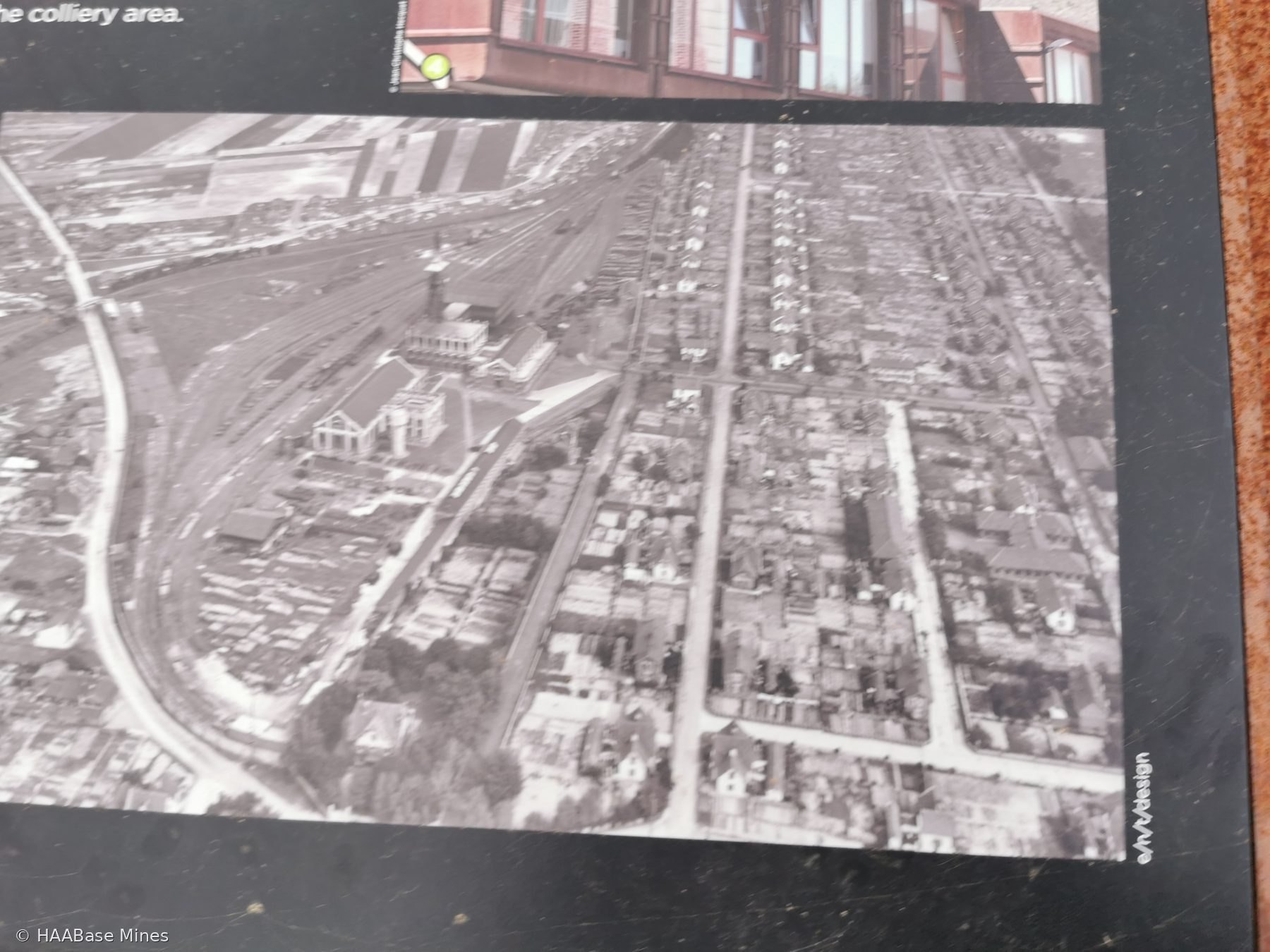
By 1903, across twelve fosses then operated by the company, the fosse n° 11 achieved the highest annual production: 358,450 tonnes. A ventilation shaft, the puits n° 11 bis, was put into service on a neighbouring surface site in 1909. Workers' cités, schools and a church — the église Saint-Pierre — were built in the vicinity, on the territories of Lens, Liévin and Loos-en-Gohelle.
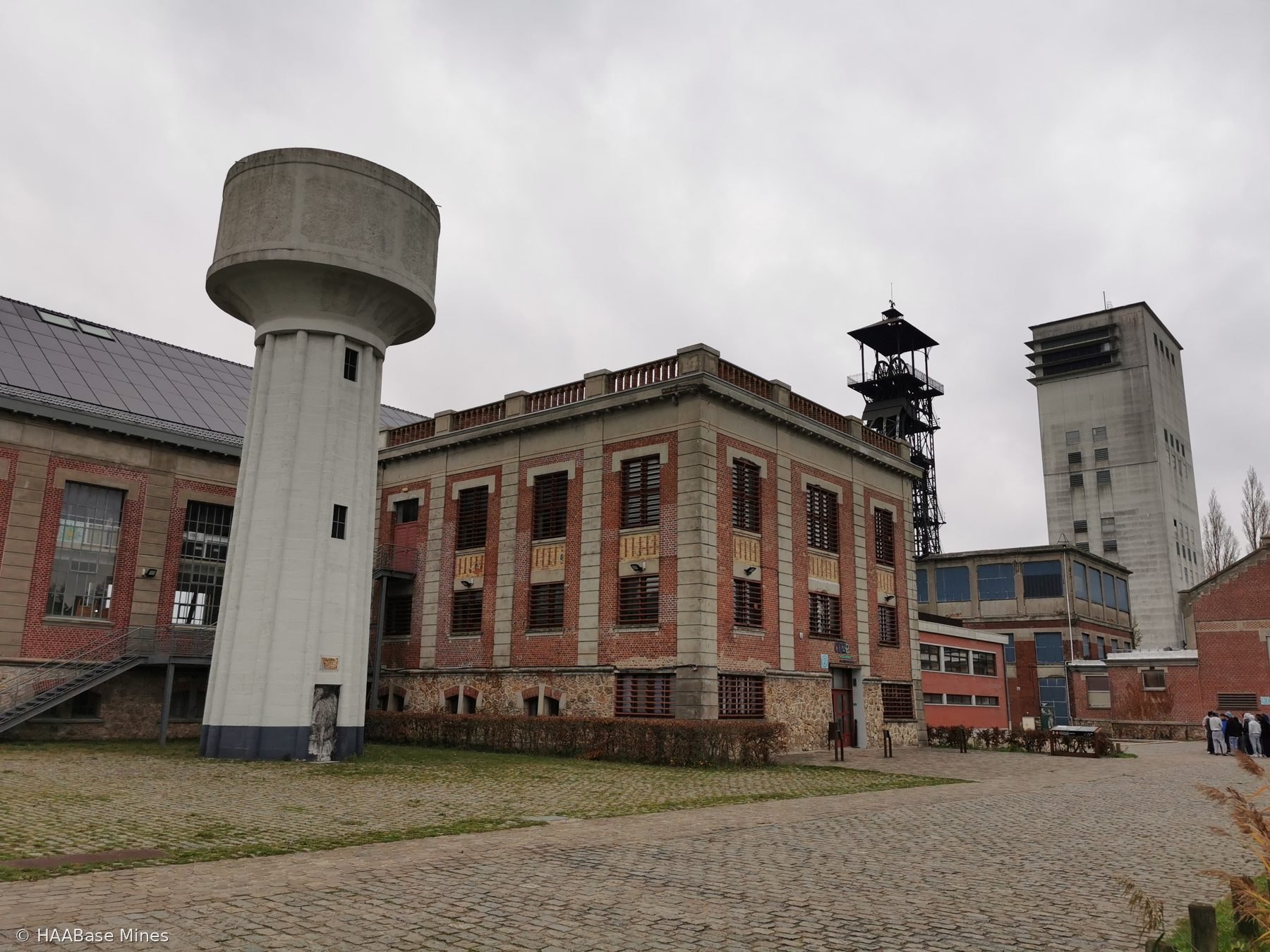
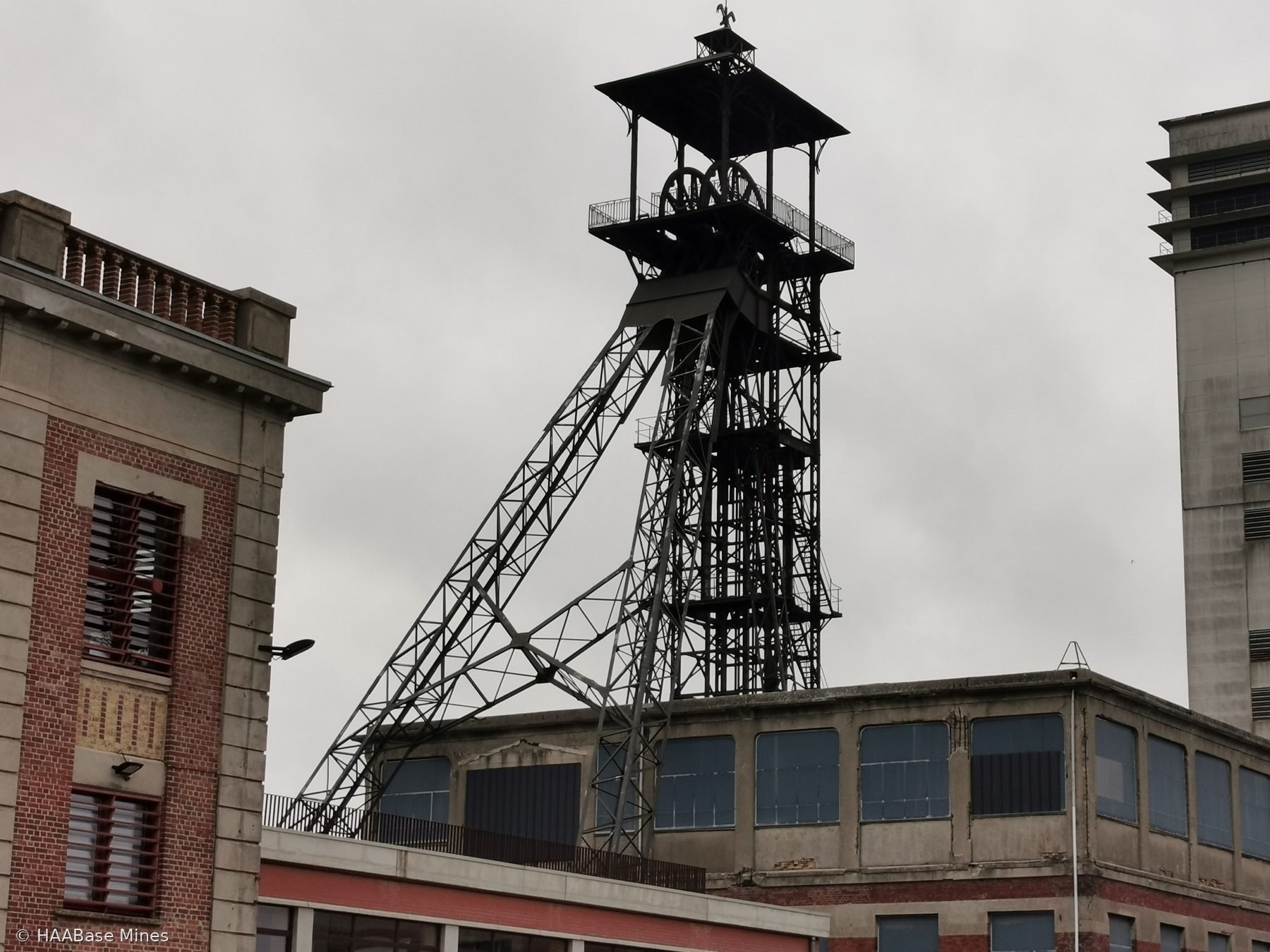
The fosse was destroyed during the First World War. It was rebuilt after the war in the post-war architectural style of the Mines de Lens; the trellised-lattice metallic headframe for the puits n° 11, which survives today, dates from 1923. It served for extraction until 1949.
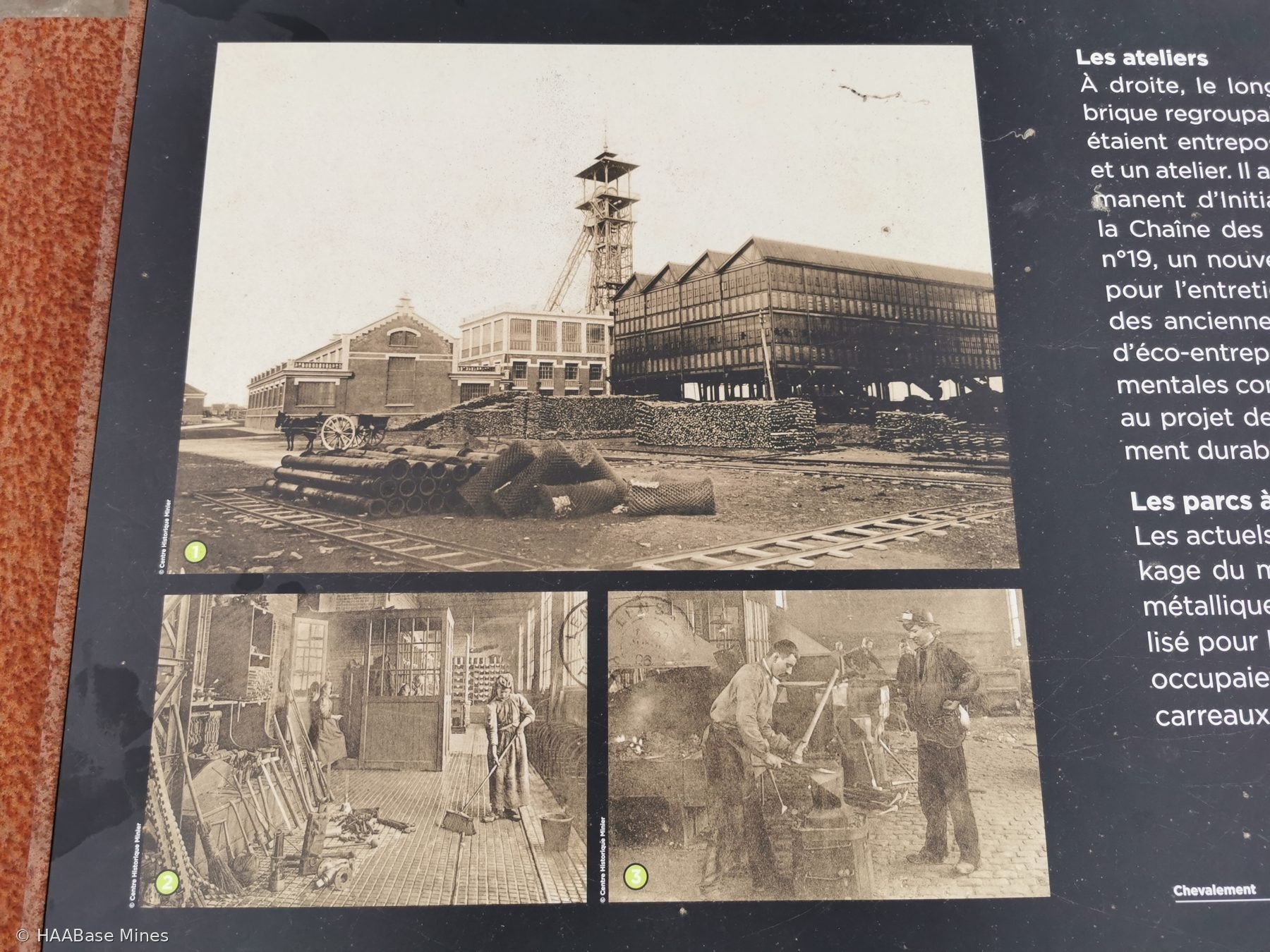
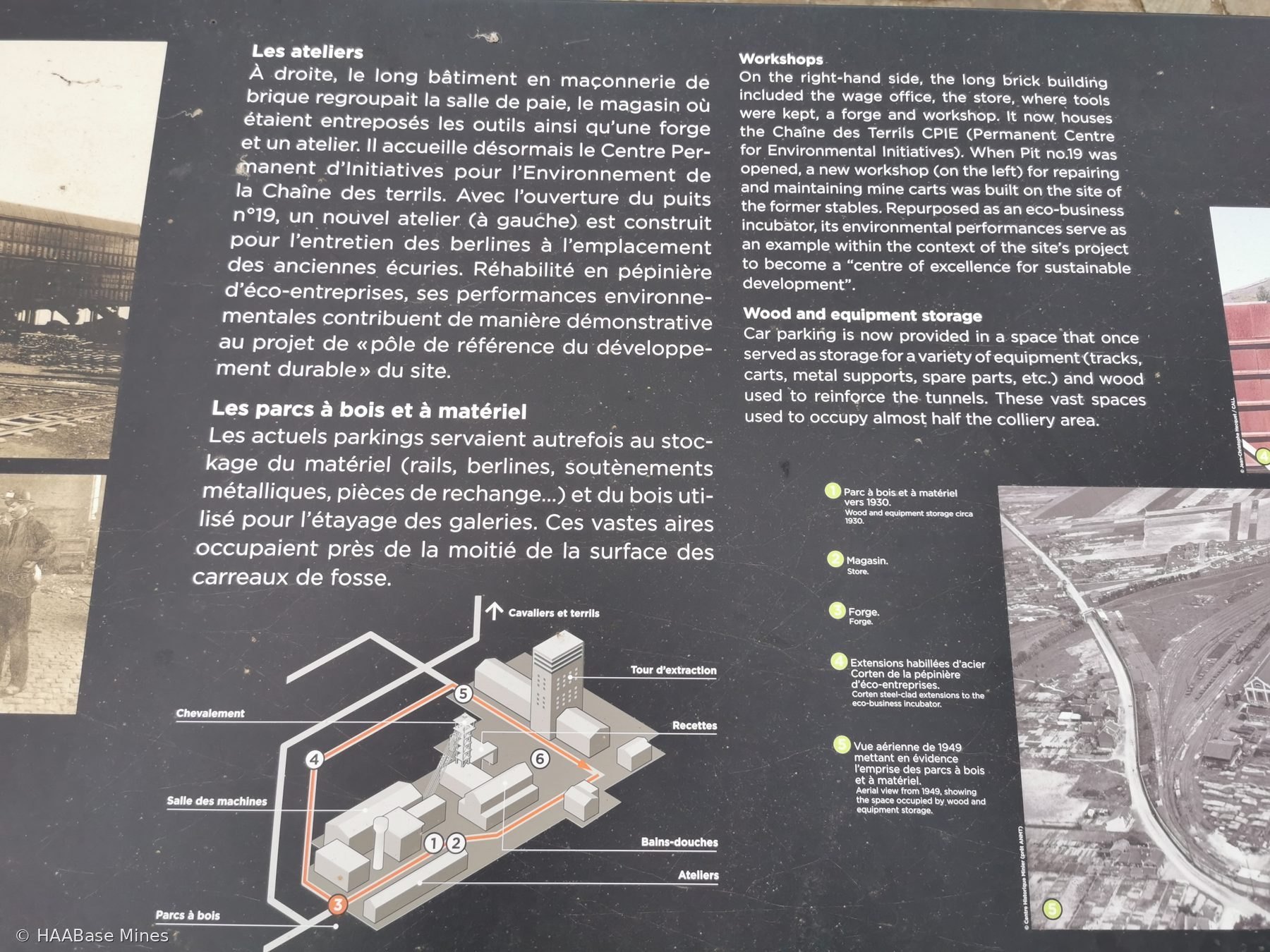
The associated extraction buildings, engine house, baths and workshops date from the same reconstruction period. The Compagnie des mines de Lens was nationalised in 1946 and integrated into the Groupe de Lens. In 1952 the Groupe de Lens merged with the Groupe de Liévin to form the Groupe de Lens-Liévin.
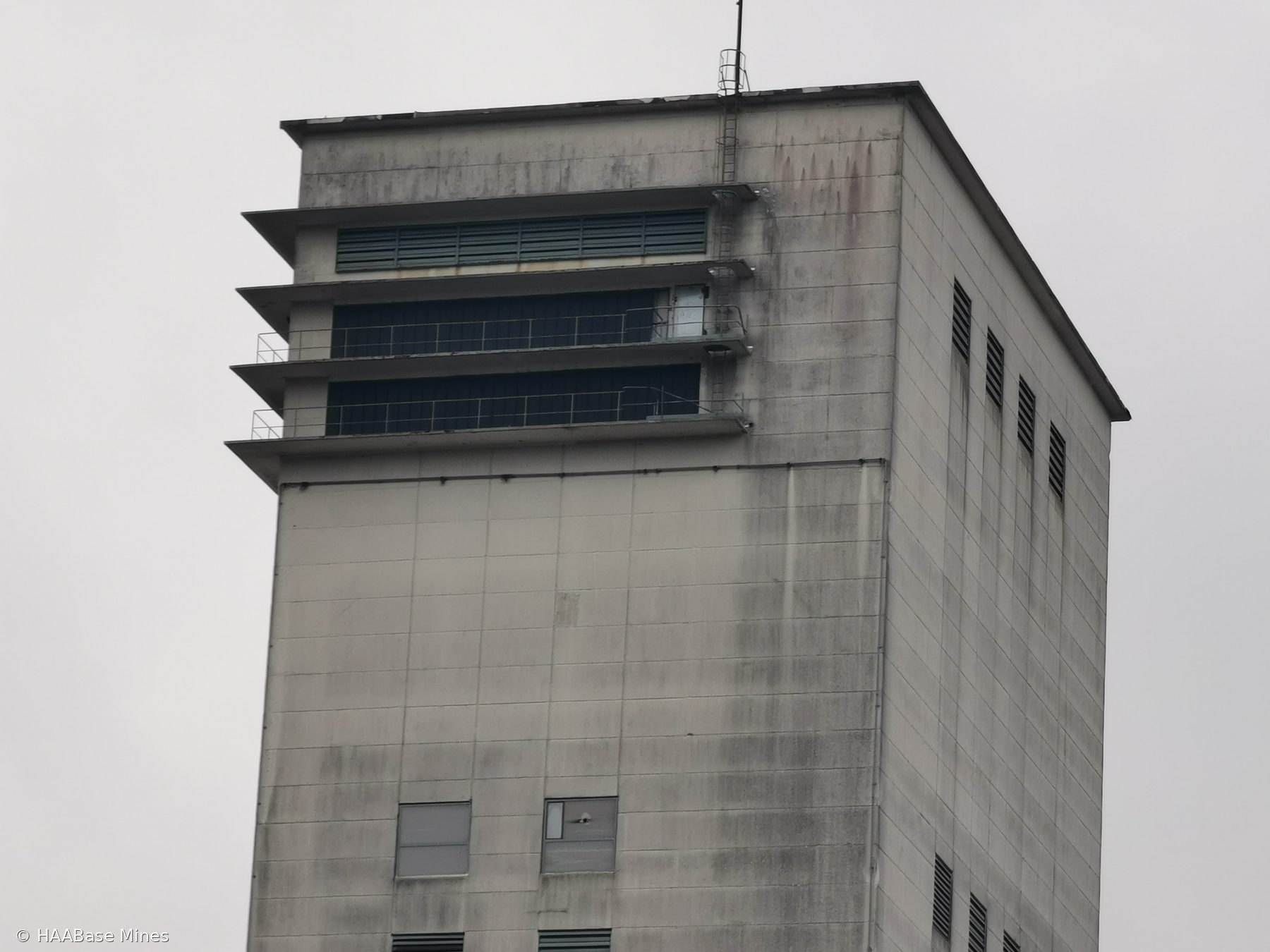
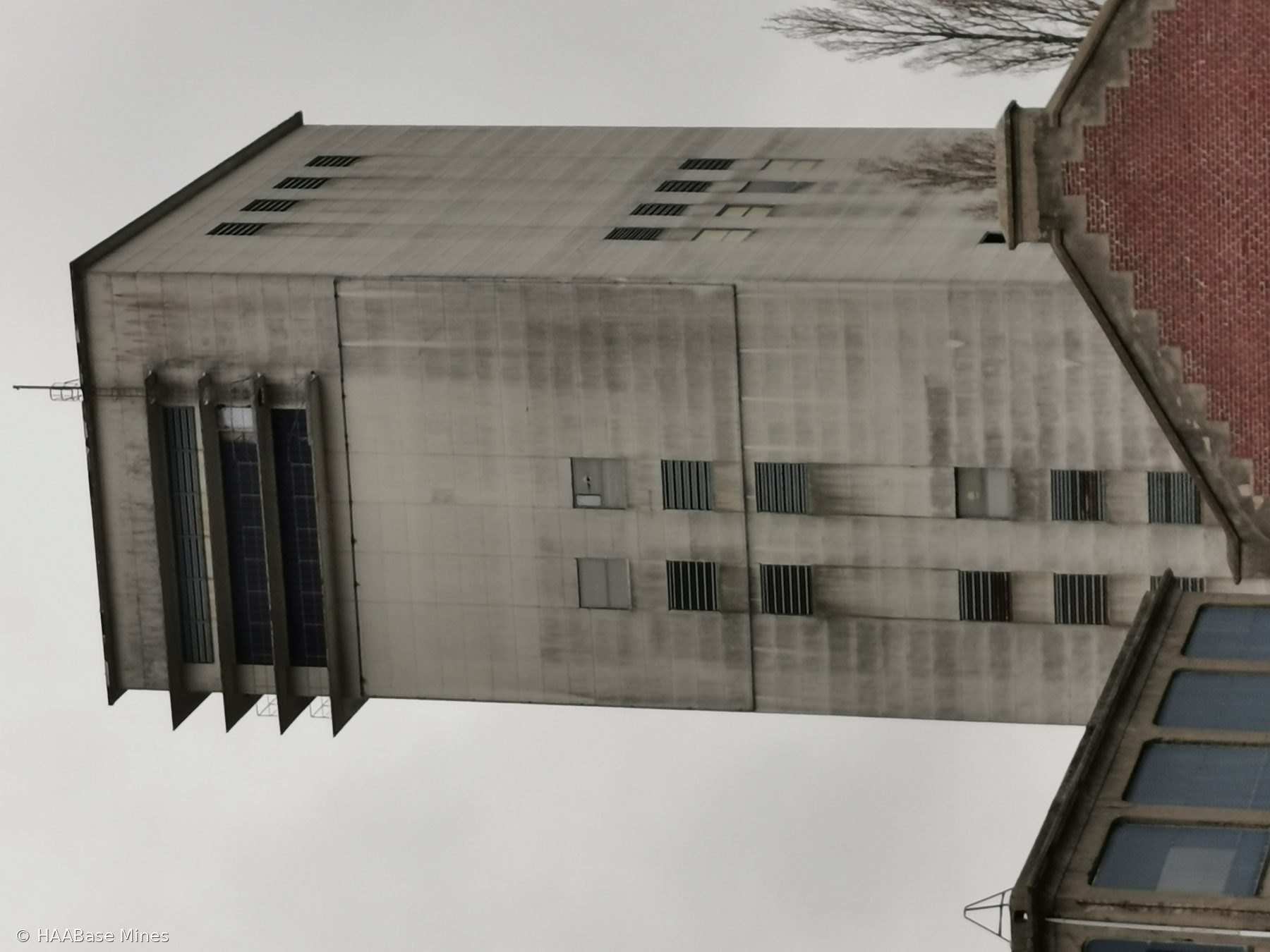
The programme of concentration and modernisation undertaken by Charbonnages de France led to the decision to create a new deep concentration seat at Loos-en-Gohelle. The puits n° 19 was sunk from 1954. A 66-metre reinforced-concrete extraction tower was constructed around 1960; this tour d'extraction is the only surviving structure of its type in the coalfield.
The puits n° 19 was equipped with two Ward Leonard winding machines with Koepe quadruple-cable drums of 4,400 horsepower each. When it entered service in 1960, the concentration seat was capable of extracting 6,000 tonnes per day with the work of 5,000 underground workers. The puits n° 11 thereafter served for service and ventilation.
Beginning in 1960, several fosses were successively concentrated on the siège 11-19: the fosses nos 2 and 2 bis, 3 and 3 bis, 4 and 9 in the 1960s, fosse n° 12 in 1966, and the fosses nos 7 – 7 bis in 1973. A new accrochage at 710 metres was created in 1971 and skips were replaced by a belt conveyor for waste transport to the terrils. Three terrils — nos 74, 74A and 74B — were generated by the exploitation of the fosse; the two conical terrils nos 74 and 74A are the tallest in Europe, reaching approximately 146 metres in height at an altitude of 187.50 metres, covering together with the third terril nearly 90 hectares with a total volume of approximately 24,000,000 m³.
A rich biodiversity has been recorded on the terrils, including around 205 plant species, 82 bird species, and numerous invertebrate and mammal species. The fosse closed on 31 January 1986, with the puits nos 11 and 19, respectively 852 and 815 metres deep, backfilled in 1987. The église Saint-Pierre, reconstructed after the First World War in 1923, was demolished on 2 November 1987.
The lavoir and triage were demolished, but the principal installations were conserved. A strong local mobilisation against demolition ensued; the site was acquired in 1990 by the Ville de Loos-en-Gohelle, and in 2000 by the agglomeration, which launched a comprehensive redevelopment plan. The chevalement du puits n° 11 and the tour du puits n° 19, with their associated extraction buildings and machinery, were inscribed as a monument historique in 1992, and classified by arrêté of 21 December 2009.
On 30 June 2012, the fosse n° 11 – 19, the terrils nos 74, 74A and 74B, the cité pavillonnaire des Provinces, the cité pavillonnaire Saint-Albert and the cité n° 11 were listed as UNESCO World Heritage, constituting part of site n° 63. The site today hosts several organisations including Culture Commune, the scène nationale du bassin minier du Pas-de-Calais, alongside environmental and economic activities making the base 11/19 a reference centre for sustainable development.