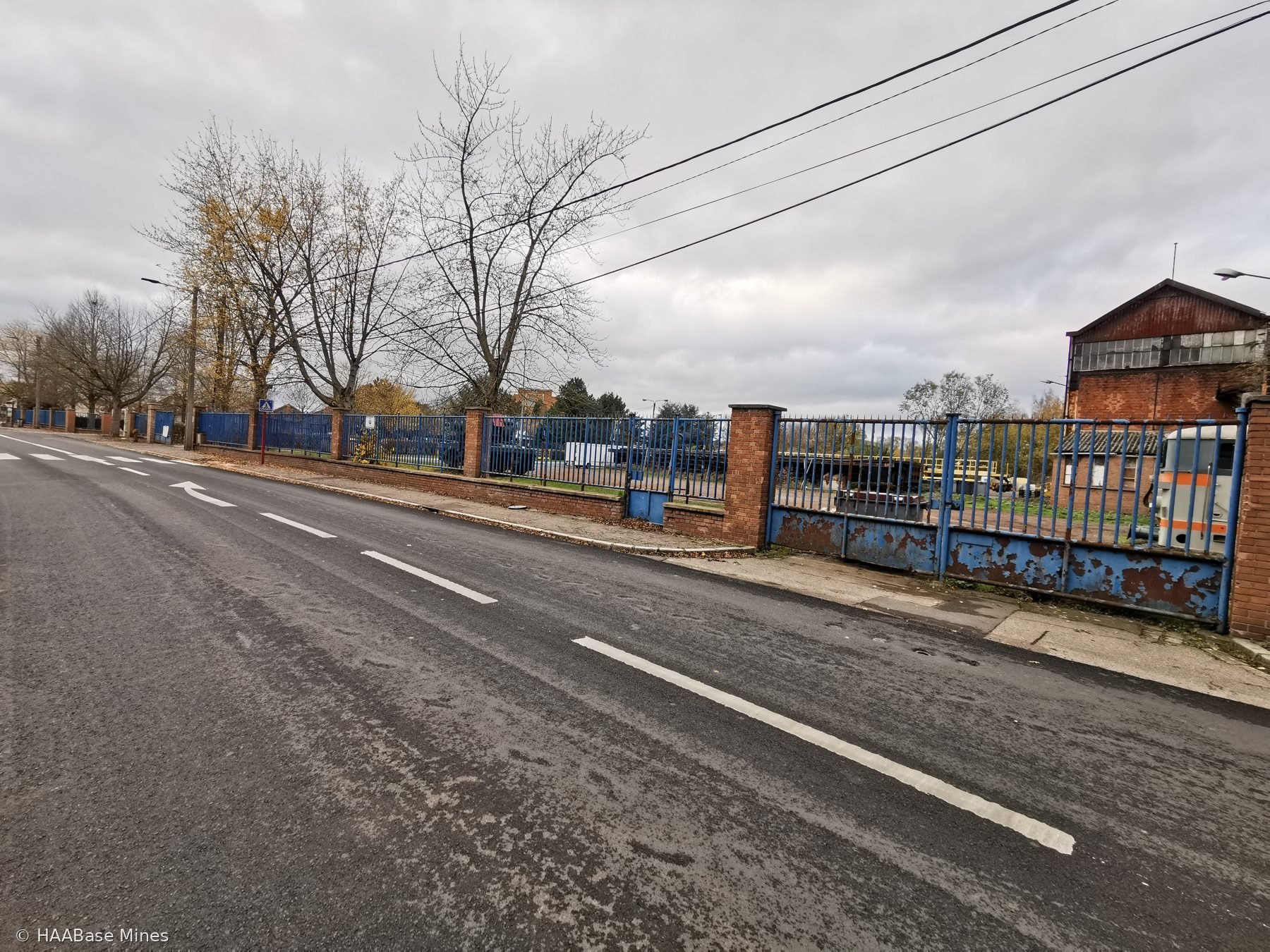
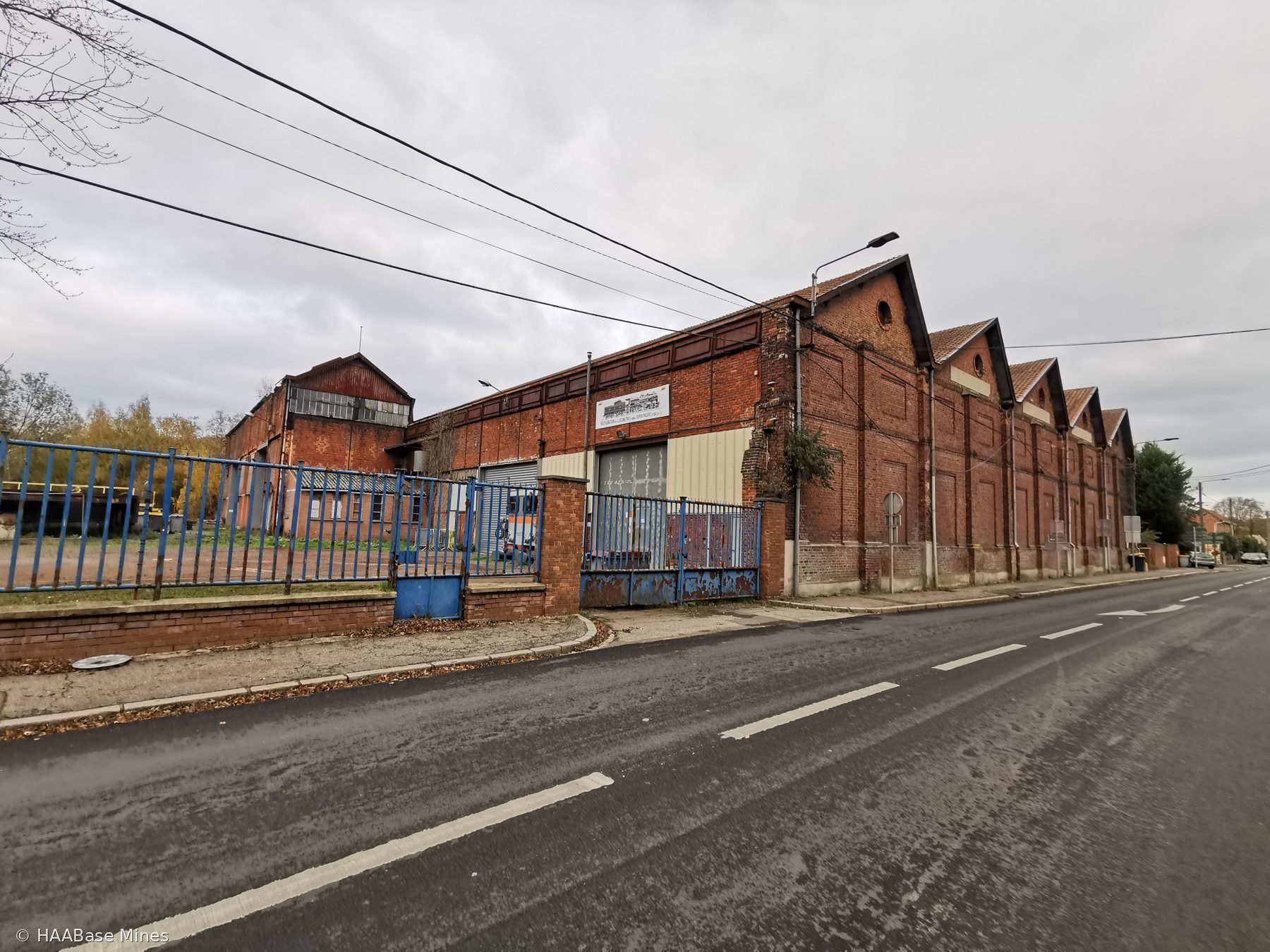
The Compagnie des mines d'Ostricourt sank the puits n° 2, naming it Henri Charvet after an administrator of the company, beginning on 3 July 1860 on the territory of Oignies, 700 metres north-east of the church and 700 metres west of the Paris-Nord à Lille railway line. The shaft had a useful diameter of four metres; the shaft mouth stood at an altitude of 29 metres. Water ingress at 61.45 metres required a 200-horsepower pump hired from the Compagnie de Meurchin to allow the shaft to advance.
The coal seam — a maigre houille — was reached at approximately 152 metres. Extraction began in September 1863. The wooden lining of the shaft was reinforced with a cast-iron sleeve in 1870 because it was leaking, and the lining was consolidated again in 1890.
An explosion on 6 February 1868 killed four miners. The fosse was destroyed during the First World War. By 1934, the company had identified the fosse n° 2 as its future concentration seat, with the aim of reducing staff and saving fuel.
In 1937 the puits was enlarged to 5.30 metres in diameter to accommodate this role. Equipment work began in 1938 but was substantially slowed by the Second World War; installation of the salle des machines, winding engine, and turbocompressor was carried out from 1938 to 1945. In 1943 the siège n° 2 was equipped with a double-horizontal-cylinder steam winding engine — the largest steam winding engine built in France — chosen because an electric installation would have required excessively costly modifications.
The construction of workers' cités began in the early 1940s to the north of the fosse on the territory of Libercourt, including the cité 1940 and the cité de la Faisanderie. A mine-image training gallery, a reconstructed full-scale mine gallery used to train new miners and for safety instruction, was established at the fosse in 1945. The Compagnie des mines d'Ostricourt was nationalised in 1946 and integrated into the Groupe d'Oignies.
A new trellised-lattice headframe 55 metres in height was installed between 1947 and 1948. Pithead buildings including the recette, lavoir, bains-douches, lampisterie and triage-lavoir were fitted out between 1947 and 1950. By 1950, when the concentration works were completed, the fosse n° 2 was regarded as one of the most modern in the coalfield.
Concentration of the fosses nos 1, 3, 5 and 6 of the former Compagnie des mines d'Ostricourt was effective from 1950. Large lavoirs and processing plants were built on the pit-head site, and the central workshops and main offices of the Groupe d'Oignies were constructed nearby. A téléphérique was installed in 1948 to transport waste to the terril n° 115; it collapsed in 1958.
The fosse was deepened to 456 metres in 1966 and a crosscut then linked it to the fosses nos 9 – 9 bis and 10. Extraction ceased in 1976, and the mineworkers were transferred to the fosse n° 9 – 9 bis. The puits n° 2, 505 metres deep, was backfilled in 1977 and the 94.60-metre chimney was dynamited the same year.
The headframe was demolished in 1980. The main offices were destroyed in 2000, the central workshops in 2003, and the passerelle and lampisterie in 2007. In November 2009, the winding engine building with its complete technical equipment — including the steam engine and the overhead travelling crane — was listed as a monument historique (classement) by arrêté of 9 November 2009, while the mine-image was inscribed (inscription) by arrêté of 25 November 2009.
On 30 June 2012, the fosse n° 2, its mine-image, the cités (including the cité de la Faisanderie, its school, its church Saint-Henri, the cité de la Forêt and the cité pavillonnaire 1940), and the terrils nos 115 and 115A were listed as part of the Bassin minier du Nord-Pas-de-Calais UNESCO World Heritage inscription, constituting parts of sites nos 38 and 39. The surviving buildings — including the workshops, garage, rescue services building, mine-image, bains-douches, transformer building, and winding engine hall — were taken over by the Centre de la Mine et du Chemin de Fer, an association established by retired miners, which maintains the steam winding engine of over 500 tonnes and operates the site as a public heritage and museum centre.