Fact-checked Research reviewed and published About research status
View fact-check assessment and classification

The history, timeline and surviving-site classification shown here reflect the reviewed account.

Assessment

The record identifies this site as fosse n° 2 Henri Charvet of the Compagnie des mines d'Ostricourt, situated at Oignies and adjoining Libercourt. Its history is supported principally by two official French Ministry of Culture monument records, PA62000074 and PA62000093, the Nord–Pas-de-Calais Mining Basin World Heritage documentation, the municipality of Oignies and the heritage association occupying the former pithead. These sources establish the colliery's nineteenth-century origins, its reconstruction after the First World War, selection for concentration in 1934, extensive modernisation from 1938 to 1950, closure in 1976 and survival of the winding-engine building and 1945 mine-image.

They also establish the separate legal protection of the winding-engine building and training galleries in November 2009 and their place within the World Heritage mining landscape recognised in 2012. The main industrial history, heritage chronology and identification of surviving protected structures are strongly supported. More detailed nineteenth-century technical measurements, the reported 1868 accident, some later underground developments and individual demolition dates depend substantially on specialist historical material reproduced in secondary accounts.

A chronological difference also exists between the Ministry of Culture's association of the steam winding engine with 1943 and the World Heritage guide's explicit statement that installation occurred in 1947. The record distinguishes the broader equipment programme from the specific installation date. The surviving industrial character is well established, although the exact fate of every former workshop and service building remains less certain.

The timeline is strongest for the twentieth-century concentration programme, mine-image, closure and statutory heritage designations, while certain earlier engineering events require additional archival corroboration.

Surviving-site classification

The surviving site of fosse n° 2 Henri Charvet consists principally of surface industrial buildings and equipment, including the former winding-engine building with its historic steam engine and overhead travelling crane, and the mine-image training complex constructed in 1945. The former pithead also retains associated welfare and service buildings identified in the Mining Basin World Heritage documentation. The historical production shaft has been backfilled, while the headframe and chimney have been demolished.

The surviving_descriptor is surface_buildings because the principal visible mining remains are standing industrial structures and machinery rather than an open shaft or standing headframe. The surviving_label identifies the principal retained features. The authenticity_status is mixed because the site combines original industrial fabric and machinery, an authentic historical training installation built to simulate underground working, and subsequent adaptation for heritage uses.

Its site_character is Museum site, reflecting the Centre Denis Papin, the Centre de la Mine et du Chemin de Fer and associated mining-heritage interpretation. The site_character_detail distinguishes the industrial remains from their present heritage and railway uses. The output classification is coal, the mineral historically extracted by the colliery.

Mérimée records PA62000074 and PA62000093 establish the principal protected structures and equipment, while official World Heritage documentation and the municipality of Oignies provide evidence of additional surviving buildings and present use. The precise survival and ownership of every former workshop and service building have not been independently established, but the main classification is strongly supported.

Published 21 November 2026 · Overall confidence 91/100 · Classification confidence High
Sources added or confirmed during the review are included in Sources and records where available.

Site overview

Fosse n° 2, known as Henri Charvet, occupies an important place in the industrial history of the Nord–Pas-de-Calais coalfield. Established by the Compagnie des mines d'Ostricourt at Oignies in 1860 and brought into production in 1863, it developed from a nineteenth-century colliery into one of the region's principal modern concentration pits. Its surviving buildings lie close to the boundary with Libercourt, where the mine-image and associated spoil heaps form part of the wider mining landscape.

The colliery's most important transformation began in the 1930s, when it was selected to receive production from other Ostricourt pits. The programme involved major shaft works, new coal-handling facilities and an exceptionally large steam winding engine. Construction was delayed by the Second World War and continued after the nationalisation of the coal industry in 1946. By 1950 the complex had become one of the most modern in the basin. A mine-image, constructed in 1945, provided a realistic training environment in which miners could learn underground working methods and safety procedures before entering the production workings.

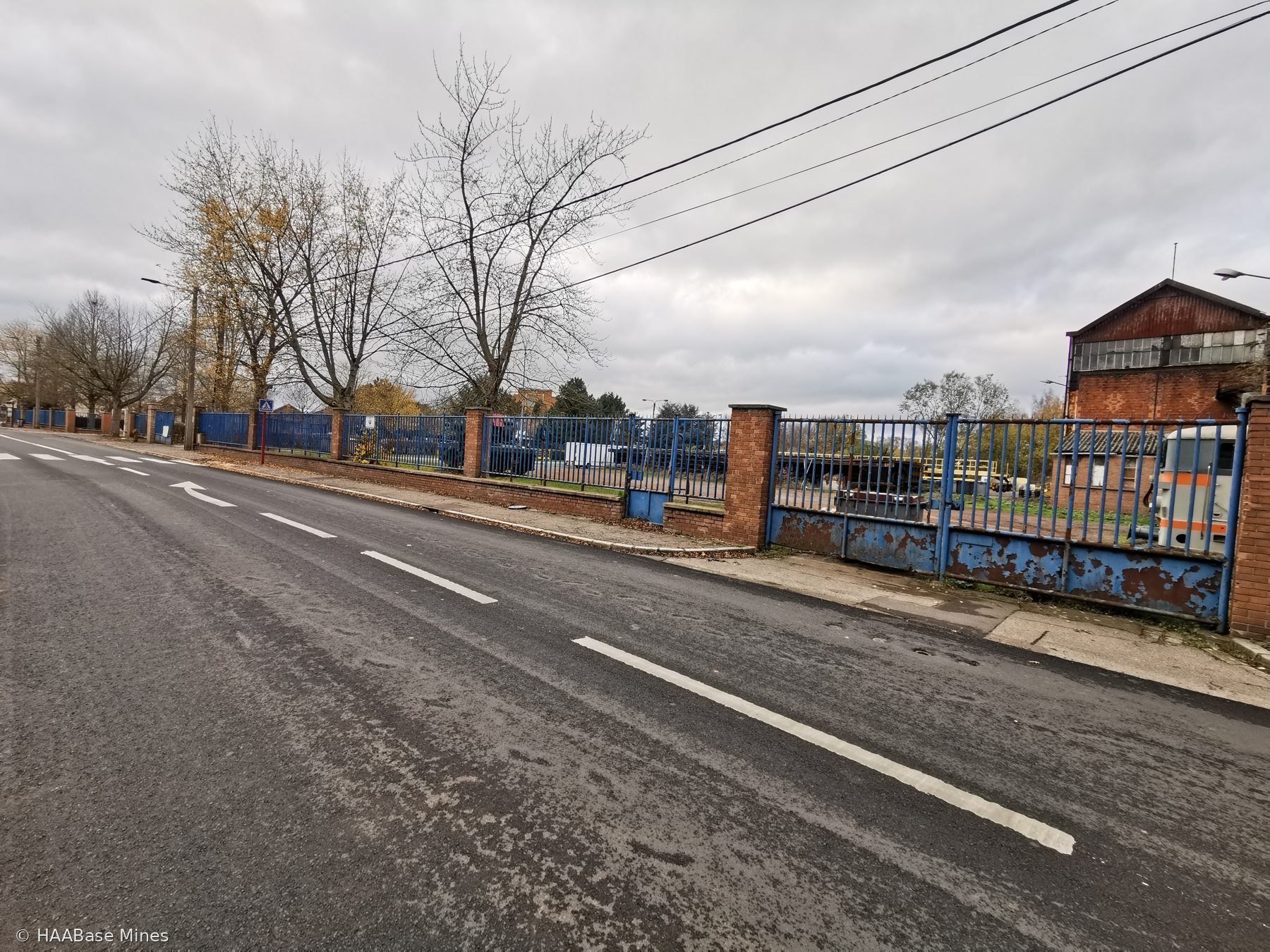
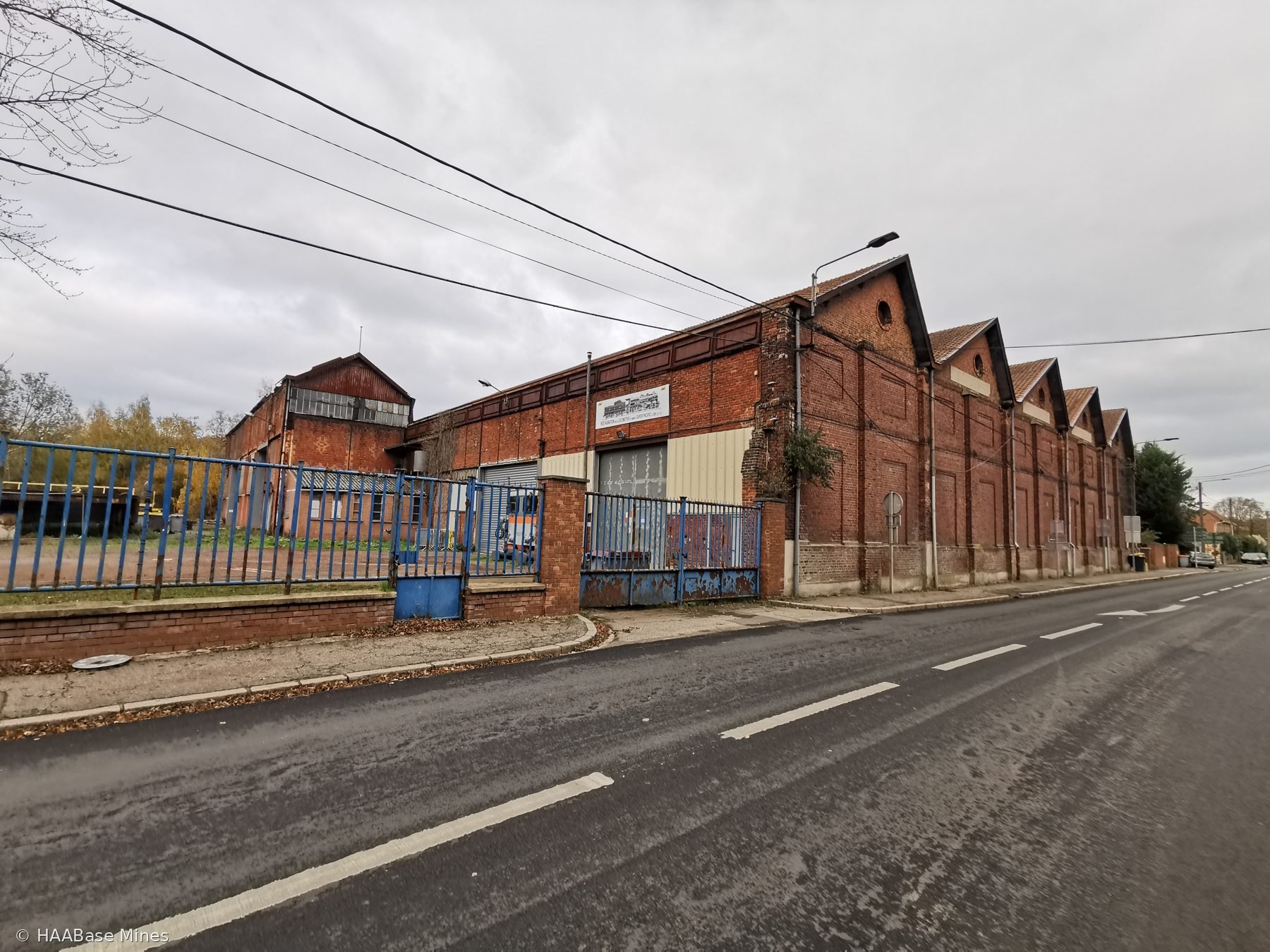
Mining ceased in 1976 and much of the pithead was subsequently demolished, including the chimney and the large lattice headframe. The most significant surviving industrial feature is the winding-engine building, still containing its historic steam engine and overhead travelling crane. Nearby, the mine-image retains its purpose-built training galleries, including sections extending beneath a small spoil heap. The former pithead also includes surviving service and welfare buildings associated with the twentieth-century concentration complex.

The winding-engine building was classified as a monument historique on 9 November 2009, and the mine-image was separately inscribed on 25 November. In 2012 the colliery and selected associated elements of its mining landscape became part of the UNESCO-listed Nord–Pas-de-Calais Mining Basin. Today the Centre Denis Papin and the Centre de la Mine et du Chemin de Fer occupy the former colliery, combining the preservation of substantial industrial remains with railway heritage activities. The site is especially significant for the survival of its powerful steam winding equipment and the unusual historic training installation, which together illustrate both the technology of a major concentration colliery and the preparation of miners for underground work.

The surviving buildings stand in a mixed urban and post-industrial landscape on the Oignies-Libercourt boundary, where the former pit site still reads as a distinct historic enclave.

Map & photo

Fosse n° 2 des mines d’Ostricourt mine headframe or winding tower site
Photograph taken: 16 November 2025
Map markers and directions links are provided for location reference only and do not indicate public access or permission to enter a site.

History

Fosse n° 2, known as Henri Charvet, was one of the principal collieries developed by the Compagnie des mines d'Ostricourt in the northern French coalfield. The shaft was established at Oignies, close to the boundary with what is now Libercourt, and was named after Henri Charvet, an administrator of the company. Sinking began on 3 July 1860, several years after the opening of the company's first pit. Historical descriptions place the shaft approximately 700 metres north-east of the church at Oignies and 700 metres west of the Paris–Lille railway. Its original useful diameter was four metres, with the shaft opening recorded at an elevation of about 29 metres.

The sinking operation encountered serious water problems. By April 1861 the shaft had reached approximately 61.45 metres, but increasing inflows threatened further progress. The original machinery was inadequate to remove the water. A 50-horsepower pumping engine allowed sinking to continue to a little over 71 metres, after which still more powerful equipment became necessary. The company obtained a 200-horsepower pumping engine from the Compagnie de Meurchin. Historical engineering accounts describe this engine working with substantial pumps and boilers to control the water entering the shaft. Successive measures to exclude water eventually allowed the wooden lining to be completed to a depth of approximately 86 metres. The coal-bearing measures were encountered at about 152 metres.

Extraction began in September 1863. The workings encountered several seams, not all of which were economically workable, and included relatively lean grades of coal. Contemporary descriptions identify nine intersected seams, of which five were considered workable; seams numbered 6 and 9 supplied much of the early production. The presence of firedamp was recorded during the early years of operation, and a mining explosion on 6 February 1868 is reported to have killed four miners. Water continued to be a difficulty in the shaft. Leakage through the original wooden lining led to the installation of a cast-iron reinforcing sleeve in 1870, followed by further consolidation in 1890. These interventions reflected the continuing technical demands of maintaining a deep working shaft in the water-bearing strata of the coalfield.

Fosse n° 2 continued as part of the Ostricourt company's network of collieries through the later nineteenth century and into the twentieth. Its development was interrupted by the First World War, during which the colliery suffered destruction. The pit was subsequently reconstructed, but its most substantial transformation came several decades later, when the company began planning a concentration of production at fewer, larger and more mechanised installations.

In 1934 fosse n° 2 was identified as the future concentration seat for the Compagnie des mines d'Ostricourt. Concentration was intended to rationalise production by directing coal from several pits through one principal surface complex, reducing duplication of machinery, staffing requirements and fuel consumption. The scheme required major redevelopment of the existing shaft and its equipment. Shaft works undertaken around 1937 included enlargement to a diameter reported as 5.30 metres, substantially greater than the four-metre original opening. The enlarged shaft was intended to accommodate the demands of the expanded winding and coal-handling operation.

Equipment works began in 1938, but the Second World War seriously delayed construction. The machinery hall, winding equipment and turbocompressor formed part of an extensive programme carried out through the war years. The concentration process nevertheless began before the works were complete: the official heritage history records the closure of fosse n° 3 in 1941 as an early stage. The aim was to transform fosse n° 2 from an individual colliery into a central production installation serving a wider network of underground workings.

One of the most remarkable features of the modernisation was the adoption of an exceptionally large steam winding engine with two horizontal cylinders. Although electrically driven winding machinery was becoming increasingly important in modern collieries, the arrangements at fosse n° 2 made conversion to electric winding particularly expensive. Steam power was therefore retained for the new installation. The Ministry of Culture's historical account associates the equipping of the concentration seat with 1943, while the Nord–Pas-de-Calais Mining Basin World Heritage guide records that the engine had been ordered before the war, was retained by the nationalised coal industry and was installed in 1947. The machinery formed one of the most substantial surviving examples of steam winding equipment in the French coalfield and remains the defining technical feature of the preserved site.

Alongside the concentration works, a mine-image was established at fosse n° 2 in 1945. A mine-image was a deliberately constructed imitation of underground mine workings, designed to provide a realistic training environment without the dangers and difficulties of descending immediately into an operating pit. It allowed new miners to become familiar with underground conditions, equipment, working methods and safety procedures. The Oignies installation consists of two long sheet-metal tunnels, continued by an underground gallery constructed beneath a small artificial spoil heap. Its position close to the working colliery allowed training to form part of the wider organisation of the concentration complex. Unlike ordinary production galleries, the mine-image was built specifically for instruction, and its reconstructed mining environment is itself an authentic historic feature of the site.

The nationalisation of the French coal industry in 1946 brought the former Compagnie des mines d'Ostricourt into the Groupe d'Oignies. The modernisation of fosse n° 2 continued under the nationalised organisation and became part of a wider transformation of the coalfield's industrial infrastructure. A modern lattice headframe was erected during the late 1940s, with historical accounts describing a structure approximately 55 metres high. The official heritage notices refer to headframe construction in 1947 and a further phase of modernisation beginning in 1948. Between 1947 and 1950 the pithead was equipped with enlarged shaft reception facilities, coal washing and sorting installations, baths and showers, and a lamp room. The resulting group of buildings served the practical requirements of a major concentration colliery, bringing together winding, coal preparation and the daily movement of large numbers of miners.

The industrial buildings of this period also had architectural qualities beyond their purely functional design. The winding-engine building and the nearby function room and baths incorporated elements associated with late Art Deco architecture. The function room was ornamented with a relief showing miners' helmeted profiles and a woman playing a harp, expressing the building's social and recreational purpose. Such facilities reflected the scale of the new colliery organisation and the provision of welfare and social accommodation alongside the machinery of coal production.

The development was accompanied by the expansion of mining settlements around Oignies and Libercourt. These included the cité pavillonnaire 1940, the cité de la Faisanderie and the cité de la Forêt. The latter was developed in 1946 and included distinctive timber chalets provided for mining staff. The arrangement of housing, gardens, roads and communal buildings formed part of the wider industrial and social landscape associated with the concentration colliery. The settlements illustrate how the modernisation of mining extended beyond the pithead to the accommodation and everyday lives of the workforce and their families.

By 1950 the concentration works were substantially complete, and fosse n° 2 was regarded as one of the most modern collieries in the Nord–Pas-de-Calais basin. The concentration of the former Ostricourt fosses nos 1, 3, 5 and 6 had become effective, with production channelled through the enlarged central installation. Coal washing and processing facilities occupied an important part of the surface complex, while central workshops and the main offices of the Groupe d'Oignies were developed nearby. These associated installations extended the industrial character of the area beyond the immediate shaft and winding buildings. Their functions and histories remained distinct from those of the neighbouring numbered pits whose production was concentrated at fosse n° 2.

The colliery also required substantial arrangements for the disposal of waste rock. An aerial cableway was developed to transport spoil towards terril n° 115, with historical accounts dating its installation to 1948 and recording its collapse in 1958. Terril 115 became a major feature of the wider mining landscape, although its form was subsequently modified by reworking and landscaping. The smaller terril 115A had a different role: it was associated with the mine-image and covered part of its purpose-built training galleries. The two spoil heaps therefore have separate physical histories and significance despite their common association with fosse n° 2.

Underground development continued during the later operating life of the colliery. Historical accounts record deepening of the shaft to approximately 456 metres in 1966 and the development of connections towards the workings associated with fosses nos 9–9 bis and 10. These underground links formed part of the increasingly integrated organisation of the Oignies mining area, although the connected pits remained distinct surface installations. The eventual recorded depth of the Henri Charvet shaft was approximately 505 metres.

Extraction at fosse n° 2 ceased in 1976. The closure marked the end of more than a century of coal production at the original Henri Charvet shaft. Historical accounts record the transfer of miners to the separate fosse n° 9–9 bis complex. The shaft was backfilled in 1977, and the tall colliery chimney was demolished during the same year. The large lattice headframe, which had dominated the modernised pithead, was removed in 1980. The disappearance of these structures substantially altered the appearance of the colliery, removing its most prominent vertical industrial features while leaving important buildings and equipment on the surface.

Further demolition and redevelopment followed as the former colliery and surrounding industrial land were progressively reorganised. The principal company offices, workshops and other service structures were affected by changes during the late twentieth and early twenty-first centuries. Nevertheless, important elements of the concentration colliery survived, above all the winding-engine building and its machinery. The former baths and social facilities, together with the mine-image and other retained industrial buildings, continued to give the site a recognisable relationship with its mining past.

The historical importance of the surviving machinery and training complex received formal recognition in 2009. On 9 November the winding-engine building of the former fosse n° 2, including the complete technical arrangement of steam engine and overhead travelling crane, was classified as a monument historique. The protection covers the industrial building and machinery together, recognising their value as an integrated technical survival. On 25 November the mine-image received separate inscription as a monument historique. This protection encompasses its external and underground galleries and the technical training equipment associated with them, including the installation beneath terril 115A.

A further recognition followed on 30 June 2012, when the Nord–Pas-de-Calais Mining Basin was inscribed on the UNESCO World Heritage List. The former fosse n° 2, its mine-image and associated elements of the surrounding industrial and social landscape form part of that extensive serial property. The neighbouring mining settlements, community buildings and spoil heaps help demonstrate the relationship between production, workers' housing, social facilities and the transformed landscape of the coalfield. The preservation of these elements provides a broader context for understanding the surviving pithead, whose history is inseparable from the communities and infrastructure that developed around it.

The surviving colliery buildings are now associated with the Centre Denis Papin and the Centre de la Mine et du Chemin de Fer de Oignies. The association occupies part of the former pithead and is principally concerned with conserving and presenting railway heritage, including full-size railway equipment and models. The substantial preserved steam winding engine remains an exceptional feature of the site, its machinery weighing more than 500 tonnes according to the municipality's description. Together with the winding-engine hall, the former welfare buildings and the historic mine-image, these remains show several different aspects of the colliery's working life: the large-scale engineering of coal extraction, the industrial and social organisation of a modern concentration pit, and the practical training of the miners who worked below ground. Although the headframe, chimney and working shaft have disappeared, the retained buildings, machinery and training galleries preserve an unusually tangible record of the transformation of an older Ostricourt colliery into a major twentieth-century mining complex.
Timeline

1860
Construction

Sinking of the Henri Charvet shaft begins

Sinking of fosse n° 2 began at Oignies. The original shaft had a useful diameter of approximately four metres and was named after company administrator Henri Charvet.
1863
Operation

Coal extraction begins

Coal extraction began in September 1863, after the shaft reached the coal-bearing measures at a depth of approximately 152 metres.
1868
Operation

Fatal explosion at fosse n° 2

Historical accounts record an explosion on 6 February 1868 in which four miners lost their lives.
1870–1890
Construction

Shaft lining reinforced

Leakage through the wooden shaft lining led to the insertion of a cast-iron reinforcing sleeve in 1870. Further consolidation was carried out in 1890.
1914–1918
Closure

Colliery destroyed during the First World War

Fosse n° 2 suffered destruction during the First World War and was subsequently rebuilt.
1934
Construction

Selected as the company's concentration colliery

Fosse n° 2 was selected for development as a principal concentration colliery, centralising production and reducing duplication of machinery, staffing and fuel consumption.
1937
Construction

Shaft enlarged for concentration working

Major redevelopment of the existing shaft took place in preparation for concentration working. Historical accounts give its enlarged diameter as 5.30 metres.
1938–1945
Construction

Major concentration equipment works

Construction and installation of the machinery hall, winding equipment and turbocompressor formed part of the major 1938–1945 equipment programme. Progress was seriously delayed by the Second World War.
1943–1947
Construction

Large steam winding engine provided and installed

An exceptionally large twin-horizontal-cylinder steam winding engine was incorporated into the concentration scheme. Ministry of Culture accounts associate the equipment with 1943, while the Mining Basin World Heritage guide identifies 1947 as its installation year following an order placed before the war.
1945
Operation

Mine-image training complex established

A purpose-built mine-image was established for practical miner training and safety instruction. It comprises two long sheet-metal tunnels continued by an underground gallery beneath a small artificial spoil heap.
1946
Legislation

Nationalisation and integration into Groupe d'Oignies

Following nationalisation of the French coal industry, the former Ostricourt operations became part of the Groupe d'Oignies. The concentration works continued under the nationalised coalmining organisation.
1947–1950
Construction

New headframe and pithead installations completed

A modern lattice headframe was erected in the late 1940s, while new shaft reception, coal washing and sorting, baths, showers and lamp-room facilities were installed between 1947 and 1950.
1950
Operation

Concentration complex fully operational

The modernised concentration colliery became fully operational, handling production associated with the former Ostricourt fosses nos 1, 3, 5 and 6. It was regarded as one of the most modern installations in the coalfield.
1966
Construction

Shaft deepening and underground connection

Historical accounts record further shaft development to approximately 456 metres and an underground connection towards the workings associated with fosses n° 9–9 bis and n° 10.
1976
Closure

Coal extraction ceases

Extraction at fosse n° 2 ended after more than a century of operation. Historical accounts record the transfer of miners to the separate fosse n° 9–9 bis.
1977
Closure

Shaft backfilled and chimney demolished

The former production shaft, recorded as approximately 505 metres deep at the end of its life, was backfilled. The tall colliery chimney was demolished during the same year.
1980
Closure

Colliery headframe demolished

The modern lattice headframe erected during the concentration programme was demolished, removing the principal vertical structure above the former shaft.
2000–2007
Closure

Further demolition and redevelopment of the pithead

The former colliery underwent further reduction and redevelopment, including the removal of offices, workshop structures and service facilities. The winding-engine building and historic mine-image remained as important preserved elements.
2009
Heritage

Winding-engine building classified as a monument historique

The winding-engine building, together with its steam winding engine and overhead travelling crane, was classified as a monument historique by arrêté of 9 November 2009.
2009
Heritage

Mine-image inscribed as a monument historique

The complete mine-image, including external and underground training galleries and associated technical equipment, was inscribed as a monument historique by arrêté of 25 November 2009.
2012
Heritage

Included in the Nord–Pas-de-Calais Mining Basin World Heritage property

The former fosse n° 2, its mine-image and selected associated spoil heaps and mining settlements formed part of the Nord–Pas-de-Calais Mining Basin inscribed on the UNESCO World Heritage List on 30 June 2012.

Sources and records

This list includes live sources already held for the record and any additional sources added or confirmed during the published fact-check review.

Official heritage records

Further sources

  • Les 100 sites du Bassin minier Nord–Pas de Calais Patrimoine mondial World Heritage site guide identifying the surviving extraction building, steam winding engine, function room, baths and mine-image. Particularly important because it dates installation of the steam engine to 1947, distinguishing this from the 1943 date in the Mérimée historical account.
  • Fosses d'extraction Official World Heritage interpretation explaining the significance of the preserved winding-engine building and equipment at fosse n° 2 within the development of the mining basin.
  • Centre de la Mine et du Chemin de Fer Municipal account confirming the Centre Denis Papin's occupation of the former fosse n° 2, the presence of the preserved steam winding engine and the activities of the heritage association.
  • Centre de la Mine et du Chemin de Fer — Accueil Website of the heritage association occupying part of the former colliery. Useful for its present-day activities and institutional identity, not independent corroboration of nineteenth-century mining chronology.
  • Centre de la mine et du chemin de fer Regional museum network description of the Centre Denis Papin and preserved winding engine.

Research bibliography

Wikipedia article (French): Fosse no 2 des mines d'Ostricourt
Wikipedia article (French): Compagnie des mines d'Ostricourt
Plateforme ouverte du patrimoine / Mérimée database: PA62000074 (winding engine building)
Plateforme ouverte du patrimoine / Mérimée database: PA62000093 (mine-image)
Monumentum heritage database: PA62000074 and PA62000093
Gaillette.fr: UNESCO Oignies heritage summary
Escapades en Hauts-de-France: Centre de la Mine et du Chemin de Fer de Oignies
Ville de Oignies: Centre Denis Papin page
Centre de la Mine et du Chemin de Fer association website
This researched site record is part of the HAABase Mines database. Normal personal research and browsing is welcome. Automated bulk extraction, republication, or harvesting of site text and images is not permitted without written consent.