Site overview

The Fosse n° 2 des mines de Flines, sited at Anhiers, is a former coal colliery of the Compagnie des mines de Flines, subsequently the Compagnie des mines d'Aniche, in the Nord-Pas-de-Calais coalfield. The puits was sunk from 1898 and entered extraction in 1900, with accrochages at 212 and 292 metres. A lavoir, criblage and two boulet-pressing plants were installed on site; the two fosses of the Compagnie were linked by rail and by underground connexion from 1905.

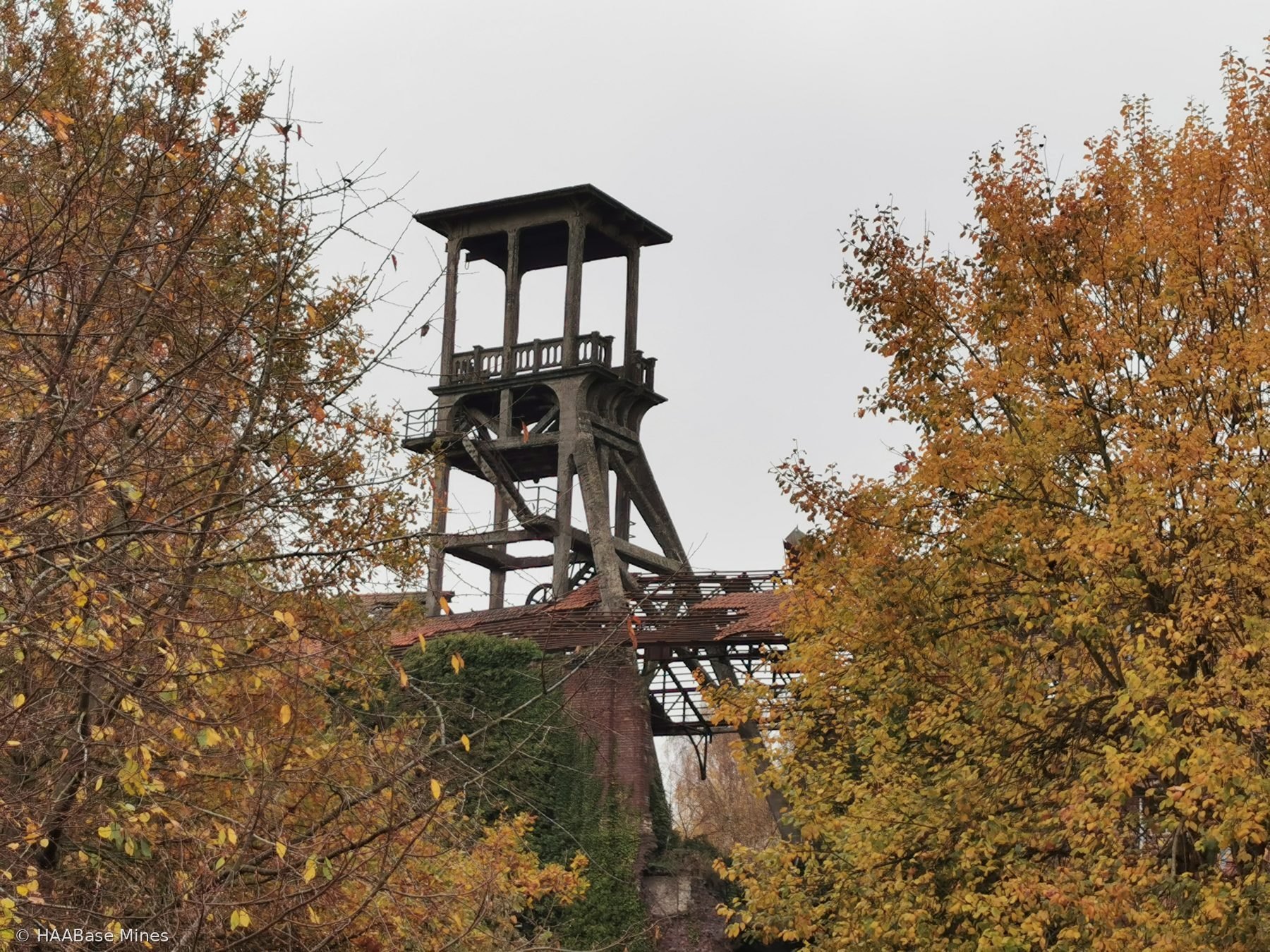
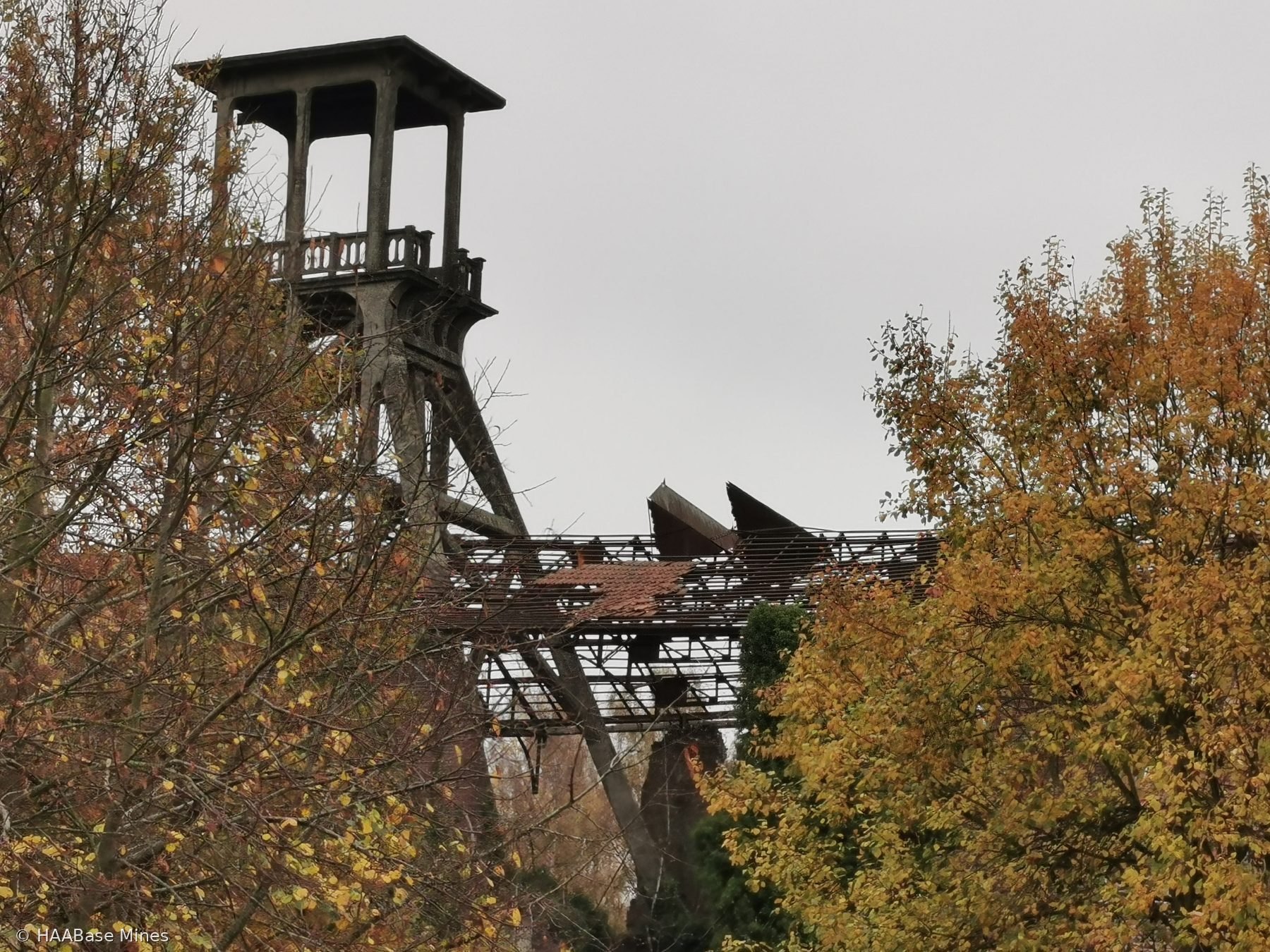
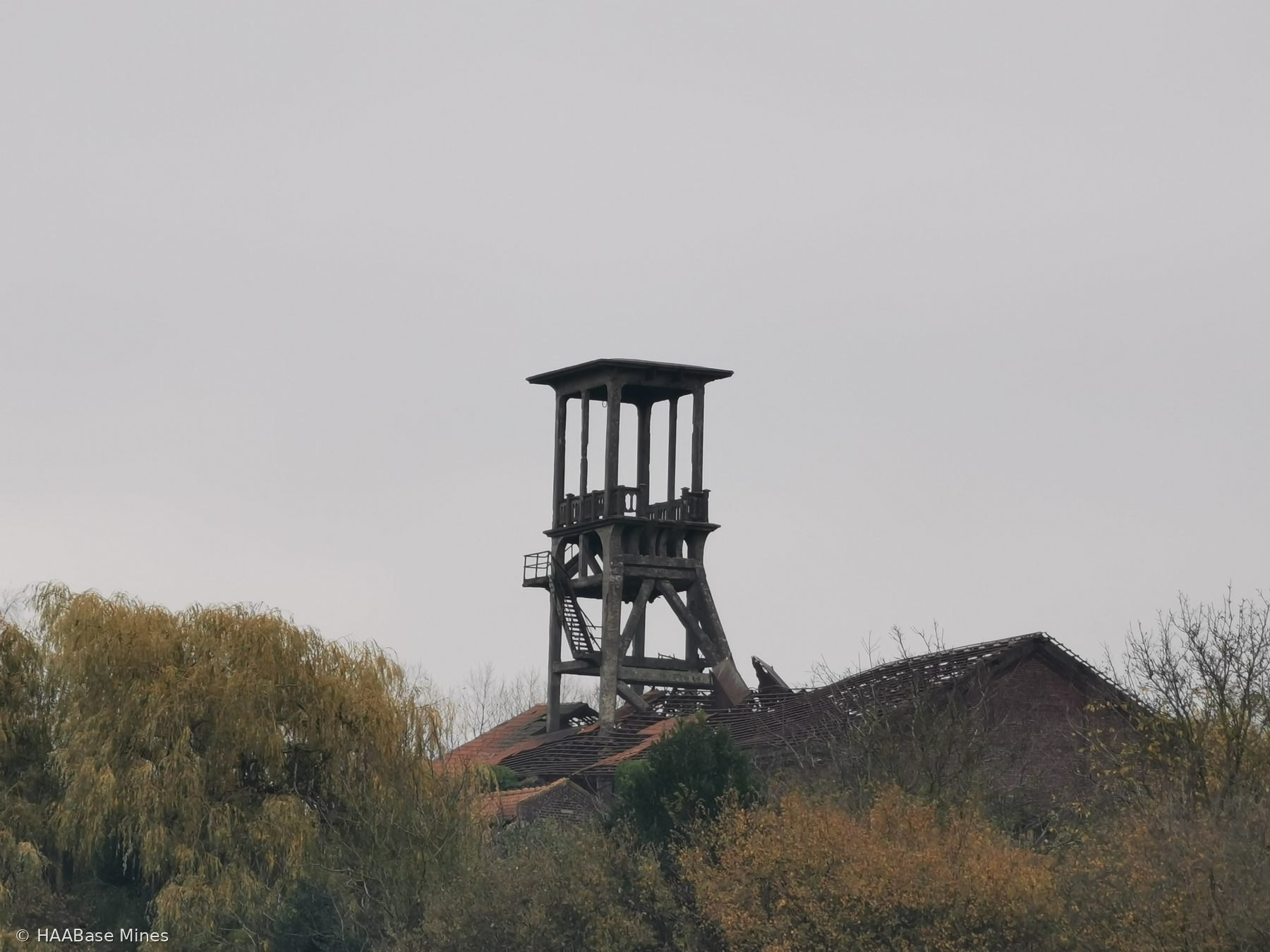
The fosse alone continued extraction after 1914 until it was destroyed by German forces in 1918; it was rebuilt between 1919 and 1921 with a reinforced-concrete headframe. The Compagnie des mines de Flines was acquired by the Compagnie des mines d'Aniche on 13 January 1922, after which the shaft served as ventilation for the fosse Bernard at Douai until 1958, when the puits was backfilled and the sheave wheels removed. The extraction buildings and headframe were inscribed as a monument historique on 30 August 2010 and listed as UNESCO World Heritage site n° 32 on 30 June 2012.

The site was acquired in 2021 by private owners, Alexandre and Lise Tignon, with a project to rehabilitate and repurpose the buildings.

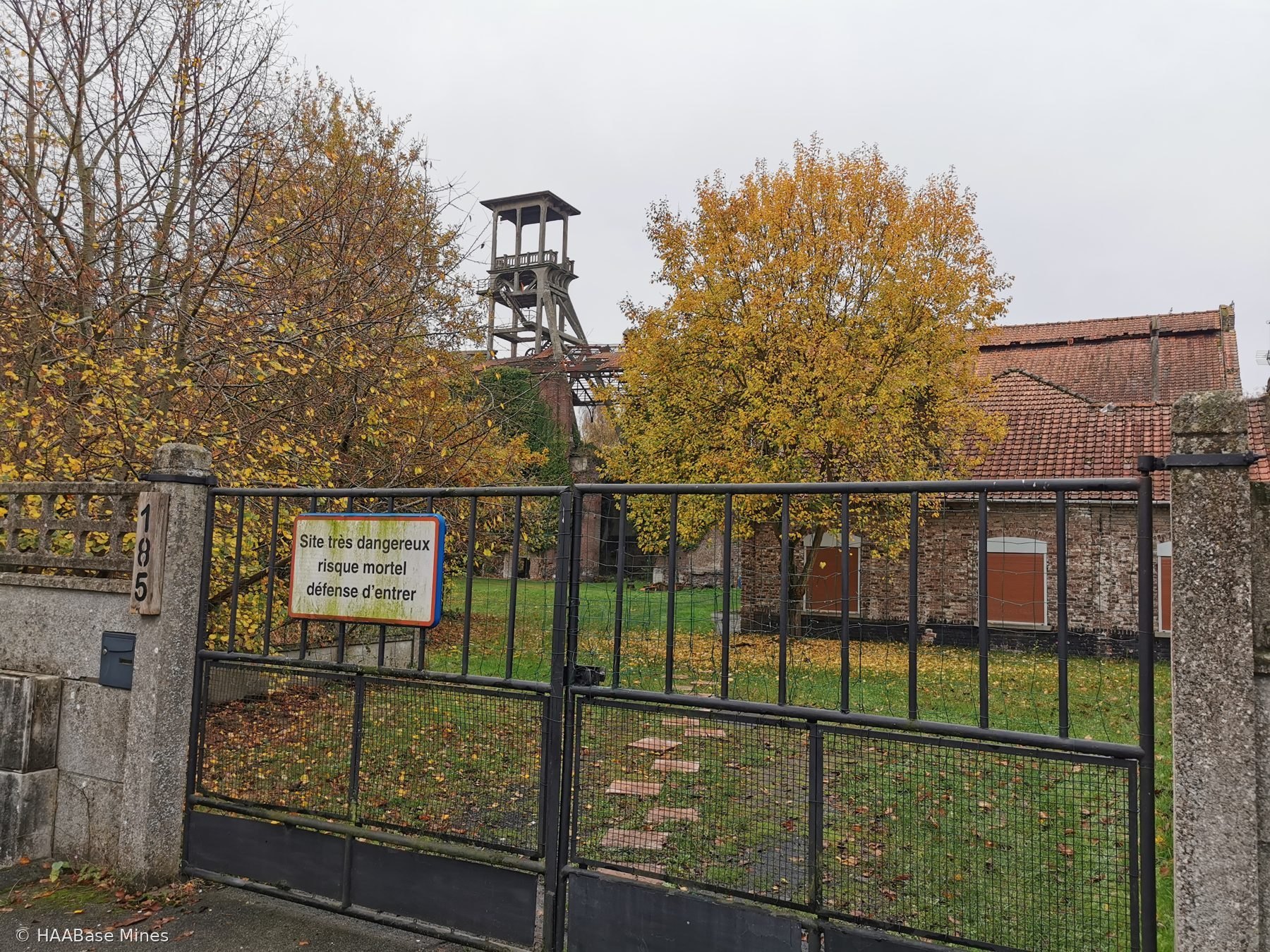
Set within a settled former mining landscape at Anhiers, the surviving buildings form a compact pit-head group that still reads clearly in its surroundings.

Map & photo

Fosse n° 2 des mines de Flines mine headframe or winding tower site
Photograph taken: 16 November 2025
Map markers and directions links are provided for location reference only and do not indicate public access or permission to enter a site.

History

The Société houillère de Flines-lez-Râches held its concession from 1892. It operated two collieries: the fosse Saint Charles n° 1 at Flines-lez-Raches, begun in 1895 and entering production on 1 July 1897, and the fosse n° 2 at Anhiers, begun in 1898. The concession covered some 2,850 hectares; the recoverable coal was estimated at a minimum of four and a half million tonnes and classified as maigre houille, described as remarkably pure anthracite.

The puits n° 2 at Anhiers was sunk from 1898 to a depth of 307 metres, with a diameter of 4.20 metres. Extraction began in 1900, with accrochages at 212 and 292 metres. The initial headframe was metallic, fitted with a 350-horsepower winding engine.

On site were installed a lavoir, a criblage and two usines à boulets. The fosse was linked to the fosse n° 1 by the railway connecting both fosses to the gare de Râches. On 1 December 1905, the two fosses were connected underground.

By 1905, the Société houillère de Flines employed 770 workers and staff, of whom 600 worked underground. A coron of workers' housing — the coron Lespagnol — was built facing the surface site of the fosse n° 2, comprising six dwellings with estaminets and a boucherie and boulangerie at its extremities. When the fosse n° 1 ceased extraction in 1914, the fosse n° 2 became the sole producing shaft.

In 1918, German forces destroyed both fosses and flooded the underground workings. Between 1919 and 1921 the mines were cleared and re-equipped, the fosse n° 2's metallic headframe being replaced at this time with a reinforced-concrete structure. On 13 January 1922, the Compagnie des mines de Flines was acquired by the Compagnie des mines d'Aniche, and the former Flines company ceased to exist as an independent entity.

Following the takeover, the puits n° 2 was equipped with ventilators and used for return-air ventilation of the fosse Bernard, sited in the Frais-Marais quarter of Douai at approximately 1,440 metres to the south-west. The Compagnie des mines d'Aniche was nationalised in 1946 and integrated into the Groupe de Douai. In 1944 the concession was transferred to the Groupe de Douai, which in 1971 became the Unité de production de Douai and later merged with the Valenciennes unit.

Ventilation at the fosse n° 2 ceased in 1958. The puits, by this point deepened to 378.76 metres, was backfilled and the sheave wheels removed in 1959. The lampisterie and main offices on the surface site were subsequently converted to housing and the whole ensemble was demolished in the course of the 1970s.

A private company purchased the remaining installations in 1992, which sources indicate accelerated the deterioration of the surviving structures. At the beginning of the twenty-first century, Charbonnages de France materialised the pit-head marker. The BRGM conducts annual inspections.

The reinforced-concrete headframe and extraction buildings, among only four such concrete headframes surviving in France and notable for retaining their associated extraction building, were inscribed as monuments historiques in their entirety on 30 August 2010. On 30 June 2012, the fosse n° 2 was listed as part of the Bassin minier du Nord-Pas-de-Calais UNESCO World Heritage inscription, constituting site n° 32, one of 353 elements across 109 sites. In 2016, the communauté d'agglomération du Douaisis sought to acquire the site to secure it and commission restoration by a private firm.

In 2021, the site was purchased by Alexandre and Lise Tignon, who have a project to stabilise the structures and introduce new functions including architecture offices, paramedical consulting rooms, co-working space, craft workshops and a spa. The Fondation du patrimoine signed a fundraising convention with the owners on 1 March 2023 to support rehabilitation works. A grant of 170,000 euros was awarded via the Loto du Patrimoine in December 2024.
Timeline

1892
Legislation

Société houillère de Flines-lez-Râches acquires concession

The Société houillère de Flines-lez-Râches held its mining concession from 1892. The concession covered approximately 2,850 hectares and was estimated to contain a minimum of four and a half million tonnes of recoverable maigre houille.
1898
Construction

Sinking of puits n° 2 begun at Anhiers

Work on the puits n° 2 at Anhiers began in 1898, three years after the start of fosse n° 1. The shaft reached a depth of 307 metres with a diameter of 4.20 metres. An initial metallic headframe with a 350-horsepower winding engine was installed.
1900
Operation

Fosse n° 2 begins extraction

Extraction began in 1900, with accrochages at 212 and 292 metres. A lavoir, criblage and two usines à boulets were installed on site.
1905
Construction

Two fosses connected underground and by rail

On 1 December 1905, the fosse n° 2 at Anhiers and the fosse n° 1 at Flines-lez-Raches were linked underground. The surface sites were also connected by a railway line running to the gare de Râches. By 1905 the company employed 770 workers and staff.
1914
Operation

Fosse n° 2 becomes sole producing shaft

When the fosse n° 1 ceased extraction in 1914, the fosse n° 2 at Anhiers became the only producing shaft of the Compagnie.
1918
Closure

German forces destroy fosses and flood workings

In 1918, German forces destroyed both the fosse n° 1 and fosse n° 2 surface installations and flooded the underground workings.
1919–1921
Construction

Fosse n° 2 rebuilt with reinforced-concrete headframe

Between 1919 and 1921 the mine was cleared and re-equipped. The metallic headframe of the fosse n° 2 was replaced at this time by a reinforced-concrete structure, part of the wider reconstruction of Douaisis mining installations.
1922
Legislation

Compagnie des mines de Flines acquired by Compagnie des mines d'Aniche

On 13 January 1922, the Compagnie des mines de Flines was acquired by the Compagnie des mines d'Aniche and ceased to exist as an independent entity. The fosse n° 2 was thereafter equipped with ventilators to serve as return-air ventilation for the fosse Bernard in the Frais-Marais quarter of Douai.
1944
Legislation

Concession transferred to Groupe de Douai

The concession was transferred in 1944 to the Groupe de Douai, and later became the Unité de production de Douai in 1971 before merging with the Valenciennes unit.
1946
Legislation

Compagnie des mines d'Aniche nationalised

The Compagnie des mines d'Aniche was nationalised in 1946 and integrated into the Groupe de Douai.
1958
Closure

Ventilation ceases; puits backfilled and sheave wheels removed

Ventilation operations at the fosse n° 2 ceased in 1958. The puits, deepened by this point to 378.76 metres, was backfilled in 1959 and the sheave wheels were removed.
1970–1979
Closure

Lampisterie, offices and ancillary buildings demolished

During the 1970s, the lampisterie and main office buildings, which had been converted to housing after closure, were demolished, along with the wider ensemble of ancillary structures.
1992
Redevelopment

Remaining installations sold to private company; buildings further deteriorate

A private company acquired the remaining installations in 1992. Sources indicate this accelerated the ruination of the surviving buildings.
2010
Heritage

Headframe and extraction buildings inscribed as monument historique

The reinforced-concrete headframe and extraction buildings of the fosse n° 2, in their entirety, were inscribed as monuments historiques by arrêté on 30 August 2010.
2012
Heritage

Listed as UNESCO World Heritage site (site n° 32)

On 30 June 2012, the fosse n° 2 des mines de Flines was included among the 353 elements across 109 sites inscribed on the UNESCO World Heritage List as part of the Bassin minier du Nord-Pas-de-Calais, constituting site n° 32.
2021
Redevelopment

Site acquired by private owners; rehabilitation project launched

Alexandre and Lise Tignon purchased the site in 2021 with a project to stabilise the structures and introduce new uses including architecture offices, paramedical consulting rooms, co-working space, craft workshops and a spa. The Fondation du patrimoine signed a fundraising convention with the owners on 1 March 2023. A Loto du Patrimoine grant of 170,000 euros was awarded in December 2024.

Sources and records

Wikipedia article (French): Fosse no 2 des mines de Flines
Monumentum heritage database: Fosse n° 2 de Flines, PA59000162
Plateforme ouverte du patrimoine / Mérimée database: PA59000162
Fondation du patrimoine: Projet Gaia, réhabilitation de la fosse d'Anhiers
Bassin minier Nord-Pas-de-Calais Patrimoine mondial website
CAUE du Nord: observatoire entry, fosse à Anhiers
FFH Flines au Fil de son Histoire: La société houillère de Flines-les-Râches (résumé)
Pevele.online.fr: La société houillère de Flines-lez-Râches
Escapades en Hauts-de-France: Balade nature et patrimoine à Flines-lez-Râches
Gaillette.fr: UNESCO fosse n° 2 de Flines Anhiers
This researched site record is part of the HAABase Mines database. Normal personal research and browsing is welcome. Automated bulk extraction, republication, or harvesting of site text and images is not permitted without written consent.