Fact-checked Research reviewed and published About research status
View fact-check assessment and classification

The history, timeline and surviving-site classification shown here reflect the reviewed account.

Assessment

The record identifies the Espérance Puits no. 3 site within the former La Pouëze slate workings, distinct from the nearby Carterie shafts and Fiogée quarry. Official Ministry of Culture and regional heritage inventory records establish the major shaft chronology, the 1899 Carterie fire, the 1941 works, the switch to Puits 3bis, the 1989 cessation of Carterie extraction, final processing in 1998 and the 16 March 1999 protection of the wooden headframe. A specialist reconstruction account and mining-history source document its collapse on 25 February 2011 and rebuilding in 2014.

The record distinguishes the earlier wooden structure from the reconstructed headframe visible today. Earlier small-quarry production figures and certain labour statistics rely on less direct secondary histories and remain qualified. The core industrial history, physical identification, and heritage timeline are strongly supported, while some detailed early production figures and the exact extent of reused original headframe components are less certain.

Surviving-site classification

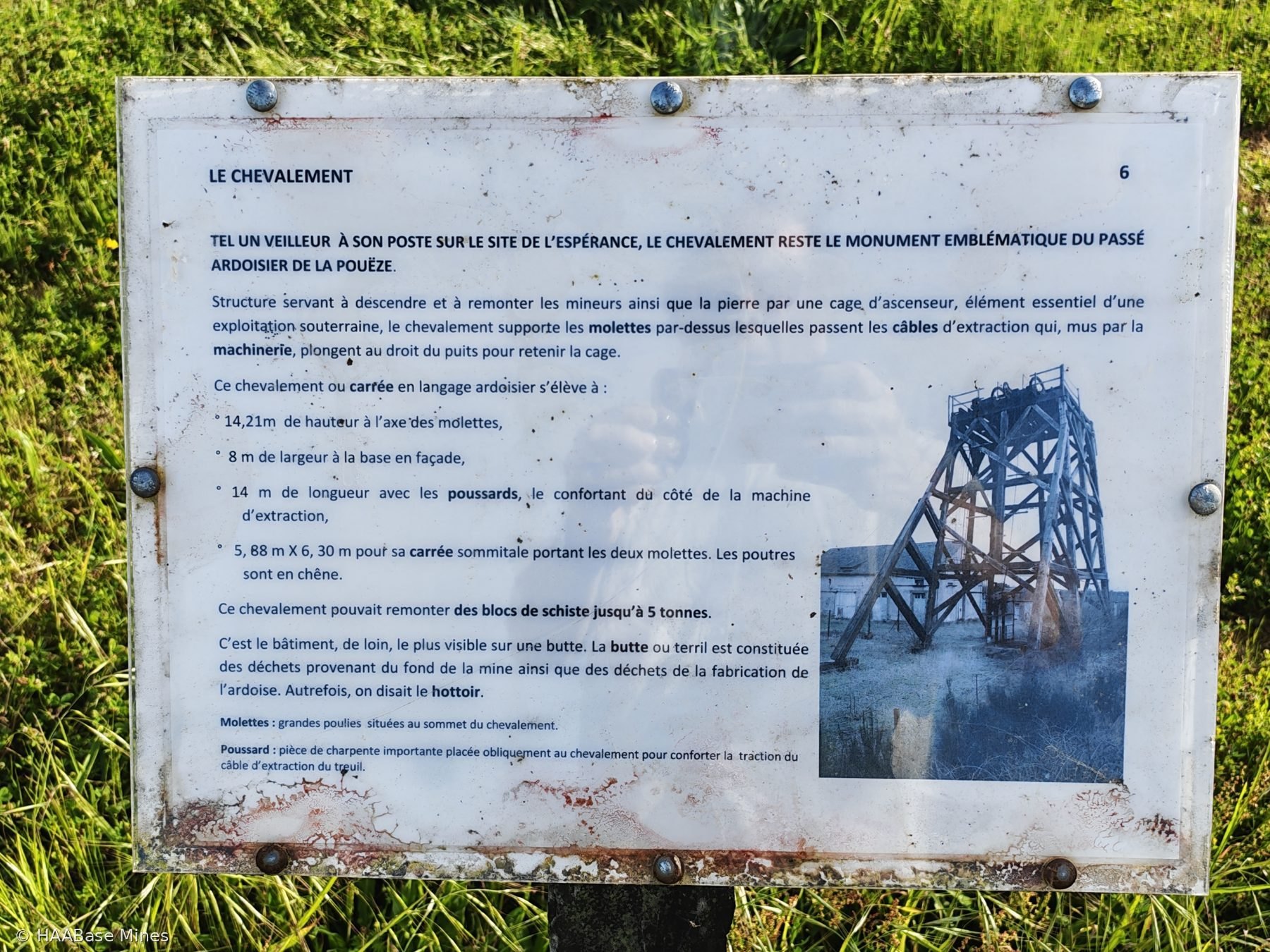
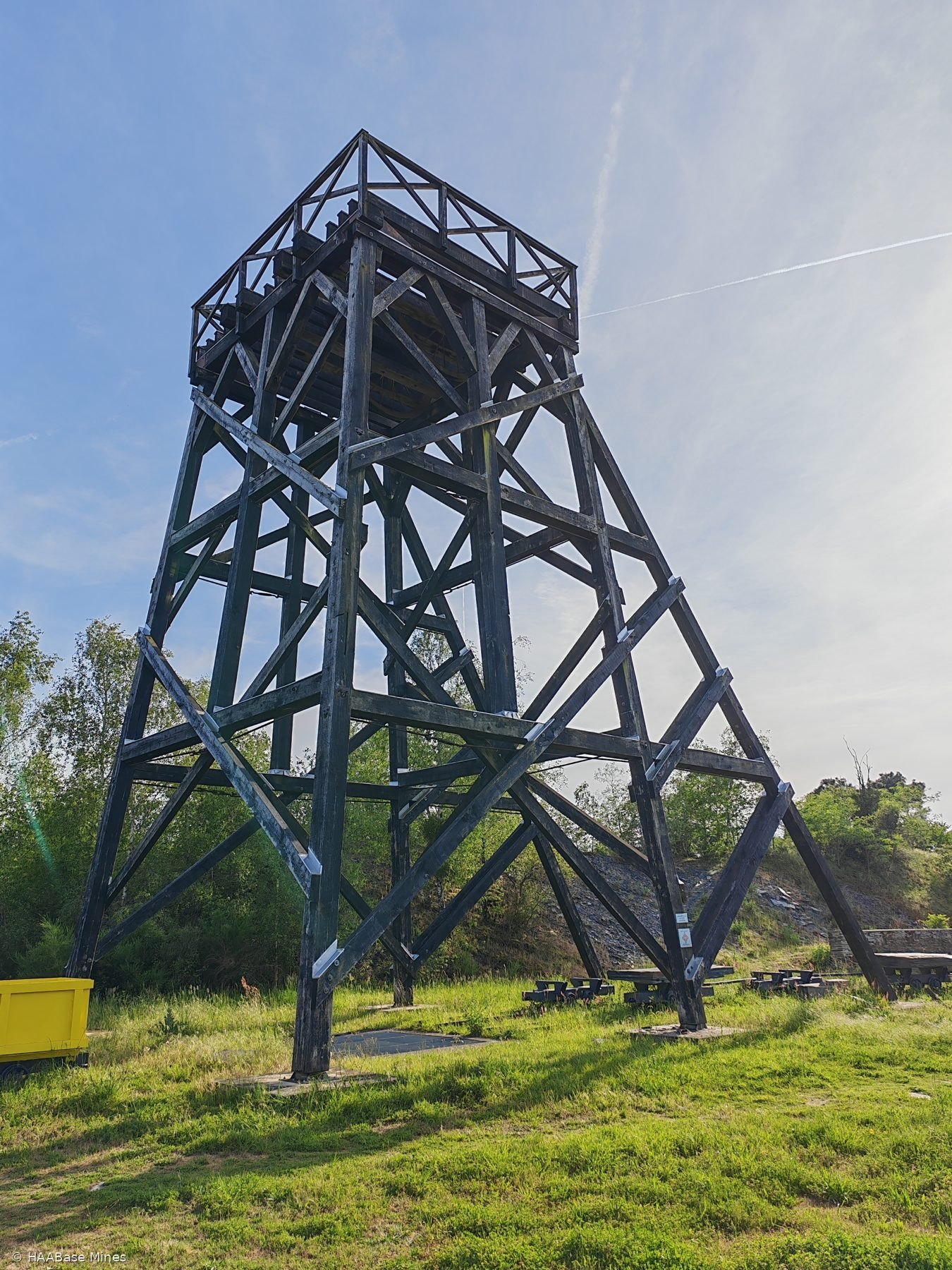
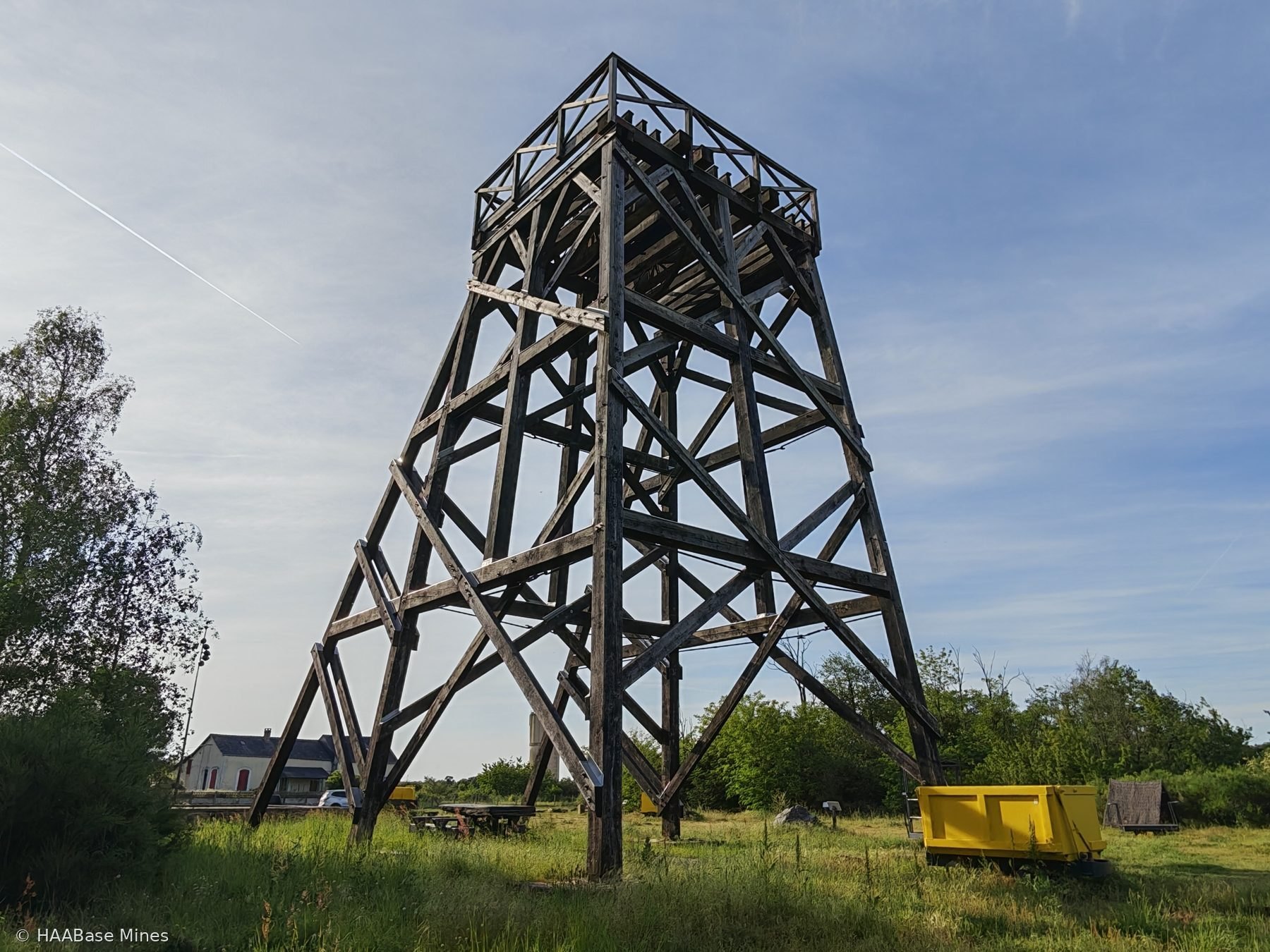
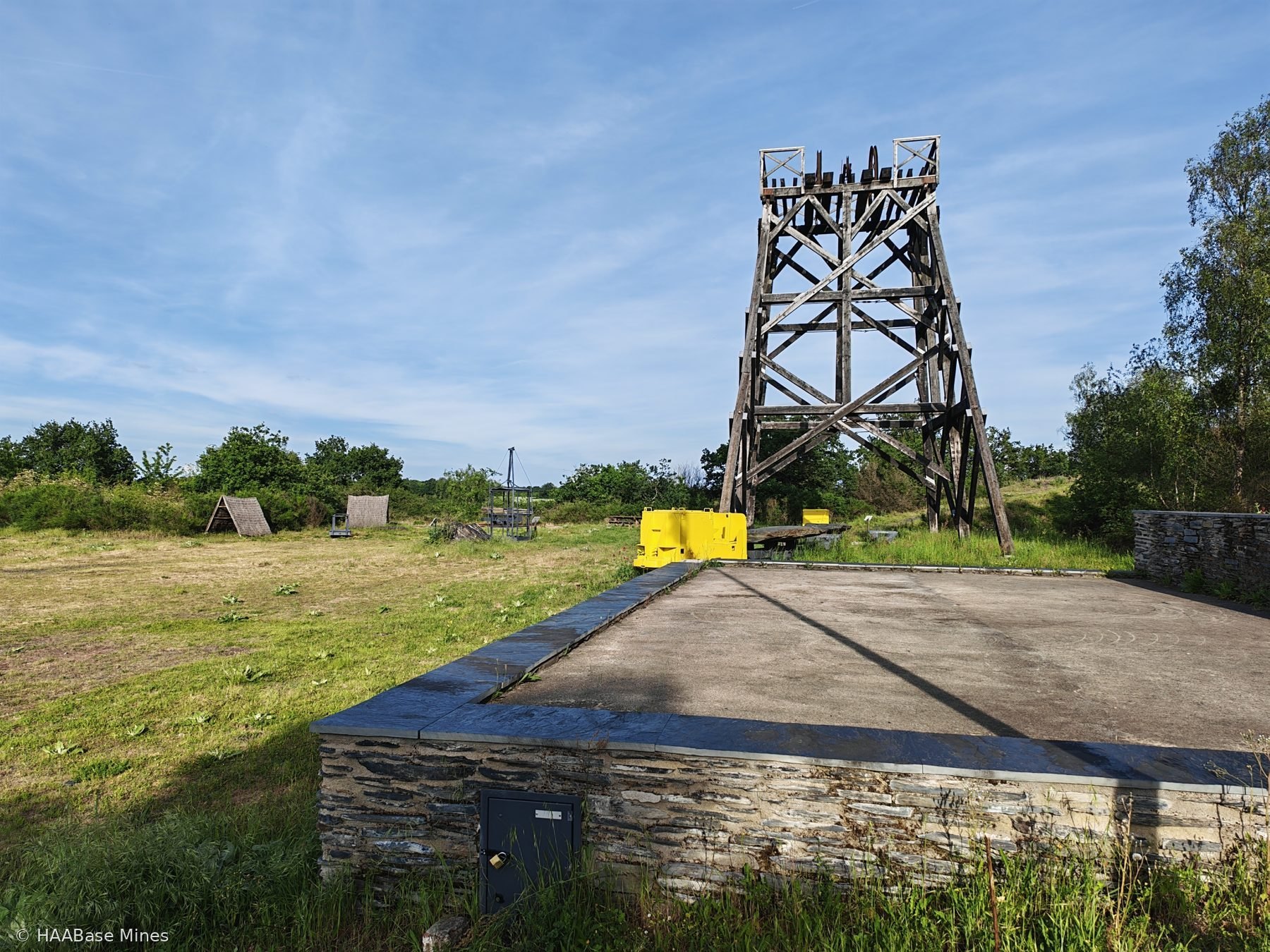
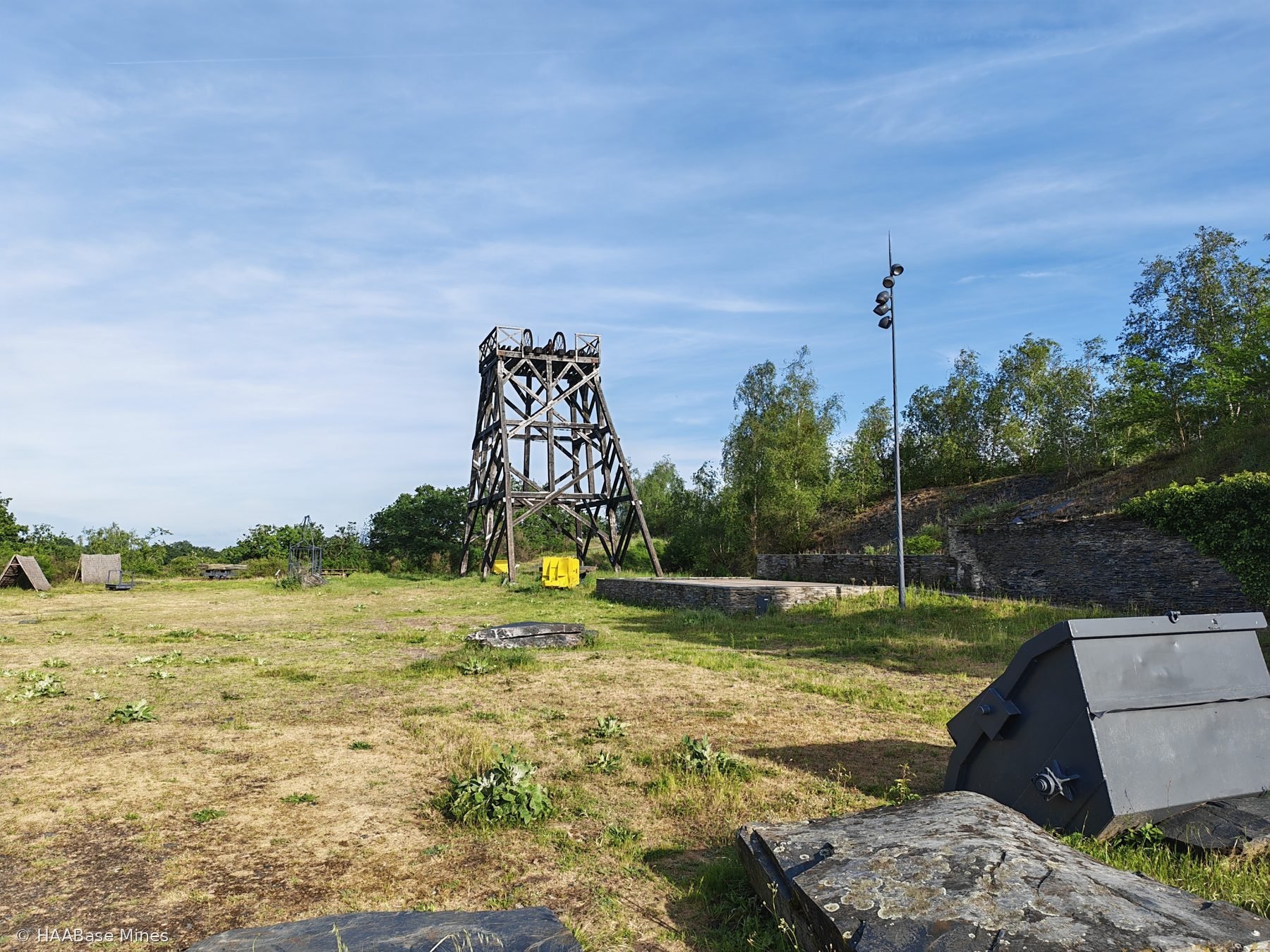
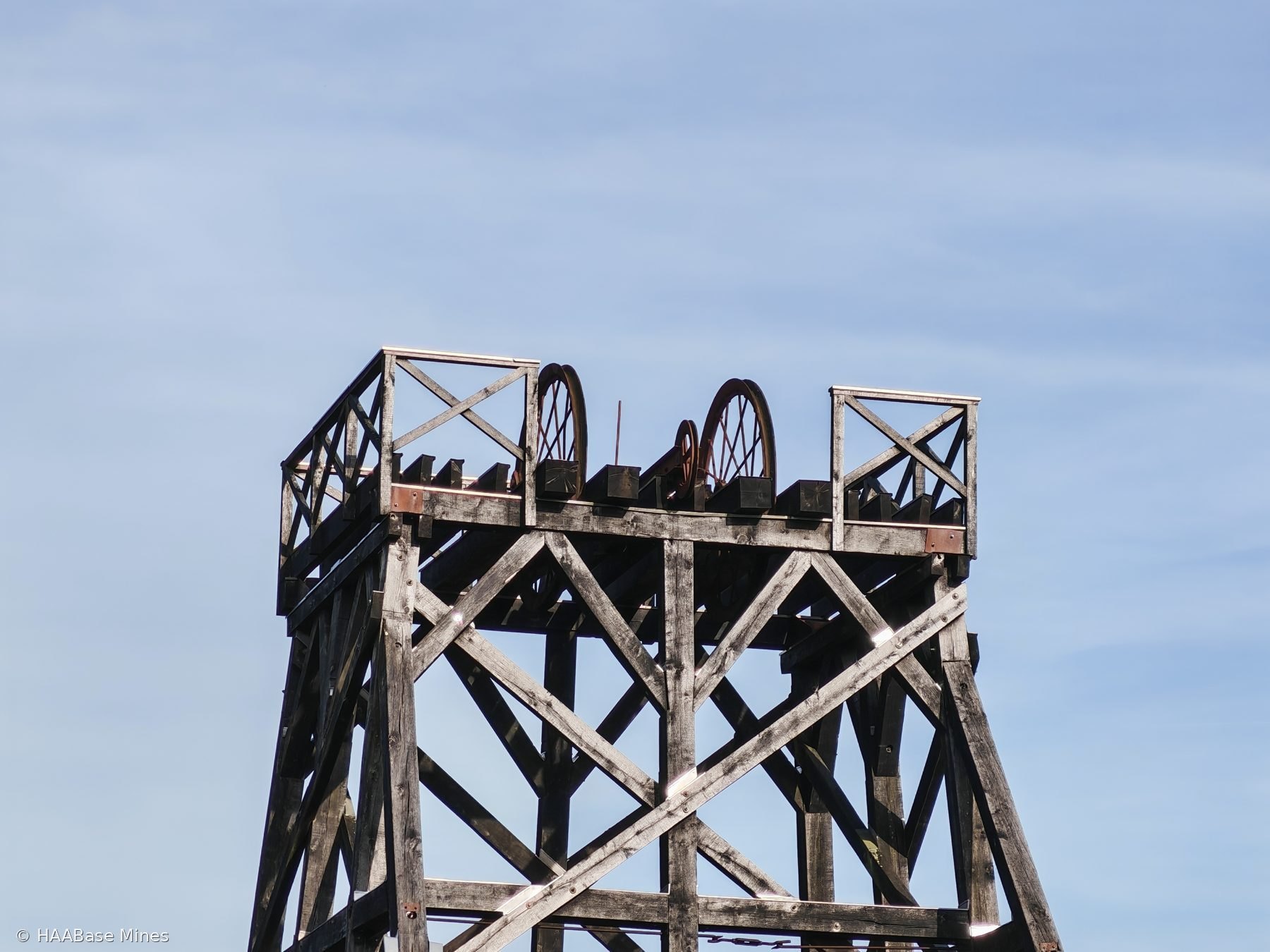
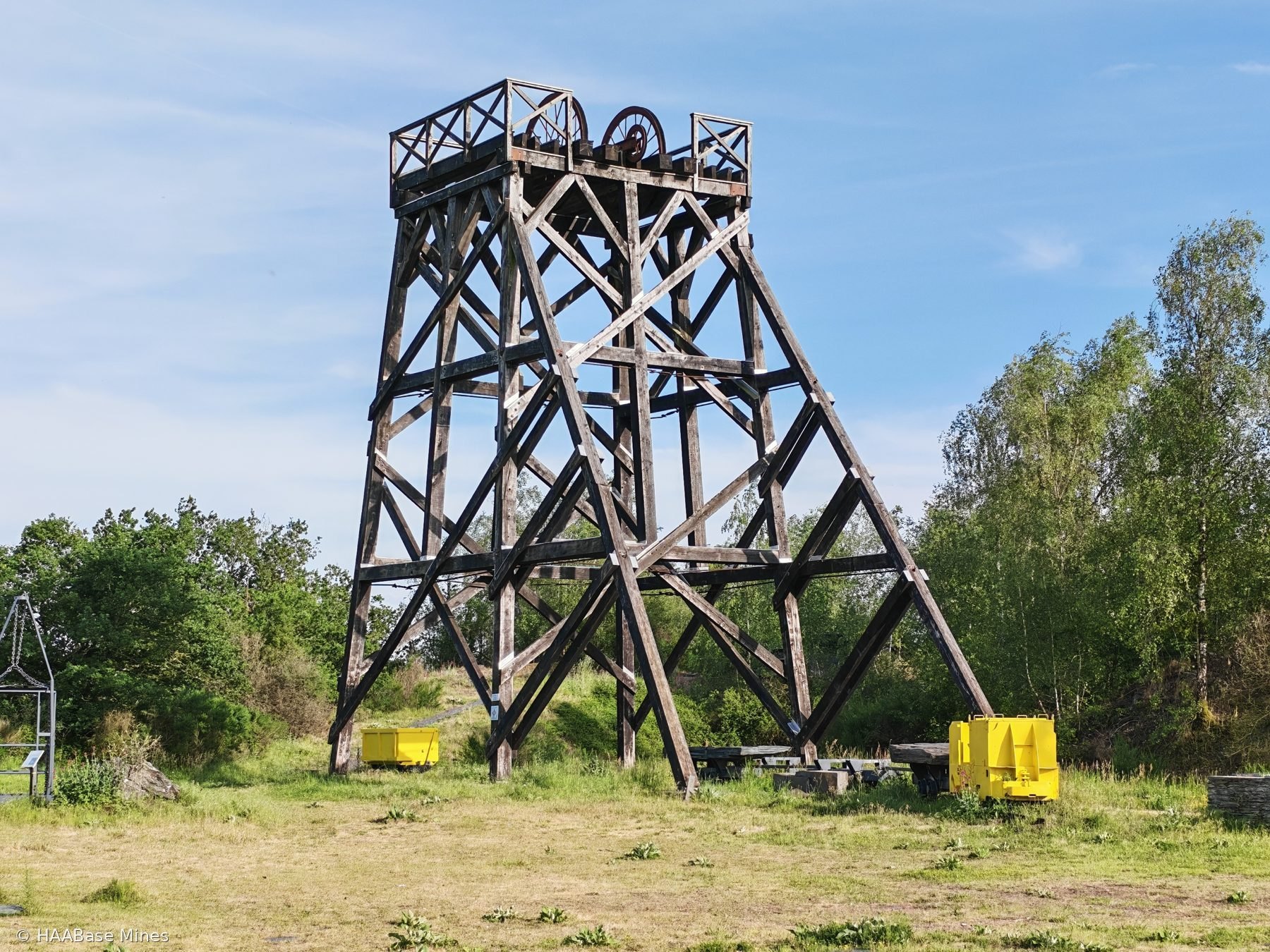
The surviving focal structure at Espérance is the wooden headframe standing over the historical position of Puits no. 3. The headframe retains its traditional structural form but was reconstructed in 2014 after the original timber structure collapsed in 2011. Consequently the surviving_descriptor is headframe, the surviving_label identifies a reconstructed timber carrée, and authenticity_status is recreated for the focal structure.

The site_character Repurposed site - reconstructed headframe reflects a former industrial site interpreted through a reconstructed landmark and heritage trail rather than an operational quarry. The site_character_detail distinguishes Puits no. 3 from the separate steel-headframed Puits 3bis, whose headframe was demolished, and recognises nearby former industrial buildings and slate spoil. Output is slate.

The statutory designation of the historical timber headframe is established by Ministry of Culture record PA49000024; the regional inventory IA49010290 establishes the pit history and wider remains; a specialist reconstruction account documents the 2011 collapse and reconstruction. The amount of original reused metalwork is not independently established.

Published 21 November 2026 · Overall confidence 91/100 · Classification confidence High
Sources added or confirmed during the review are included in Sources and records where available.

Site overview

The Ardoisières de La Pouëze occupy part of the Anjou slate basin in Maine-et-Loire. The Espérance workings, north-east of the village, include the former Puits no. 3 and its prominent wooden winding headframe, known locally as the carrée. The mine developed from a landscape of small open slate quarries into industrial underground workings, alongside the neighbouring but distinct Carterie and Fiogée sites.

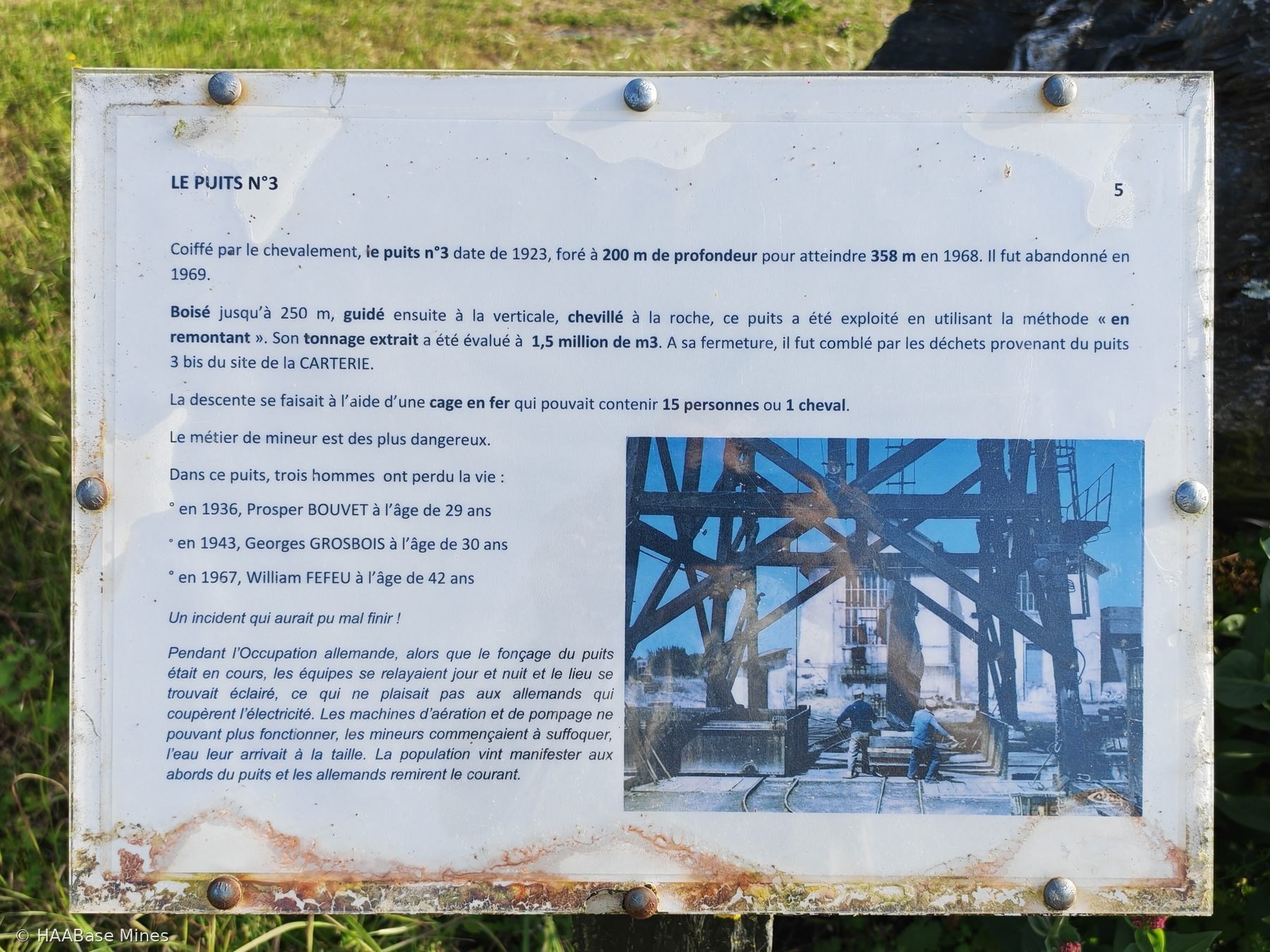
Puits no. 3 was active from the early twentieth century and had been abandoned by 1974; local underground production continued elsewhere until the Carterie collapse of 1989, while slate processing with stone from other quarries lasted until 1998. The headframe was inscribed as a monument historique in 1999. It collapsed in 2011 and was rebuilt to its historic form in 2014, so the standing timber structure is reconstructed rather than wholly original.

Former quarry voids, spoil heaps, buildings and miners’ housing remain in the surrounding landscape, and the Espérance discovery trail presents the site’s slate-mining history.

Set at the edge of La Pouëze, the site occupies a mixed village and former industrial landscape where spoil heaps, housing and surviving structures still make the slate workings readily legible.

Map & photo

Ardoisières de La Pouëze — Puits n° 3 mine headframe or winding tower site
Photograph taken: 8 May 2026
Map markers and directions links are provided for location reference only and do not indicate public access or permission to enter a site.

History

Slate has been worked at La Pouëze, in the Anjou slate belt north-west of Angers, for several centuries. Local accounts trace extraction to the fifteenth century. In 1797, after a small quarry at Châtelais closed, the Cheneaux, Gasnier and Bellanger families arrived from Saint-Quentin-les-Anges to continue their trade. Working remained modest until about 1830, but then expanded rapidly at several separate sites, notably La Fiogée, L’Espérance, La Carterie and Clos-Colas. At La Fiogée, 90 workers and 36 horses reportedly produced three to four million slates annually in 1832; part of the output travelled by the Loire from Ingrandes. Espérance alone produced around four million slates in 1861. A later estimate put production at roughly three million slates a year with 110 workers in 1894.

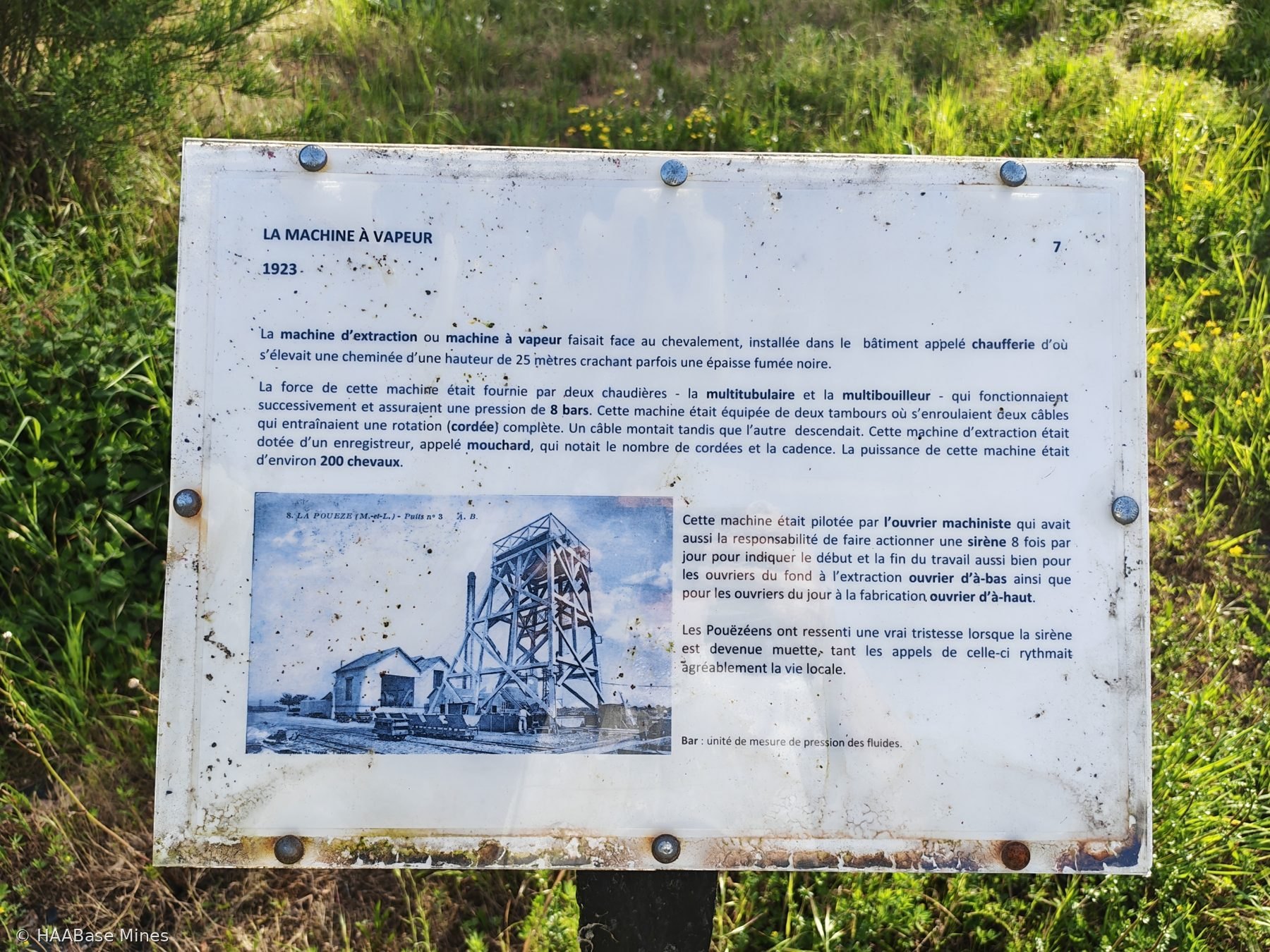
The older open quarries gave way increasingly to underground extraction served by shafts and headframes similar in principle to those of coal mines. At Carterie, Puits no. 1 reached 101 metres before being destroyed in October 1899, when fire from a steam winding installation spread to its timbering. The shaft was abandoned and replaced by Puits no. 2. The separate Espérance workings developed Puits no. 3 in the early twentieth century. It was operating by 1922 at about 210 metres depth, under a substantial timber headframe known locally as the carrée. The original structure, dated approximately 1920–1922 in heritage accounts, used heavy timber framing and bracing to carry its winding wheels.

Further investment in 1941 deepened Puits no. 3 and established the smaller rescue shaft Puits 3bis at Carterie. By 1952 the slate centre reportedly employed about 300 people and produced roughly four per cent of French quality slate. In 1968 the steel-headframed Puits 3bis was developed to approximately 450 metres and took over principal extraction from Puits no. 3, which had reached about 355 metres. Puits no. 3 was fully abandoned by 1974. The workforce reportedly fell to around 140 by 1980. The separate steel headframe of 3bis was removed towards the end of the 1980s. An underground collapse in 1989 brought extraction at Carterie to an end. Nevertheless, splitting and finishing continued for several years using stone brought from Trélazé and Noyant-la-Gravoyère/Misengrain, until slate working at La Pouëze finally ceased in 1998.

The wooden headframe of Puits no. 3 became the most recognisable survivor of the local slate industry. On 16 March 1999 it was inscribed as a monument historique, an unusually important example of a traditional timber winding structure. Its condition deteriorated and, while restoration was being prepared, it collapsed on 25 February 2011. A public appeal, grants and the work of specialist carpenters enabled its reconstruction to the historic form in 2014. The present headframe is therefore a faithful reconstruction occupying the former shaft site rather than an intact 1920s timber structure.

The wider landscape still contains former quarry hollows, spoil mounds, the administrative building with brick window surrounds, a manager’s house dated 1897 and the workers’ housing of La Fiogée and Les Pouëzettes. A discovery trail at the Espérance site interprets the headframe and the work of the slate quarrymen. Together these remains show how extraction, stone finishing and workers’ settlements shaped La Pouëze long after underground mining ended.
Timeline

—
Heritage

Espérance heritage discovery trail established

A heritage trail with interpretation panels now presents the reconstructed headframe, quarry remains and social history of slate extraction.
1400–1800
Operation

Small-scale slate extraction develops

Small slate quarries worked at La Pouëze, traditionally dated to the fifteenth century, before later industrial development.
1797–1850
Construction

Artisan quarrying expands

Three families arrived in 1797 after closure of a slate quarry at Châtelais; industrial quarrying grew strongly after 1830.
1899
Closure

Puits no. 1 at Carterie destroyed by fire

Fire started at a steam winding machine in October 1899 and spread to timbering in Puits no. 1, which reached 101 metres. Puits no. 2 was then sunk at Carterie.
1941
Construction

Puits no. 3 deepened and rescue shaft 3bis established

In 1941 new investment deepened Puits no. 3 at Espérance and established the separate rescue Puits 3bis at Carterie.
1968
Construction

Puits 3bis takes over principal extraction

In 1968 the steel-headframed Puits 3bis reached about 450 metres and replaced Puits no. 3, whose workings had reached around 355 metres.
1974
Closure

Puits no. 3 abandoned

The Espérance Puits no. 3 was fully abandoned by 1974 after earlier replacement by Puits 3bis.
1989
Closure

Carterie extraction ends after underground collapse

An underground collapse in 1989 ended extraction at Carterie. The separate steel headframe of Puits 3bis was removed around the end of the 1980s.
1998
Closure

Slate processing at La Pouëze ceases

After local extraction stopped, an equipped slate-working shop processed stone brought from Trélazé and Noyant-la-Gravoyère/Misengrain until activity ended in 1998.
1999
Heritage

Wooden headframe inscribed as monument historique

The timber headframe of Puits no. 3 was inscribed as a monument historique by order dated 16 March 1999.

Sources and records

This list includes live sources already held for the record and any additional sources added or confirmed during the published fact-check review.

Official heritage records

Further sources

Research bibliography

Wikipedia article (French): Ardoisières de La Pouëze
Monumentum heritage record PA49000024 — Ardoisières, Erdre-en-Anjou
Erdre-en-Anjou commune — histoire and patrimoine pages
Tourisme Anjou Bleu — Parcours découverte du site de l'Espérance, La Pouëze
Wiki-Anjou article: La Pouëze
This researched site record is part of the HAABase Mines database. Normal personal research and browsing is welcome. Automated bulk extraction, republication, or harvesting of site text and images is not permitted without written consent.