Site overview

The puits Saint-Charles at Petite-Rosselle in Moselle holds a central place in the history of French coal mining: it was from puits Saint-Charles no. 1 that the first coal of the Lorraine basin was extracted on 27 June 1856, inaugurating an industrial era that would last until 2004. Fonçage of puits no. 1 began in March 1854 under the Compagnie des Houillères de Stiring, founded by Charles de Wendel, from whom the puits takes its name. The shaft reached 789 metres.

Two further shafts followed — puits no. 2 from 1875 and puits no. 3 from 1924. Extraction at the siège Saint-Charles was directed principally at the rich coking coals of the Warndt amodiation, which sustained the site through the post-war reconstruction decades. With the 1946 nationalisation the siège was integrated into the Houillères du Bassin de Lorraine.

A 1956 Franco-German agreement required cessation of exploitation in the eastern part of the Warndt amodiation by end-1961, and geological surveys confirmed insufficient remaining French reserves to sustain the siège. Extraction ceased on 10 July 1965 and puits no. 1 was backfilled in 1989. The headframes of puits no. 2 and no. 3 were demolished in 1993.

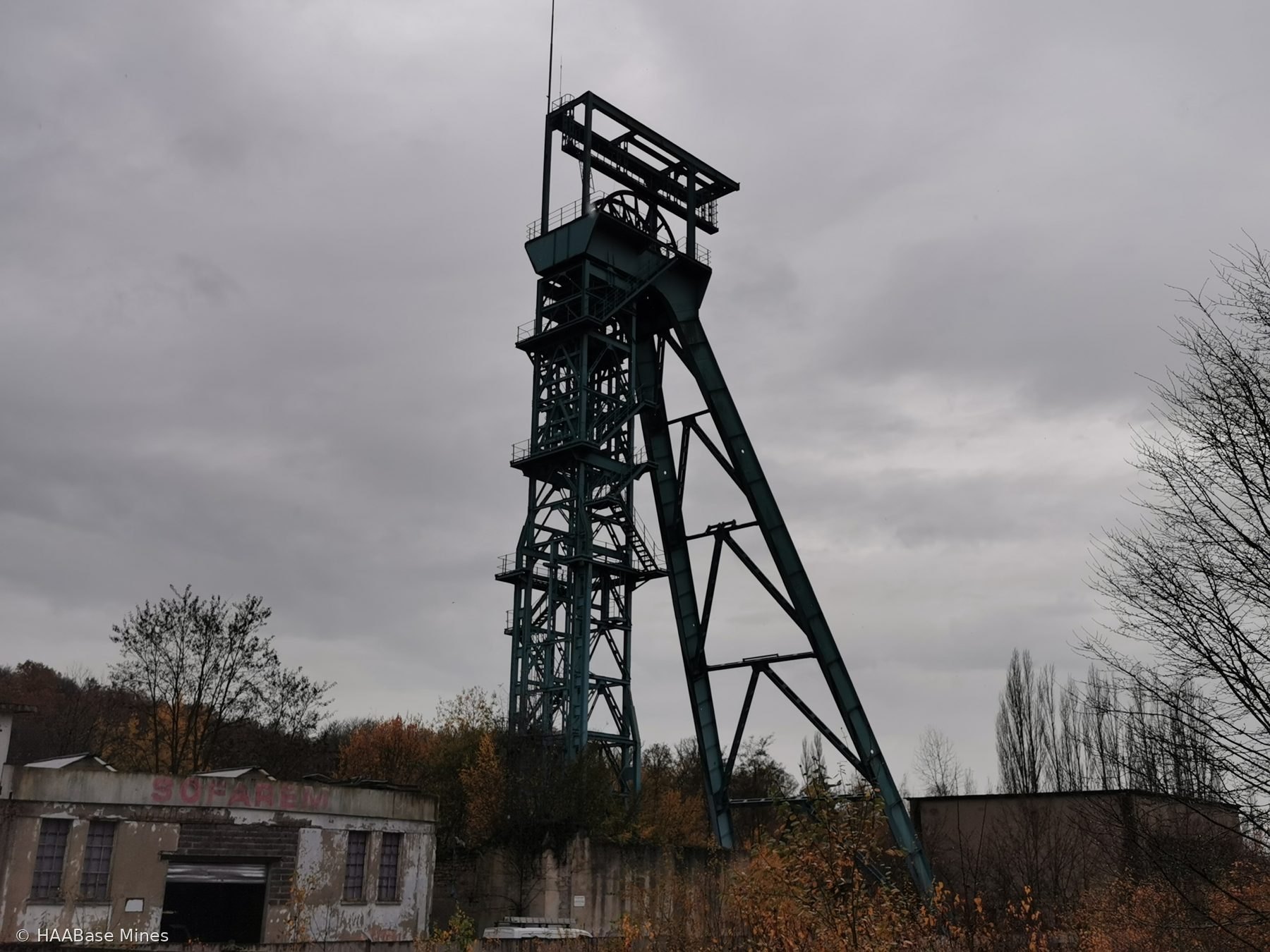
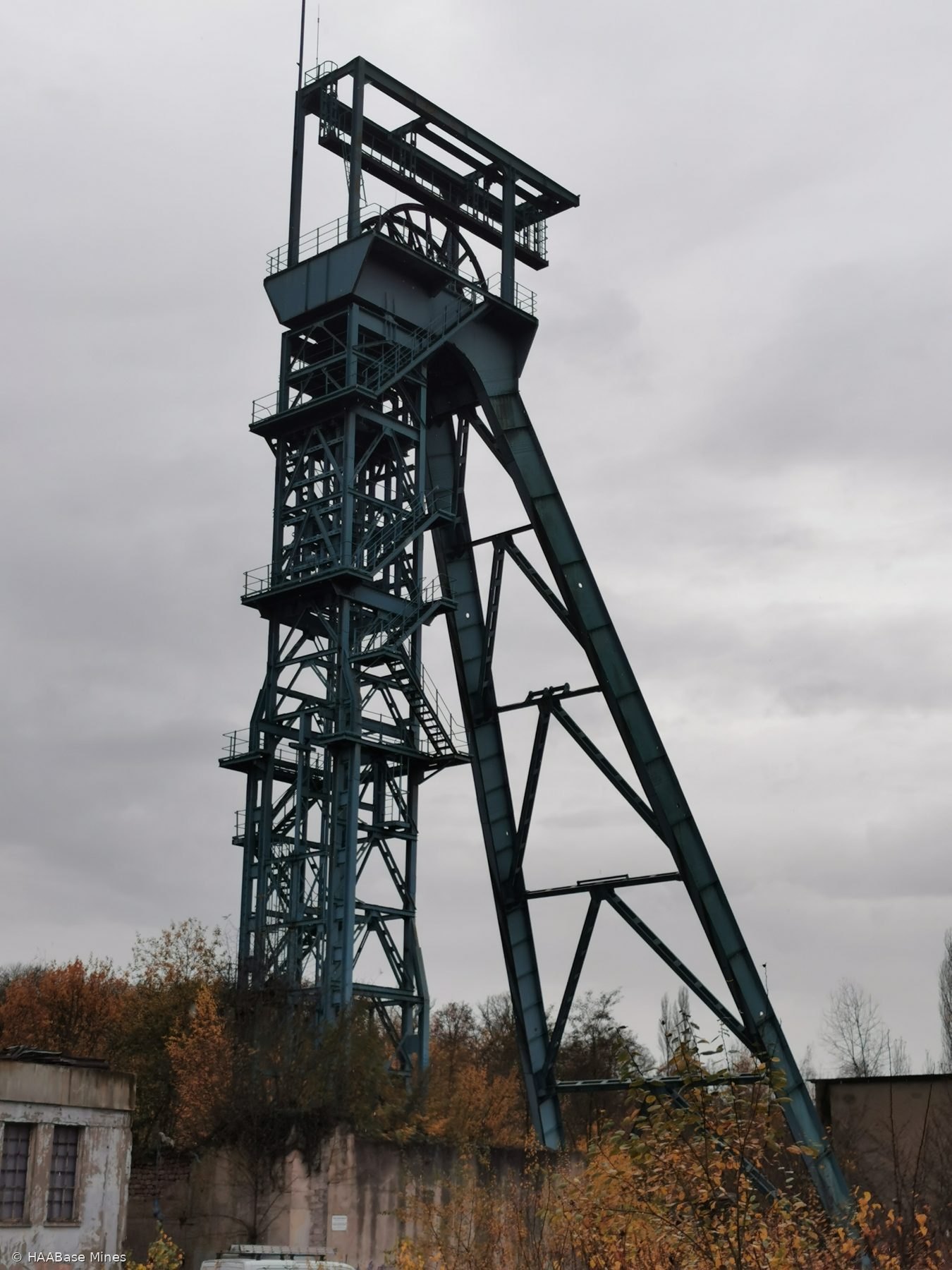
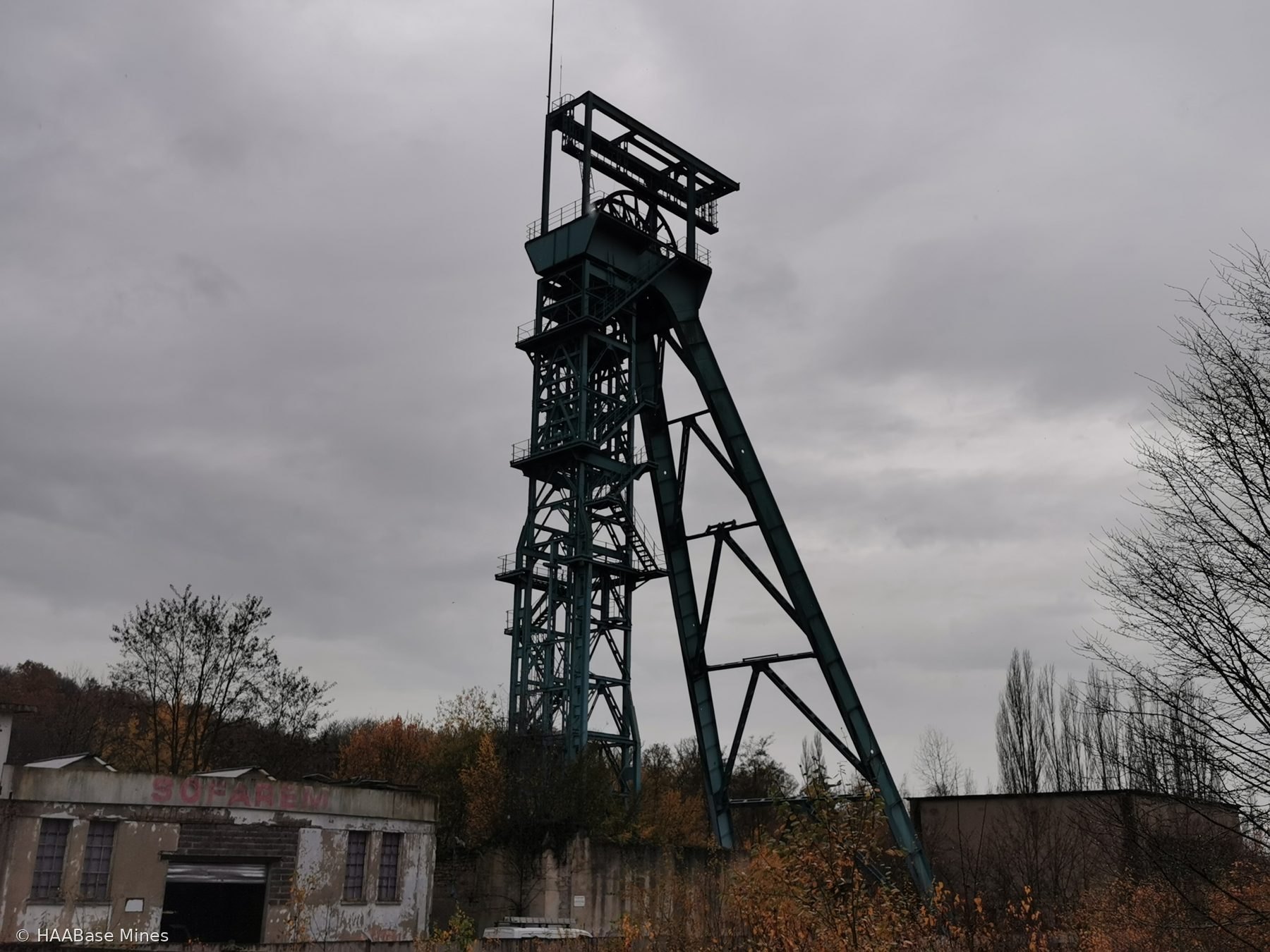
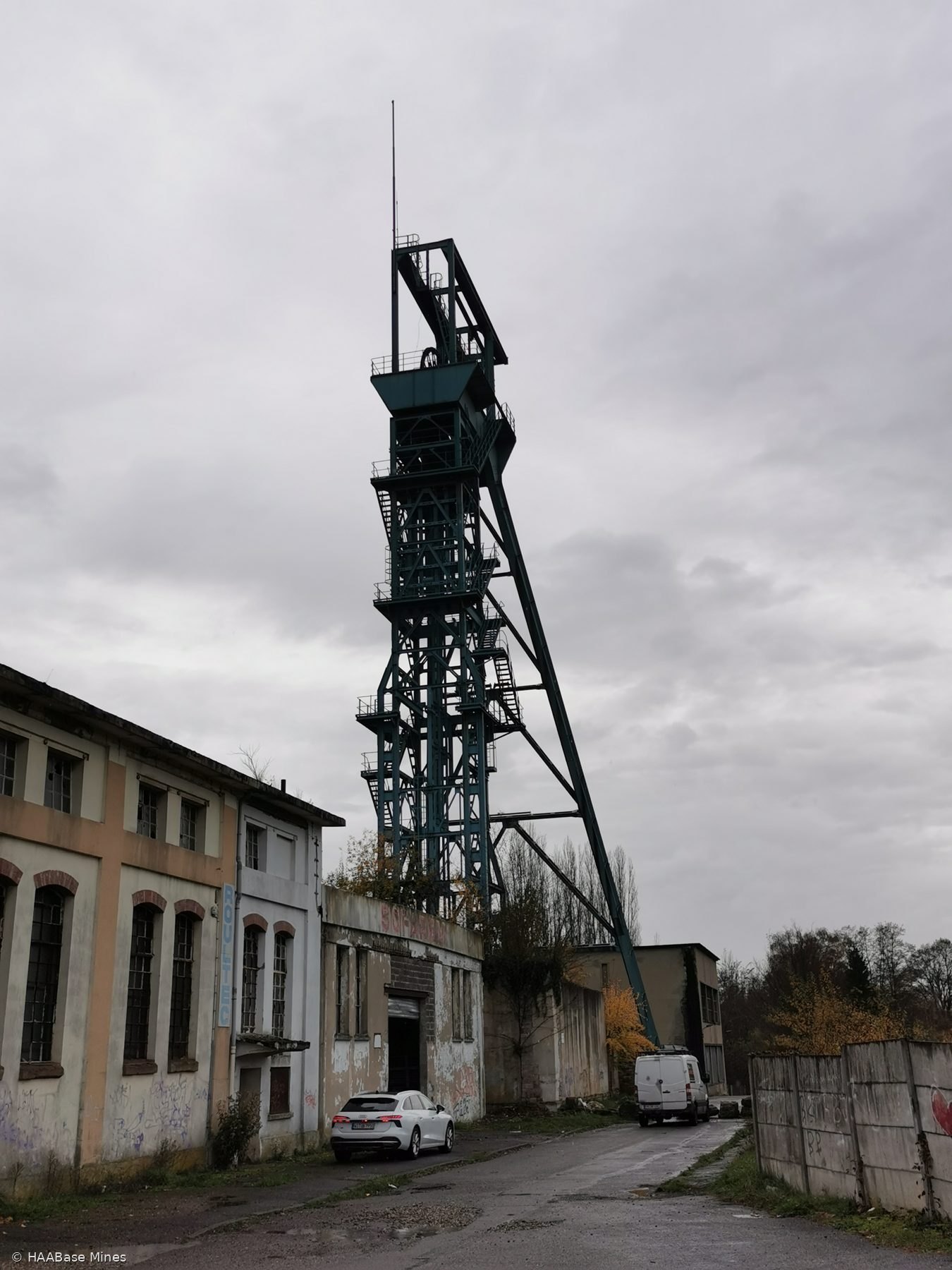
The puits no. 1 headframe, 46.30 metres high, was saved from demolition by the association Les Amis du Puits Saint-Charles and is preserved by the commune, along with the winding engine building, former stables, and administrative offices. The statue of a miner commemorating the centenary of 1856, inaugurated on 23 June 1956, also survives.

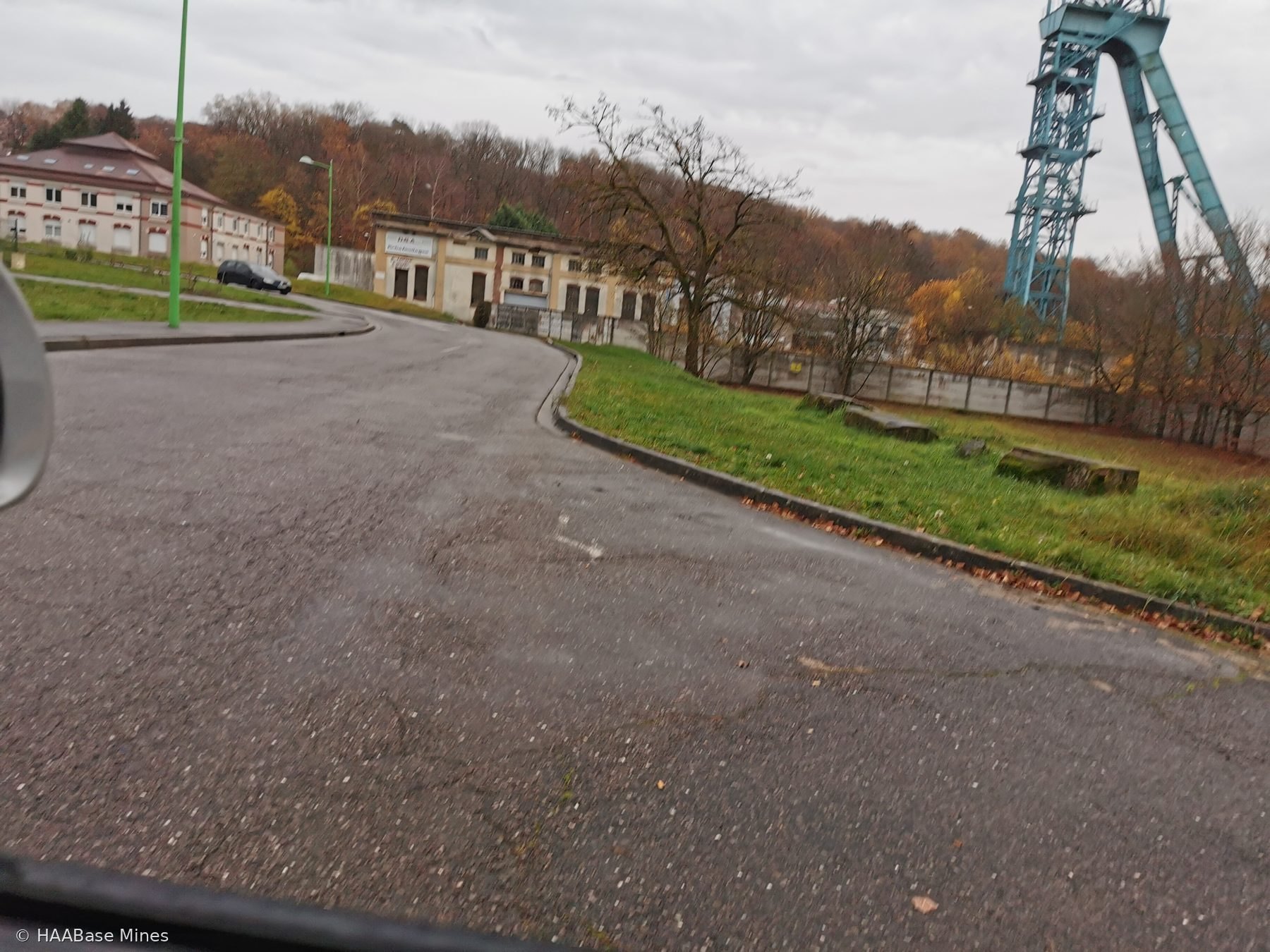
The surviving buildings stand in a settled former mining landscape on the edge of Petite-Rosselle, where the retained headframe and associated structures still read as a distinct historic pit site within later urban surroundings.

Map & photo

Siège Saint-Charles — Puits n° 1 mine headframe or winding tower site
Photograph taken: 15 November 2025
Map markers and directions links are provided for location reference only and do not indicate public access or permission to enter a site.

History

The Lorraine coal-bearing formation extends beneath the Franco-German frontier in the Moselle–Sarre border region. Following initial failures at the first sounding of Schœneck (1818) and at the puits Sainte-Marthe at Stiring-Wendel (1851–1854), the Compagnie des Houillères de Stiring, formed in 1846 by Charles de Wendel and Georges Tom Hainguerlot (the reconstituted company building on the earlier Compagnie des Houillères de l'Est), turned westward to Petite-Rosselle.

Fonçage of puits Saint-Charles no. 1 began in March 1854, using a cast-iron tubing (cuvelage en fonte) of 4 metres diameter. The shaft is named directly after its founder, Charles de Wendel. In June 1856 the vein Saint-Jean was intersected; the first coal was raised on 27 June 1856 at approximately 121 metres depth (other sources give the date as slightly different in some detail but agree on 27 June). Production on a commercial scale began in August 1857. It is from this puits and this date that the great era of Lorraine coal exploitation is conventionally dated. By the 1870s the concession was producing several hundred thousand tonnes annually: with five sièges (Saint-Charles, Saint-Joseph, Wendel, Vuillemin, and Gargan) operating under the Compagnie des Houillères de Petite-Rosselle, production rose from 230,000 tonnes in 1873 to 2,210,000 tonnes in 1910.

Puits Saint-Charles no. 2 was sunk from 1875 at 4–4.25 metres diameter, reaching 603 metres, primarily serving aeration and backfilling. Puits Saint-Charles no. 3 was begun in 1924–1925 (some sources give completion to 1929) to a depth of 679 metres, serving both extraction and ventilation. The essential surface infrastructure of the siège was established between 1880 and 1913. In 1925, soundings limited by the Saarland frontier revealed rich coking coals at depth.

Nationalisation in 1946 integrated the siège into the Houillères du Bassin de Lorraine. Under the Warndt amodiation of 1949 (granted to the HBL for 50 years), access to German-side reserves secured the medium-term future of the siège. A new lavoir was installed in 1954 and puits no. 1 was modernised; at the time of modernisation the chevalement was rebuilt to a height of 46.30 metres, equipped with a 1,450 CV Koepe-pulley extraction machine. However, a Franco-German agreement of June 1956 required that all exploitation in the eastern part of the amodiation cease by the end of 1961. Geological surveys confirmed that the remaining French reserves at Saint-Charles were insufficient to sustain the siège in isolation. Extraction ceased on 10 July 1965. Puits no. 4 had been ceded to the Saarland mines. Puits no. 1 was backfilled in 1989 at a total depth of 788.81 metres. The headframes of puits no. 2 and no. 3 were demolished in 1993, as were the lavoir, extraction buildings, and central workshops; the land was sold to the commune.

The centenary of the first coal extraction was marked on 23 June 1956 with the inauguration of a statue of a miner, the work of sculptor Janthiel of Paris, in the presence of the President of the Council Guy Mollet. The statue stands on the former site.

The association Les Amis du Puits Saint-Charles campaigned to preserve the puits no. 1 headframe, which narrowly escaped demolition on several occasions. As a result it is conserved today, along with the bâtiment de la machine d'extraction, the former écuries, the administrative buildings including the salle d'appel des mineurs, and other elements of the siège. The puits Saint-Charles site thus stands as a visible complement to the Parc Explor Wendel at Petite-Rosselle, where the Vuillemin 2 headframe (the oldest surviving metal headframe in the Lorraine basin, built in 1884–1885 and inscribed monument historique) and the Wendel 3 headframe are preserved as part of the musée Les Mineurs Wendel opened in 2012.
Timeline

Heritage

Puits no. 1 headframe preserved by commune after association campaign

The association Les Amis du Puits Saint-Charles campaigned to preserve the 46.30-metre headframe of puits no. 1, which narrowly escaped demolition on several occasions. It is conserved by the commune of Petite-Rosselle, along with the winding engine building, former stables, administrative offices, and the salle d'appel des mineurs.
1846
Legislation

Compagnie des Houillères de Stiring founded by Charles de Wendel

In 1846 Charles de Wendel and Georges Tom Hainguerlot founded the Compagnie des Houillères de Stiring (or Compagnie des Houillères de l'Est), building on the abandoned Schœneck concession. The company undertook new soundings before turning to Petite-Rosselle.
1854
Construction

Fonçage of puits Saint-Charles no. 1 begins

Fonçage of puits Saint-Charles no. 1 began in March 1854 using cast-iron tubbing (cuvelage en fonte) of 4 metres diameter. The puits is named after its founder Charles de Wendel.
1856
Operation

First Lorraine coal raised from puits Saint-Charles no. 1

On 27 June 1856 the first coal of the Lorraine basin was extracted from puits Saint-Charles no. 1 at approximately 121 metres depth (vein Saint-Jean). Commercial production began in August 1857. This date is conventionally taken as the start of the great era of Lorraine coal exploitation.
1875–1878
Construction

Fonçage of puits Saint-Charles no. 2

Puits Saint-Charles no. 2 was sunk from 1875 at 4–4.25 metres diameter, reaching 603 metres. It served primarily for aeration and backfilling.
1889
Legislation

Compagnie des Houillères de Stiring dissolved; passes to Wendel family

In 1889 the Compagnie des Mines de Stiring was dissolved and its assets passed into the patrimony of the Maison de Wendel. The concession was thereafter operated as the Compagnie des Houillères de Petite-Rosselle under Wendel control.
1924–1929
Construction

Fonçage of puits Saint-Charles no. 3

Puits Saint-Charles no. 3 was begun in 1924 (the shaft reaching 679 metres), serving both extraction and aeration until 1965.
1946
Legislation

Nationalisation: siège integrated into Houillères du Bassin de Lorraine

Nationalisation in 1946 integrated the siège Saint-Charles into the Houillères du Bassin de Lorraine (HBL). The Warndt amodiation of 1949 (50 years) secured access to deep coking coal reserves on the German side of the frontier.
1954–1956
Construction

New lavoir installed; puits no. 1 modernised with 46.30 m headframe

A new lavoir was installed in 1954 and puits no. 1 was modernised. The headframe was rebuilt to a height of 46.30 metres with a 1,450 CV Koepe-pulley extraction machine.
1956
Heritage

Centenary of first Lorraine coal: statue of miner inaugurated

On 23 June 1956 a statue of a miner by sculptor Janthiel of Paris was inaugurated at Petite-Rosselle in the presence of President of the Council Guy Mollet, to mark the centenary of the first coal extraction.
1965
Closure

Extraction ceases at siège Saint-Charles

Extraction ceased on 10 July 1965. A Franco-German agreement of June 1956 had required that exploitation in the eastern part of the Warndt amodiation cease by end-1961; geological surveys confirmed insufficient French reserves to sustain the siège. Puits no. 4 was ceded to the Saarland mines.
1989
Closure

Puits no. 1 backfilled; puits no. 3 backfilled

Puits no. 1 was backfilled in 1989 at a total depth of 788.81 metres. Puits no. 3 was also backfilled in 1989.
1993
Closure

Headframes of puits no. 2 and no. 3 demolished; lavoir and workshops demolished

The headframes of puits no. 2 and no. 3 were abattu in 1993. The lavoir, extraction buildings, and central workshops were also demolished; the land was sold to the commune.

Sources and records

Wikipedia article (French): Puits des houillères de Lorraine
APPHIM — Le siège de Saint-Charles
Patrimoine-minier.fr — bassin houiller lorrain
Exxplore.fr — houillères de Lorraine
Mairie de Petite-Rosselle — tourisme et patrimoine
Parc Explor Wendel official website — history of the Explor Wendel Park
Wikipedia article (French): La Mine, musée du carreau Wendel
Nicau.be — La Compagnie des Houillères de Petite-Rosselle
Sylvain-post.blogspot.com — Conflit de dates en Lorraine: la redécouverte du charbon
This researched site record is part of the HAABase Mines database. Normal personal research and browsing is welcome. Automated bulk extraction, republication, or harvesting of site text and images is not permitted without written consent.