The gisement of Sain-Bel and Chessy was known from antiquity. The Gauls extracted lead and copper from the area, the Romans developed copper production by treating cupriferous pyrites, and medieval exploitation focused on copper veins. Known proprietors are recorded from 1430, when Jacques Cœur, argentier of King Charles VII, took on the exploitation of the mines of the Lyonnais. Between 1780 and 1842 the workings passed through various periods of prosperity and difficulty, with the concession of Sain Bel established by an arrêté du Directoire of 14 messidor an 7 (25 June 1798), modifying an earlier arrêté of 22 fructidor an 6.
The decisive turning point came in 1833 with the invention by the Perret brothers of a process for obtaining sulphuric acid by the roasting of pyrites. Practical application of the process was developed over the following years. By the 1840s pyrite extraction for chemical purposes became the principal aim of the operation. The concession was acquired in 1839 by Claude Perret père, Michel and Jean Baptiste Perret his sons, and Jules Olivier. The mines were thus transformed into true pyrite mines, with iron pyrite — previously considered worthless — becoming the primary product. In 1848 a sulphuric acid factory was built at Chessy and in 1854 another at Saint-Fons south of Lyon, giving rise to a concentration of chemical industries in the Lyonnais valley. The Chessy factory and its associated mine disappeared by 1877. In 1854 the Perret brothers established a sulphuric acid factory at Saint-Fons, and caravans of donkeys transported pyrite between mine and factory. In 1873 the railway station at Sain-Bel was opened, and in 1878 a chain-float railway was installed from the puits Saint-Gobain at Saint-Pierre-la-Palud to the station, replacing the donkey convoys.
In 1870 the Perret family sold the mine and its installations to the Manufacture de glace et de produits chimiques de Saint-Gobain, Chauny et Cirey. In 1872 the Compagnie Saint-Gobain formally merged with the Maison Perret Frères et Olivier. This fusion enabled a considerable expansion, coinciding with the introduction of dynamite from 1871; the underground network attained in 1903 virtually the full extent it would retain until 1972. Production reached its all-time peak of 320,000 tonnes in 1903, and the mine produced approximately 70 per cent of French pyrite at the beginning of the twentieth century. From 1825 to 1972, approximately 18 to 18.4 million tonnes of pyrite were extracted. The gisement consists of lenses or masses of pyrite elongated north-south with a westward dip, divided around the puits Perret into western and eastern lenses. The deposit reaches up to 300 metres in depth, extends approximately 3 kilometres in length and 200 metres in width. The sulphur content is 55 per cent, making it one of the richest pyrite deposits in the world at the time of its main exploitation.
The peak workforce was approximately 980 employees in 1918. Between 1870 and 1950 the principal extraction method was a descending sub-level system using ascending cuts. From approximately 1950 onwards a filled ascending longwall method was adopted, with caved ground management introduced elsewhere. A serious underground fire occurred on 9 October 1934, killing 31 workers; this event is commemorated annually. In September 1925 the orifice of puits A collapsed. Between 1935 and 1937 several mining houses, including the director's house built in 1880, had to be placed on hydraulic jacks due to ground subsidence, traceable to a plan of 1889 that already recorded subsidences of up to four metres.
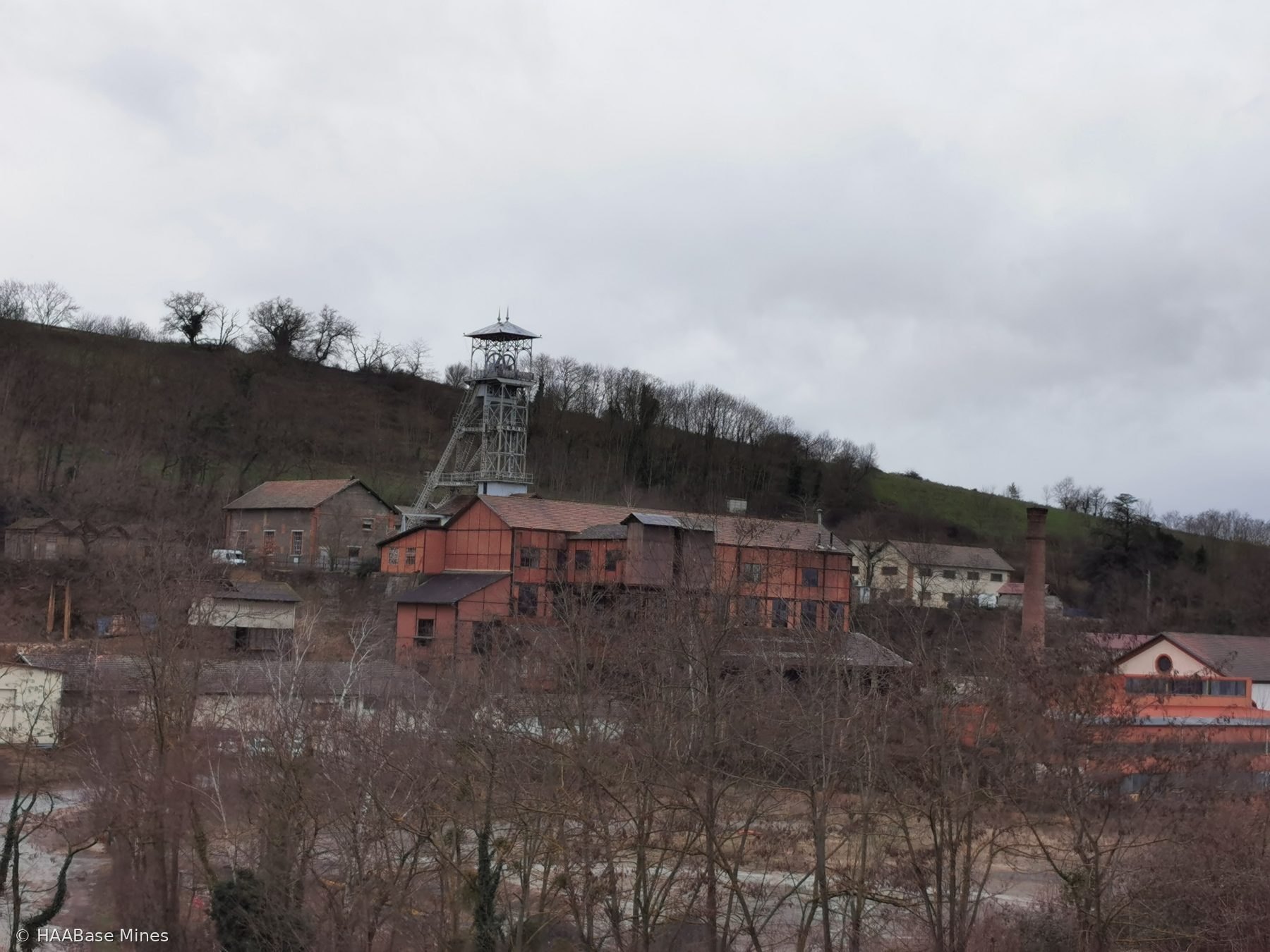
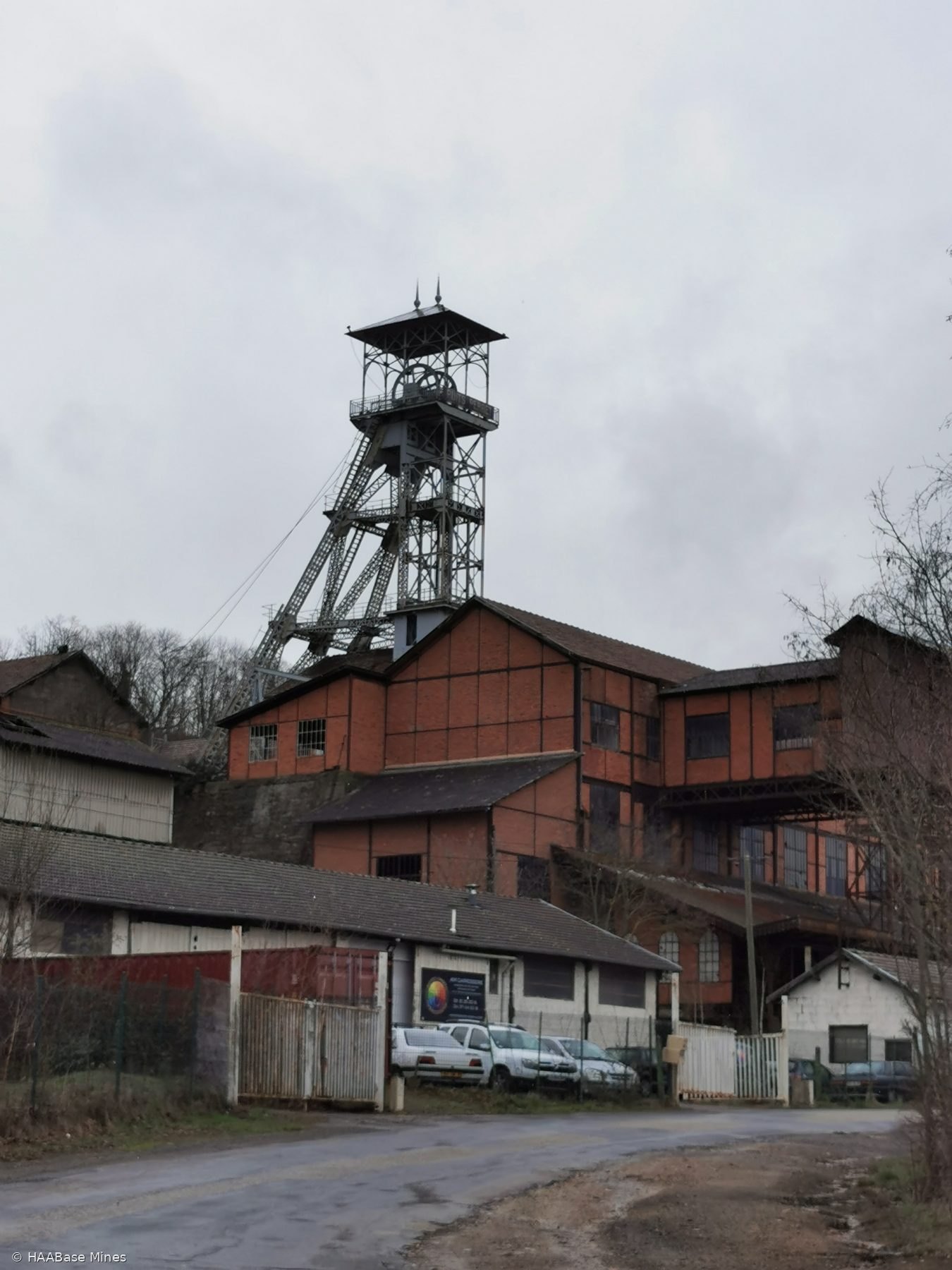
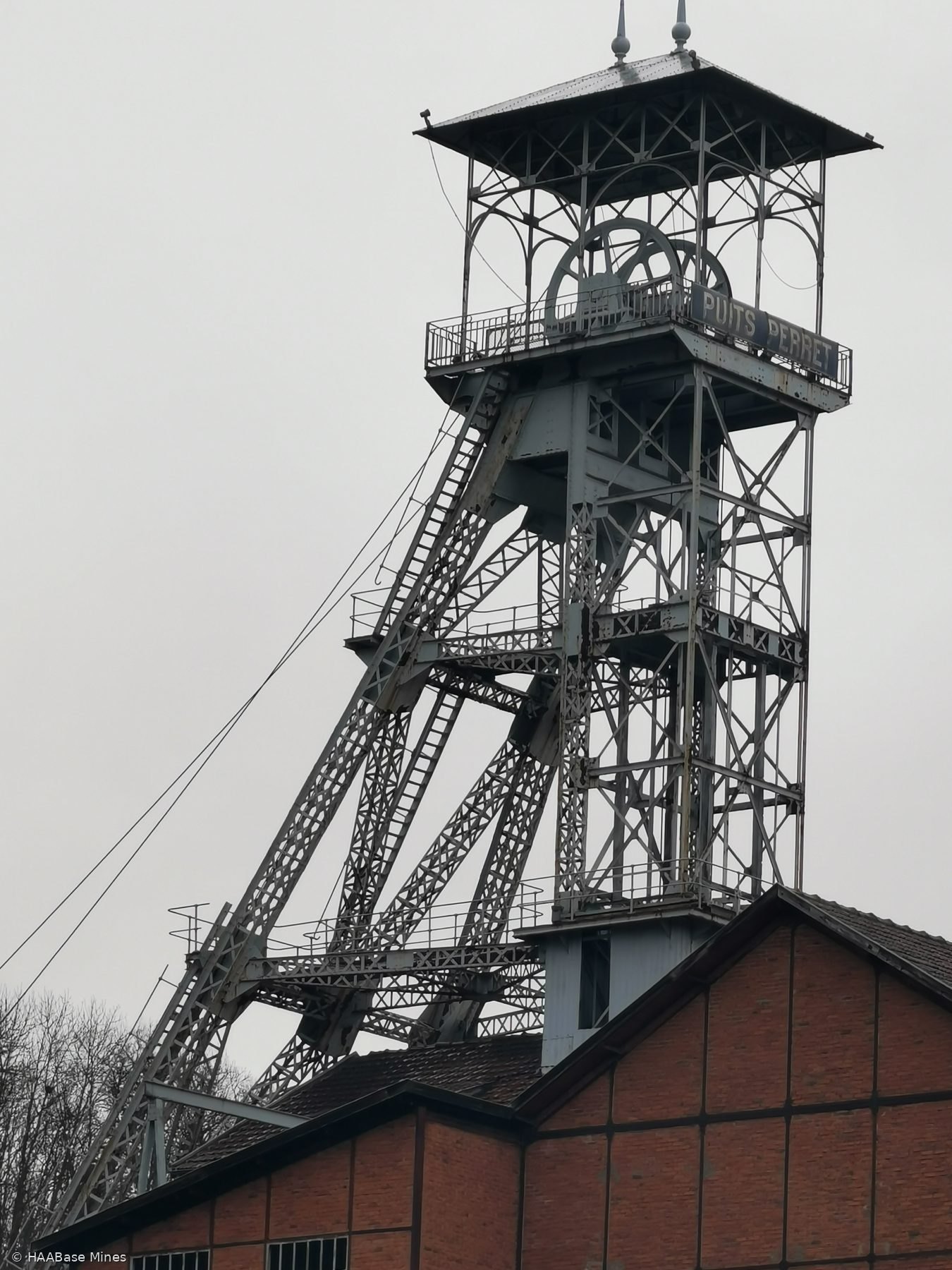
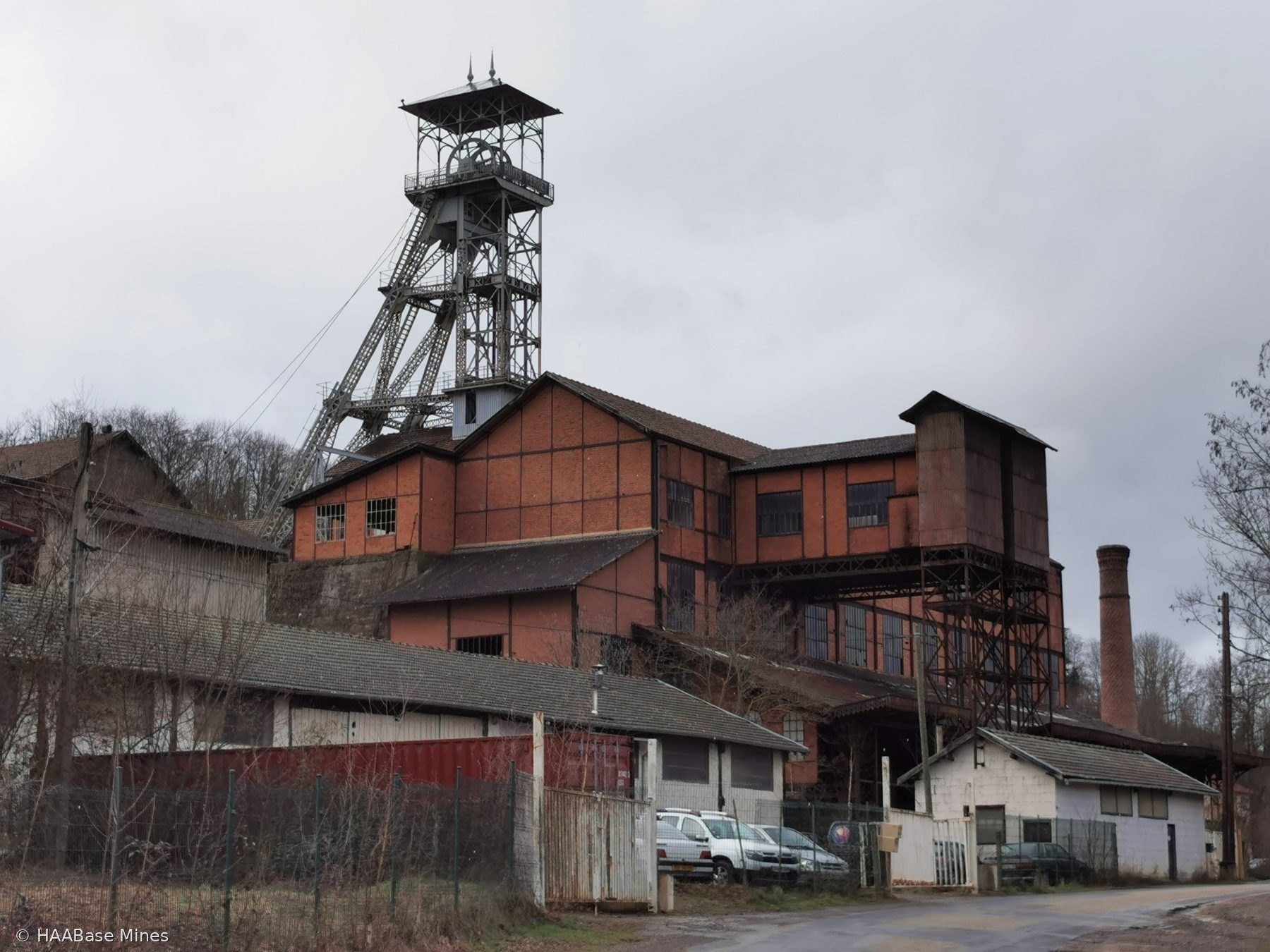
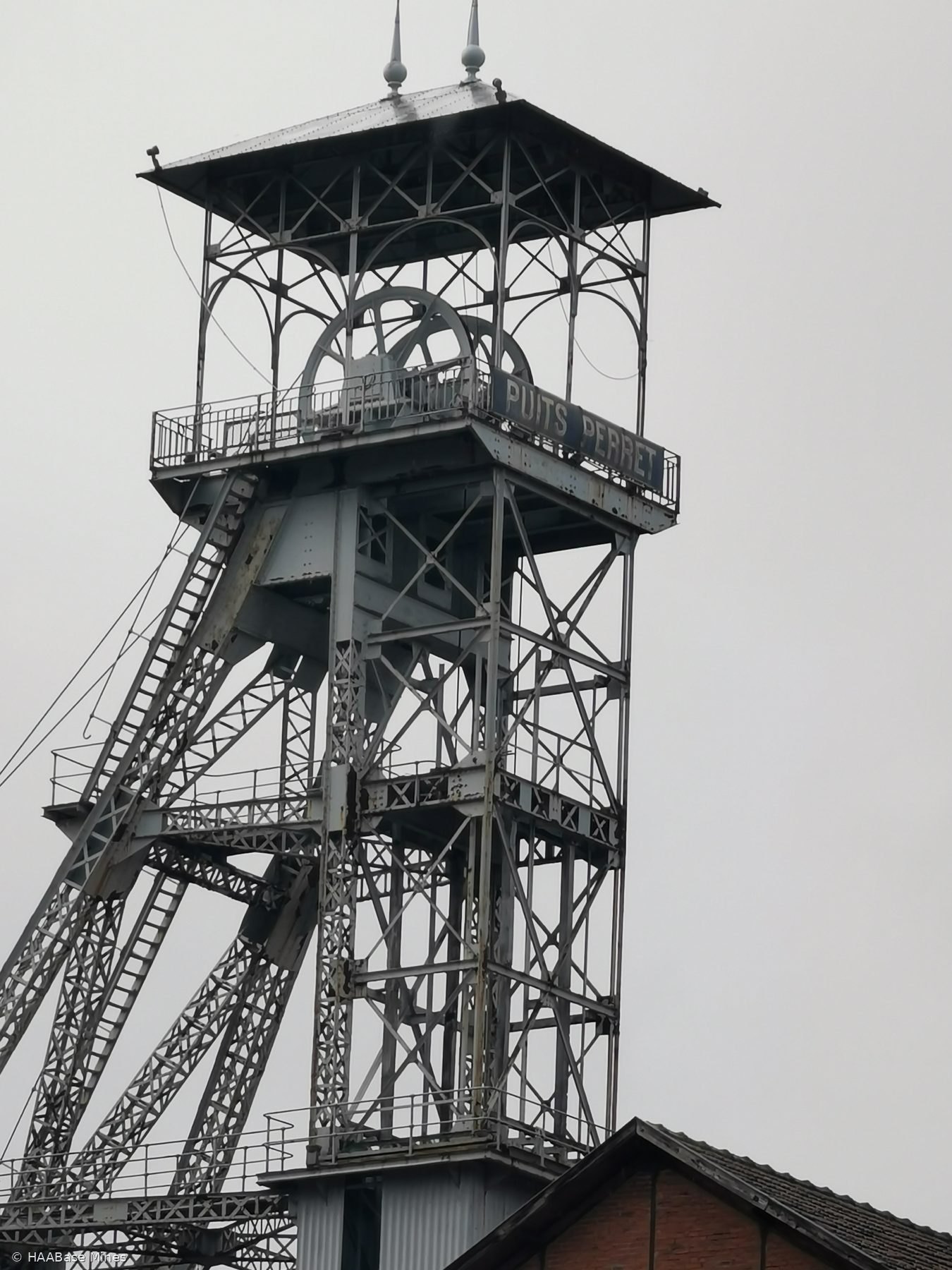
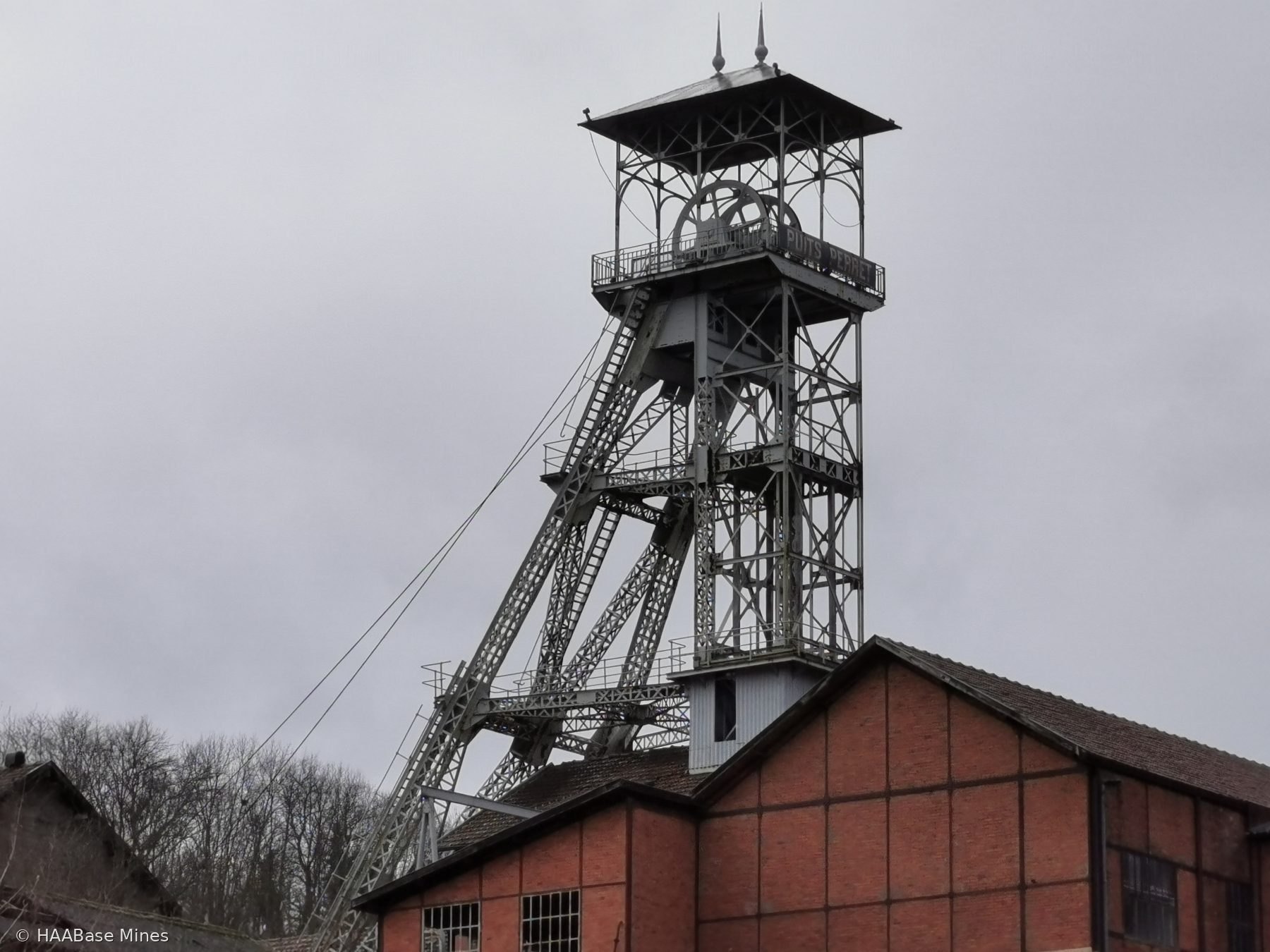
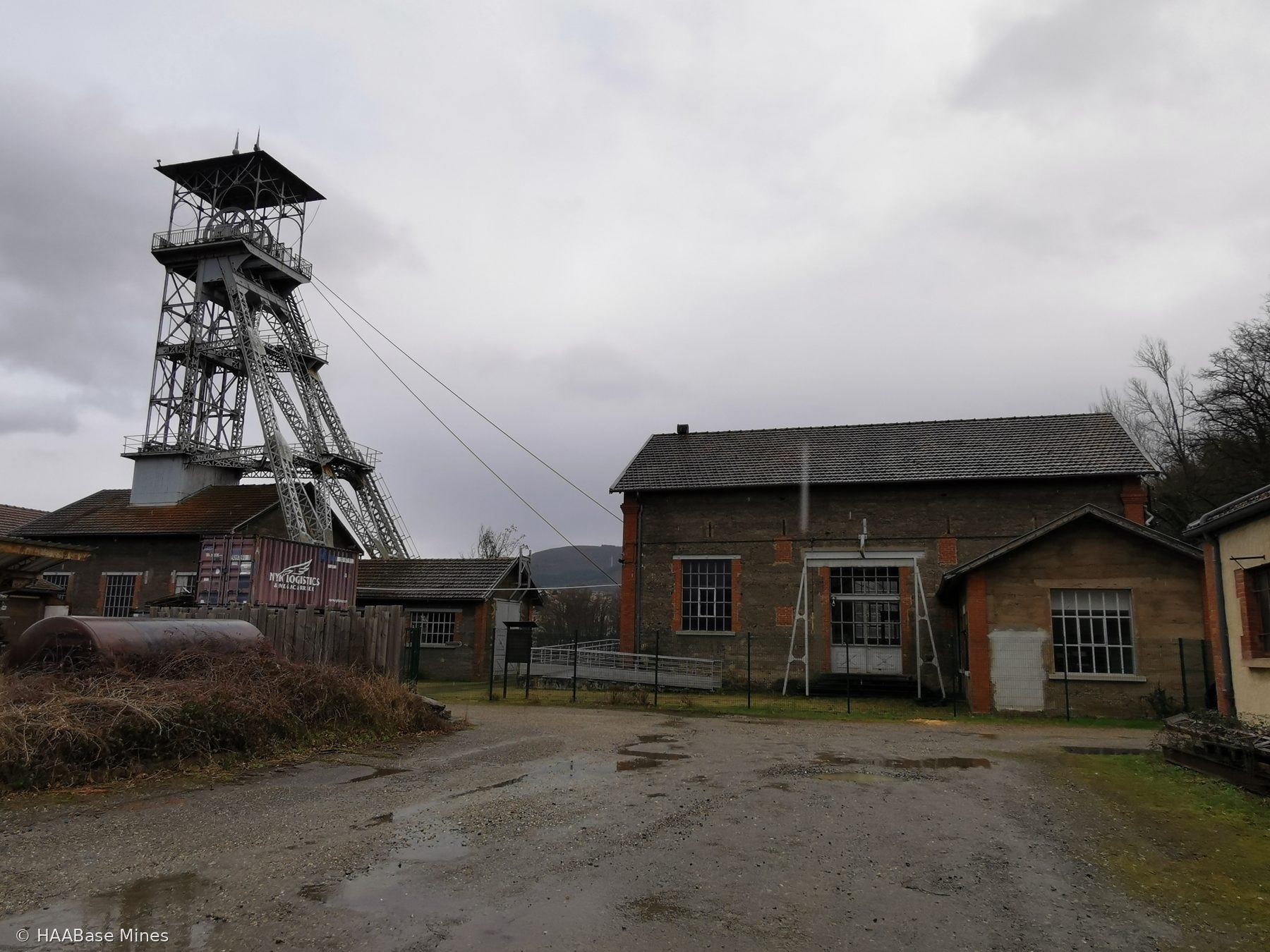
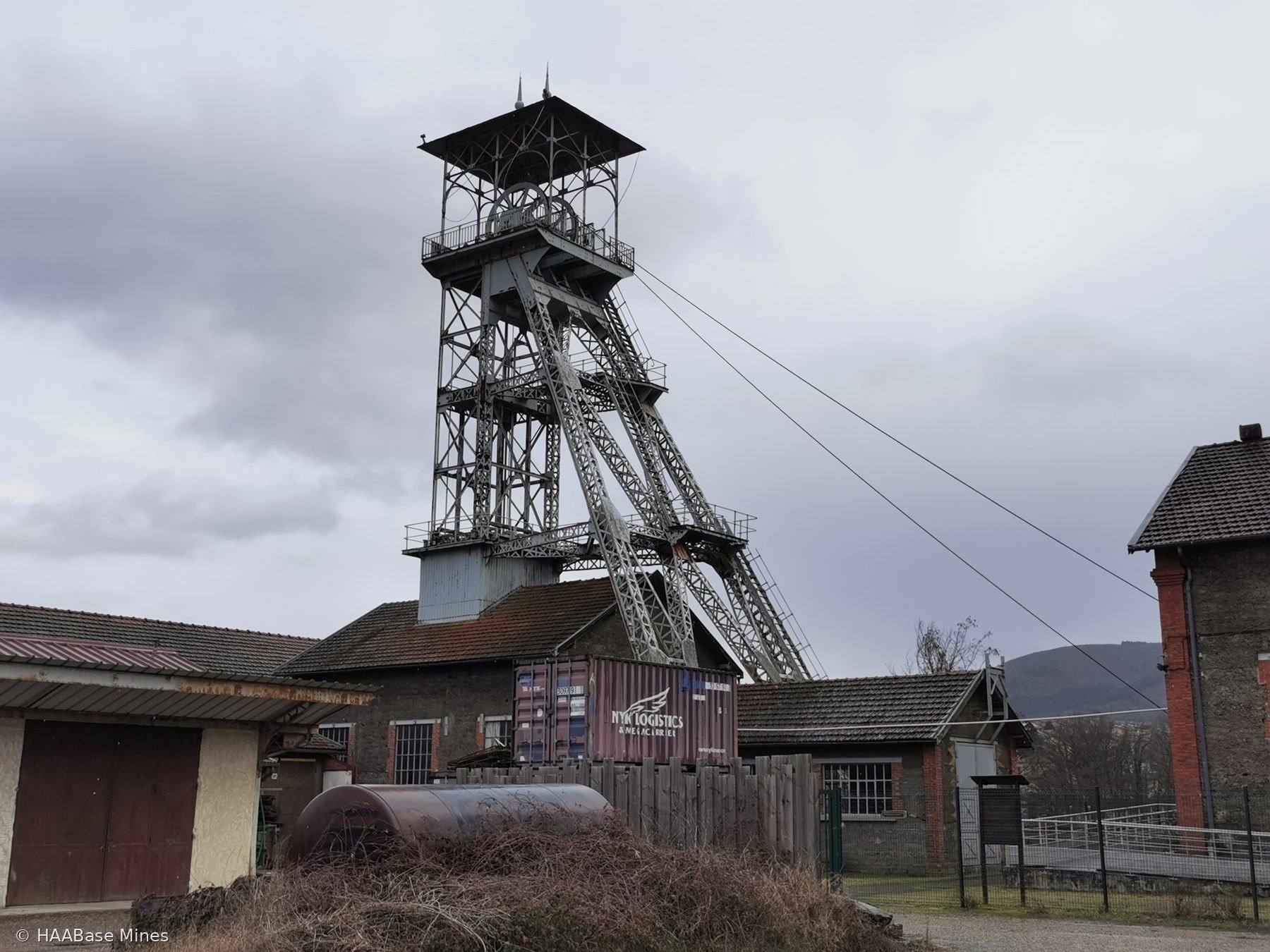
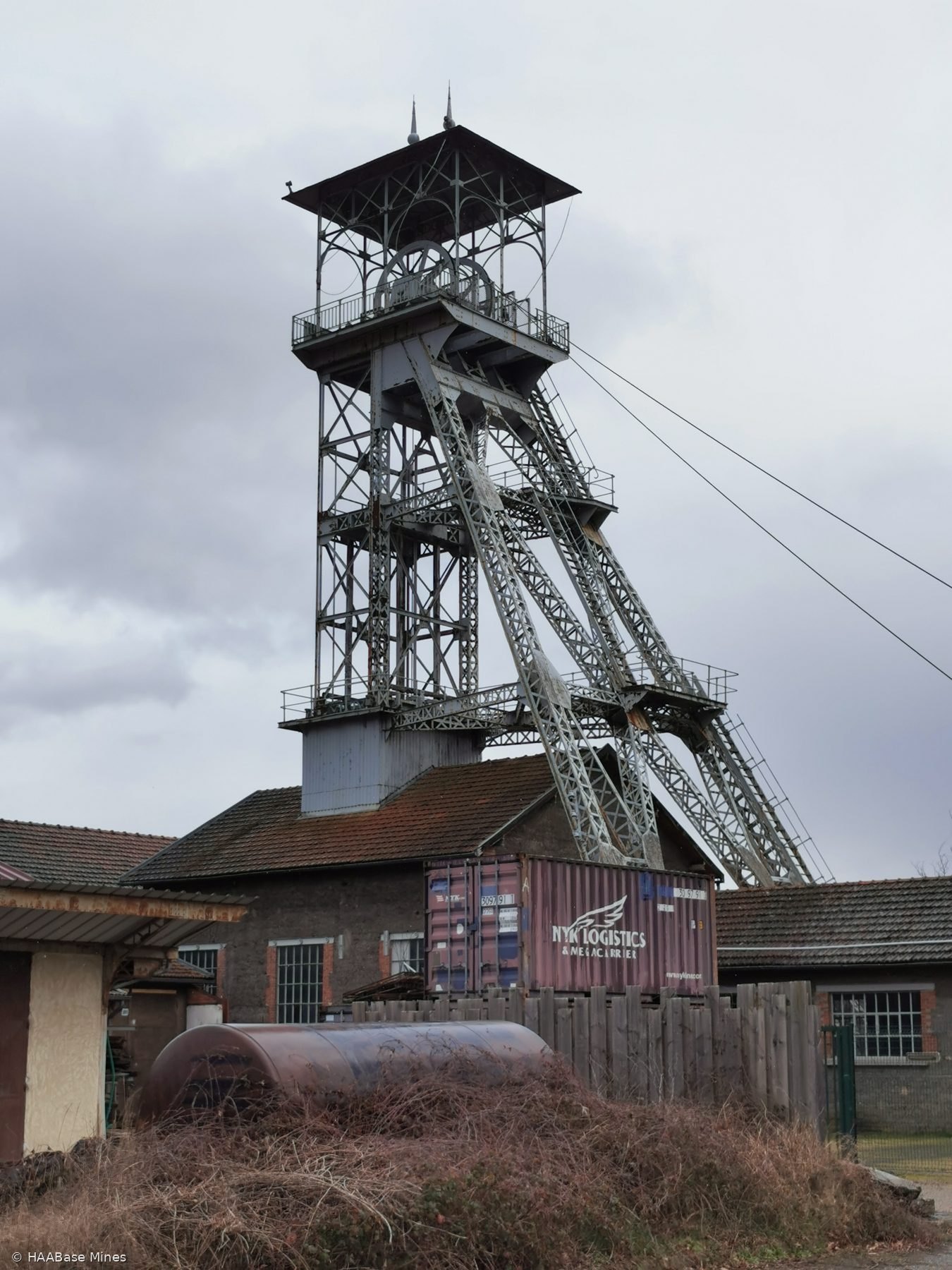
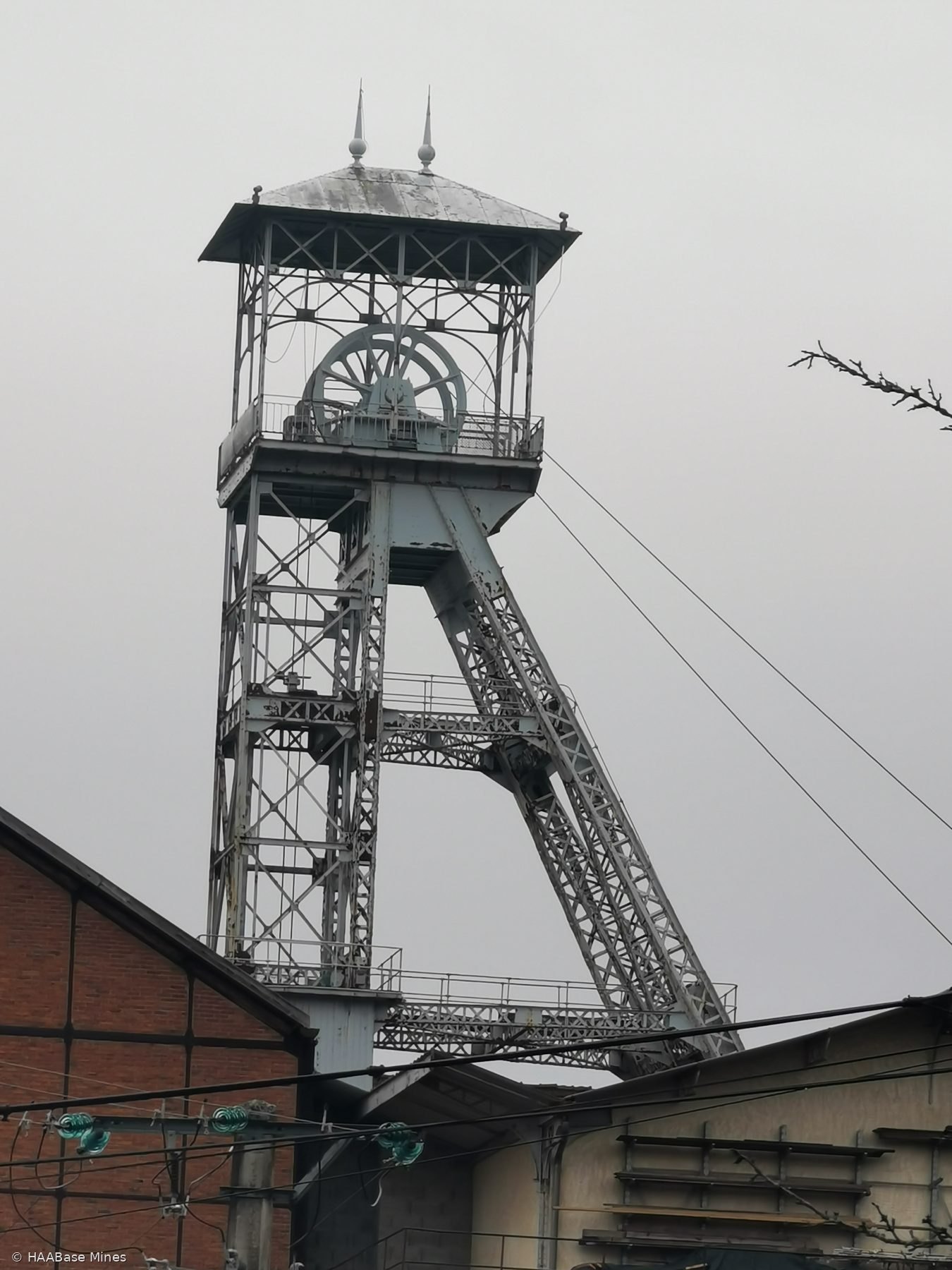
The puits Saint-Gobain was the main surface extraction point until 1928, served by the chain-float railway from 1878. In 1928 it was replaced by the puits Perret, sunk from 1897 and transformed into the principal shaft between 1920 and 1928. The current headframe at puits Perret was built in 1925 by the firm Venot; it is a metal structure 28 metres in height with winding wheels of 4 metres diameter. The puits Perret served all functions — personnel, extraction, and ventilation — and connected to the other shafts via internal inclined planes and bures, serving levels at -136, -166, -200, -225, -250, and -300 metres. The chain-float railway was relocated in 1928 to depart from puits Perret. A puits Nord was sunk in 1919 to -136 metres, connected to puits Perret at the -166 and -200-metre levels. In 1950 its headframe was moved to a new location for preservation.
In 1963 a decree of 6 August authorised mutation of the concession to the Société Produits Chimiques Pechiney Saint-Gobain (PSG), which became Rhône-Progil in 1972. The final exploitation was conducted by the Produits Chimiques Pechiney Saint-Gobain, and the mine closed in 1972, two years after Saint-Gobain's centenary celebration. In 1975 the concession was mutated to the Compagnie Industrielle et Minière (CIM), a subsidiary of Rhône-Poulenc, later Rhodia, holding the concession until its expiry on 31 December 2018. The puits Perret was backfilled in 1988.
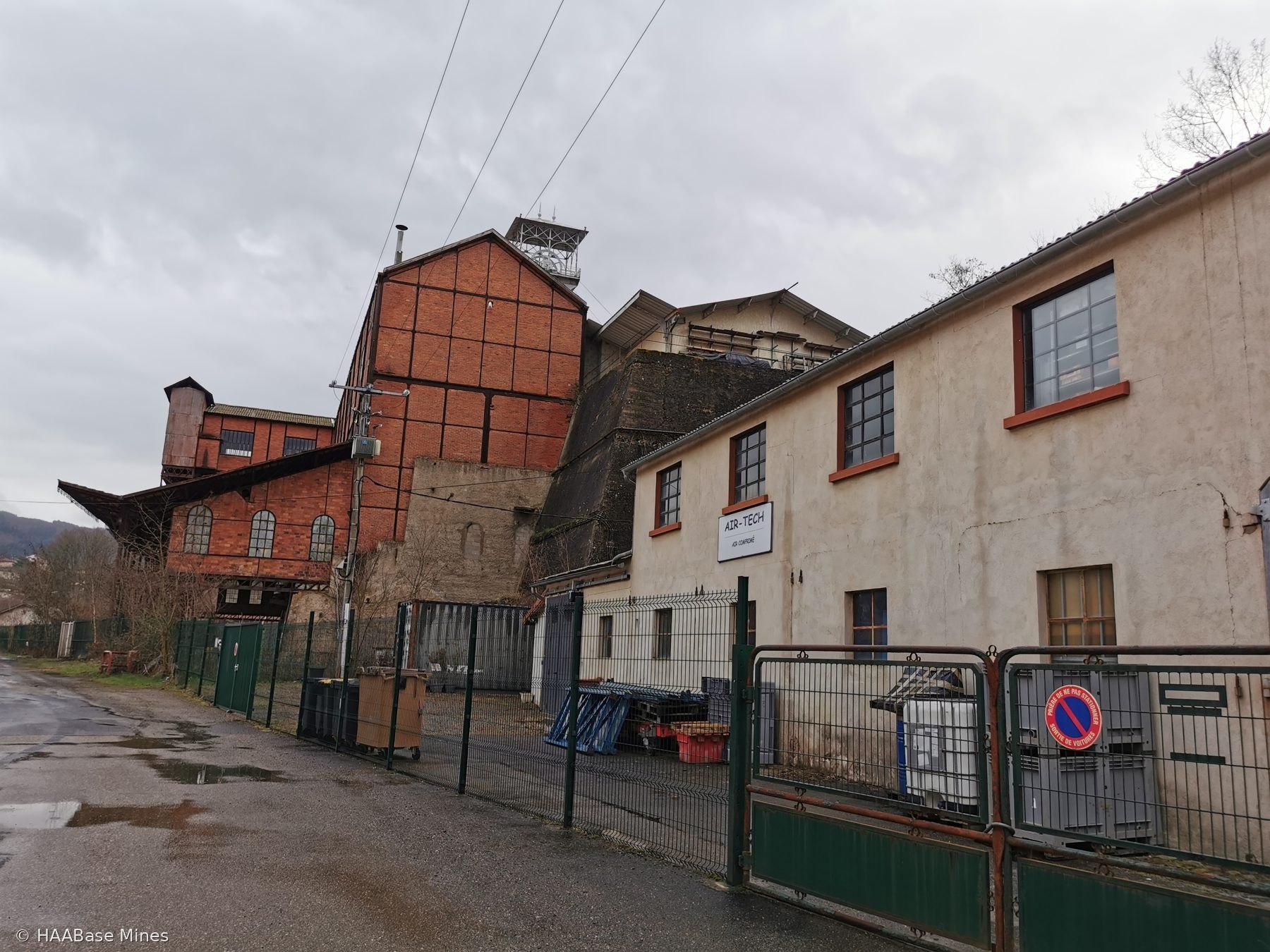
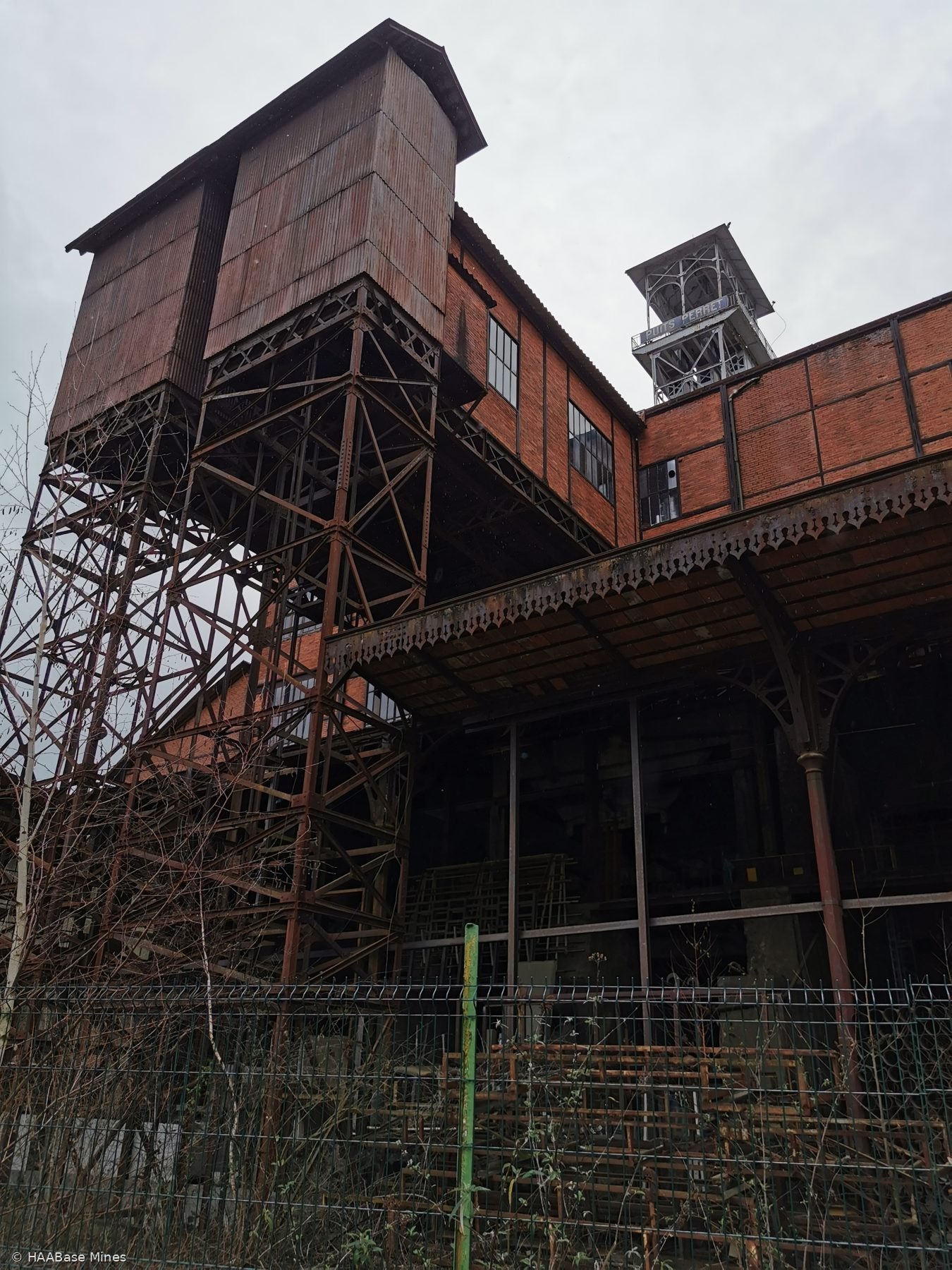
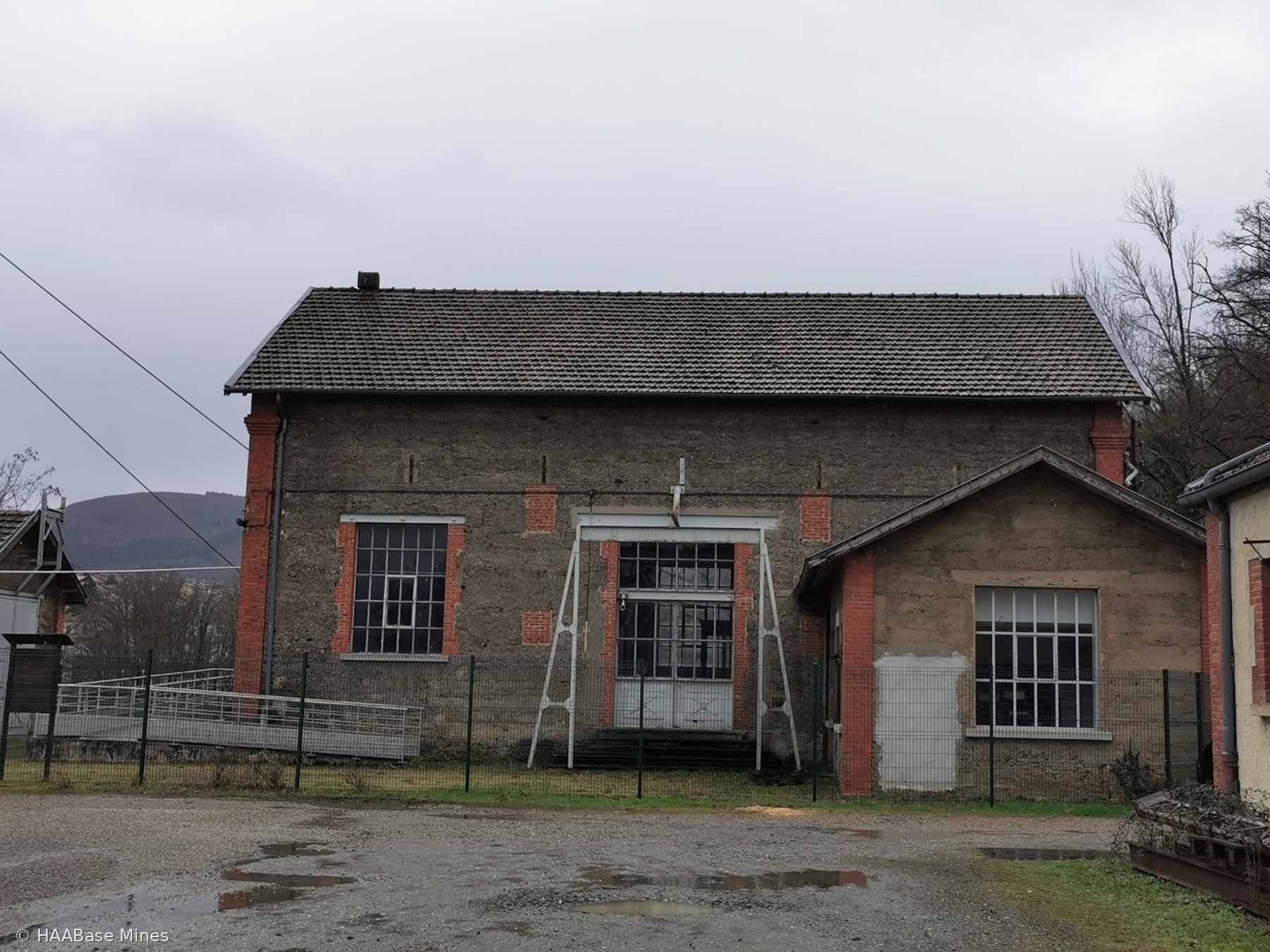
The puits Perret is the only shaft of the Sain-Bel mines to have retained its surface installations; the headframe, recette, machine building, rescue post, and other associated structures date from the 1920-to-1928 transformation. These buildings passed to the commune in 1972. Following closure, former miners organised the association Les Amis de la Mine, which opened the Musée de la Mine et de la Minéralogie in the former mine infirmary on 4 December 1982. A pedestrian path with interpretive panels leads from the museum to the puits Perret site, where the headframe, recette, and machine room are accessible. The site holds the largest mineralogical collection in the Auvergne-Rhône-Alpes region, including exceptional chessylite and azurite specimens from the local gisement. The chevalement, recette, machine building, rescue post, broyage workshop, and hand-breaking workshop were inscribed to the Inventaire supplémentaire des Monuments historiques by arrêté of 17 February 2010.