1893
Sinking begins at Sainte-Marie shaft no. 1
Sinking of Sainte-Marie shaft no. 1 began on 26 July 1893 as part of the development of the southern Carmaux coalfield.
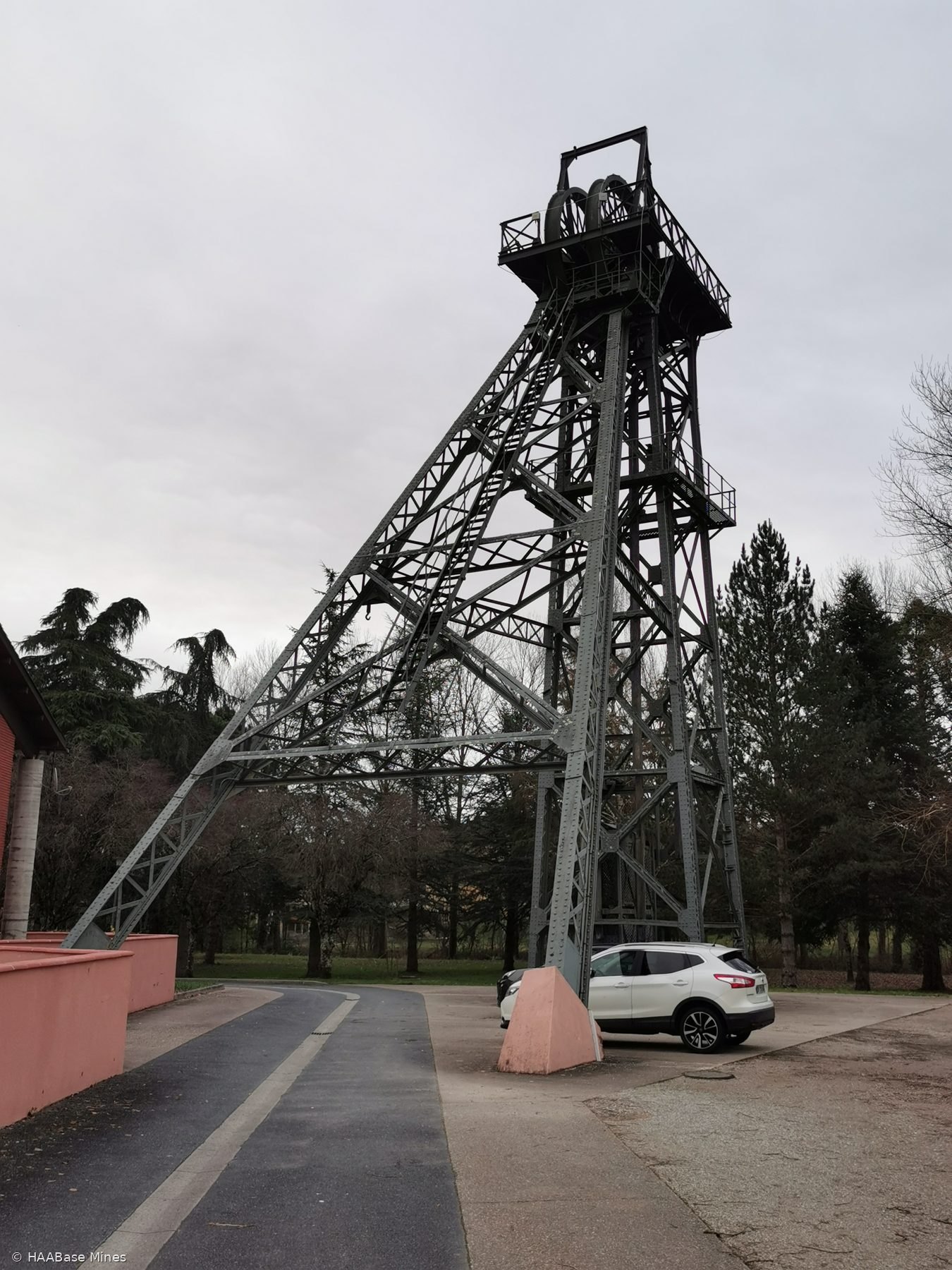
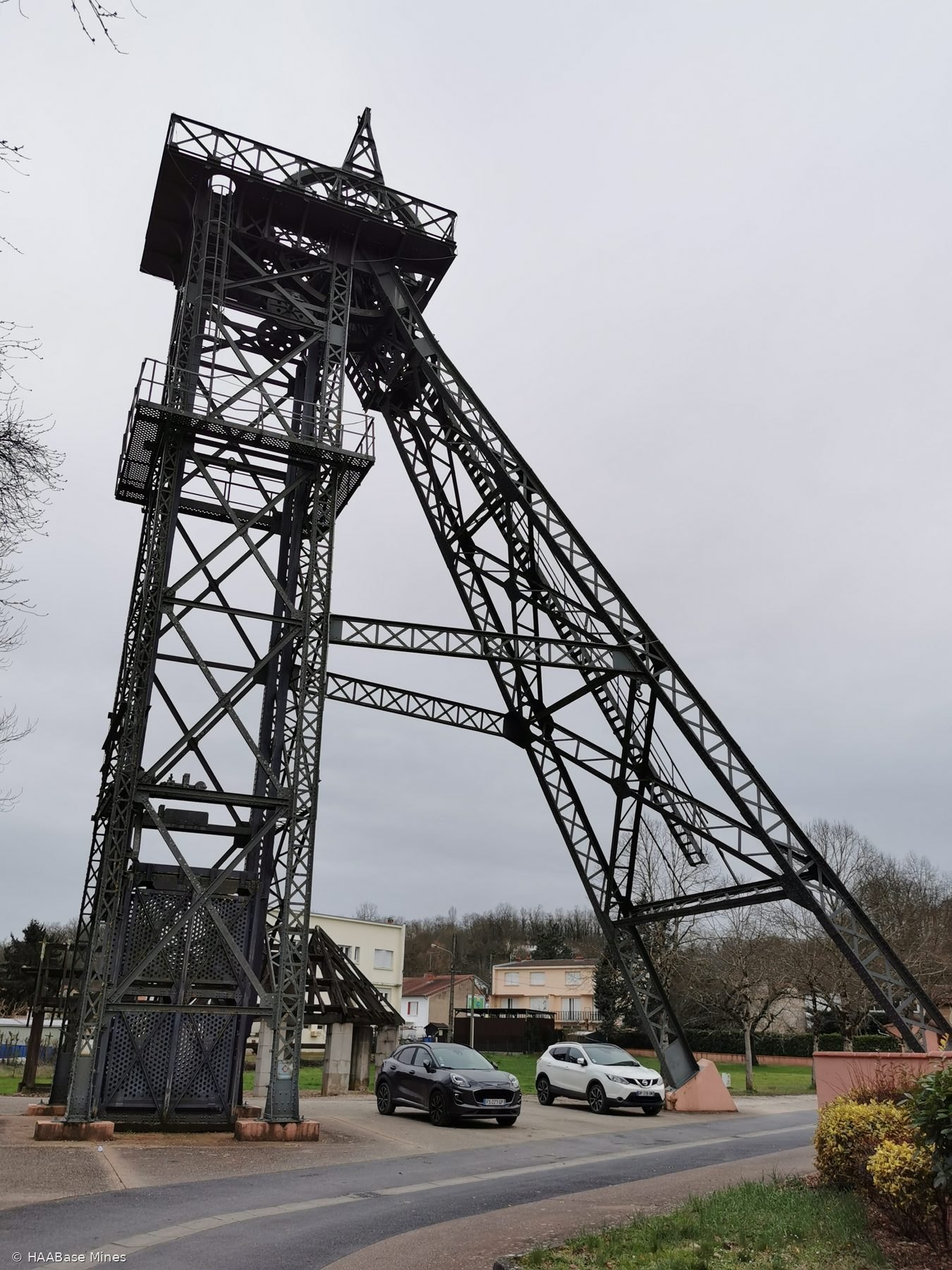
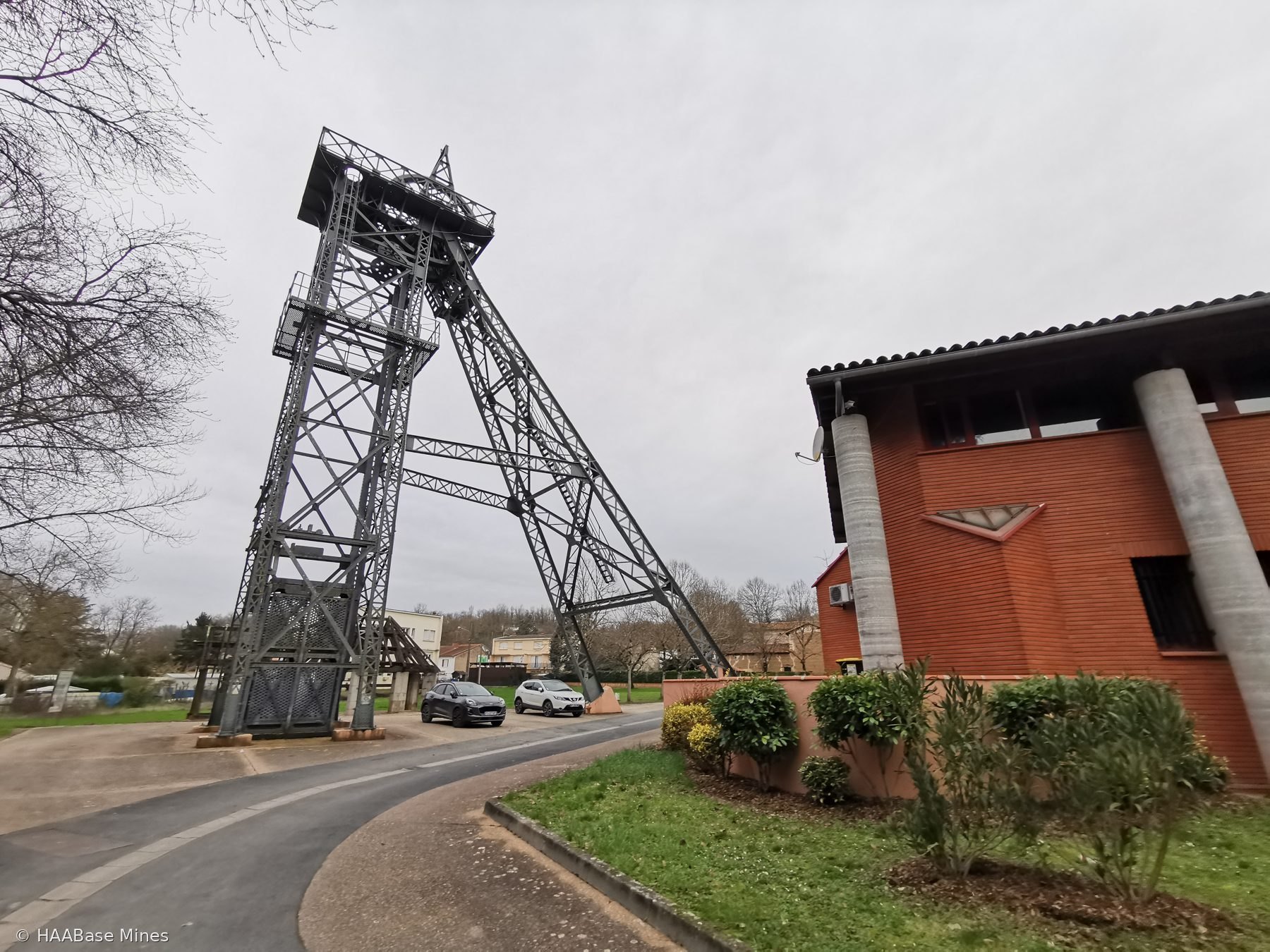
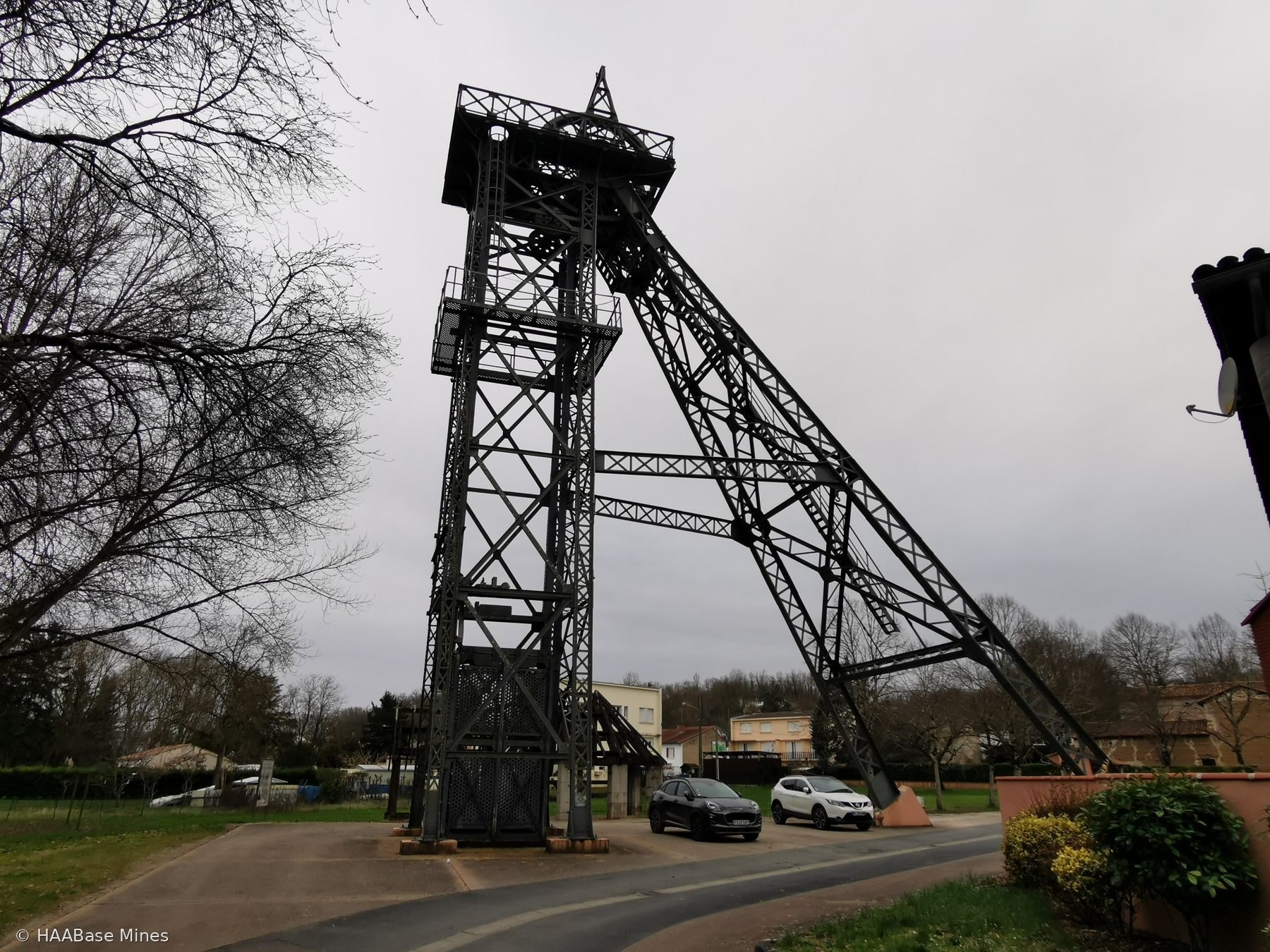
Relocated historic metal coal-mine headframe beside Blaye-les-Mines mairie, preserved as a town landmark; its original pit attribution remains uncertain.
The history, timeline and surviving-site classification shown here reflect the reviewed account.
The record identifies the isolated metal coal-mine headframe beside Blaye-les-Mines mairie, within the former Carmaux coalfield. Specialist mining-history accounts, the municipality, local heritage interpretation and a contemporary account support the history of the Sainte-Marie working centre, its two shafts, nationalisation, altered functions, 1973 closure, subsequent open-cast redevelopment, and the relocation of a historic headframe to the civic site. The original location of the displayed frame is not securely established: the mining association attributes it to Sainte-Marie but does not name the shaft, whereas a local tourism guide describes the mairie frame as coming from La Tronquié.
There is consequently stronger evidence for the history of the two-shaft Sainte-Marie colliery and for the monument’s present character than for a precise link between the monument and Sainte-Marie shaft no. 2. The timeline retains well-supported historical events while distinguishing associated-site history and qualifying the disputed monument attribution.
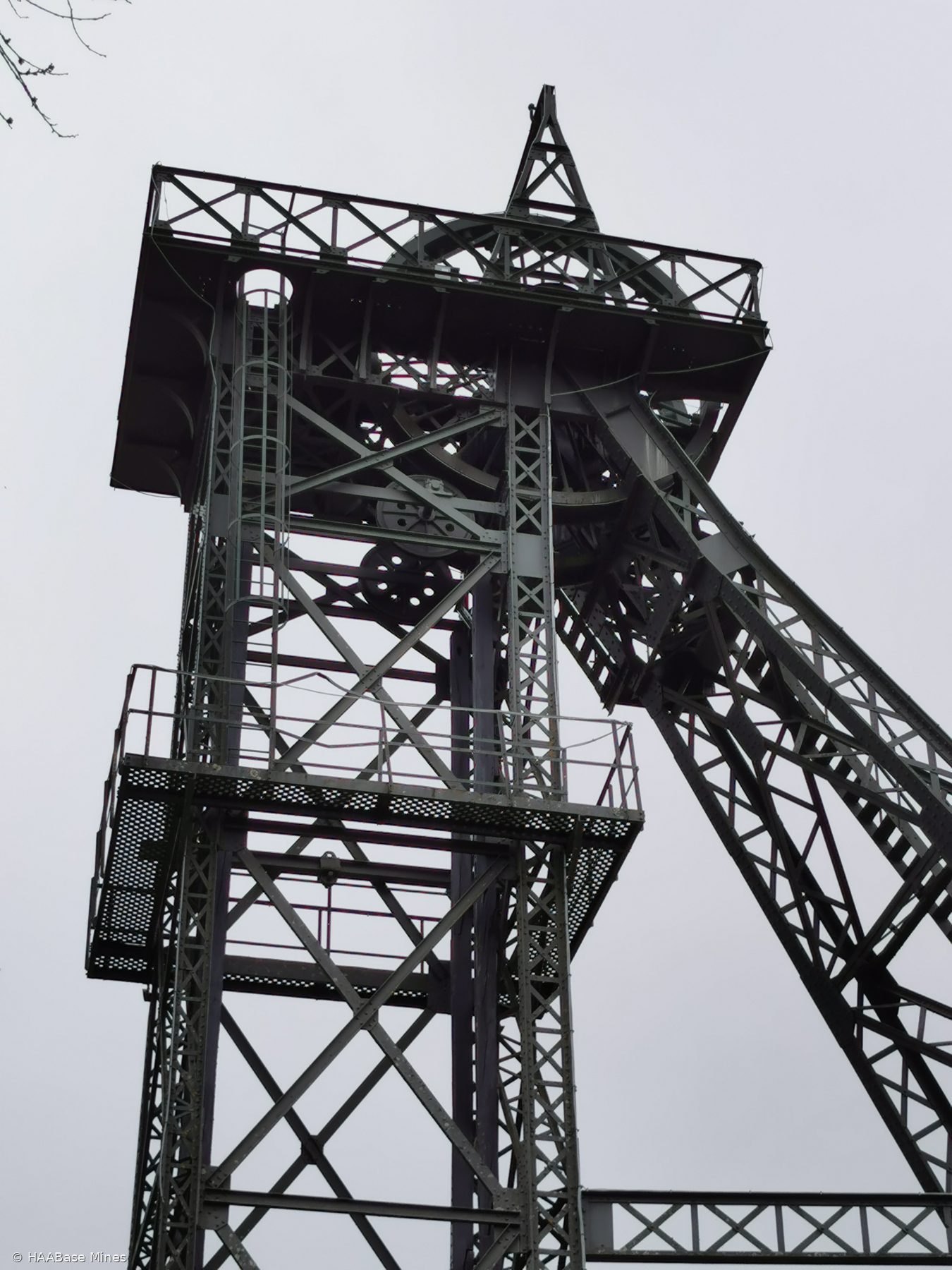
The surviving site comprises an isolated historic steel headframe erected beside the mairie in Blaye-les-Mines. The surviving_descriptor is headframe and its label identifies a relocated industrial monument. The authenticity_status is mixed: the structure is treated as historic mining fabric, but its present setting and re-erection are post-industrial, and the extent of replacement fabric during restoration has not been established.
Its site_character is Isolated headframe, not a museum complex or a functioning mine. The output is coal, the mineral extracted in the Carmaux basin. Mining-history records and local heritage accounts support its relocation and civic display.
The original shaft attribution is uncertain: specialist accounts connect it with Sainte-Marie, while a tourism walking guide links the mairie example to La Tronquié; no surviving open working shaft or associated original pithead buildings are established at the displayed location.
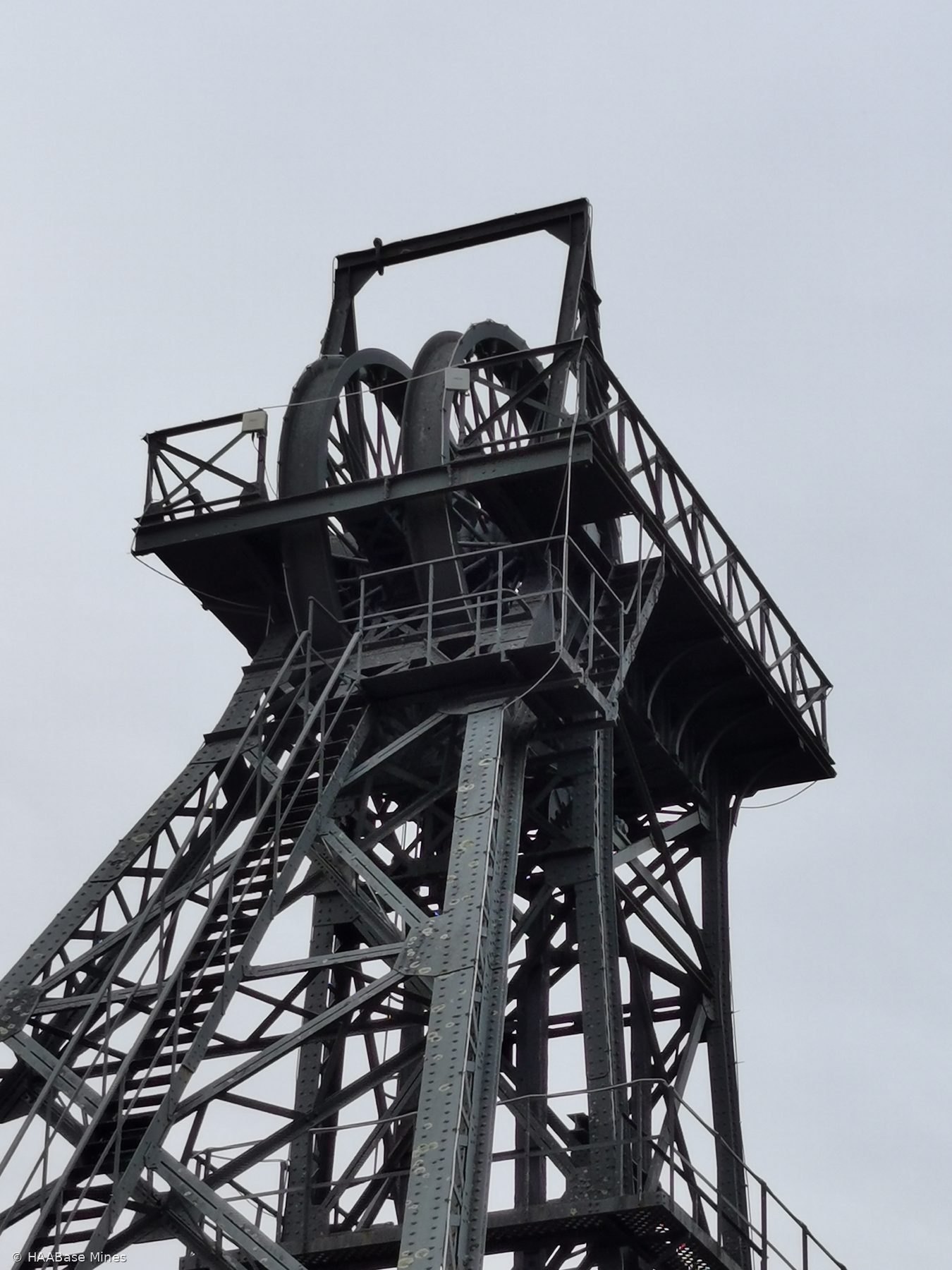
The metal headframe standing beside the mairie of Blaye-les-Mines is a prominent reminder of coal mining in the Carmaux basin. It is a historic structure removed from a former working pit and re-erected in a civic setting, not a headframe remaining over its original shaft. Mining heritage accounts generally associate it with the two-shaft Sainte-Marie colliery, although a local tourism guide identifies the mairie headframe with La Tronquié; its original shaft cannot be stated with certainty.
Sainte-Marie was developed from the 1890s to exploit the southern coalfield. Its first shaft was sunk from 1893 to 1896, and a second followed between 1898 and 1901. The installation included winding gear, workshops, ventilation arrangements and coal-handling facilities, and was modernised as part of the expanding Carmaux industry.
After nationalisation in 1946, coal was increasingly concentrated at La Tronquié, with Sainte-Marie ceasing as an independent extraction centre and closing in 1973. The former mining landscape was transformed by open-cast extraction in the 1980s and 1990s. The headframe was re-erected near the new town hall around 1988 through the efforts of former mayor Jean Coutouly.
It now stands as a local public monument, with heritage events and interpretation supported by former miners and local associations.
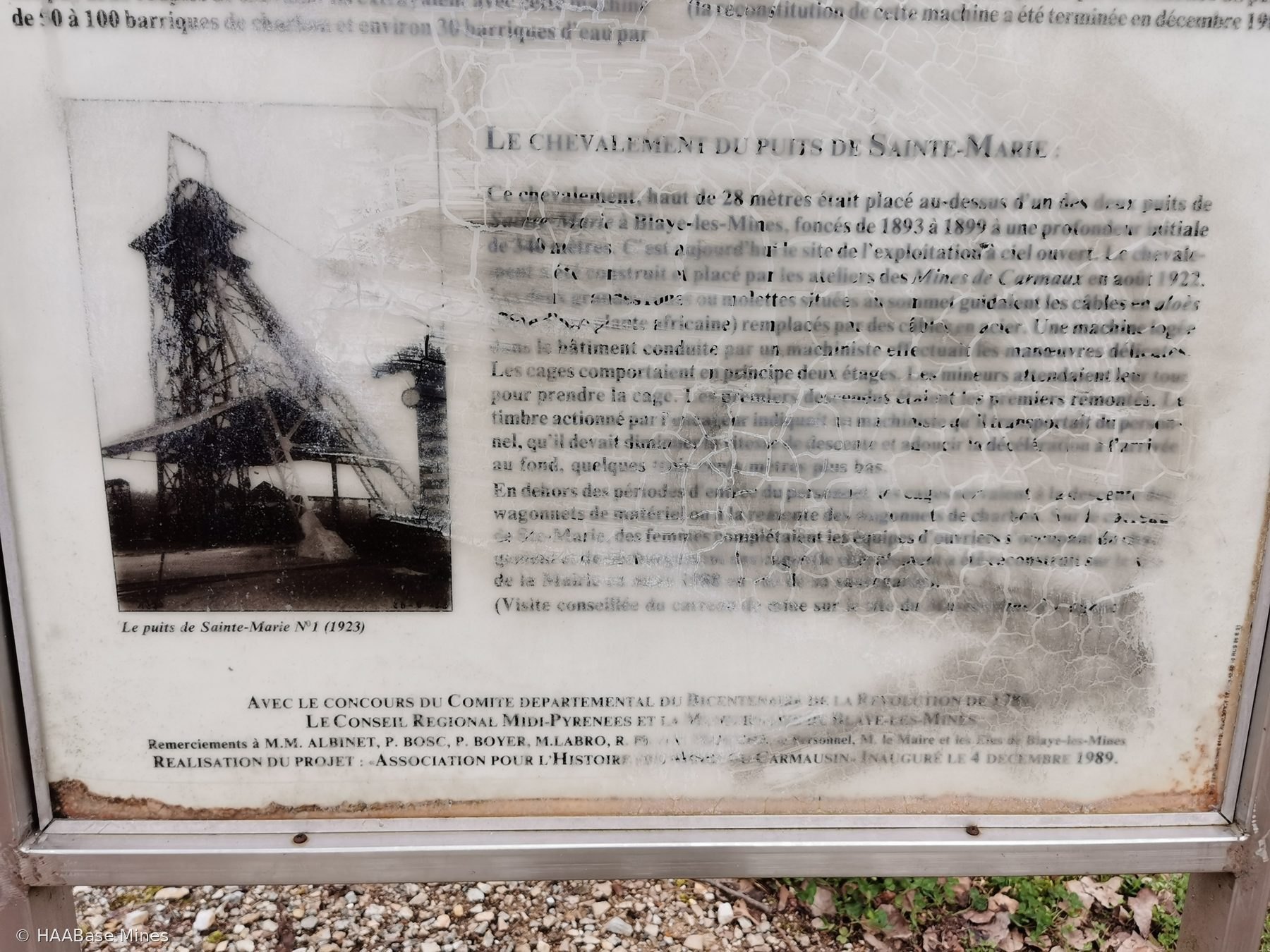
Coal extraction around Carmaux in the Tarn has medieval origins, but the large southern mining installations at Blaye-les-Mines developed much later. Around 1890 the Société des Mines de Carmaux decided to open a new working centre at Sainte-Marie to reach coal deposits in the southern part of its concession. Sinking of its first shaft began on 26 July 1893 and continued until 1896, reaching approximately 341 metres. A second shaft was begun in 1898 and completed around 1901 to a depth of some 220 metres. Together they formed a substantial colliery with two steel headframes, offices, workshops, lamp room, timber yard, water reservoir and connections to auxiliary ventilation shafts.
The original winding installations used steam machinery, later replaced by electric motors during the modernisation of 1920. Coal treatment was progressively centralised, and local sorting ceased in 1932 in favour of the main washery. In 1939 the mine also served as a place for trials of mechanised stowing. The Sainte-Marie workings became part of the nationalised Houillères du Bassin d’Aquitaine in 1946. In 1952 full mechanisation and an underground connection with La Tronquié altered the role of the shafts: coal was thereafter raised at the concentration pit, while Sainte-Marie shaft no. 1 carried material and stowing supplies and shaft no. 2 was used for miners. The workforce reportedly reached 865 in 1962.
Sainte-Marie closed in 1973, although its second shaft remained available for ventilation and safety purposes. Elsewhere in the Carmaux basin deep mining continued, particularly at La Tronquié, which remained in service into the late 1980s. The old Sainte-Marie industrial site was subsequently demolished as the area was transformed by the Grande Découverte open-cast mine. Open-cast extraction operated during the 1980s and 1990s and ceased in 1997, fundamentally changing the former landscape of shafts, buildings and transport routes.
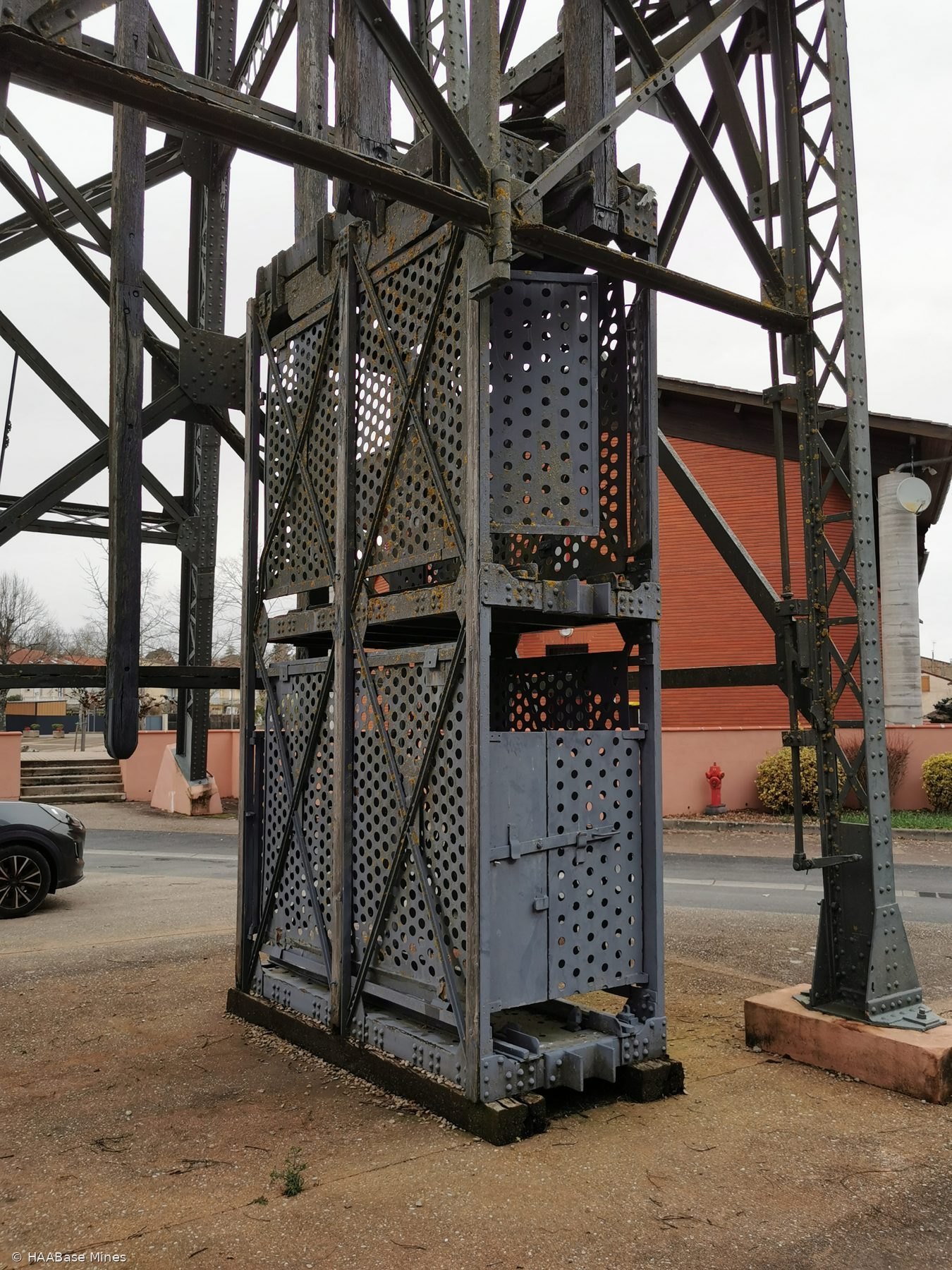
One historic metal headframe was saved and re-erected beside the new mairie of Blaye-les-Mines, near the former RN 88, around 1988. Former mayor Jean Coutouly played a significant part in securing its preservation. Mining-history accounts identify the relocated structure as a headframe from Sainte-Marie, without demonstrating whether it served shaft no. 1 or no. 2. A published local walking guide instead attributes the headframe at the mairie to La Tronquié. The original provenance of the displayed structure therefore remains uncertain, but it is clear that it stands away from its former working shaft and survives as a relocated industrial monument.
The headframe has undergone restoration and occupies a prominent position in the town centre. The Association de Sauvegarde du Patrimoine Industriel Carmaux-Cagnac has taken part in commemorative activities nearby, including presentations of a reconstructed gallery, narrow-gauge track and recollections from former miners. Alongside the former mining settlements and the extensively altered Sainte-Marie landscape, the structure remains a public reminder of the engineering, employment and community life once sustained by the Carmaux coalfield.
This list includes live sources already held for the record and any additional sources added or confirmed during the published fact-check review.