History
Lead mining in Mid-Derbyshire has a history stretching back to Roman times. Mining at the Magpie Mine site has been documented from the seventeenth century, with the Shuttlebark vein of lead ore officially opened in 1682. The mine itself is recorded from 1740.
Early working was intermittent, and the mine closed for several years around 1793 because of flooding and a drop in the price of lead. A Newcomen-type pumping engine had been erected on the main shaft by 1824, and the resulting improvement in drainage led to the production of 800 tons of lead in 1827, a record that remained unbroken until 1871. For years the mine was involved in a bitter dispute with the neighbouring Maypitt Mine over the right to work the Great Redsoil Vein.
Miners from both sides lit underground fires to smoke out their rivals. In September 1833 three Maypitt miners were suffocated by fumes from fires lit by Magpie miners. Twenty-four Magpie miners were put on trial for murder; several were freed immediately and eventually all were acquitted, the outcome reflecting both the difficulty of identifying individual culprits and the provocative actions of the Maypitt miners.
The effect of the dispute was to ruin the mine, which closed in 1835. In 1839 the renowned Cornish mining engineer John Taylor was brought in to reopen Magpie Mine, which now incorporated the Great Redsoil workings. Taylor introduced steel borers, safety hats, safety fuse, and iron winding ropes, and established a more regular pattern of shift working and payment.
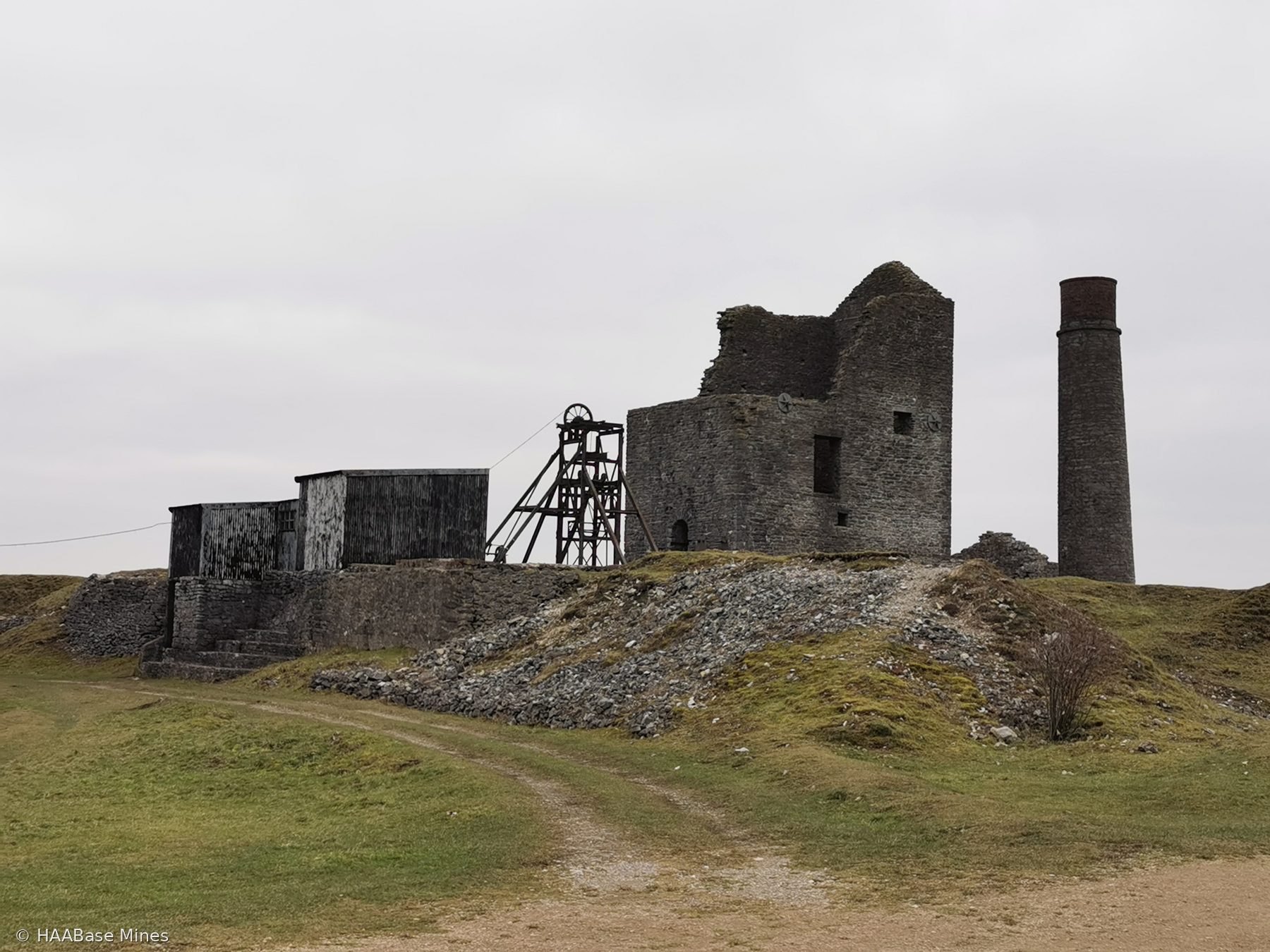
He deepened the main shaft to 208 metres and installed a 40-inch Cornish pumping engine. The main shaft had been sunk in 1823. Taylor oversaw the construction of most of the surviving limestone buildings, including the square chimney and the circular chimney, both built in 1840; the agent's house, smithy, and a circular gunpowder house, constructed in the 1840s; and an engine reservoir to supply boiler and cooling water.
When the 40-inch engine proved inadequate, Taylor proposed replacing it with a 70-inch engine, but the proprietors could not agree; some felt a sough would be a better solution, and appeals to the Duke of Devonshire to adjudicate were fruitless. In 1869 the Cornish engine house was built, replacing an earlier engine house and installing a winding engine with a winding drum that still remains. By 1872 the engine was consuming 80 tons of coal per week, making steam pumping increasingly costly.
Work began on a drainage sough in 1873; it took eight years to drive the approximately two-kilometre channel from the River Wye near Ashford-in-the-Water to meet the main shaft, at a cost of £14,000. The sough was completed in 1881 and still discharges several million gallons of water per day. By 1883 the mine was struggling with rising costs and a falling lead price; the Magpie Mining Company was wound up in July 1883 with liabilities of £3,000.
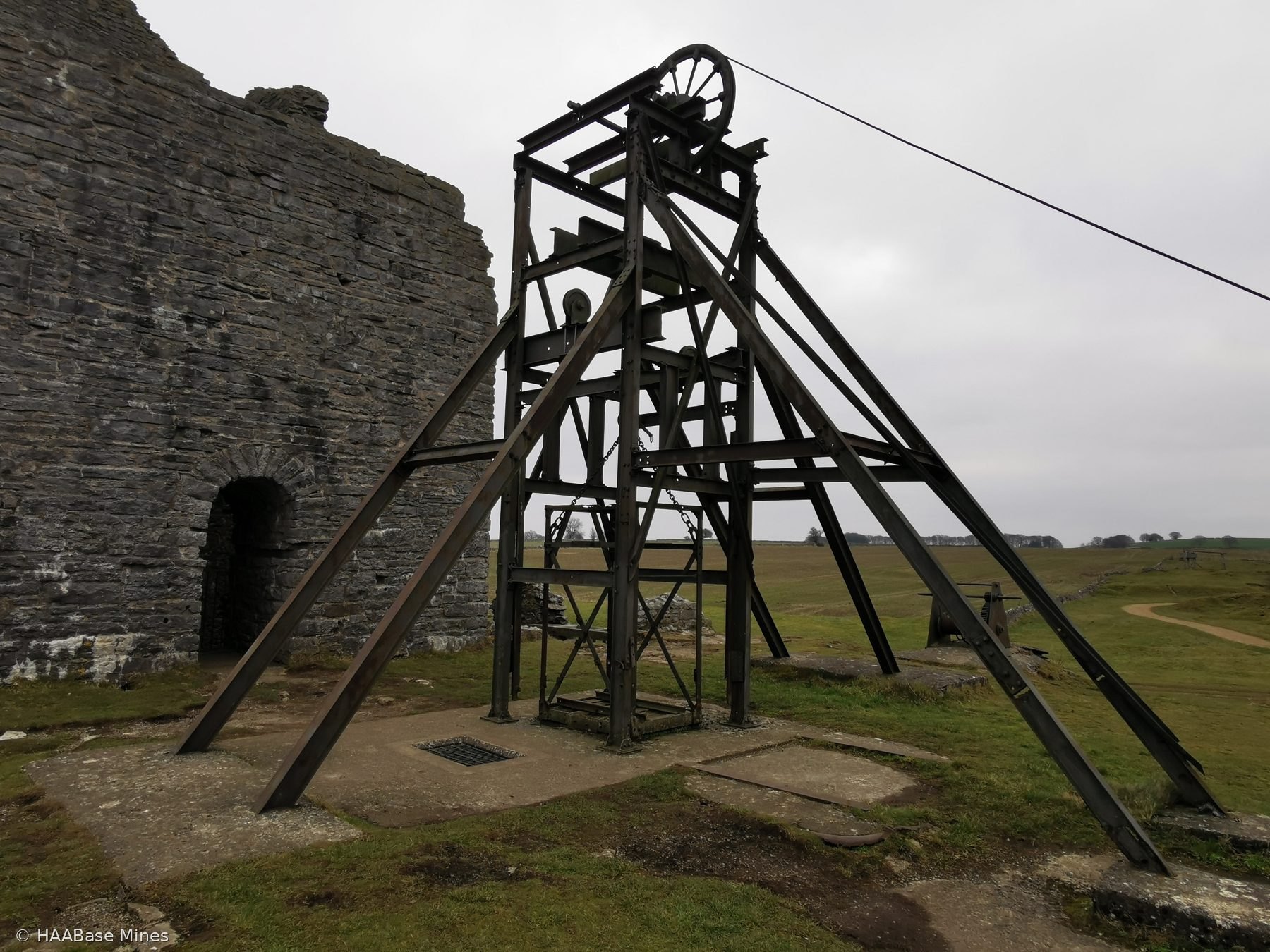
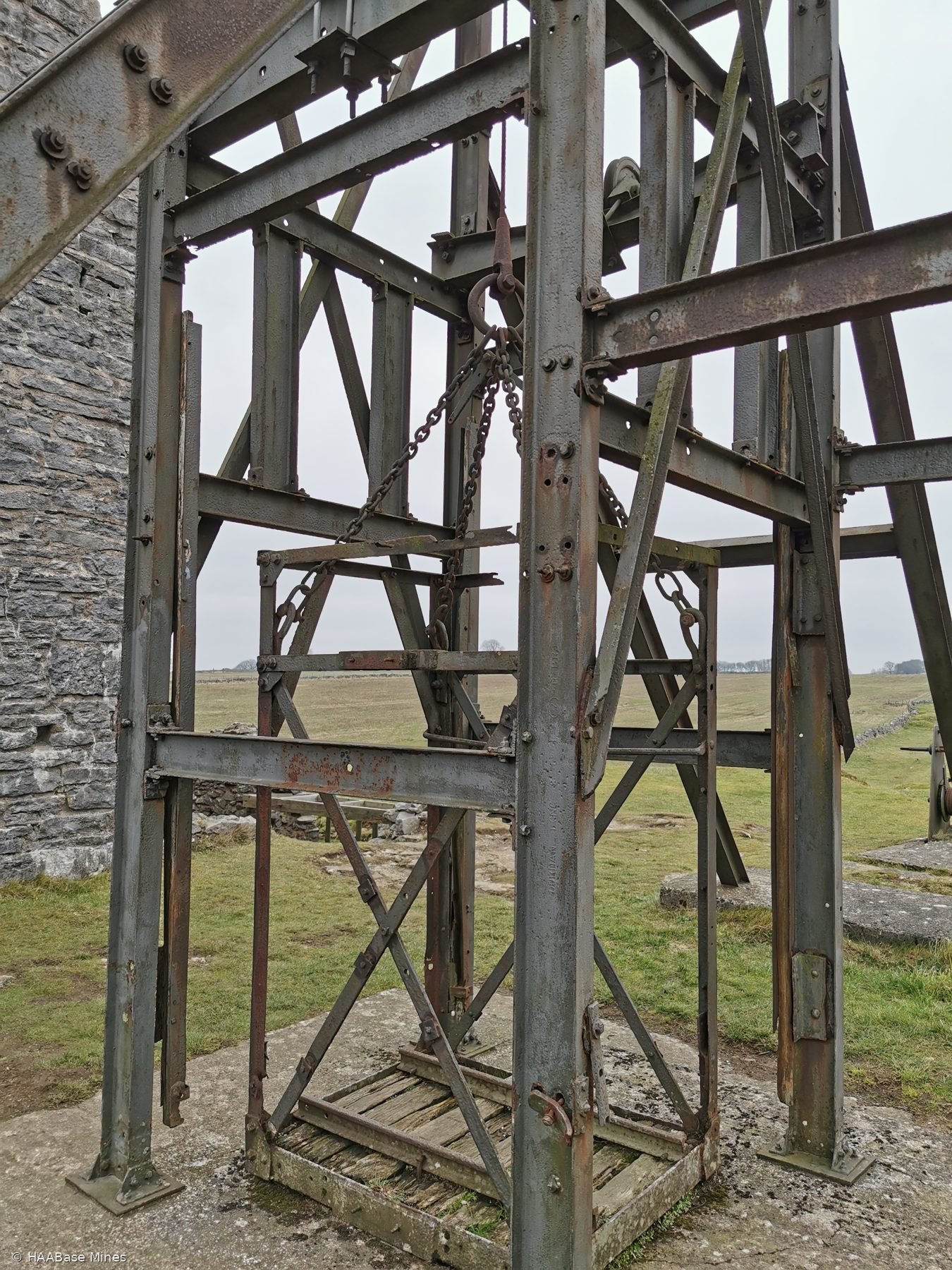
The mine operated intermittently between 1913 and 1923. In 1950 Magpie Consolidated Mines reopened the mine; they replaced the wooden headgear with a steel frame, which remains on site today, and the corrugated iron winding house of the 1950s is also still standing. The main shaft is over 200 metres deep, with the lower portion flooded.
The mine finally closed in 1958, the last working lead mine in Derbyshire. In the 1960s the site came into the care of the Peak District Mines Historical Society. The walled enclosure comprising Magpie Mine, Dirty Red Soil, Great Red Soil, Maypit, and Horsesteps was designated a Scheduled Monument on 15 January 1974 under reference 1019490.
In the 1970s a roof collapse near the sough entrance caused a pressure blowout that displaced part of the hillside; in 1974 the PDMHS restored the sough and hillside and fitted a gate and depth indicator at the entrance. The square chimney was renovated in 2016 with the help of a National Lottery grant. The site is freely accessible at all times via public footpaths and Open Access Land.
All shafts are now blocked or capped. The PDMHS operates a field centre in the Agent's House and Smithy.