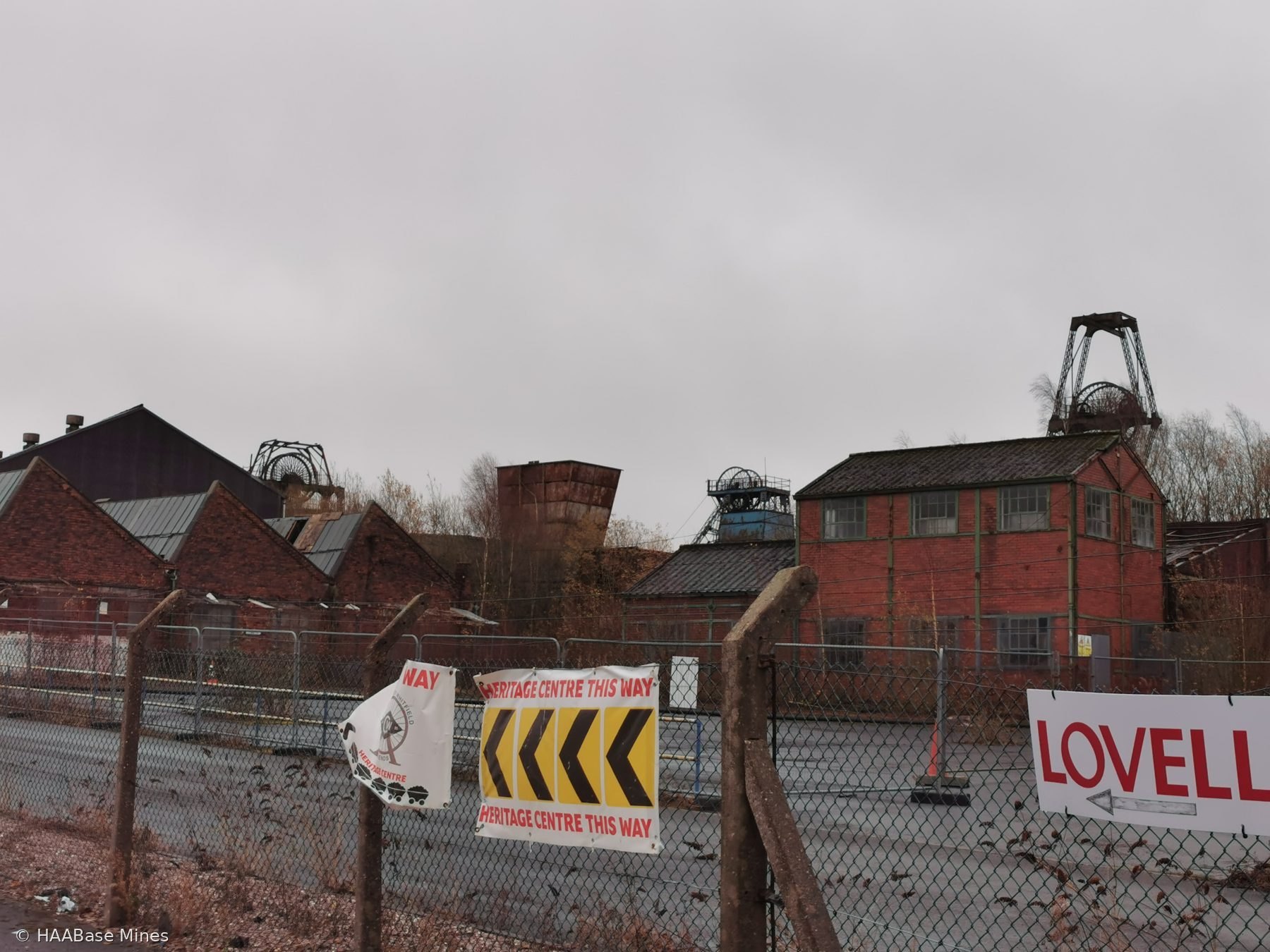
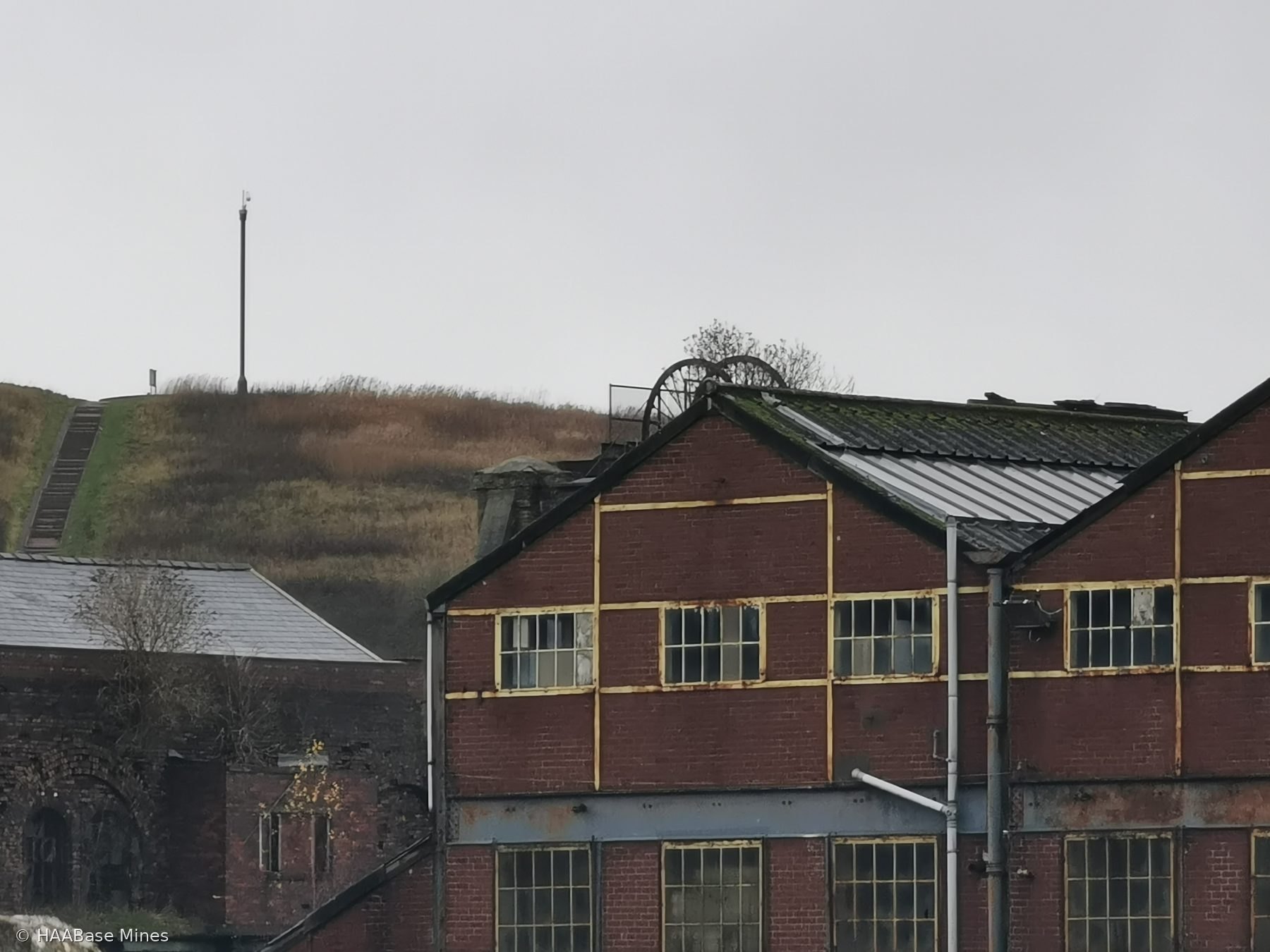
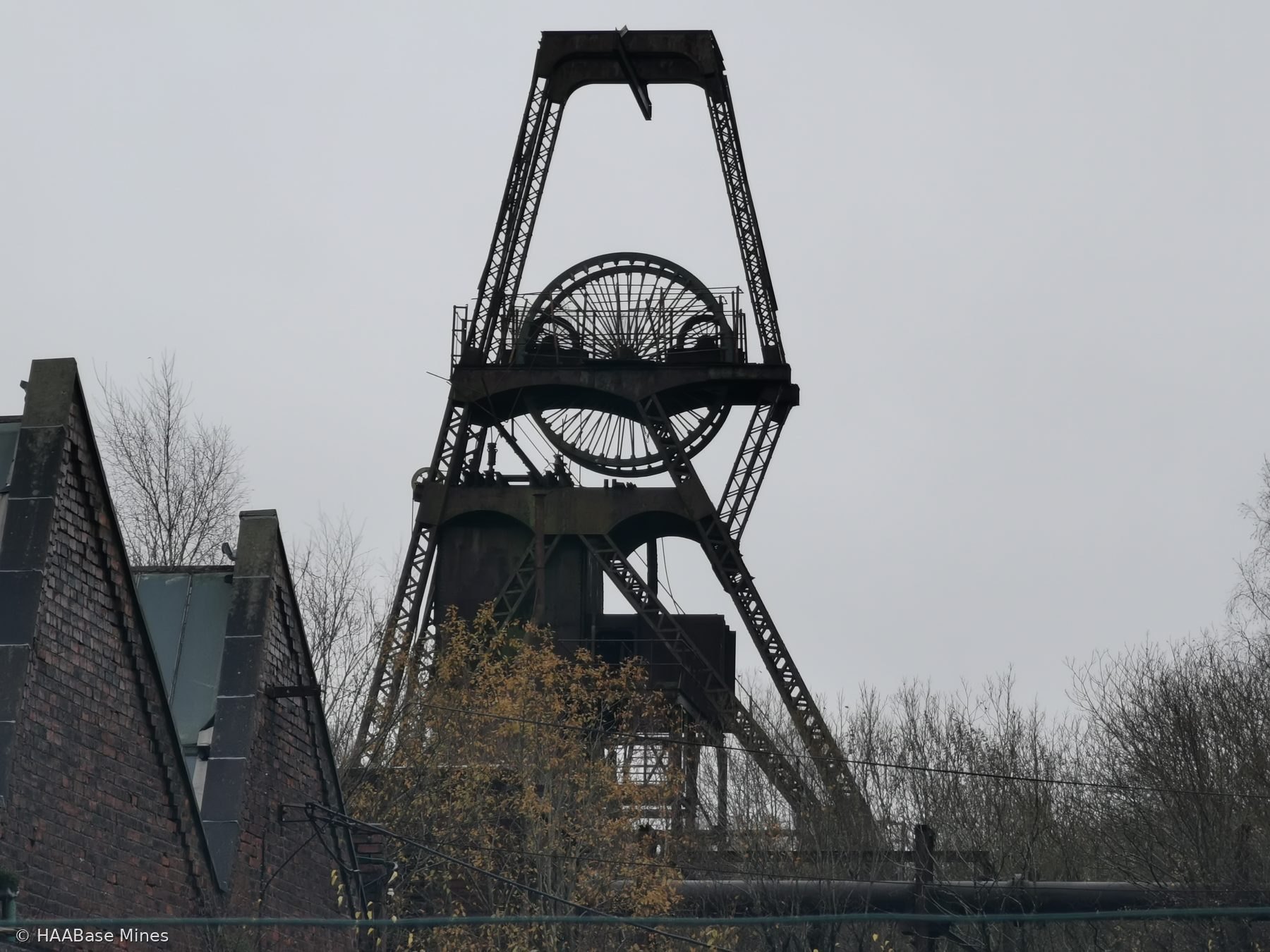
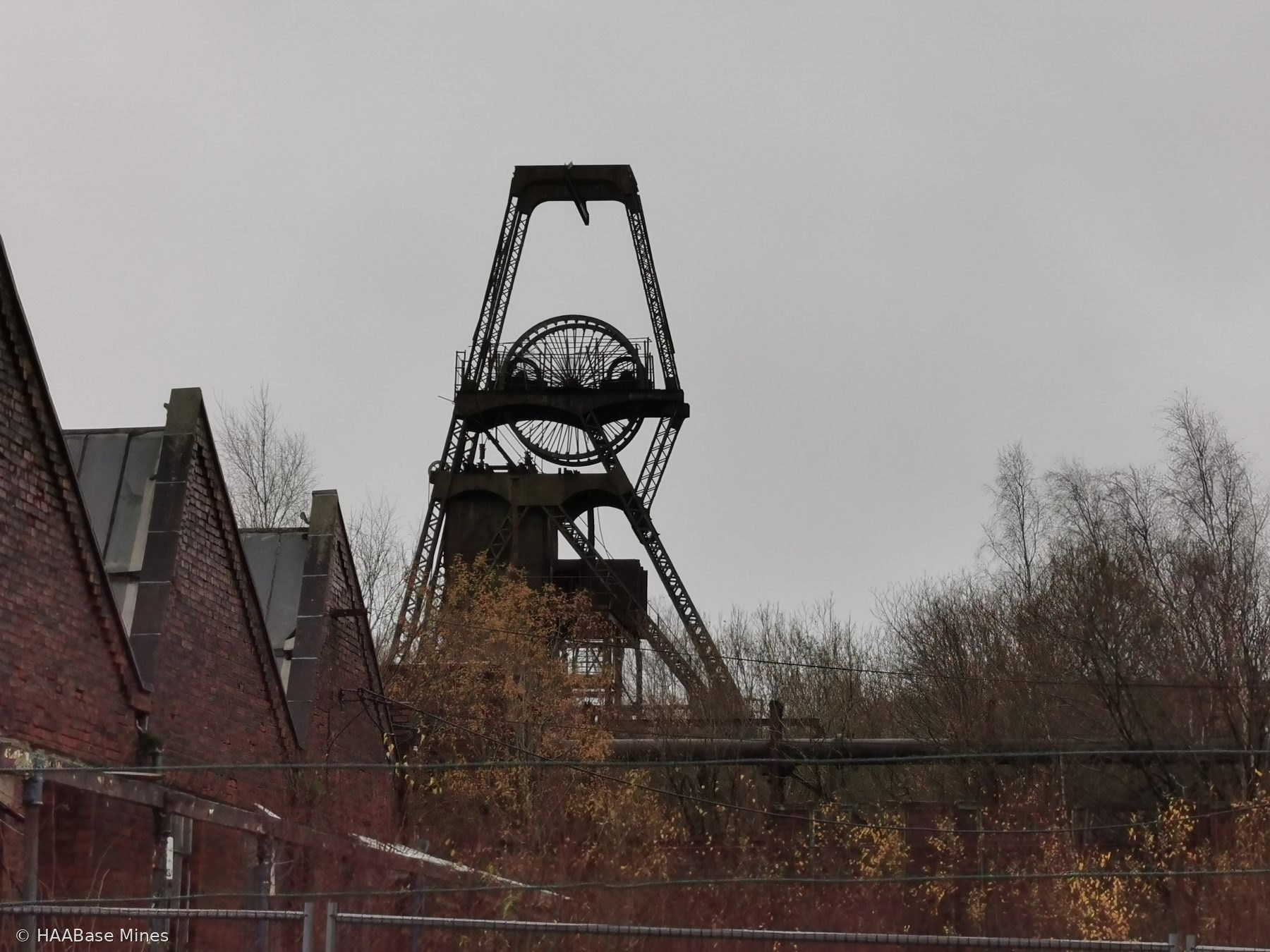
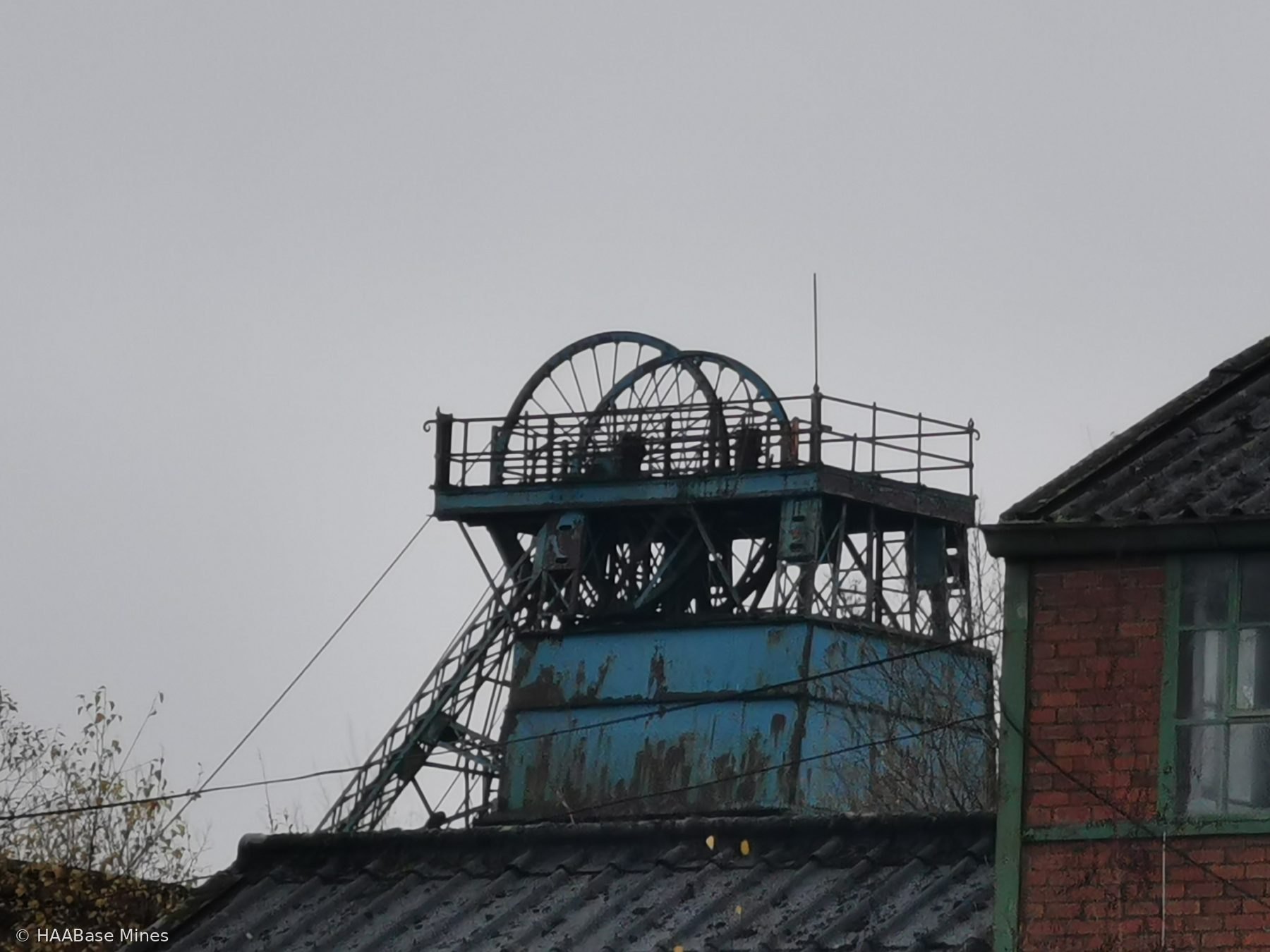
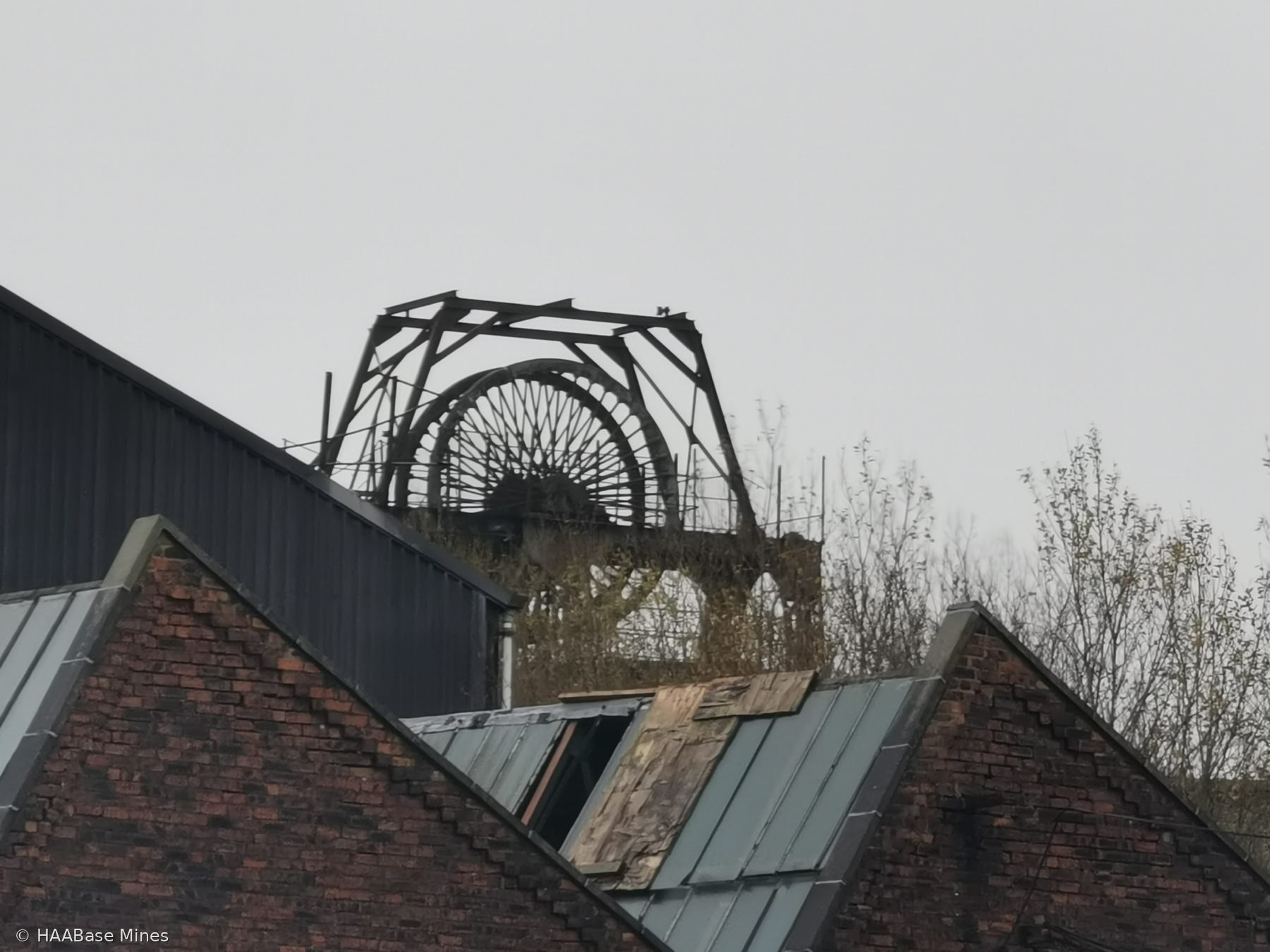
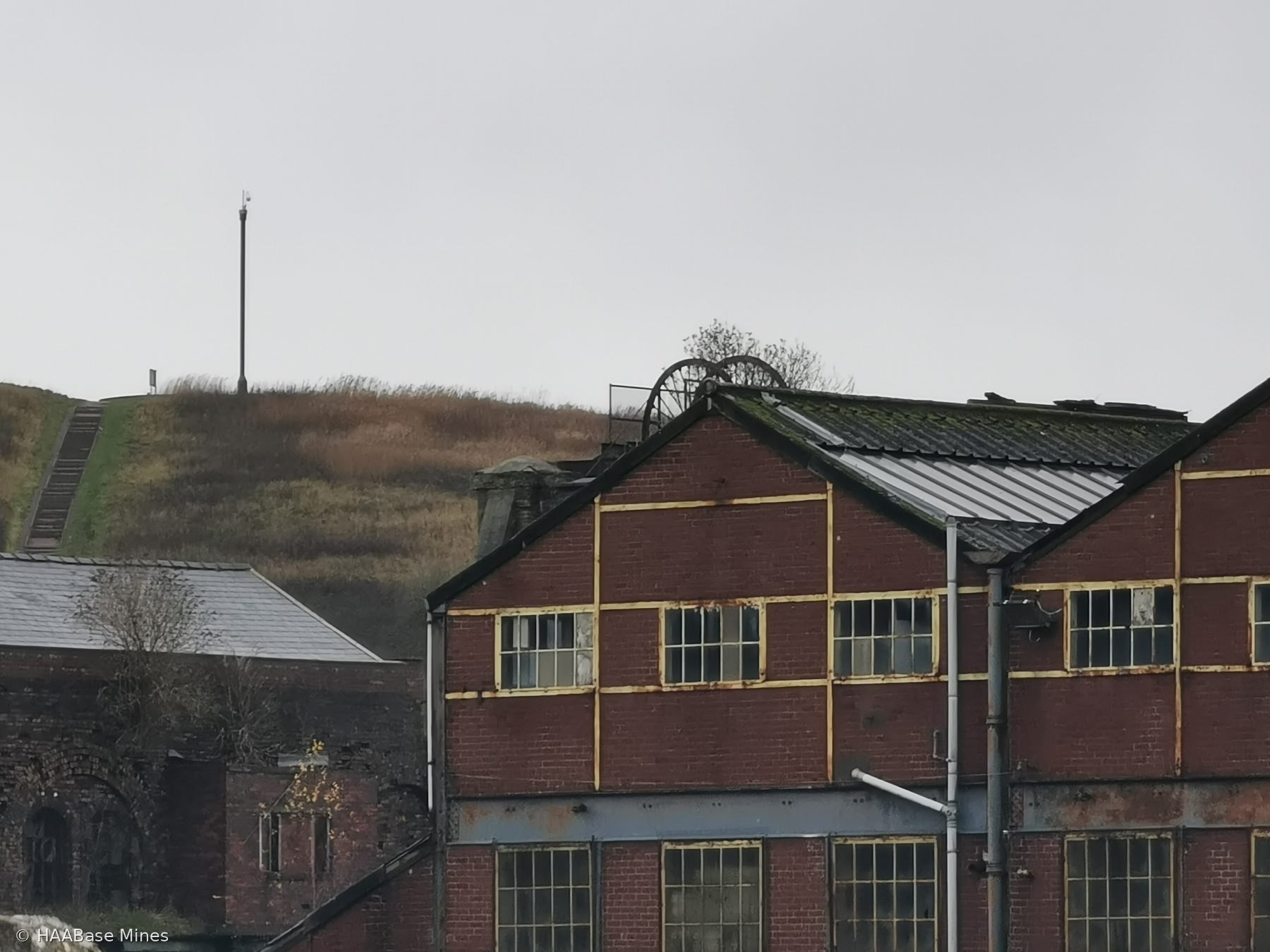
Chatterley Whitfield Colliery is situated on the north-eastern outskirts of Stoke-on-Trent in Staffordshire, on the North Staffordshire Coalfield, where five productive coal seams outcrop across the site. References to coal mining in the manor of Tunstall date from the late thirteenth century, and a local tradition records that monks of Hulton Abbey worked coal from footrails at nearby Ridgeway in the fourteenth and fifteenth centuries. In 1750, Ralph Leigh of Burslem is recorded collecting coal from Whitfield twice a day by horse.
In 1838, Thomas Hargreaves conducted a survey on behalf of the proprietors, who held an engine house, coal wharf, carpenters' shop, and brickworks on site. Hugh Henshall Williamson was mining at Whitfield by 1853, working the Bellringer shaft (79 yards deep), the Ragman and Engine shafts (each 50 yards deep), and footrails at Ridgeway. He sank the Prince Albert shaft and additional shafts during the 1850s to exploit the Holly Lane, Hardmine, Bowling Alley, and Ten Feet seams.
In 1854 he pressed the North Staffordshire Railway to construct the Biddulph Valley branch line, which opened for mineral traffic in 1859 and was completed in 1860, passing within half a mile of Whitfield. On the line's opening, Williamson constructed his own rail link from the shafts to Chell Sidings. In 1863 the Ragman shaft was deepened to the Ten Feet seam at 150 yards; at this time one winding engine served the Ragman, Engine, and Bellringer shafts, with coal wound in 8 cwt. tubs attached by chains.
Hugh Henshall Williamson died in December 1867. Just before his death the colliery changed hands, and a group known as the Gentlemen of Tunstall formed the Whitfield Colliery Company Limited, purchasing both the colliery and a 214-acre estate for £40,000. The new owners deepened the Engine Pit to the same level as the Ragman Pit (148 yards), widened both shafts to accommodate two cages, and provided each with its own steam winding engine, discontinuing the Bellringer shaft.
The Whitfield Colliery Company Limited came to an end in 1872. In early 1873 Charles J. Homer, Managing Director of the Chatterley Iron Company Limited, purchased the Whitfield Colliery. The new owners began widening and deepening the old Bellringer shaft to 440 yards in 1874; shortly after sinking began, it was renamed the Institute shaft to commemorate a visit by the North Staffordshire Institute of Mining Engineers.
In 1874 an old shaft to the north-east of the Institute was widened and deepened to act as the upcast; it was named the Laura, after Mr Homer's daughter. Both shafts were completed in 1876. In the same year the company ran into serious financial difficulties, and numerous small pits were closed.
Charles J. Homer resigned over the issue. A private railway from Whitfield to Pinnox, constructed despite opposition from the North Staffordshire Railway, was completed in 1878, reducing transport costs to the blast furnaces at Chatterley. During the early morning of 7 February 1881 a serious fire and explosion at Whitfield, caused by the misuse of an underground blacksmith's furnace, killed twenty-four men and boys.
The force of the explosion caused the Laura Pit and its pit top to be abandoned entirely, and the Institute shaft had to be partly filled to extinguish the fire. An inquiry was held at the Norton Arms public house, and the manager Edwin Thompson was tried for manslaughter at Stafford Assizes and acquitted. In 1881 the Middle Pit shaft (formerly the Ragman) was deepened to the Hardmine seam, and a new upcast shaft was sunk to replace the Laura.
This replacement shaft was completed in 1883 and named the Platt Pit, after one of the company's directors. In 1884 the company faced heavy financial difficulties again and applied to the court for permission to close; the application was withdrawn and the affairs placed under three liquidators, one of whom was the previous company secretary, John Renshaw Wain. Edward Brownfield Wain, his son, was appointed undermanager in 1882 and introduced longwall working to replace the pillar-and-stall system.
He became colliery manager in 1886 and by 1890 the company was paying its way again. In 1890 the liquidators reached an agreement with the North of England Trustee, Debenture and Assets Corporation Limited of Manchester, who purchased the old Chatterley Iron Company; the new company became Chatterley Whitfield Collieries Limited, beginning a major period of expansion. By 1899 the colliery produced in excess of 950,000 tons of saleable coal.
A minor explosion in 1912 resulted in no fatalities but made additional ventilation essential. Work commenced in April 1913 on a new ventilation shaft, 5 yards in diameter and 700 feet deep, completed in 1914; the heapstead and winding engine house were constructed entirely of brick to a German design, unique in British coal mining, and the shaft was named the Winstanley after the company's Mining Engineer, Robert Winstanley. The Prince Albert shaft and the Engine Pit were closed and filled as a direct result.
Work on the Hesketh shaft commenced in June 1915 east of the Platt shaft; it was completed in May 1917 to a depth of 640 yards and named after Colonel George Hesketh, Chairman of the Board of Directors. A massive horizontal steam winding engine, installed by the Worsley Mesnes company of Manchester, was placed in the winding engine house. In 1923 the original parallel drum was replaced by a bi-cylindro drum.
Electrically driven coal cutters and compressed air shaker conveyors were introduced in 1915. By 1932 all underground haulage had been mechanised and most pit ponies removed from the mine; steel supports began replacing timber pit props. In the late 1920s and early 1930s only 193 working days were recorded in 1929 and 300 miners were made redundant during the Depression.
Over £300,000 was invested in new plant, workshops, and railway equipment during the recovery years. In 1937 the colliery became the first in Britain to produce one million saleable tons of coal in a year, a feat repeated in 1938. In 1938 a new boiler house with twelve Lancashire boilers and the pithead baths with 3,817 clean and 3,817 dirty lockers were brought into use.
The colliery passed to the National Coal Board on nationalisation on 1 January 1947. In 1952 mine cars and locomotive haulage were introduced underground and a new mine car circuit installed on the surface. Output declined from over one million tons per year in 1937 to 408,000 tons in 1965.
Coal drawing stopped at the Institute shaft in 1955 and at the Middle Pit in 1968. In 1974 an underground roadway was driven to connect Chatterley Whitfield to Wolstanton Colliery, so that Whitfield coal could be worked from Wolstanton. Chatterley Whitfield ceased production on 25 March 1977.
A conically shaped spoil heap was reduced in height by approximately half between 1976 and 1982 following the findings of the Aberfan disaster inquiry. The site reopened as the Chatterley Whitfield Mining Museum in 1979, offering underground tours via the Winstanley shaft to a depth of 240 yards in the Holly Lane Seam; it attracted up to 70,000 visitors a year. Following the closure of Wolstanton Colliery in 1986, the underground workings were at risk of flooding and methane accumulation; British Coal invested £1,000,000 in a simulated underground experience in former railway cuttings accessed via the Platt shaft.
The museum was put into liquidation on 9 August 1993 and the site returned to Stoke-on-Trent City Council in 1994. The entire museum contents were auctioned in April 1994. In November 1993 the site was designated a Scheduled Monument; a number of buildings received Grade II and Grade II* listed status.
The Victorian Society included the site on its list of most endangered buildings in England and Wales in September 2019. The site is on the Historic England Heritage at Risk Register, with the colliery listed in very bad condition, with high vulnerability and a declining trend as of the most recent register. The Chatterley Whitfield Friends CIO (registered charity 1183093) currently operates a Heritage Centre, Remembrance Garden, and Artefacts Building, open every Thursday and Saturday morning, with site tours on the second Saturday of each month.