Site overview

The 1900s Colliery at Beamish Museum, near Stanley in County Durham, is a purpose-assembled colliery exhibit at the heart of the North of England Open Air Museum. The museum site is former colliery ground: the Mahogany Drift Mine, opened here in about 1855, is the one structure original to the location. It was re-used in 1921 to transport coal to Beamish Chophill Colliery, then opened as a visitor exhibit in 1979.

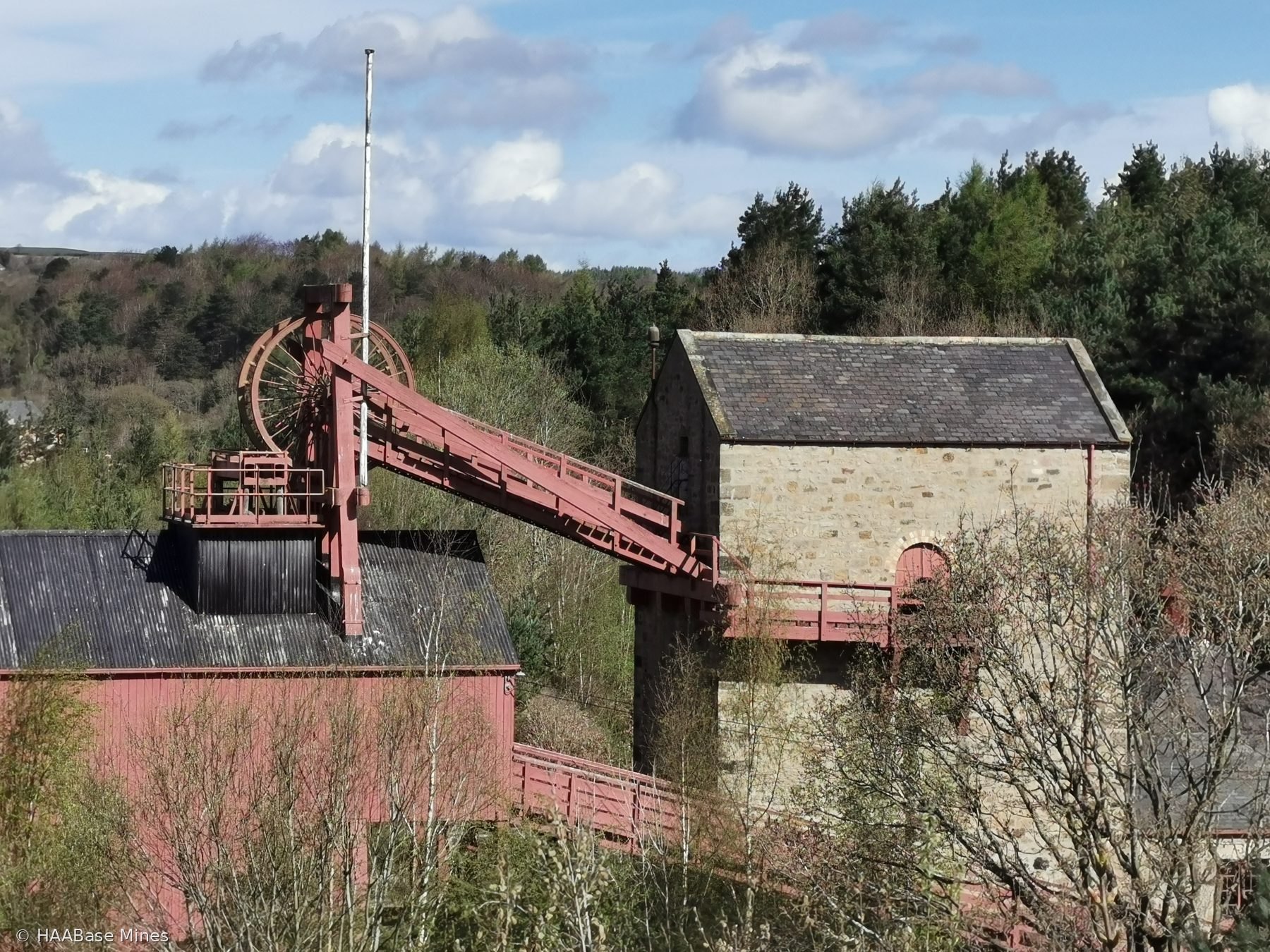
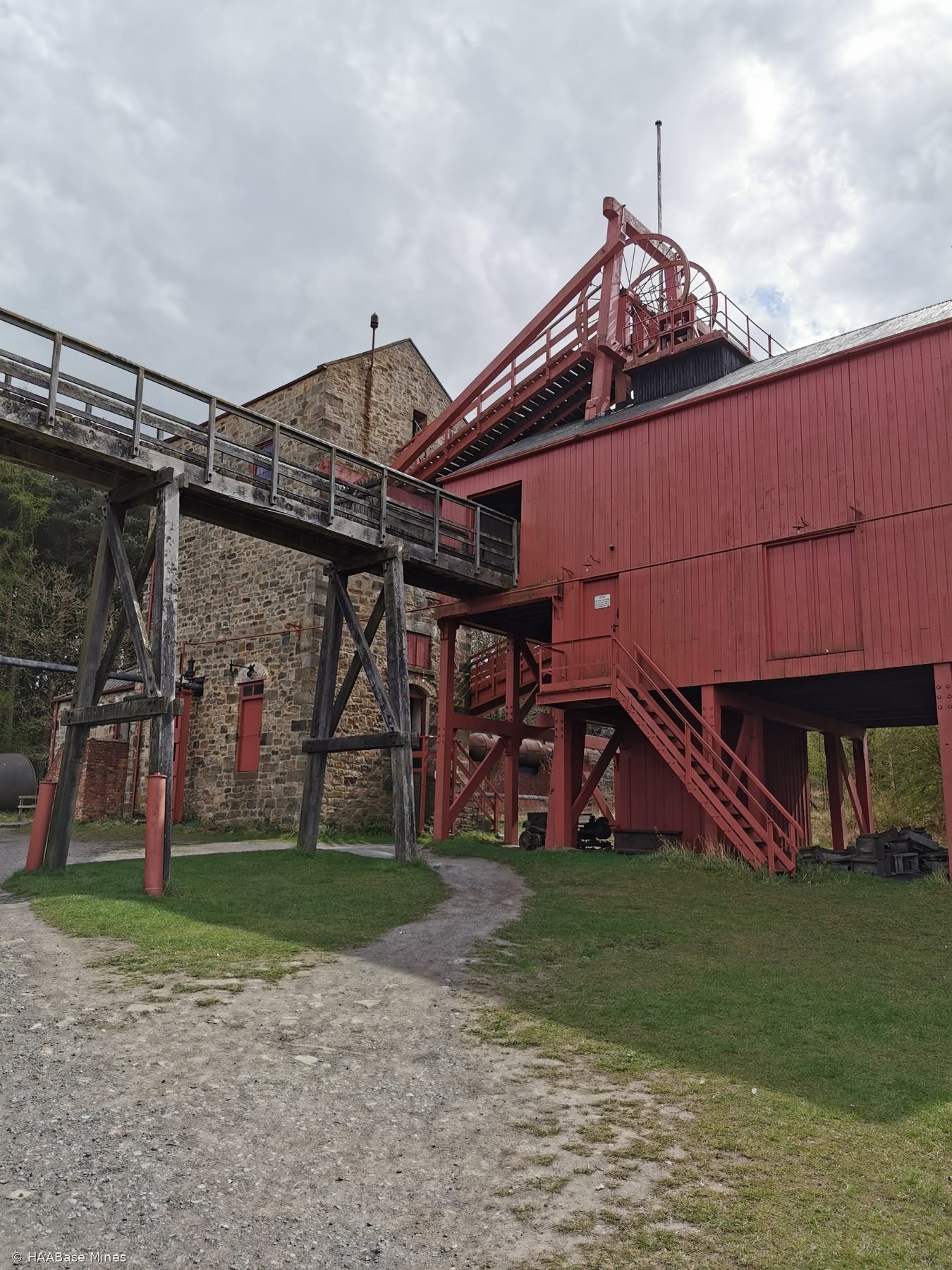
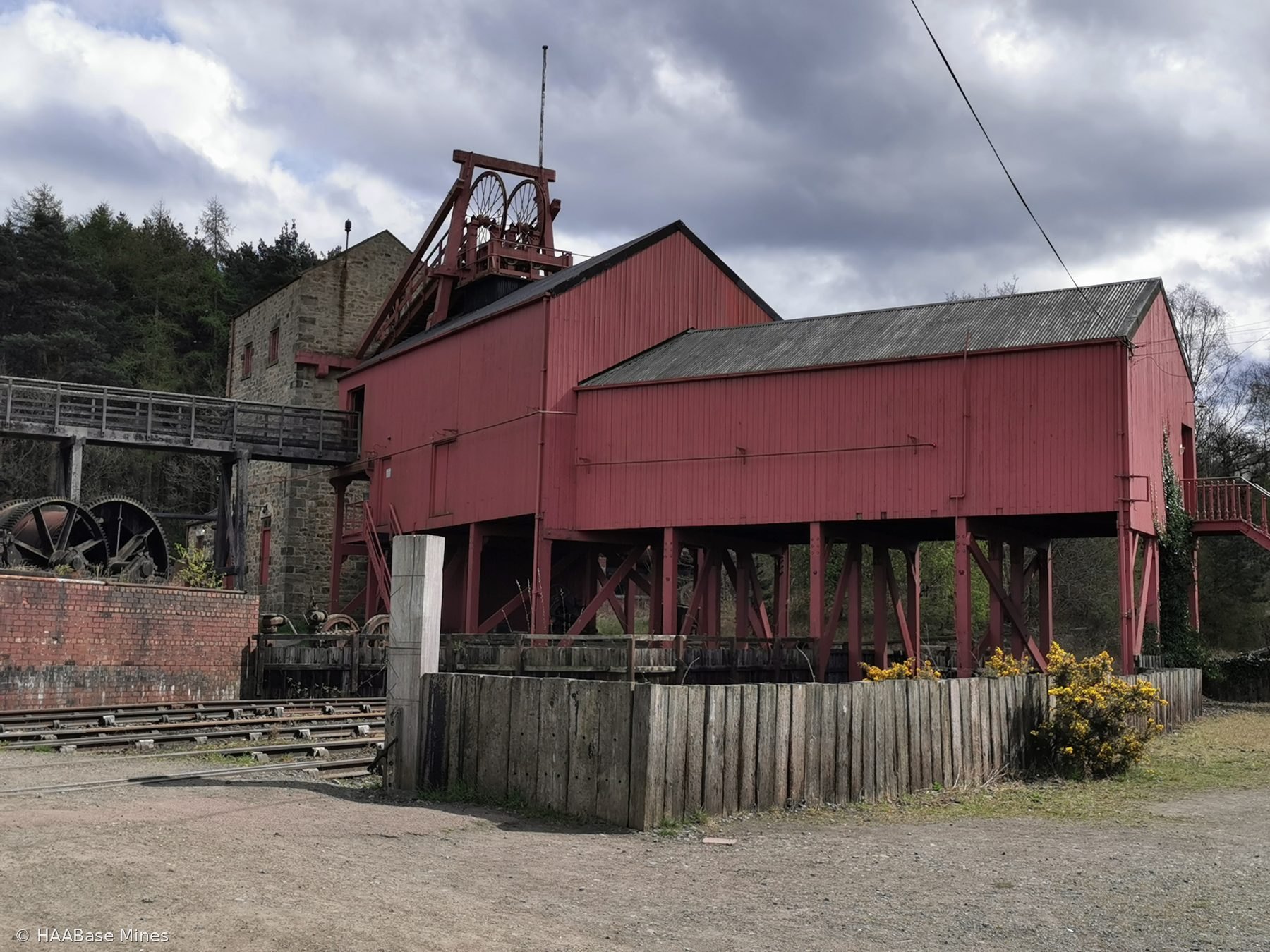
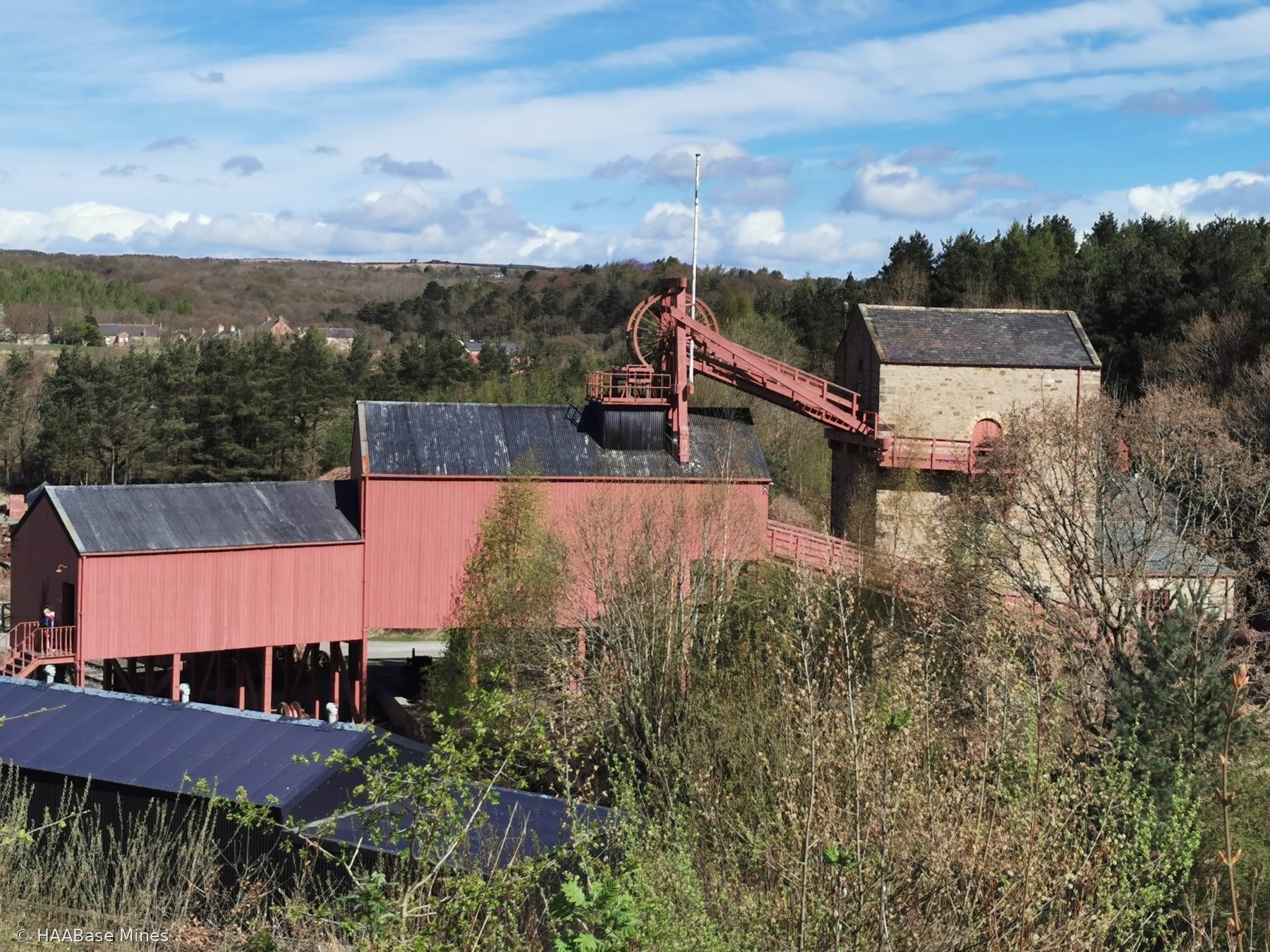
The dominant above-ground structures — the stone winding engine house and the red-painted wooden heapstead — were relocated from other local collieries. The engine house and its winding engine came from Beamish Chophill Colliery (Beamish Second Pit), closed by the National Coal Board in 1962; museum founder Frank Atkinson intervened to have both spot listed before their relocation to Beamish, completed in 1976. The heapstead was relocated from Ravensworth Park Mine in Gateshead.

The winding engine was built in 1855 by J&G Joicey of Newcastle to an 1800 design by Phineas Crowther; it is the sole surviving example of its type from the Northern Coalfield and is listed. A sinking engine brought from Silksworth Colliery in 1971, built by Burlington's of Sunderland in 1868, is likewise the sole surviving example of its kind. The colliery exhibit operates standard and narrow gauge railways, includes a lamp cabin opened in 2009, and a reconstructed engine shed representing the former Beamish 2nd Pit engine works.

The museum opened to the public in 1972 and was named European Museum of the Year in 1986.

Set within the wider museum grounds, the colliery structures stand in an open landscaped setting where relocated and original elements combine to form a clearly legible historic pit scene.

Map & photo

Beamish Museum — 1900s Colliery mine headframe or winding tower site
Photograph taken: 13 April 2025
Map markers and directions links are provided for location reference only and do not indicate public access or permission to enter a site.

History

The Beamish Museum site near Stanley in County Durham sits within the former Durham coalfield, and the 1900s Colliery exhibit draws directly on that industrial landscape. The one structure original to the museum's ground is the Mahogany Drift Mine, opened on the site in about 1855 to extract coal. After closing, the drift was brought back into use in 1921 to transport coal from Beamish Park Drift to Beamish Chophill Colliery. When the museum assembled its colliery exhibit the Mahogany Drift was incorporated, opening to visitors in 1979. It offers guided underground tours and includes a winding engine, a short section of trackway, and a mine office as part of the display.

The two structures that dominate the surface colliery exhibit — the stone winding engine house and the red-painted wooden heapstead — were not original to the site but were relocated from other local collieries. The engine house and its winding engine came from Beamish Chophill Colliery, also known as Beamish Second Pit, which had been closed by the National Coal Board in 1962. Most of its buildings were subsequently demolished. Museum founder Frank Atkinson intervened to have both the engine and the tower spot listed to prevent their demolition. After a protracted process to obtain the necessary permissions for moving a listed structure, the tower and engine were dismantled and reconstructed at the museum, work being completed in 1976. The winding engine was built in 1855 by J&G Joicey of Newcastle to an 1800 design by Phineas Crowther. It was still in active use at Chophill at the time of closure and is the sole surviving example of its type from the Northern Coalfield. Both the engine and its enclosing house are listed. Inside the engine house, a smaller jack engine is housed at the rear; such engines were used to lift heavy equipment and, in deep mines, to act as a relief winding engine.

The wooden heapstead — the structure in which coal was weighed, screened, and loaded onto railway wagons — was relocated from Ravensworth Park Mine in Gateshead. It is typical of the smaller collieries of west Durham. Outside, next to the heapstead, stands a sinking engine brought to the museum from Silksworth Colliery in 1971. Built by Burlington's of Sunderland in 1868, it is the sole surviving example of its kind. Sinking engines were used during shaft construction; it is believed the Silksworth engine was retained at that colliery because it was powerful enough to serve as a backup winding engine.

The colliery exhibit also includes a lamp cabin opened in 2009, recreating a typical colliery lamp cabin of the Edwardian period. Standard and narrow gauge railways serve the colliery yard. A larger engine shed presented as Beamish Engine Works is a reconstruction of the engine shed that formerly stood at Beamish 2nd Pit. A Power House on the south-eastern corner of the colliery site was brought from Houghton Colliery. The museum's colliery railway holds a collection of industrial steam locomotives and chaldron wagons, the traditional regional type of colliery rolling stock.

The museum was established following a working party set up in 1966, and opened to visitors on its present site in 1972, the first regional open-air museum in England. The winding engine house reconstruction was completed in 1976. The museum was named European Museum of the Year in 1986. The colliery exhibit is presented as representing operations under James Joicey and Co., managed by William Severs, consistent with the Edwardian period the museum depicts.
Timeline

1855
Construction

Mahogany Drift Mine opened on the museum site

The Mahogany Drift Mine was opened on the site in about 1855 to extract coal. It is the one mining structure original to the museum's location.
1855
Construction

Winding engine built by J&G Joicey for Beamish Chophill Colliery

The winding engine later relocated to the museum was built in 1855 by J&G Joicey of Newcastle to an 1800 design by Phineas Crowther, for Beamish Chophill Colliery (Beamish Second Pit). It remained in active use at Chophill until that colliery's closure in 1962 and is the sole surviving example of its type.
1868
Construction

Sinking engine built by Burlington's of Sunderland

A sinking engine later acquired by the museum was built by Burlington's of Sunderland in 1868 for Silksworth Colliery. It is the sole surviving example of its kind.
1921
Operation

Mahogany Drift re-used for coal transport

After its initial closure, the Mahogany Drift was brought back into use in 1921 to transport coal from Beamish Park Drift to Beamish Chophill Colliery.
1962
Closure

Beamish Chophill Colliery closed by NCB; engine and tower spot listed

Beamish Chophill Colliery was closed by the National Coal Board in 1962. Most of its buildings were subsequently demolished. Museum founder Frank Atkinson secured spot listing of the winding engine and tower to prevent their demolition.
1966
Heritage

Museum working party established

In 1966 a working party was established to set up a museum for the purpose of studying, collecting, preserving, and exhibiting evidence of industry and everyday life in the north of England. Beamish Hall, recently vacated by the National Coal Board, was selected as the initial location.
1971
Heritage

Sinking engine acquired from Silksworth Colliery

The sinking engine built by Burlington's of Sunderland in 1868 was brought to the museum from Silksworth Colliery in 1971.
1972
Heritage

Beamish Museum opened to visitors on present site

The museum opened to visitors on its present site in 1972, the first regional open-air museum in England. The railway station and colliery winding engine were among the first translocated structures erected the following year.
1976
Heritage

Winding engine house reconstruction completed; heapstead relocated

The winding engine house and its engine, relocated from Beamish Chophill Colliery after a protracted listed-building permissions process, were reconstructed at the museum in 1976. The heapstead was relocated at the same time from Ravensworth Park Mine in Gateshead. Both the winding engine and its enclosing house are listed.
1979
Heritage

Mahogany Drift Mine opened as visitor exhibit

The Mahogany Drift Mine opened as a museum display in 1979. The exhibit includes the drift mine tunnel, a winding engine, a short section of trackway, and a mine office. Visitor access is by guided tour.
1986
Heritage

Museum named European Museum of the Year

Beamish Museum was named European Museum of the Year in 1986.
2009
Heritage

Lamp Cabin opened at the colliery exhibit

The Lamp Cabin, a recreation of a typical colliery lamp cabin of the Edwardian period, opened at the 1900s Colliery exhibit in 2009.

Sources and records

Wikipedia article: Beamish Museum
Beamish Museum official website: 1900s Colliery
Beamish Museum official website: About Beamish (timeline)
Historic England archive: Ian M Parsons Slide Collection, item IMP01/01/0074
Co-Curate: Beamish Museum
The Railway Magazine: From the archive, the treasures of Beamish
Slow Europe Travel Forums: Beamish, the Living Museum of the North
This researched site record is part of the HAABase Mines database. Normal personal research and browsing is welcome. Automated bulk extraction, republication, or harvesting of site text and images is not permitted without written consent.