Site overview

Astley Green Colliery, founded in 1908 by the Pilkington Colliery Company on the edge of Chat Moss in the south Lancashire Coalfield, was sunk using a pioneering drop shaft method to overcome deep, wet, and unstable ground. Production began in 1912 from two shafts, with No. 1 shaft reaching a depth of 814 metres and housing the largest steam winding engine ever used on the Lancashire Coalfield. The colliery was amalgamated into Manchester Collieries in 1928 and nationalised in 1947.

A firedamp explosion on 6 June 1939 killed five men, including the pit manager. The colliery closed in 1970 after 62 years of production. Pressure from Lancashire County Council, local museums, and archaeologists saved the No. 1 shaft headgear, winding engine, and engine house from demolition.

The site was leased to the Red Rose Steam Society in 1983 and has since operated as a heritage museum, now known as the Lancashire Mining Museum. The 3,300 horsepower twin tandem compound steam winding engine was restored to working order in 2013. Both the headgear and engine house hold Scheduled Monument and Grade II listed building status.

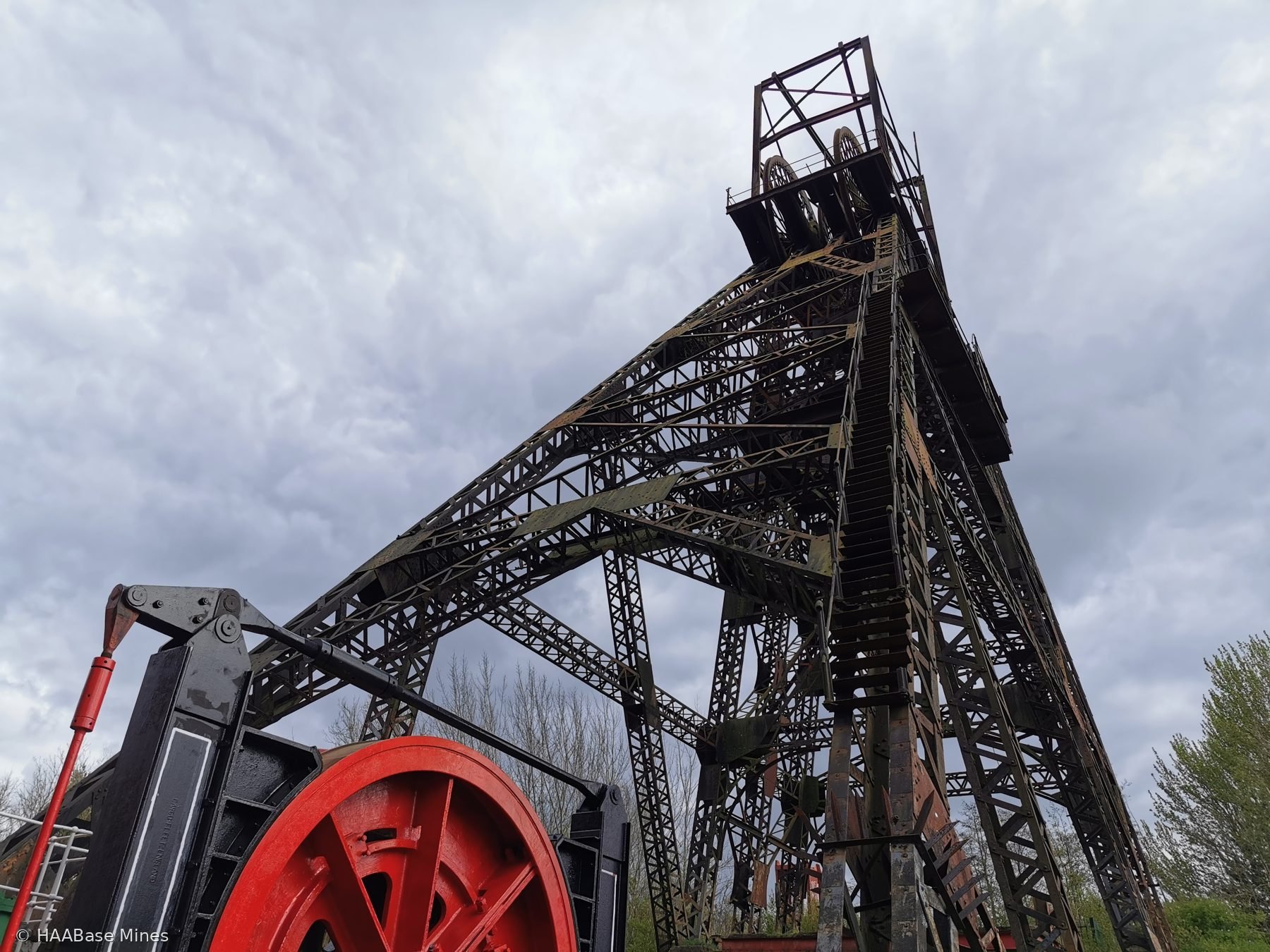
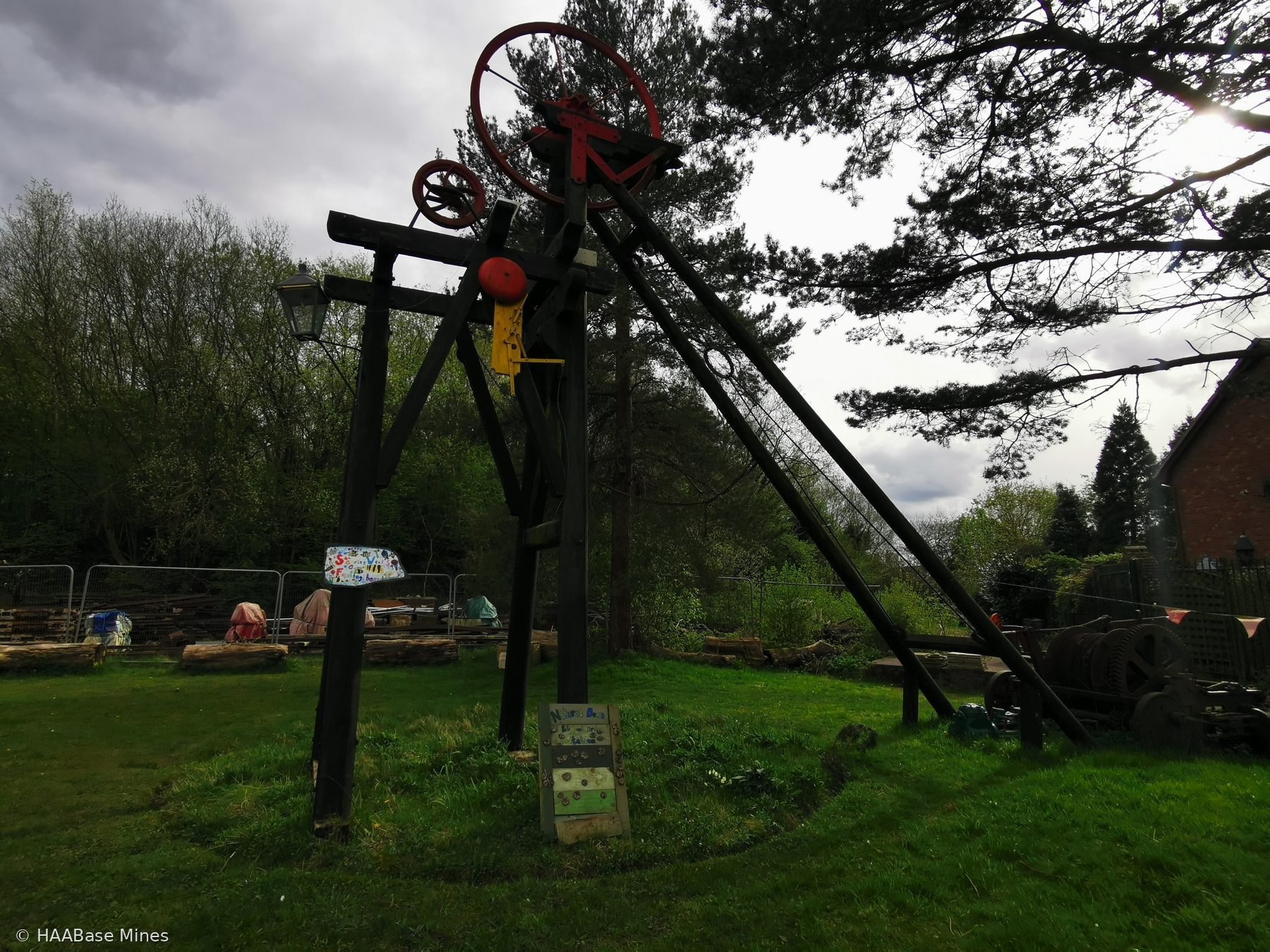
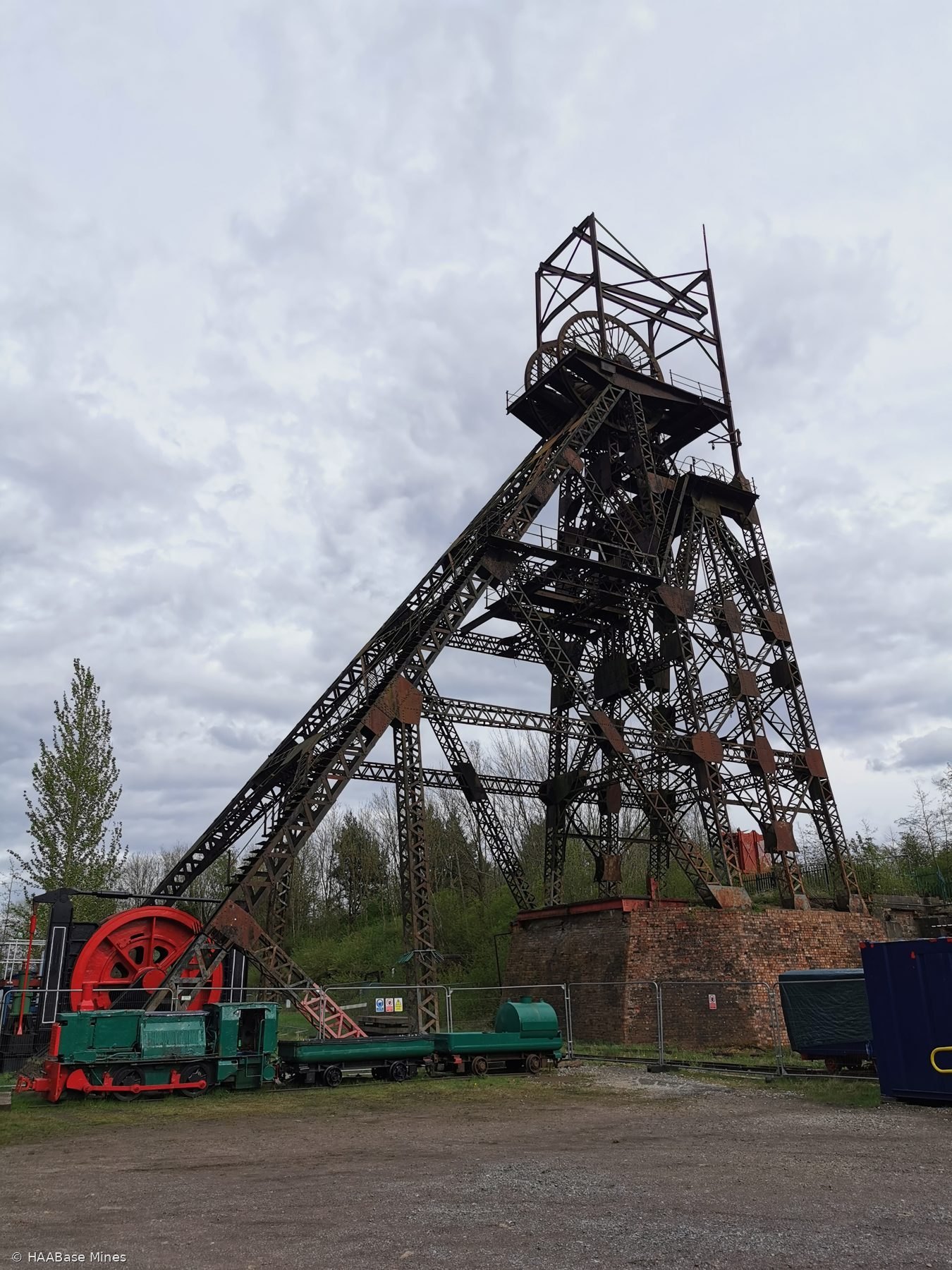
The colliery stands in flat, open surroundings on the edge of Chat Moss, where the headgear and engine house read clearly as a compact but prominent surviving group.

Map & photo

Astley Green Colliery mine headframe or winding tower site
Photograph taken: 14 April 2024
Map markers and directions links are provided for location reference only and do not indicate public access or permission to enter a site.

History

Astley Green Colliery was founded in 1908 by the Pilkington Colliery Company, a subsidiary of the Clifton and Kersley Coal Company, to exploit deep coal seams of the Manchester Coalfield beneath the peat bog known as Chat Moss. The coal seams were very deep and overlain by approximately 30 metres of wet and unstable ground, making shaft sinking a costly and technically demanding proposition; a paper on the sinking of the shaft was subsequently presented to the Institute of Mining Engineers. On Thursday 7 May 1908 work began on sinking what became known as No. 1 shaft. For the first time in Britain a method known as the drop shaft was used, in which forged iron rings with a cutting shoe at the bottom were forced into the unstable ground using thirteen hydraulic jacks; the excavated material was removed from within the shield and the process repeated until the shaft reached stable strata at a depth of 30 metres. A large masonry thrust pillar was constructed to resist the hydraulic jack forces; this pillar now supports the headgear. Below 30 metres, further tubbing continued until a depth of 122 metres was reached, after which the shaft was lined with brick. The 6.4-metre-diameter No. 1 shaft reached pit bottom at 814 metres without loss of life in 1912. The Crombouke and Rams coal measures were intersected by the sinkings. Firedamp was encountered in the new workings and presented ventilation challenges.

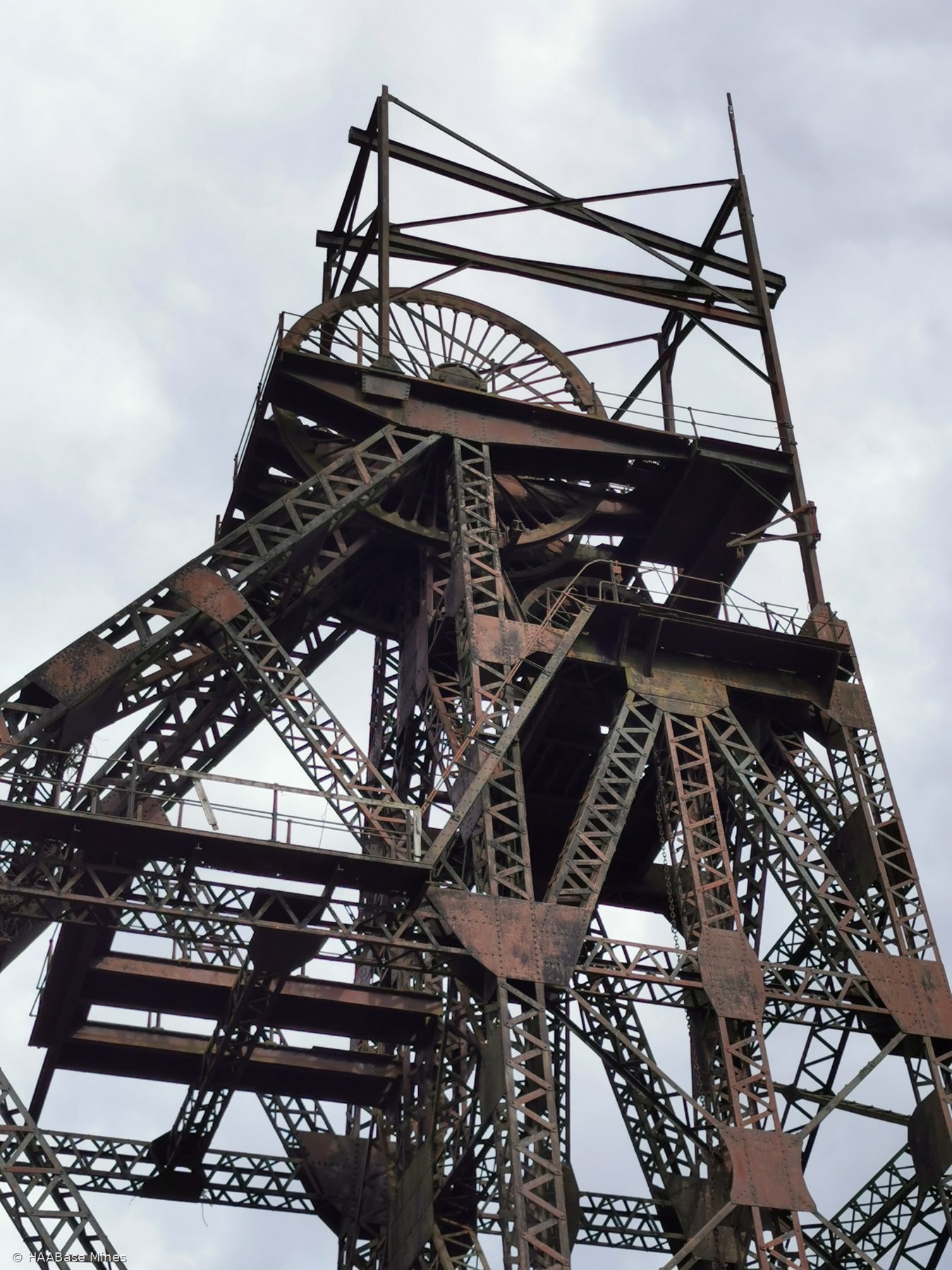
The No. 1 shaft headgear was built by Head Wrightson of Stockton-on-Tees and completed by 1912. It is a lattice steel riveted structure standing nearly 30 metres high, with two winding pulleys of 6.4 metres in diameter; the whole structure weighs 122 tonnes. The winding engine installed at No. 1 pit in 1912 was a twin tandem compound 3,300 horsepower engine built by Yates and Thom of Blackburn, and was the largest winding engine ever used on the Lancashire Coalfield. It was driven by four steam cylinders in a twin tandem compound arrangement connected to a bicylindro-conical drum; at full capacity it was able to haul just over eight tonnes of coal from a depth of 801 metres every two minutes. Yates and Thom also supplied 16 Lancashire boilers for the colliery. A smaller cross compound winding engine for No. 2 pit was also built by Yates and Thom; delivery was delayed by the First World War and it was not operational until 1919. No. 2 shaft headgear was of lighter construction using rolled steel girders, reflecting its principal duty of transporting men and materials.

Coal was despatched from Astley Green by rail to the Manchester to Liverpool mainline at Astley Junction and by water via the Bridgewater Canal; later the pit supplied coal to power stations at Trafford and Stretford. In 1923 the colliery employed 1,524 men underground and 436 surface workers, rising to 1,631 underground and 492 surface workers by 1933. Women, known as pit brow lasses, sorted coal on the screens at Astley Green and were employed there until the mid-1950s. In 1928 Astley Green was amalgamated with other local collieries to form Manchester Collieries.

On 6 June 1939 a firedamp explosion occurred at the colliery. Men had been fighting an underground fire more than a mile from the pit bottom; despite rescue efforts from Boothstown Mines Rescue Station, further explosions drove back the rescuers and five men, including the pit manager, died and four were injured. The colliery was employing approximately 2,000 men at the time of the accident. After nationalisation in 1947 the mine was modernised and both shafts wound coal; after nationalisation No. 2 shaft wound coal only from the Worsley Four Feet Seam at a depth of 263 metres, while No. 1 shaft continued to work the deeper seams. From 1947 mine cars of three-tonne capacity replaced the earlier tubs. Skip winding was also installed on No. 2 shaft in the post-nationalisation period.

By the late 1960s production targets were increasingly hard to meet. On 3 April 1970 the last load of coal was hauled up and the colliery was classified as uneconomic and closed. Demolition began in the same year. The No. 2 shaft headgear and associated buildings were demolished. However, pressure from Lancashire County Council, local museums, and archaeologists brought demolition to a halt, and the No. 1 shaft headgear, winding engine, internal travelling crane, and engine house were preserved in place. The remainder of the site was mothballed.

In 1983 the Red Rose Steam Society took a lease on the site and began work on saving and restoring the winding engine and winding house. The organisation was later renamed the Red Rose Steam Society Ltd, and subsequently the Lancashire Mining Museum Ltd in 2022. The site now operates as the Lancashire Mining Museum, a registered charity. The winding engine was restored to working order and ran for the first time since the pit's closure in 2013, now operated on compressed air at regular intervals. The No. 1 shaft headgear is the only surviving pit headgear on the Lancashire Coalfield, and the engine house contains the largest surviving steam winding engine used on that coalfield. Both the headgear and engine house are Grade II listed buildings and hold Scheduled Monument status. An English Heritage report has noted the headgear as being at risk of deterioration requiring urgent repair and maintenance. The museum occupies approximately 15 acres and holds a collection of 28 colliery locomotives, described as the largest collection of its type in the United Kingdom.
Timeline

1908
Construction

Shaft sinking begins using drop shaft method

On 7 May 1908 the Pilkington Colliery Company began sinking No. 1 shaft at Astley Green using the drop shaft method, the first application of this technique in Britain. Forged iron rings with cutting shoes were forced into the unstable ground by thirteen hydraulic jacks. A masonry thrust pillar was constructed to resist the jack forces.
1912
Construction

No. 1 shaft reaches pit bottom; headgear and winding engine installed

No. 1 shaft reached pit bottom at 814 metres without loss of life in 1912. The shaft was 23 feet in diameter. The steel lattice headgear, built by Head Wrightson of Stockton-on-Tees, was completed in 1912, standing nearly 30 metres high and weighing 122 tonnes. A 3,300 horsepower twin tandem compound winding engine built by Yates and Thom of Blackburn was installed; it was the largest winding engine ever used on the Lancashire Coalfield.
1912
Operation

Colliery opens for coal production

Astley Green Colliery commenced coal production in 1912. Coal was despatched by rail to the Manchester to Liverpool mainline at Astley Junction and via the Bridgewater Canal.
1919
Construction

No. 2 pit winding engine installed

A smaller cross compound winding engine for No. 2 pit, also built by Yates and Thom, was installed and became operational in 1919, its delivery having been delayed by the First World War.
1923
Operation

Peak employment recorded

In 1923 the colliery employed 1,524 men underground and 436 surface workers. By 1933 this had risen to 1,631 underground and 492 surface workers.
1928
Legislation

Amalgamation into Manchester Collieries

In 1928 Astley Green Colliery was amalgamated with other local collieries to form Manchester Collieries.
1939
Operation

Firedamp explosion kills five men

On 6 June 1939 a firedamp explosion occurred. Men had been fighting an underground fire more than a mile from the pit bottom. Despite rescue efforts from Boothstown Mines Rescue Station, further explosions drove back the rescuers. Five men, including the pit manager, died and four were injured. The colliery was then employing approximately 2,000 men.
1947
Construction

Nationalisation and modernisation

The colliery was nationalised in 1947, leading to considerable modernisation of the mine. Mine cars of three-tonne capacity replaced the earlier tubs after nationalisation.
1970
Closure

Final coal winding; colliery closed and demolition begins

On 3 April 1970 the last load of coal was hauled up at Astley Green Colliery. The colliery was classified as uneconomic. Demolition began in the same year and the No. 2 shaft headgear and most colliery buildings were demolished. The No. 1 shaft headgear, winding engine, travelling crane, and engine house were preserved following intervention by Lancashire County Council, local museums, and archaeologists.
1983
Heritage

Red Rose Steam Society takes lease; restoration begins

In 1983, approximately ten years after demolition of the rest of the site, the Red Rose Steam Society took a lease on the site and began work saving and restoring the winding engine and winding house.
2013
Heritage

Steam winding engine restored to working order

The 3,300 horsepower twin tandem compound steam winding engine ran for the first time since the pit's closure in 2013, approximately 30 years after the Lancashire Mining Museum took over the site. The engine now runs on compressed air at regular intervals.
2022
Heritage

Site renamed Lancashire Mining Museum Ltd

The organisation operating the site was renamed the Lancashire Mining Museum Ltd in 2022, continuing to manage and operate the museum as a registered charity.

Sources and records

Wikipedia: Astley Green Colliery
Wikipedia: Astley Green Colliery Museum
Lancashire Mining Museum website: History page
Lancashire Mining Museum website: Visit Us page
Lancashire Past website: Astley Green Colliery article (2020)
Ancient Monuments UK: Astley Green Colliery engine house and headgear Scheduled Monument record
My Urbex blog: Astley Green Colliery Museum account (2011)
Tractor and Construction Plant Wiki: Astley Green Colliery Museum
Trafford Directory: Astley Green Colliery Museum entry
Railway Heritage Map: Lancashire Mining Museum entry
This researched site record is part of the HAABase Mines database. Normal personal research and browsing is welcome. Automated bulk extraction, republication, or harvesting of site text and images is not permitted without written consent.