History
Clipstone Colliery lies within what was historically known as the Dukeries coalfields of Nottinghamshire, a landscape characterised by the estates of several ducal seats above rich coal seams. In 1912 the Bolsover Colliery Company leased approximately 800 hectares around Vicar Pond at Clipstone from the Duke of Portland, following test boreholes that located the Top Hard coal seam, locally known as the Barnsley seam, at a depth of approximately 585 metres. The Bolsover Colliery Company had been established in 1889 by Emerson Muschamp Bainbridge, a mining engineer and Liberal politician, originally to exploit coal under land owned by the Duke of Portland at Creswell and Bolsover. By the turn of the twentieth century the company ranked among the Financial Times top thirty share index. It subsequently became the third largest enterprise of its kind in Britain, and Clipstone's shafts included one of the two deepest in the country.
Shaft sinking began before the First World War but was interrupted by the conflict, though construction work on surface buildings continued throughout. Sinking resumed in 1919 and by 1922 two shafts of 6.4 metres diameter had been sunk and the colliery opened for production from the Top Hard seam. By the late 1930s Clipstone was producing 4,000 tons of coal per day, making it one of the most productive mines in Britain. The colliery was served by four dedicated sidings off the Mansfield branch line and was connected to a network of other Nottinghamshire collieries and to the 1,000 MW High Marnham power station, the largest generating station in Europe when commissioned in October 1962, which consumed approximately 10,000 tonnes of coal per day from seventeen collieries.
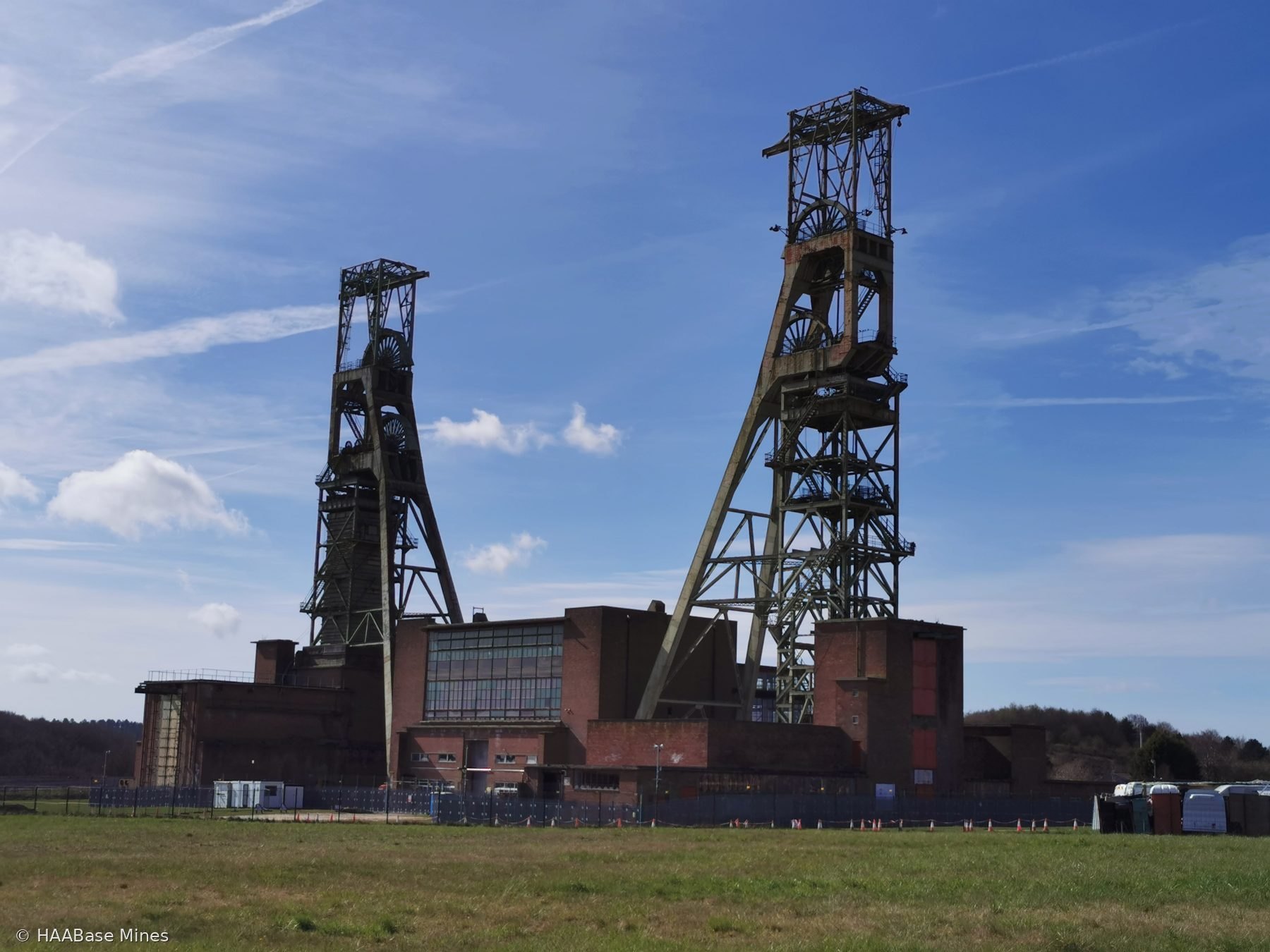
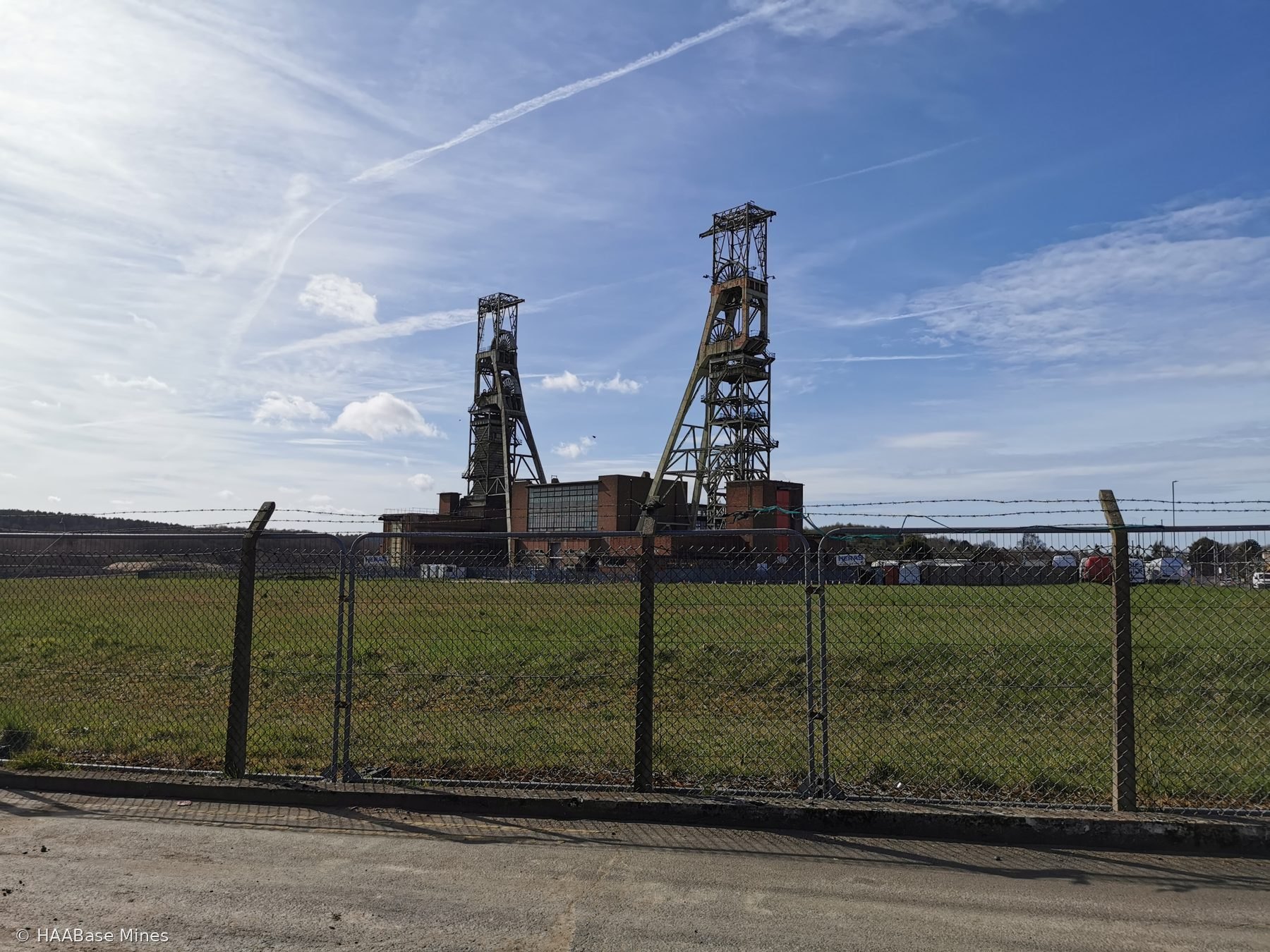
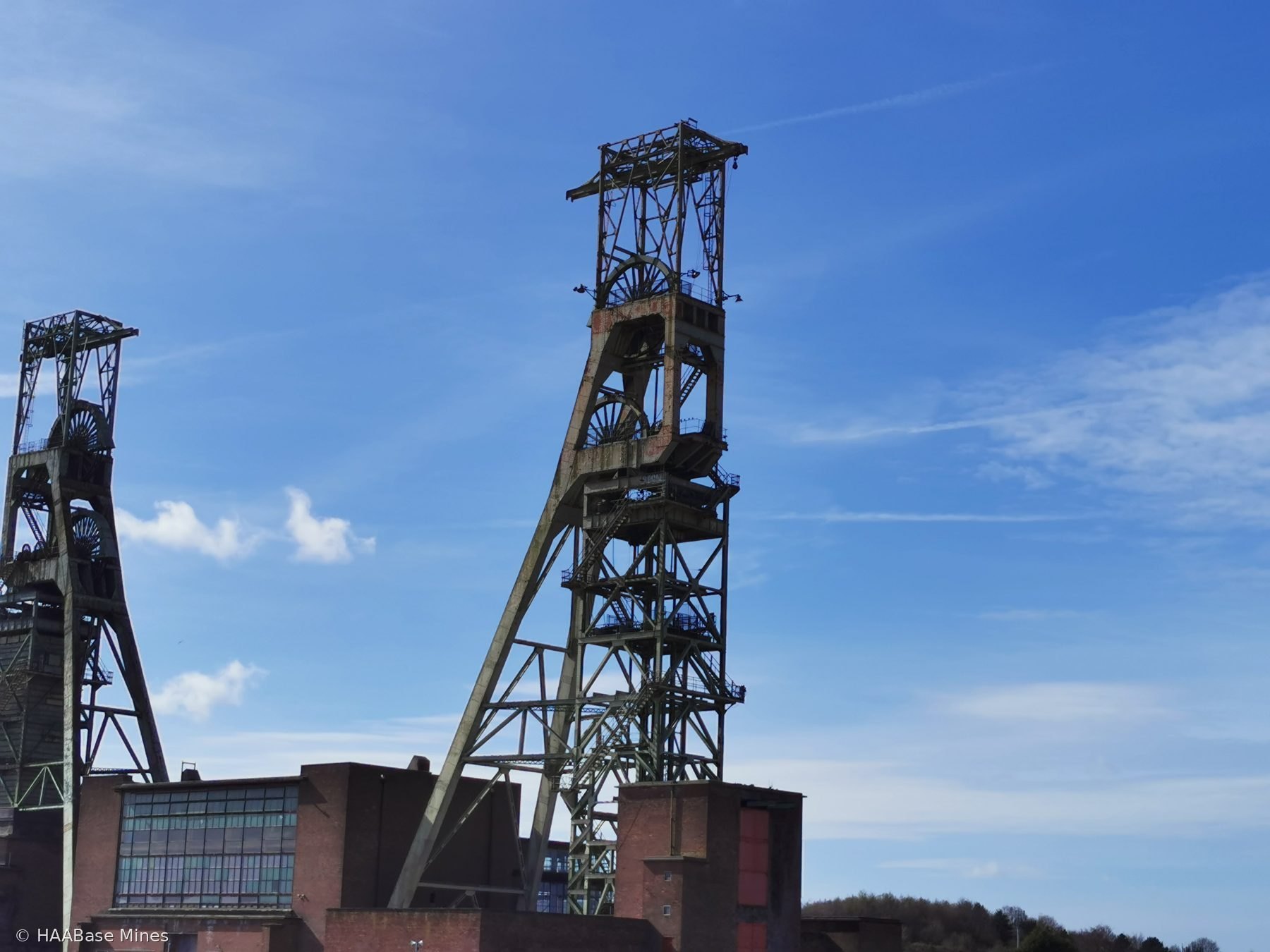
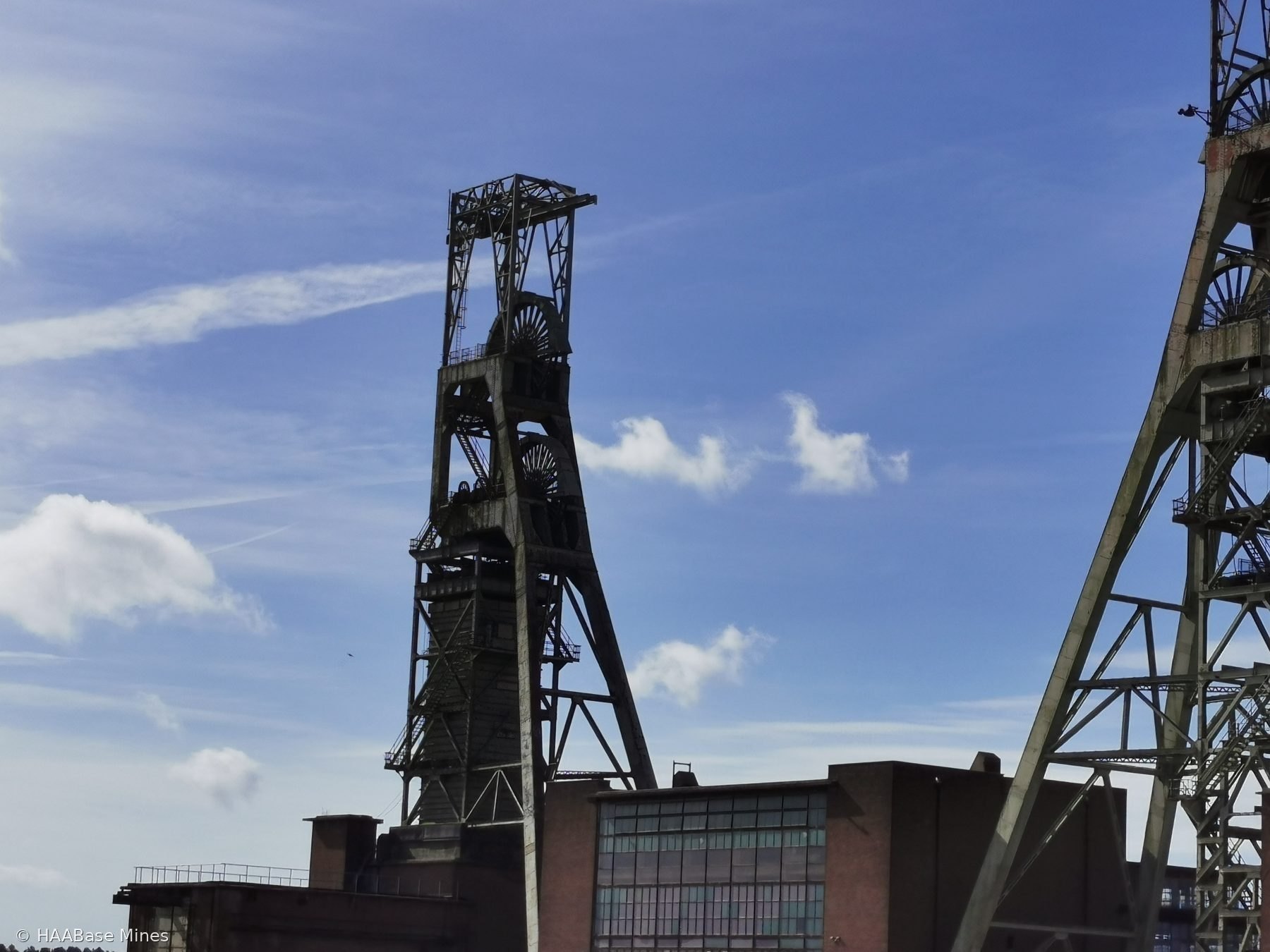
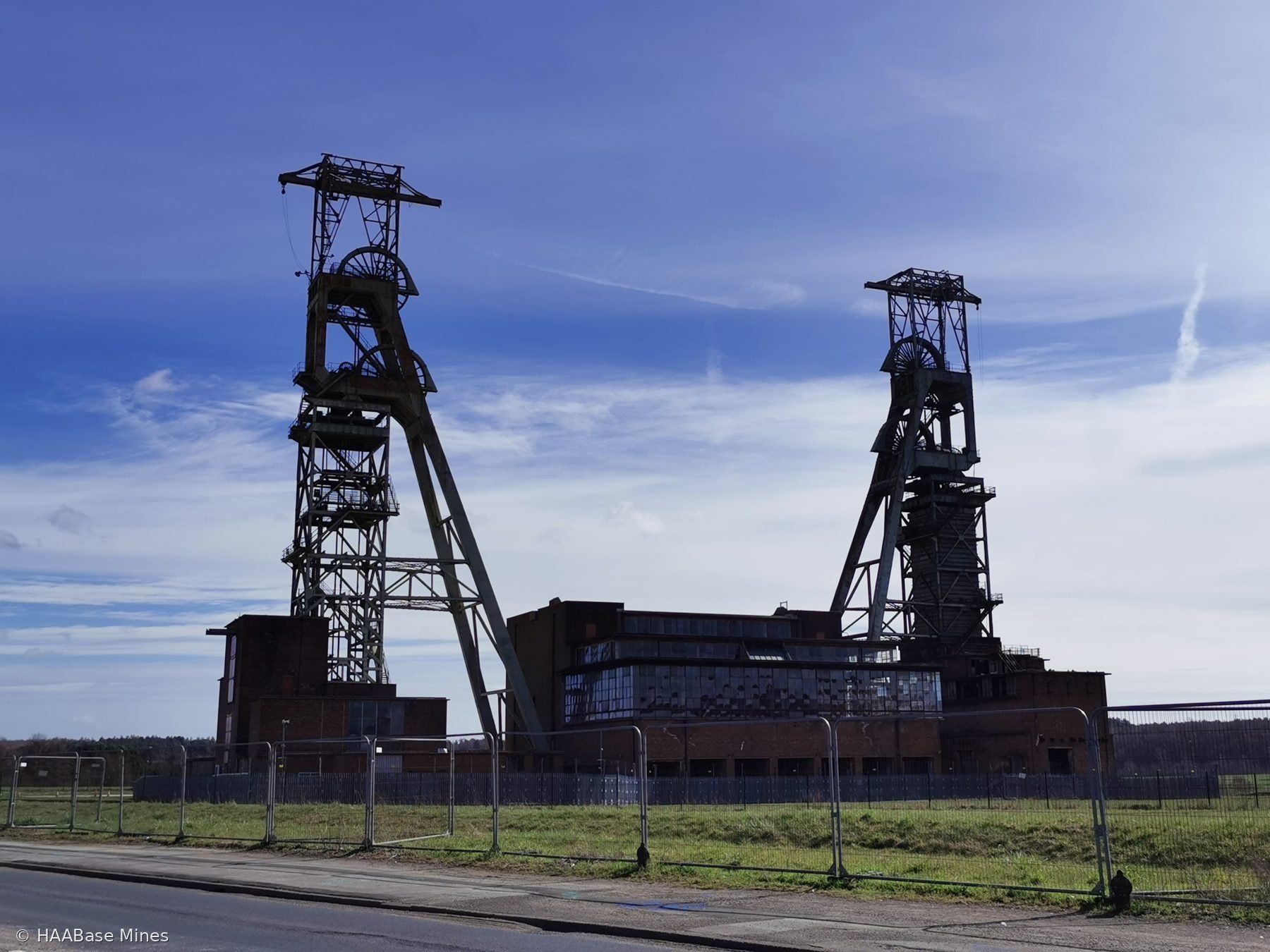
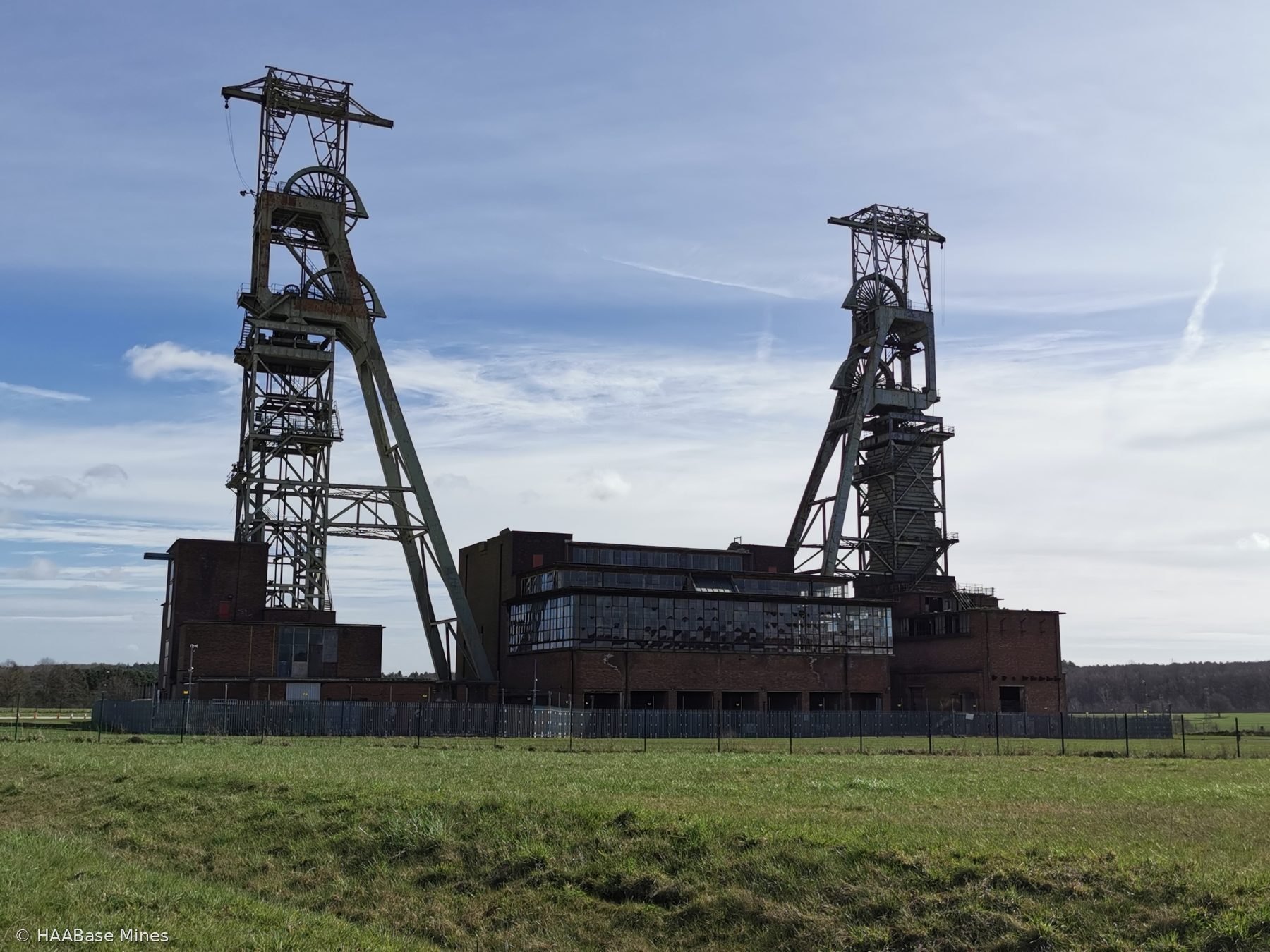
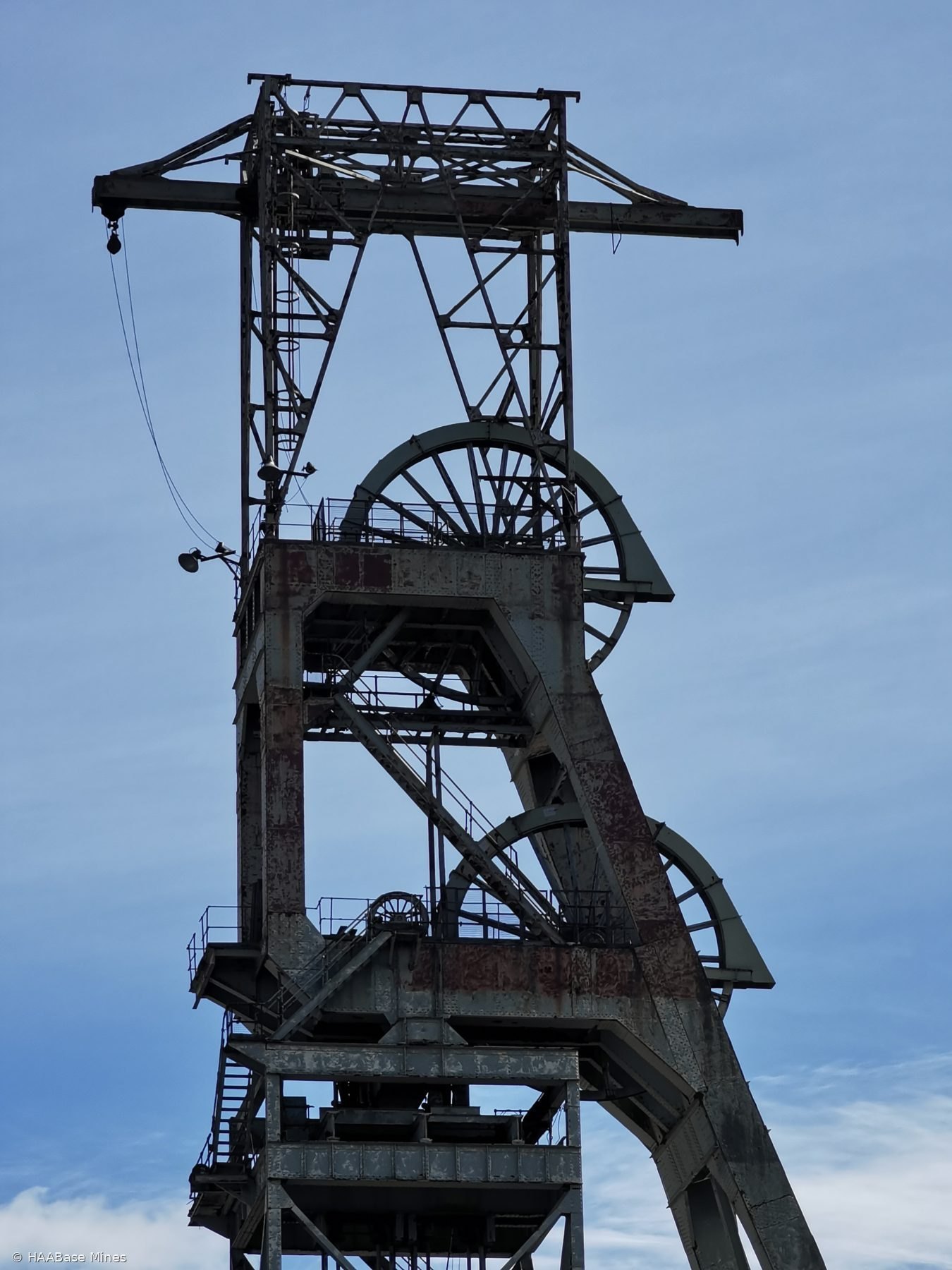
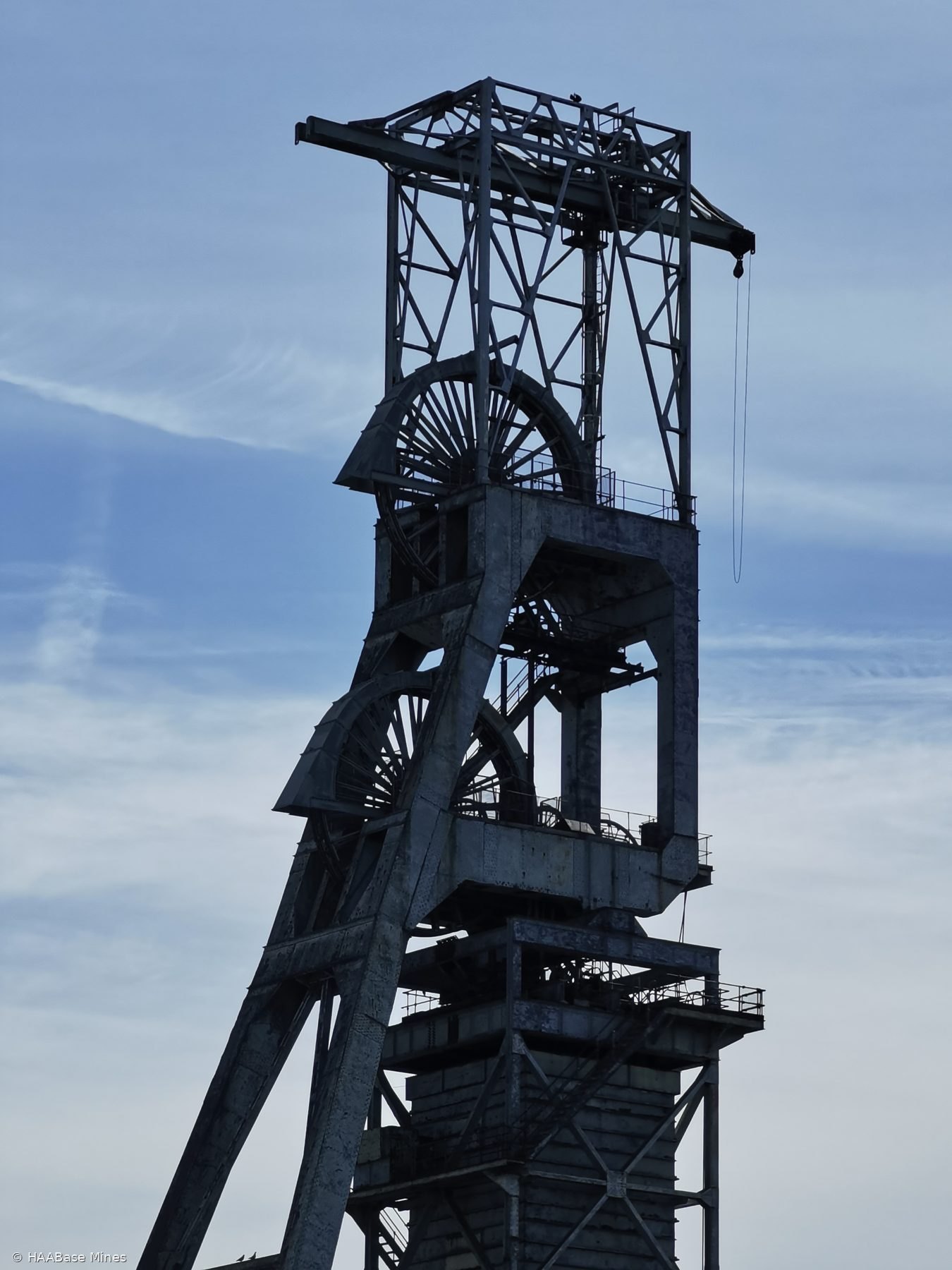
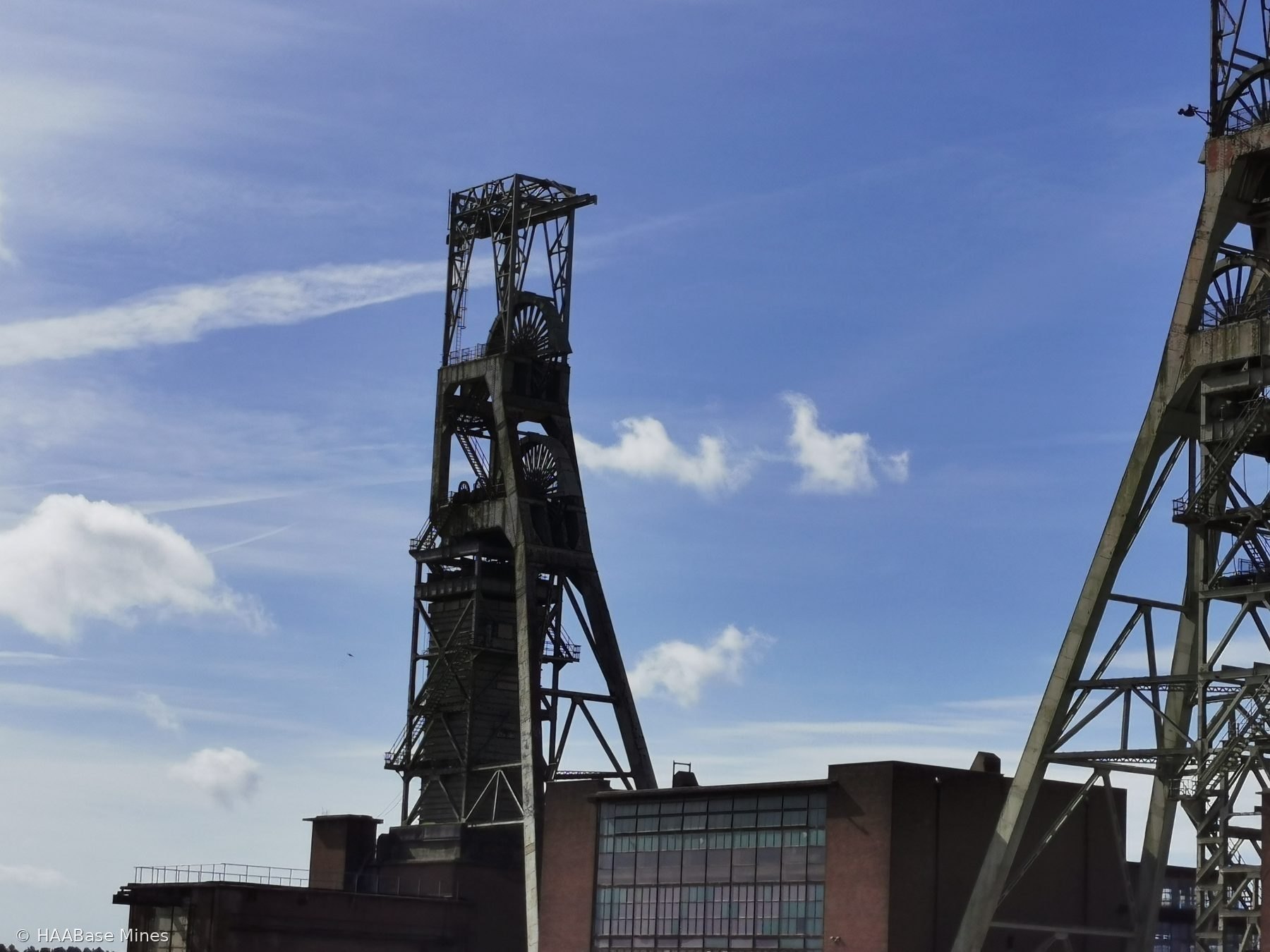
The coal industry was nationalised in 1947 and the colliery passed to the National Coal Board. Under the post-war investment programme, Clipstone was expanded to access the Low Main seam, located approximately 800 feet below the Top Hard seam. The shafts were deepened to over 1,000 yards (920 metres). Two new headstocks and a central powerhouse were completed in 1953. The complex was designed by architects Young and Purves of Manchester. The headstocks were constructed by Head Wrightson Colliery Engineering of Thornaby-on-Tees and Sheffield. The winding engines were manufactured by Markham and Company in Chesterfield. The two headstocks, linked by the central powerhouse, rose to 67 metres (No. 1 shaft, the north service shaft used for personnel and equipment) and 65.5 metres (No. 2 shaft, the south winding shaft used to raise coal skips). At the time of construction they were the tallest such structures in Europe. Each headstock comprised a latticework steel tower rising from the side of the central powerhouse, with twin headgear sheaves of 7.3 metres diameter mounted in an under-and-over arrangement to support the continuous winding rope.
The winding engines were Koepe friction winders, a system of friction winding developed by the German mining engineer Frederick Koepe in the 1870s and first installed at the Hannover Colliery in Westphalia in 1877. This system was particularly suited to deep mines as it permitted winding from increasing depths without the need to replace the winder drum. Most British collieries used drum winders at this period. There had been a small number of late nineteenth and early twentieth-century Koepe installations in England, but the system was not widely adopted until post-war reinvestment and restructuring of the industry after 1947. The powerhouse building is of a Modernist design, architecturally co-ordinating the winding machinery, power generating plant, and shaft head equipment within a single complex.
At its peak Clipstone employed over 1,300 people. In 1986 the colliery produced almost one million tons of coal, its peak output in a single year. Despite this, the colliery was among thirty-one mines named for closure by British Coal (as the National Coal Board had become). It was mothballed in 1993. In April 1994 it was reopened by RJB Mining (later UK Coal), with the licence to dig limited to the Yard seam at a depth of 957 yards (870 metres). This made Clipstone the first of the named closure collieries to restart production under licence arrangements, a full year ahead of the formal privatisation of the National Coal Board. After nine years of further production, nearly four million tonnes of coal had been extracted under the RJB and UK Coal licence, but remaining reserves were assessed as non-viable due to poor quality, high sulphur content, and the cost of accessing them. The colliery was finally closed in April 2003. A referendum held in Clipstone in 2003 saw villagers vote for demolition of the whole site.
The headstocks and powerhouse had been listed Grade II on 19 April 2000, prior to final closure. In 2003, following closure, an application for listed building consent for demolition was submitted to Newark and Sherwood District Council; this application remained undetermined for many years. All other surface structures — including the pithead baths and coal hoppers — were subsequently demolished. The listed complex remained standing, subject to sustained vandalism and stripping of metals with scrap value, resulting in heavy interior damage and evidence of localised structural failure. In 2014 Welbeck Estates, then owners of the headstocks, submitted a fresh planning application proposing demolition. The Clipstone Colliery Regeneration Group, a local organisation formed to campaign for retention and reuse of the structures, was awarded funds from the Heritage Lottery Fund and Historic England to investigate future options. As of the consulted sources, the headstocks and powerhouse remained standing on a cleared site, secured by fencing, with the surrounding land subject to ongoing redevelopment proposals.