Site overview

Bestwood Colliery was sunk from 1872 by the Lancaster family, under a lease from the 10th Duke of St Albans, on the northern edge of what is now Nottingham. The colliery worked the Top Hard and other seams of the Nottinghamshire coalfield, reaching depths of up to 555 metres. It became the first coal mine in the world to produce one million tons of saleable coal in a single year, a record achieved at significant human cost.

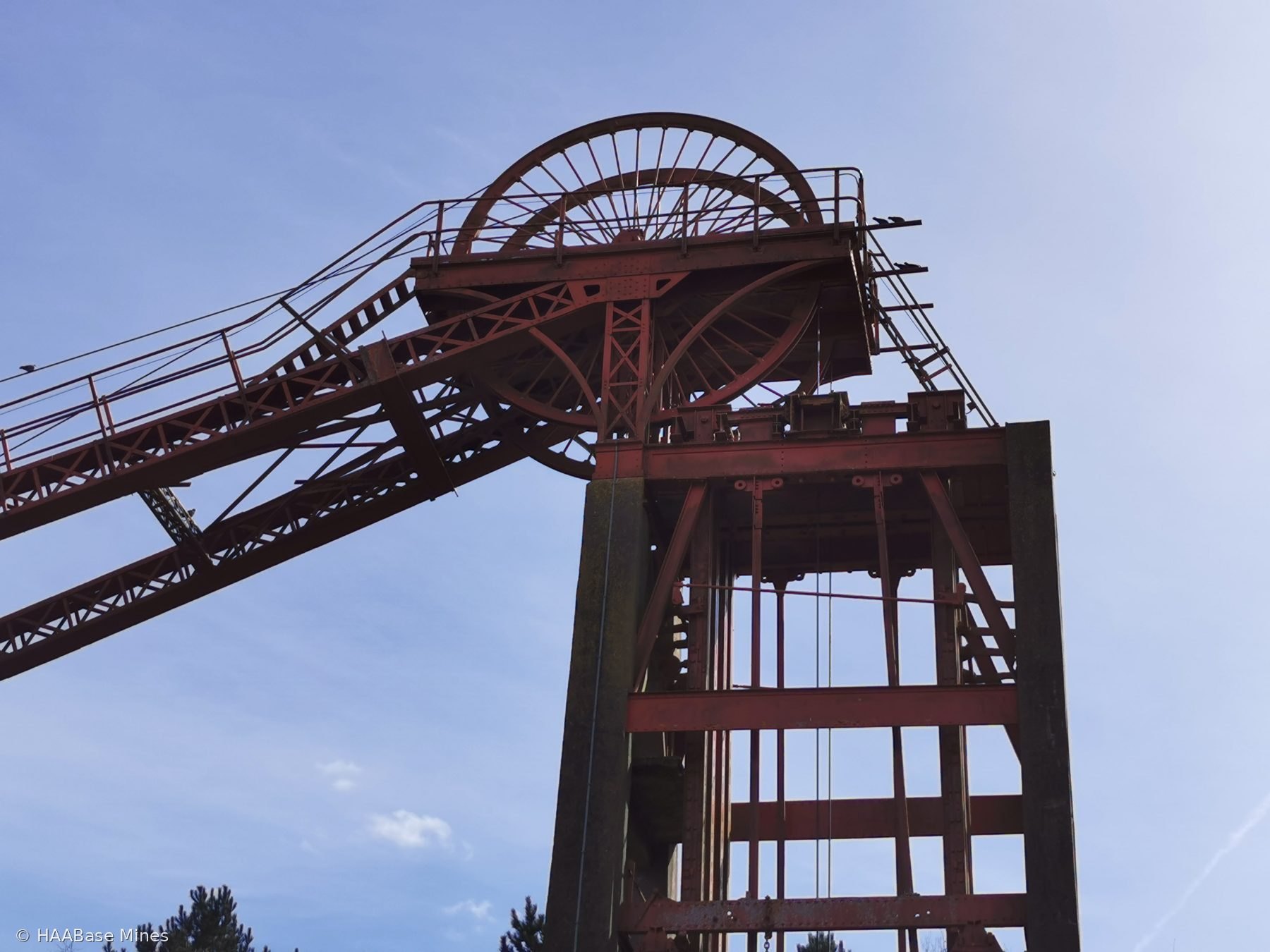
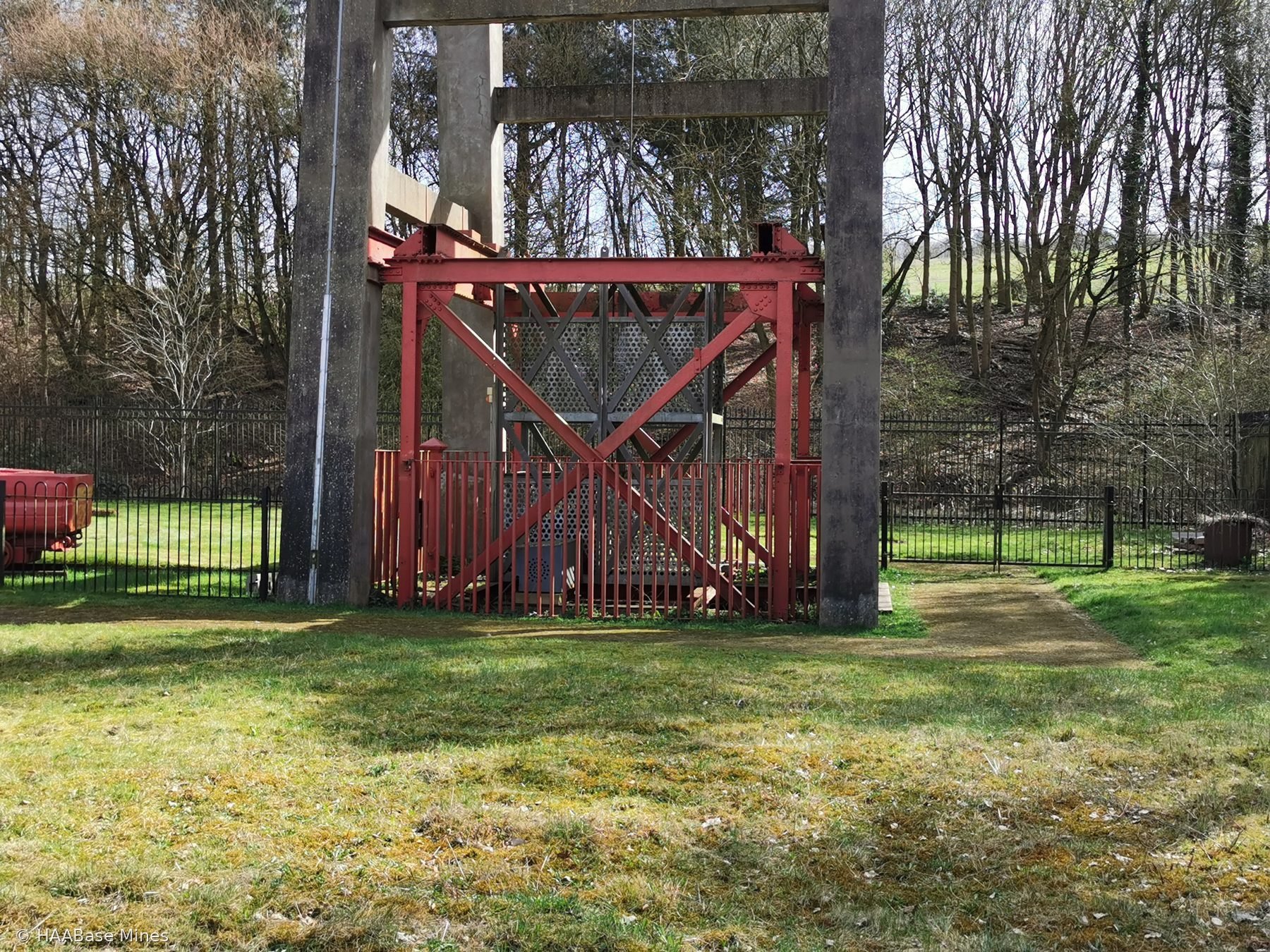
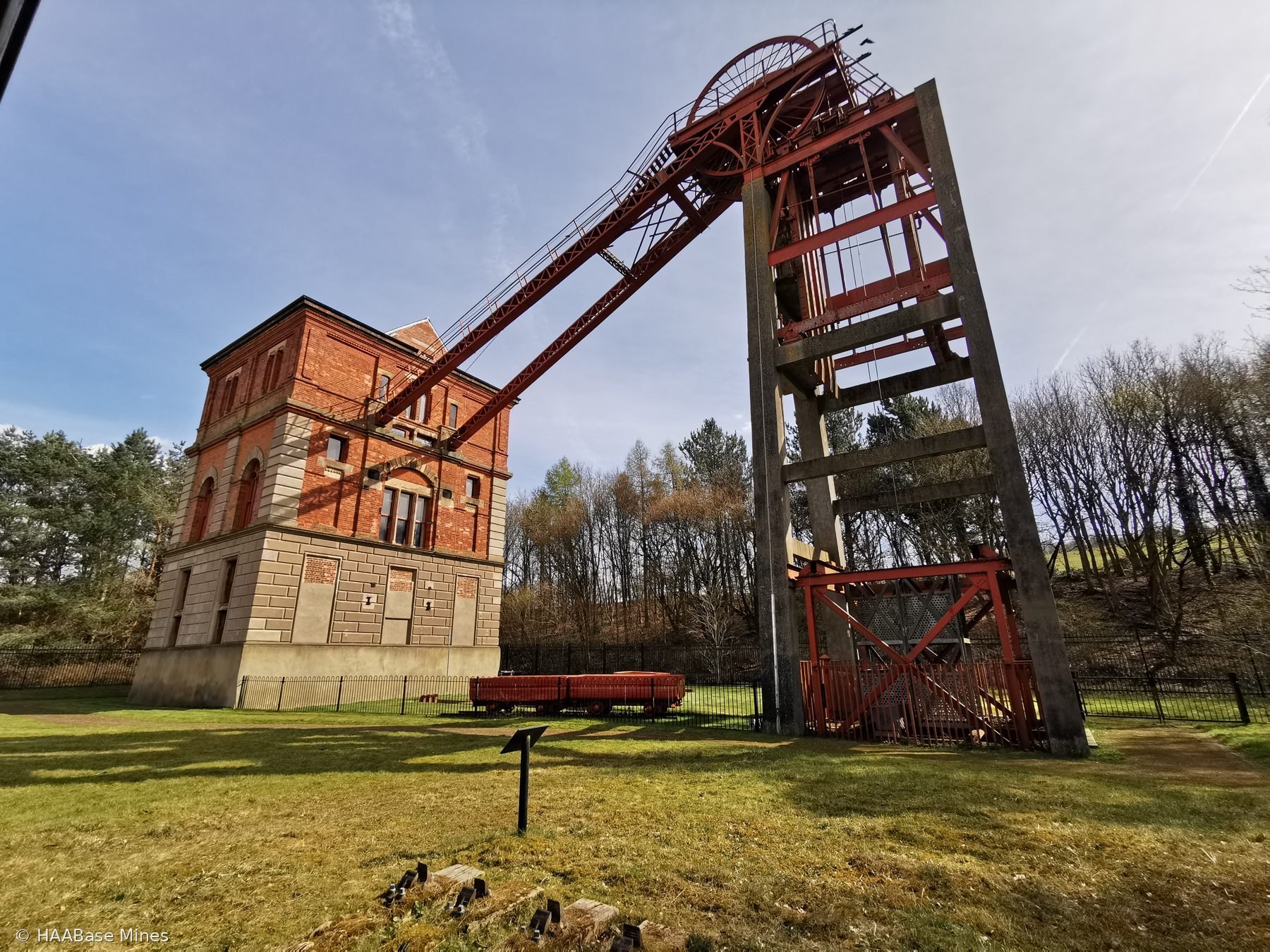
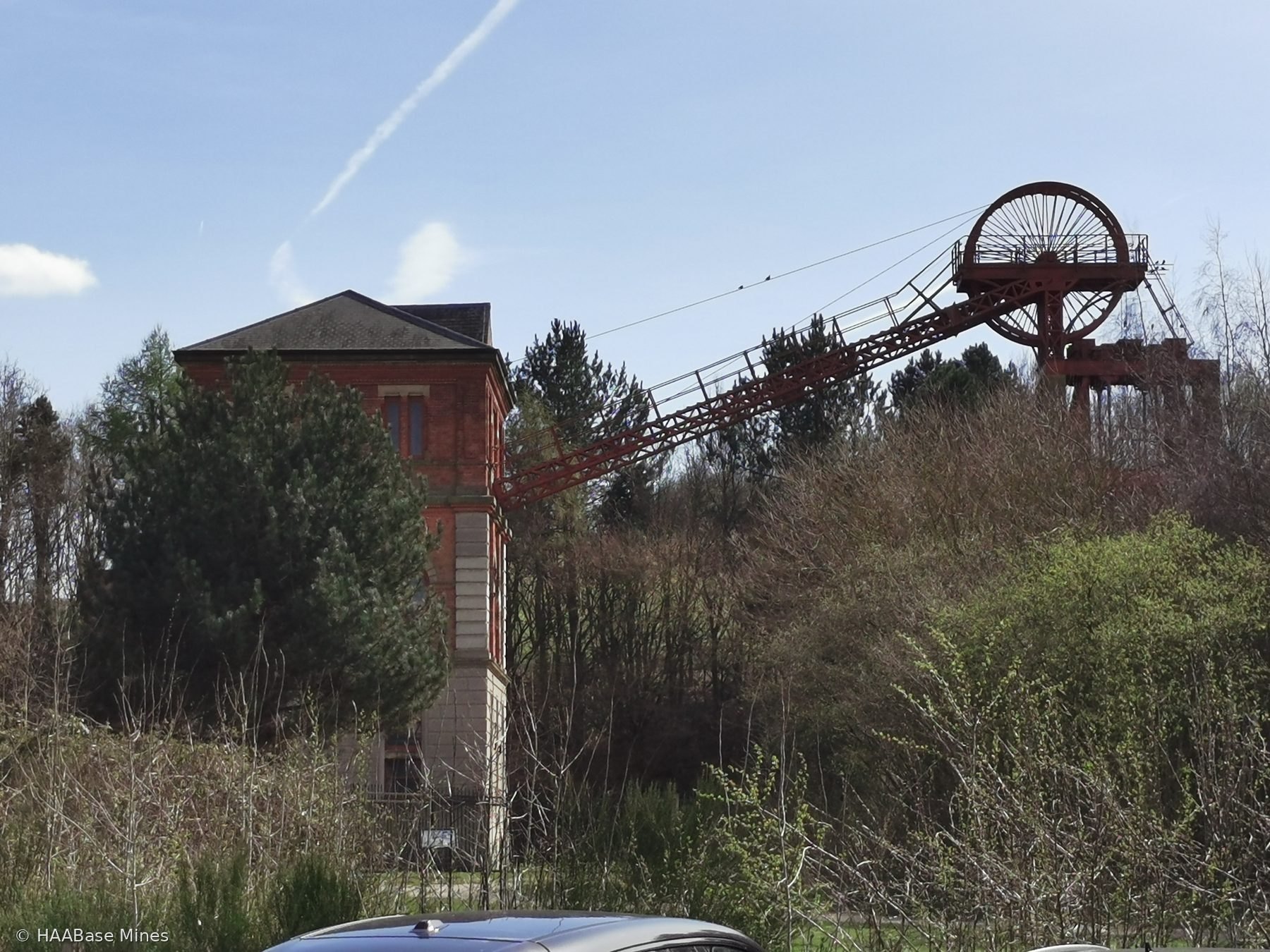
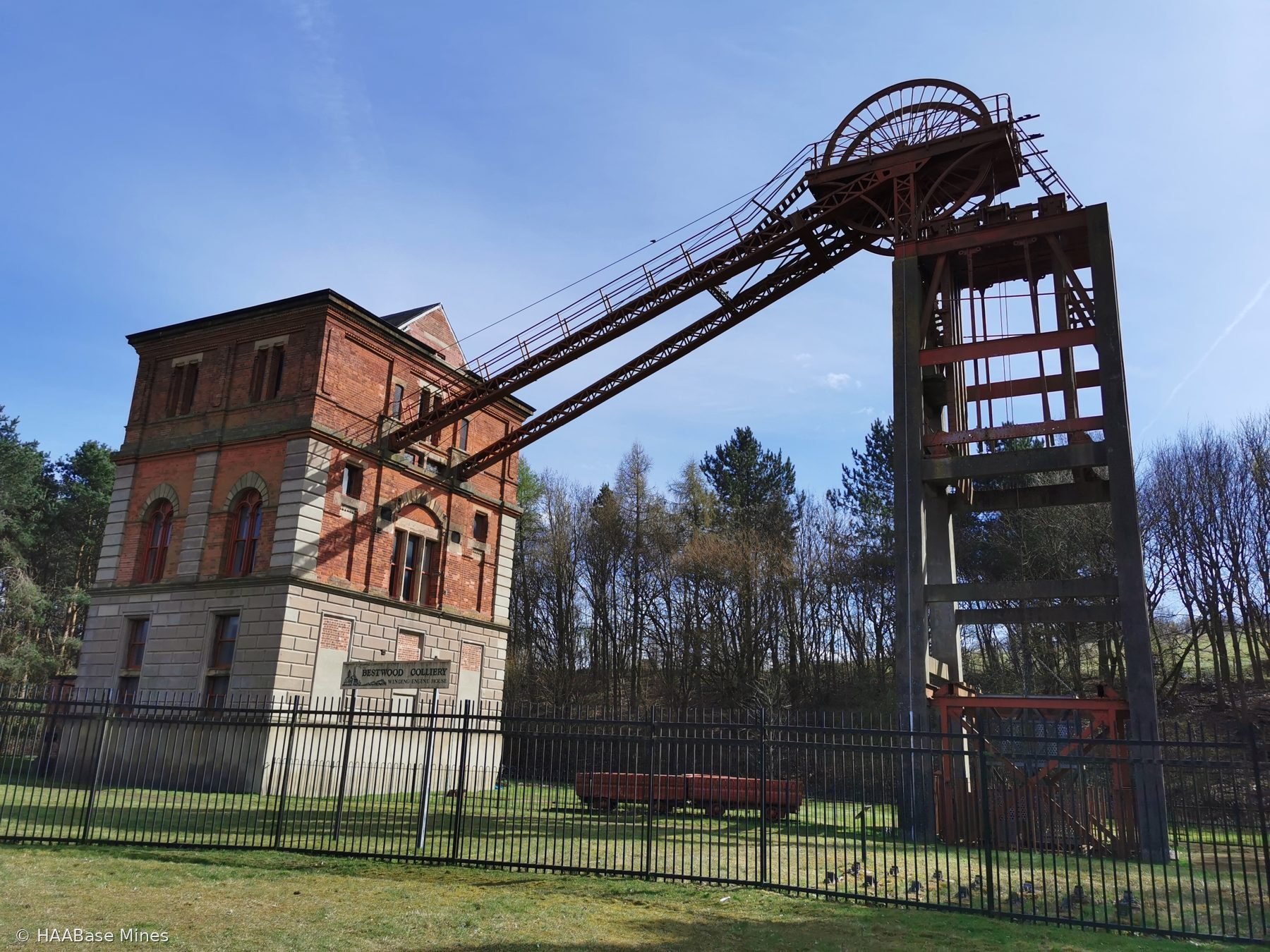
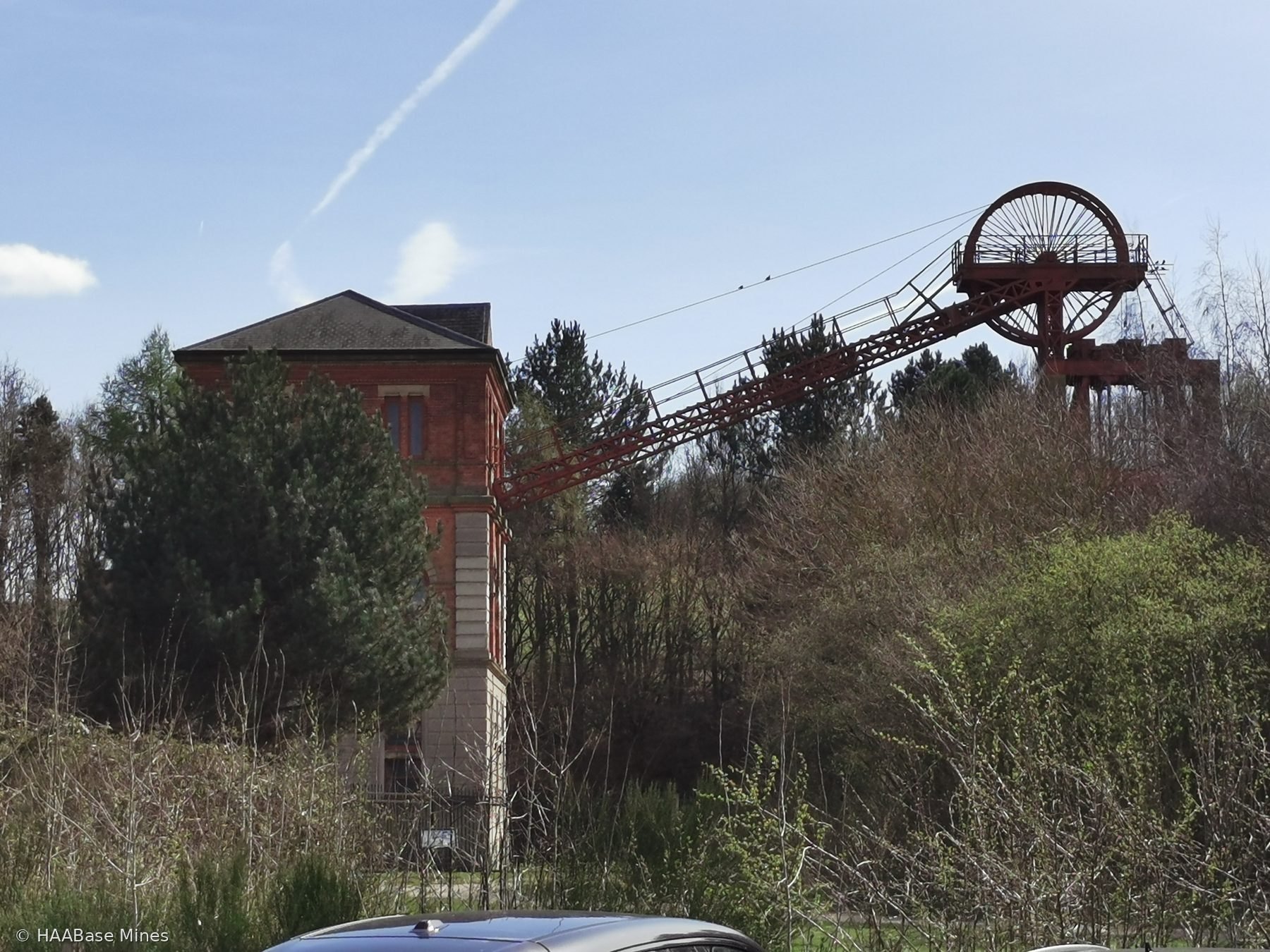
The Italianate winding engine house, constructed in 1873–1874 in brick and concrete to an ornate design unusual for a colliery, housed a vertical twin cylinder, non-condensing steam winding engine supplied in 1875 by the Worsley Mesnes Company of Wigan. The original wrought iron latticework headstocks, later encased in concrete, remain in situ. Mining ceased in 1967 when the colliery was merged with nearby Linby; final closure followed in 1971.

The winding engine house and headstocks are a Grade II* listed building and a Scheduled Monument. Restored with Heritage Lottery Fund support and reopened as a public attraction in 1995, the site now forms part of Bestwood Country Park and offers free tours of the restored engine house.

The surviving engine house and headstocks stand in wooded parkland on the northern edge of Nottingham, where the former colliery reads as a distinct historic site within a reclaimed landscape.

Map & photo

Bestwood Colliery mine headframe or winding tower site
Photograph taken: 29 March 2025
Map markers and directions links are provided for location reference only and do not indicate public access or permission to enter a site.

History

The site of Bestwood Colliery lies within the historic Bestwood Park, a former royal hunting ground on the northern edge of the City of Nottingham. The park had passed from the Crown to the Dukes of St Albans via a grant from King Charles II to Nell Gwynn, and the mineral rights remained with the Dukes of St Albans into the nineteenth century.

In 1872 John Lancaster, a mining entrepreneur from Scotland, commenced sinking the colliery under a lease from the 10th Duke of St Albans. The Lancaster family gave their name to the enterprise, which traded as the Bestwood Coal and Iron Company. The construction of the engine house began in 1873. The building was completed in 1874 and is notable for its Italianate design, an ornate style unusual for a colliery building, constructed in brick and concrete; the building represents an early use of structural concrete, employed both externally in the moulded plinth and rusticated basement and internally for the engine bed and winding drum supports. The winding engine was supplied in 1875 by the Worsley Mesnes Company of Wigan. It is a vertical twin cylinder, non-condensing steam engine with a cast iron drum of approximately 6 metres in diameter on the second floor; ropes from the drum pass through holes in the west wall and over the latticed ironwork headgear to the shaft. The original wrought iron latticework headstocks were later encased in concrete. The engine is the only surviving in situ twin cylinder vertical steam winding engine in England.

Steam winding used engines with 36-inch diameter cylinders. The ventilation fan was steam-driven, employing an engine reportedly recovered from the Royal Sovereign steamship on the bed of the Mediterranean Sea. To house the workforce drawn to the new colliery, the Lancaster family constructed sixty-four houses, an institute, offices, a school, and an ironworks in the surrounding village.

Bestwood was consistently profitable and workers earned good wages. The colliery became the first coal mine in the world to produce one million tons of saleable coal in a single year, a record achieved at the cost of more than a hundred lives, commemorated by a plaque in the engine house. Household, manufacturing, and steam coal were produced. At its height the colliery employed up to 2,000 men.

By the 1930s the Top Hard workings had extended so far from the shaft that a second shaft was sunk at Calverton for ventilation and to convey men to their work; this shaft was completed and operational in 1939. The importance of the colliery made it a target for Zeppelin bombing raids during the 1914–18 war. In 1934 the 11th Duke of St Albans died and in 1939 the estate was sold.

After a drift was constructed from Bestwood to the High Main seam in 1946, efficiency improved. The Lancaster Drift, as it became known, became operational in 1951, taking the form of a sloping tunnel descending at 1 in 4 to the High Main seam; it was extended to the Main Bright seam in 1959. In the colliery's later years all coal was brought to the surface via the Lancaster Drift, with the shafts retained only as a standby and for moving men and materials. The colliery was nationalised in 1947 under the National Coal Board. By the late 1960s, Bestwood was beset with geological problems and was considered a difficult and dirty pit to work. In 1967 coal extraction ceased when the colliery was merged with nearby Linby Colliery; final closure of all mining activity on the site followed in 1971. By the time of closure the deepest shaft reached the 2nd Piper seam at a maximum depth of 555 metres. The steam boilers, last in use in the late 1960s, were decommissioned on closure.

Following closure the colliery was allowed to fall into disrepair. The 1947 national coal board ownership and later the site's landscaping was carried out by Nottinghamshire County Council. In 1973 Bestwood Lodge and the surrounding parkland were handed over to Gedling Borough Council and the two councils created Bestwood Country Park as a public open space. The former colliery spoil heaps were re-landscaped as part of the country park.

The winding engine house and headstocks were designated a Grade II* listed building and the engine house was separately scheduled as an Ancient Monument. The restoration of the winding engine house was supported by a Heritage Lottery Fund grant obtained in 2008, and restoration of the engine house and adjacent Dynamo House was completed in 2009 by GF Tomlinson Ltd over a contract of 51 weeks. The works included brick and stone replacement, internal lime plastering, restoration of moulded lime render skirting, replacement of cast iron gutters, restoration of decorative brickwork, and restoration of the steel headstocks. Since 1998 an electrohydraulic system has powered the winding engine wheel. The site was opened as a public attraction and is operated on a volunteer basis, with free guided tours offered on Saturday mornings. The Dynamo House Community Café is managed by Women's Institute volunteers on the same site.
Timeline

Operation

First colliery in world to produce one million tons in a year

Bestwood Colliery became the first coal mine in the world to produce one million tons of saleable coal in a single year. A commemorative plaque in the engine house records that this was achieved at the cost of more than a hundred lives.
1872
Construction

Colliery sinking commenced by Lancaster family

In 1872 John Lancaster, a mining entrepreneur from Scotland, commenced sinking Bestwood Colliery under a lease from the 10th Duke of St Albans. The enterprise traded as the Bestwood Coal and Iron Company.
1872–1967
Operation

Colliery in continuous production

Bestwood Colliery operated continuously from the 1870s, working initially the Top Hard seam and subsequently the Barnsley, High Main, Deep Hard, and 2nd Piper seams, reaching a maximum depth of 555 metres. The colliery produced household, manufacturing, and steam coal.
1873–1874
Construction

Italianate engine house constructed

The winding engine house was constructed in 1873–1874 to an Italianate design unusual for a colliery building, in brick and concrete; an early use of structural concrete both externally and internally. The building is three storeys in height with a stuccoed, rusticated plinth.
1875
Construction

Winding engine supplied by Worsley Mesnes Company

The vertical twin cylinder, non-condensing steam winding engine was supplied in 1875 by the Worsley Mesnes Company of Wigan. A cast iron drum of approximately 6 metres in diameter was installed on the second floor, with ropes leading to the wrought iron lattice headgear over the shaft.
1939
Construction

Second shaft at Calverton completed

By the 1930s the Top Hard workings had extended so far from the shaft that a second shaft was sunk at Calverton for ventilation and manriding. It was completed and operational in 1939.
1946–1951
Construction

Lancaster Drift constructed to High Main seam

Driving of the Lancaster Drift, a surface drift descending at 1 in 4 to the High Main seam, began in 1946 and was operational by 1951. In later years all coal was brought to surface via this drift, with the shafts retained only for men and materials.
1947
Legislation

Nationalisation: National Coal Board assumes ownership

The colliery passed to the National Coal Board on nationalisation of the coal industry in 1947.
1959
Construction

Lancaster Drift extended to Main Bright seam

The Lancaster Drift was extended to reach the Main Bright seam in 1959.
1967
Closure

Coal extraction ceases; colliery merged with Linby

In 1967 coal extraction ceased at Bestwood when the colliery was merged with nearby Linby Colliery. Miners were offered either redundancy or reallocation to neighbouring pits.
1971
Closure

Final closure of all mining activity

All mining activity at Bestwood finished in 1971. The winding engine was kept operable until this date as a standby. The shaft had by this time been superseded by the Lancaster Drift for coal production.
1973
Redevelopment

Bestwood Country Park established

In 1973 Bestwood Lodge, gardens, and surrounding parkland were transferred to Gedling Borough Council. Nottinghamshire County Council and Gedling Borough Council together created Bestwood Country Park as a public open space on the northern edge of the City of Nottingham. The former colliery spoil heaps were re-landscaped as part of the park.
1995
Heritage

Winding engine house opened as public attraction

The restored winding engine house was opened to the public in 1995, operated by a volunteer group offering free guided tours.
1998
Heritage

Electrohydraulic system installed to operate winding engine wheel

Since 1998 an electrohydraulic system has been in place to power the winding engine wheel, allowing the engine to demonstrate its operation without steam.
2008–2009
Heritage

Heritage Lottery Fund restoration completed

A Heritage Lottery Fund grant was obtained in 2008. Restoration of the engine house and adjacent Dynamo House was completed in 2009 by GF Tomlinson Ltd in a 51-week contract, including brick and stone replacement, lime plastering, restoration of moulded decorative elements, replacement of cast iron gutters, and restoration of the steel headstocks.

Sources and records

Historic England list entry 1017653: Bestwood Colliery engine house (Scheduled Monument)
Historic England list entry 1235186: Winding House and Headstocks at Bestwood Colliery (Grade II* Listed Building)
ancientmonuments.uk: Bestwood Colliery engine house
Nottinghamshire Historic Environment Record M2062
Nottinghamshire County Council: History of Bestwood
Gedling Heritage: Bestwood
Inspire Picture Archive: Coal picking at Bestwood Colliery captions
GF Tomlinson Ltd: Bestwood Winding House restoration project
Nottinghamshire Local History Association: Bestwood Winding Engine House prepares for new tourist season
Bestwood Colliery Winding Engine House volunteer group website
365project.org: Bestwood Colliery Winding Engine House entry
This researched site record is part of the HAABase Mines database. Normal personal research and browsing is welcome. Automated bulk extraction, republication, or harvesting of site text and images is not permitted without written consent.