History
Potash was first identified in the northeast England Permian evaporite sequence in 1939, when the D'Arcy Exploration Company drilled boreholes near Aislaby in search of oil and gas. Further boreholes in the 1950s and early 1960s confirmed the extent of the Zechstein evaporite deposits, but the depth of the potash horizon — between 1,200 and 1,500 metres — initially made commercial extraction appear uneconomic. Solution mining was considered from 1962 but not pursued. By the late 1950s and early 1960s, ICI reached agreements with oil companies to allow deepening of boreholes in an area from Newton Mulgrave to Loftus, where the potash beds were shallower than at Sleights.
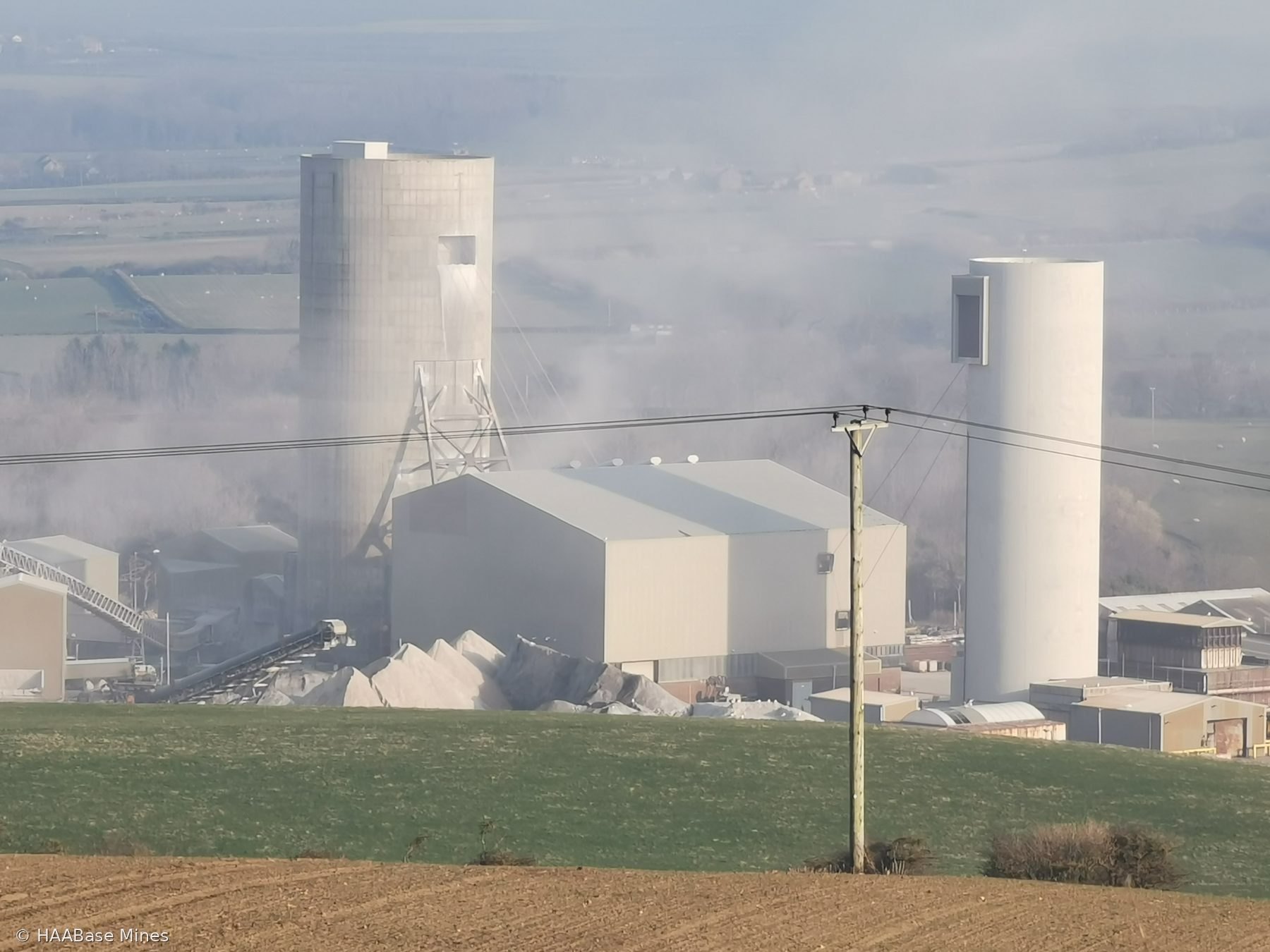
By 1967 ICI had identified Charter Consolidated Limited (CCL) as a partner with experience in sinking deep shafts. Planning permission was obtained in 1968 following a public inquiry. The site selected for the surface infrastructure was adjacent to the North Yorkshire coast near the old alum-mining hamlet of Boulby, west of Staithes, with access to the sea for processing water and to the former coastal railway for transport. The planning context was favourable, as the area had experienced high unemployment following the closure of the ironstone mines. Cleveland Potash Ltd was established as the operating entity under ICI, which later came to hold the mine jointly with Anglo American.
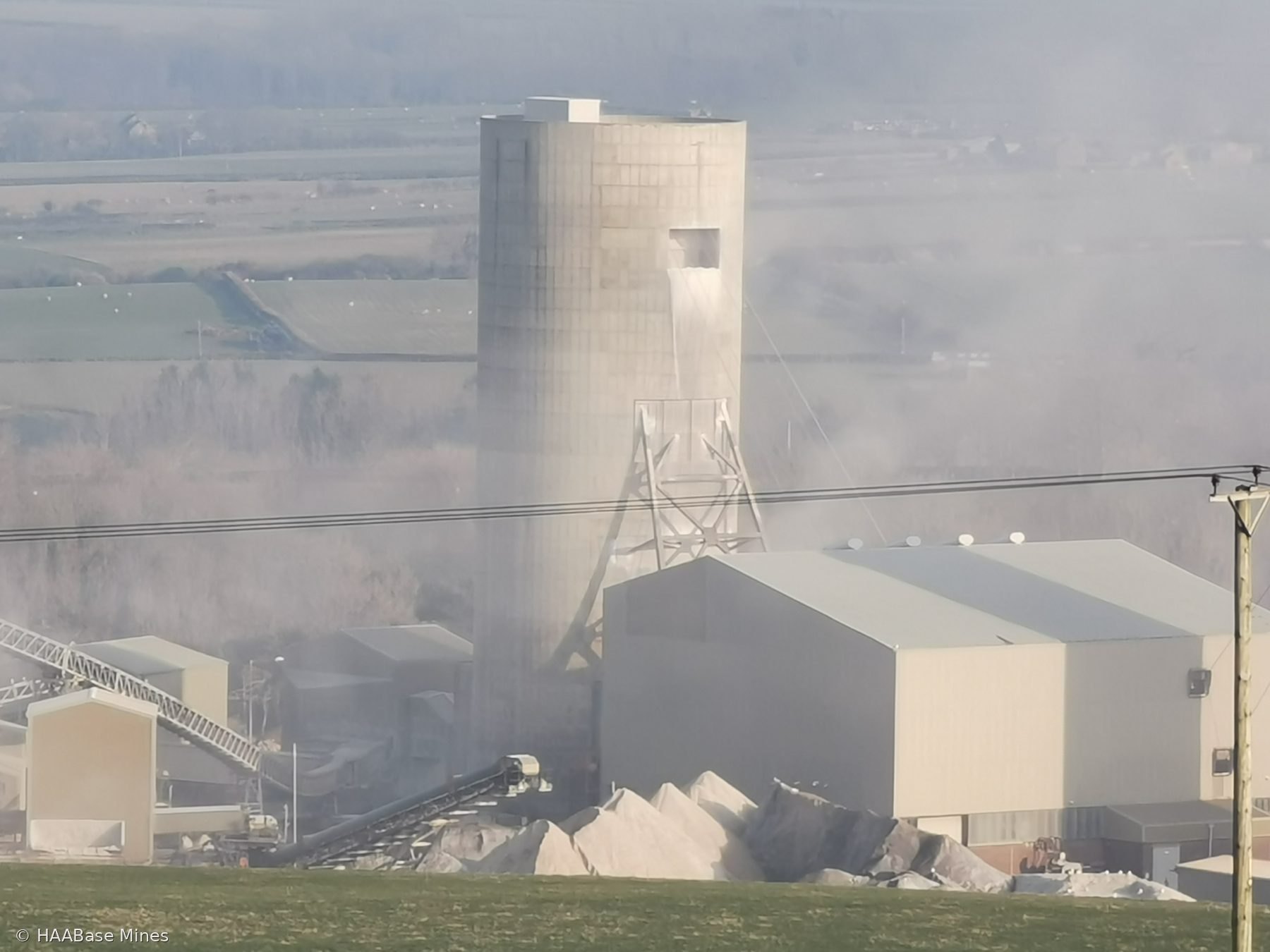
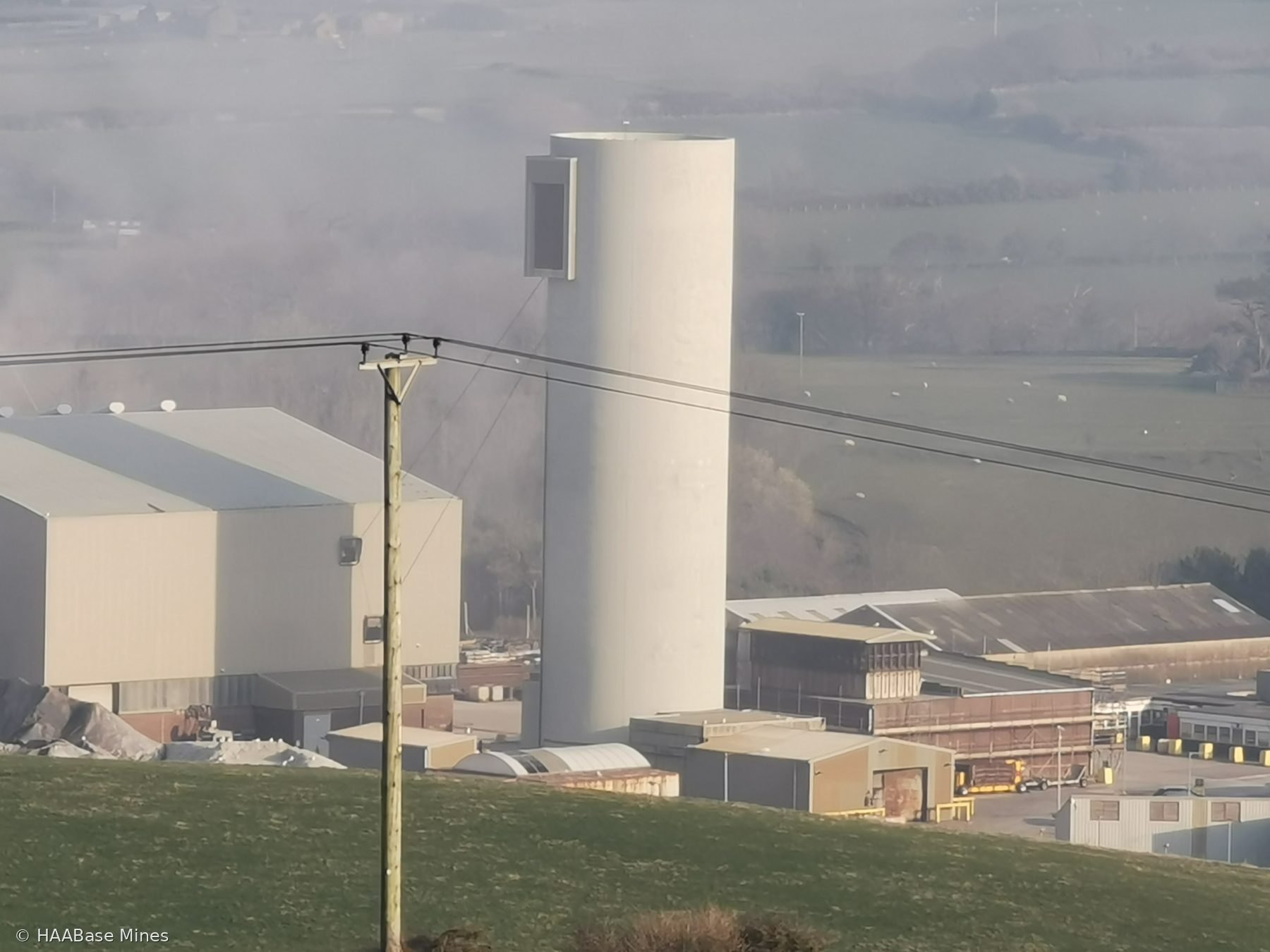
Shaft sinking commenced in 1968. The two production shafts, each 5.5 metres in diameter and approximately 1,150 metres deep, were sunk through Triassic Sherwood Sandstone aquifers using ground-freezing and grouting techniques. First potash production began from one shaft in 1973; full production from both shafts commenced in 1976. The ore horizon — sylvinite comprising 35–45% sylvite (potassium chloride) and 45–55% halite (rock salt) — occurs in a seam averaging seven metres thick. The room-and-pillar extraction method was adopted. Despite early operational success, the mine did not achieve financial profitability until 1984, the intervening years being consumed by the costs of establishing the most efficient mining system and managing unanticipated faulting and pressurised gas in shaly sections of the potash horizon.
ICI subsequently sold its stake in Cleveland Potash Ltd to Anglo American, which held the operation alongside De Beers for a period. Ownership was transferred to Israel Chemicals Ltd in April 2002, since when the mine has operated as ICL UK. By the mid-1990s output had stabilised at around 2.8 million tonnes per year of potash from six production sections, with rock salt co-produced at between 384,000 and 662,000 tonnes per year. Output capacity reached over one million tonnes of potash annually. In 2011 the mine began the world's first commercial production of polyhalite, a multi-nutrient mineral fertiliser marketed by ICL as Polysulphate, from a seam extending offshore with estimated total resources exceeding one billion tonnes. In early 2016 polyhalite mining commenced as the primary operational focus. Potash production ceased around 2018, accompanied by a reduction in workforce from over 1,000 to approximately 470 employees. By 2023 the mine was producing over one million tonnes of polyhalite annually. Rock salt co-production continues, supplying approximately half of the UK's road de-icing salt requirements.
The mine has more than 1,100 kilometres of underground roadways, some extending up to 15 kilometres beneath the North Sea, and at its deepest reaches 1,400 metres. Rail transport links the surface facilities to Teesport, using a goods-only branch of the former Whitby Redcar and Middlesbrough Union Railway, closed to passengers in 1958 but retained open to Boulby for mineral traffic. Surface facilities were designed by the architect Sir Frederick Gibberd.
Since the 1990s the mine has hosted the Boulby Underground Laboratory, operated by the Science and Technology Facilities Council (STFC) with support from ICL UK. The laboratory sits at 1,100 metres depth, shielded by a thickness of rock that reduces cosmic-ray flux by a factor of one million compared to the surface. A new underground laboratory was constructed with STFC investment and was completed and brought into use from 2014 onward. The facility provides over 4,000 cubic metres of experimental space and hosts a range of research programmes including dark matter detection, astrobiology, geomicrobiology, and space exploration technology development. It has been used to test NASA Mars rovers and hosted European Space Agency personnel. The ZEPLIN dark matter experiments concluded in 2011; ongoing programmes at the time of the most recent consulted sources included DRIFT-II and BUGS.