1906
Concession Sainte-Barbe granted
The concession Sainte-Barbe of 2,170 hectares was granted on 29 November 1906.
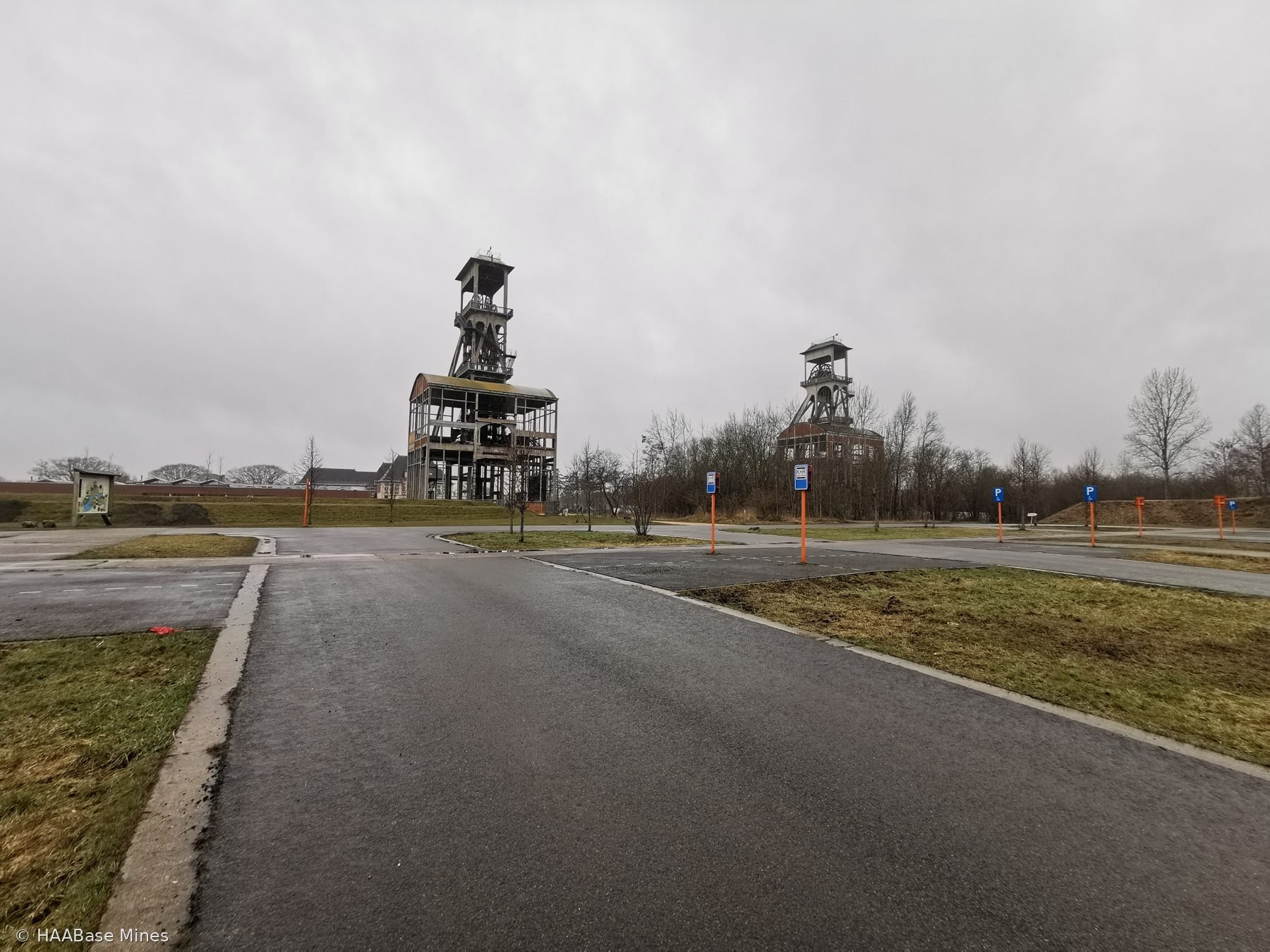
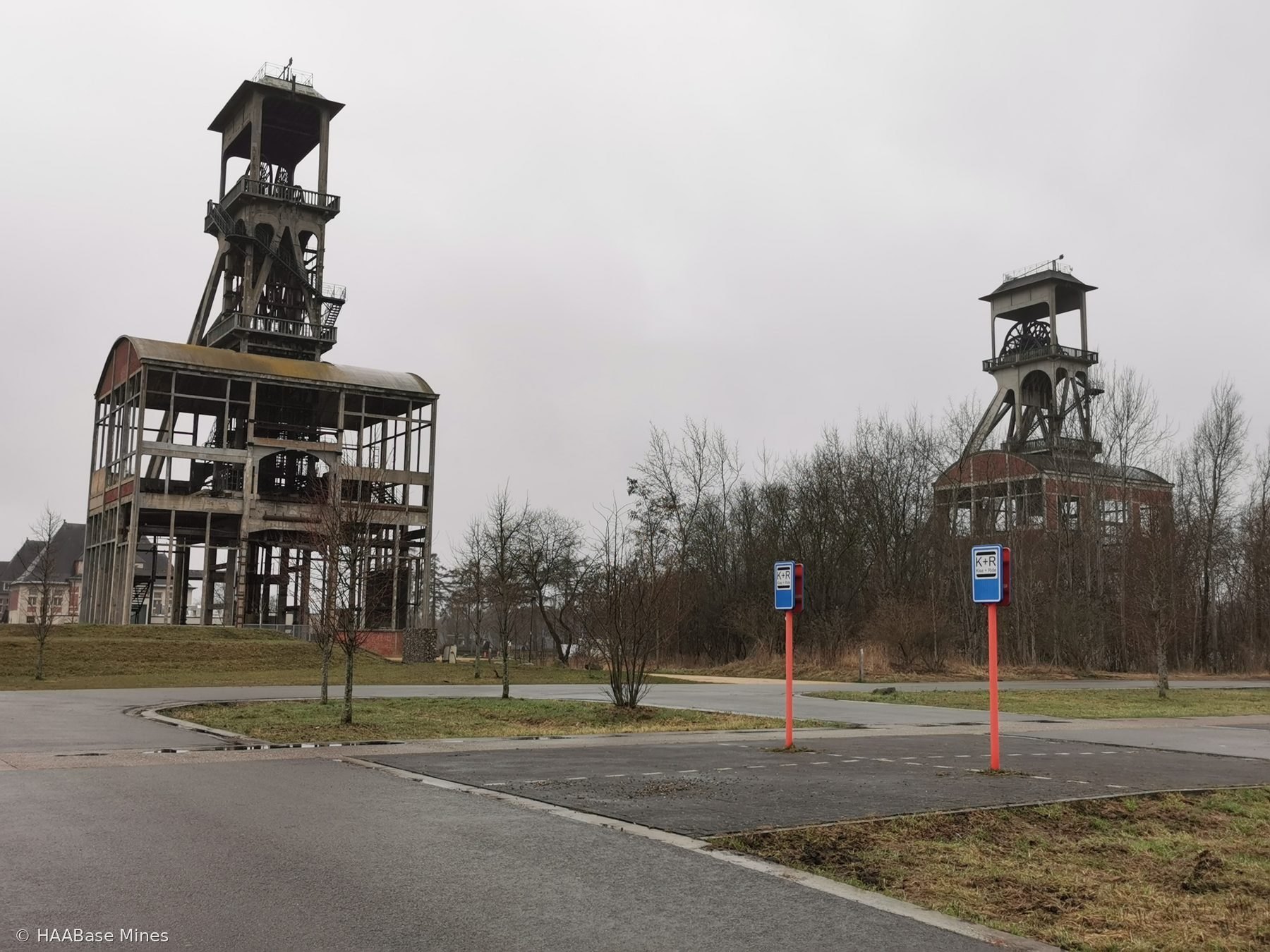
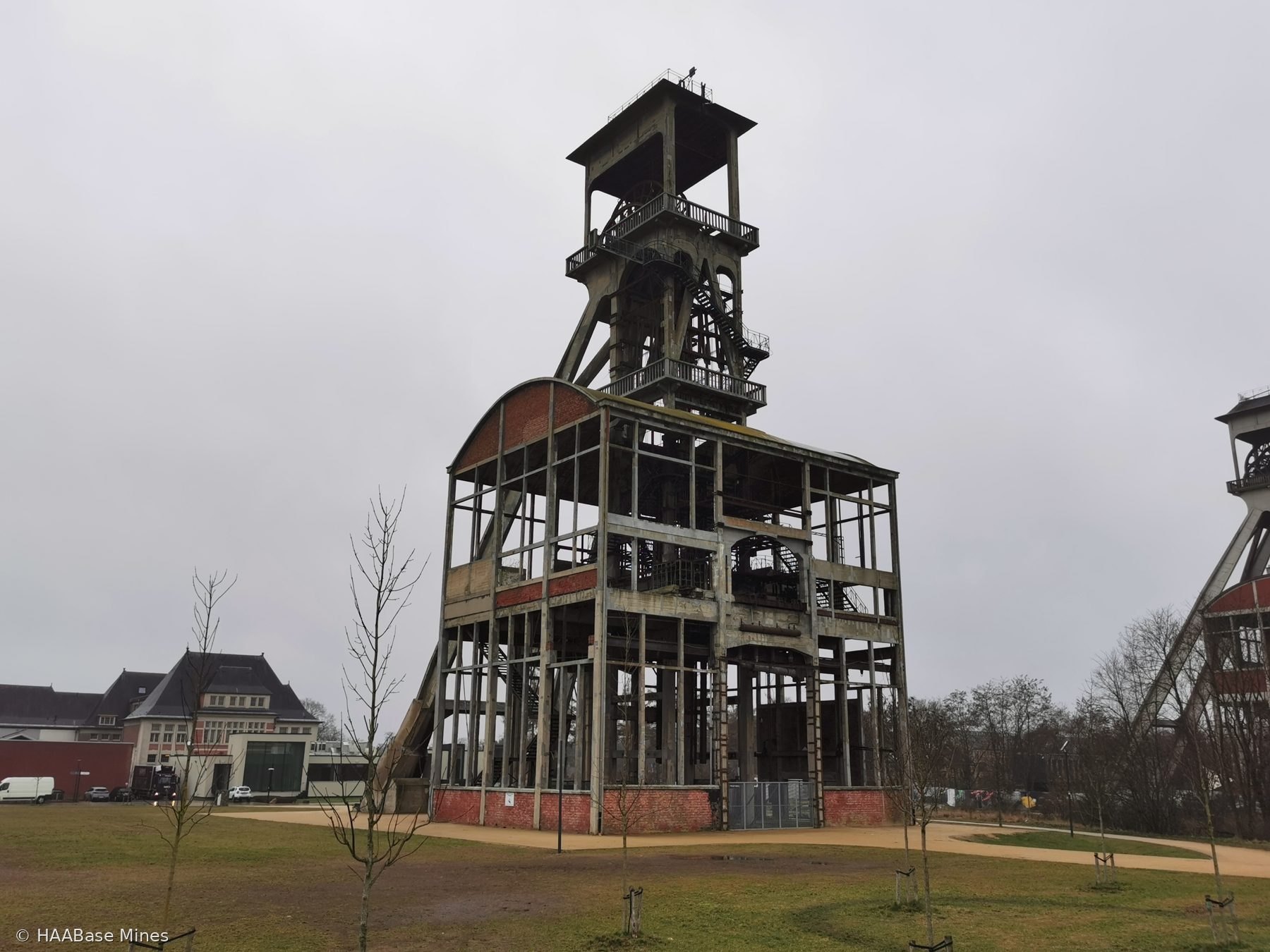
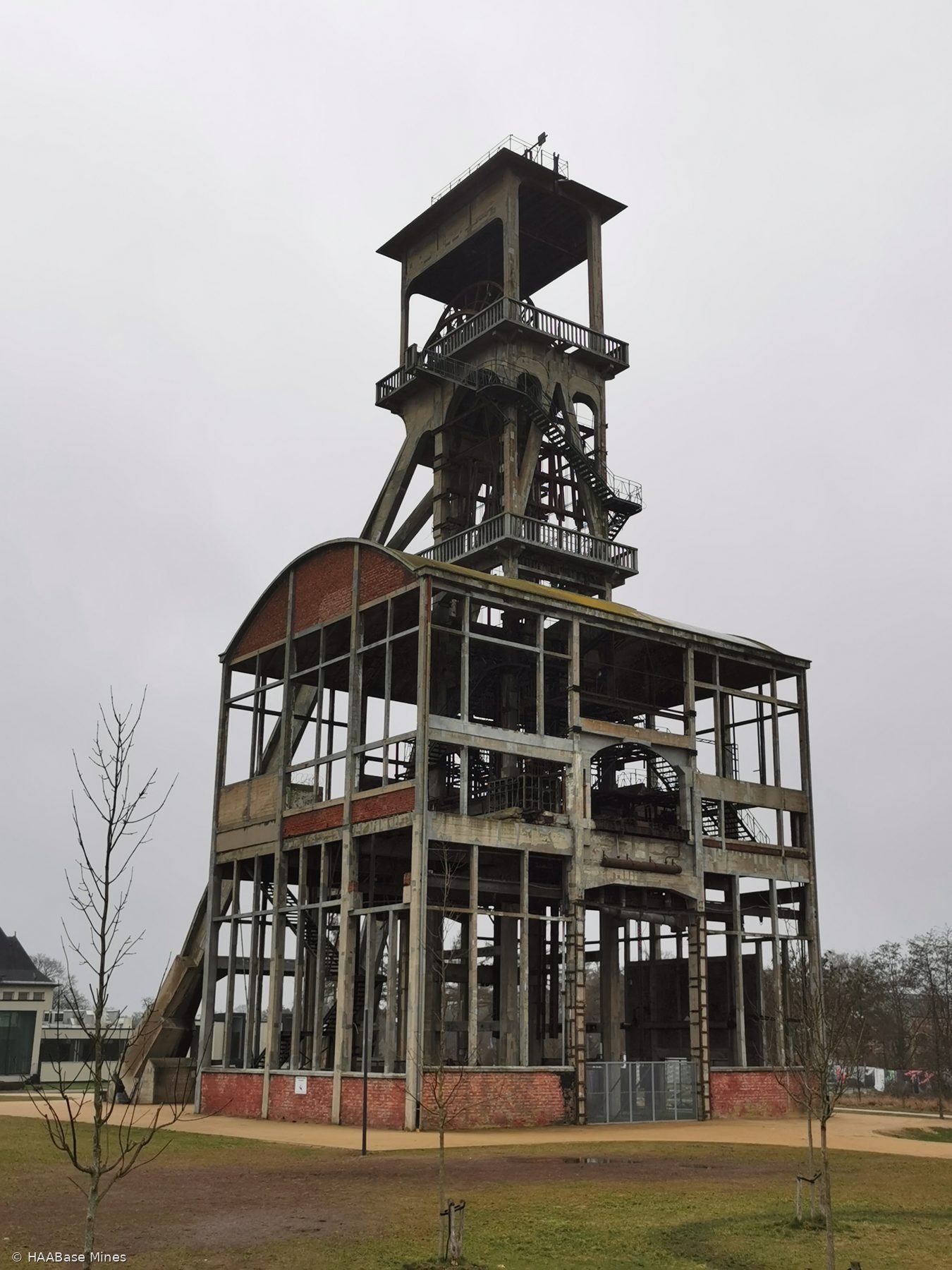
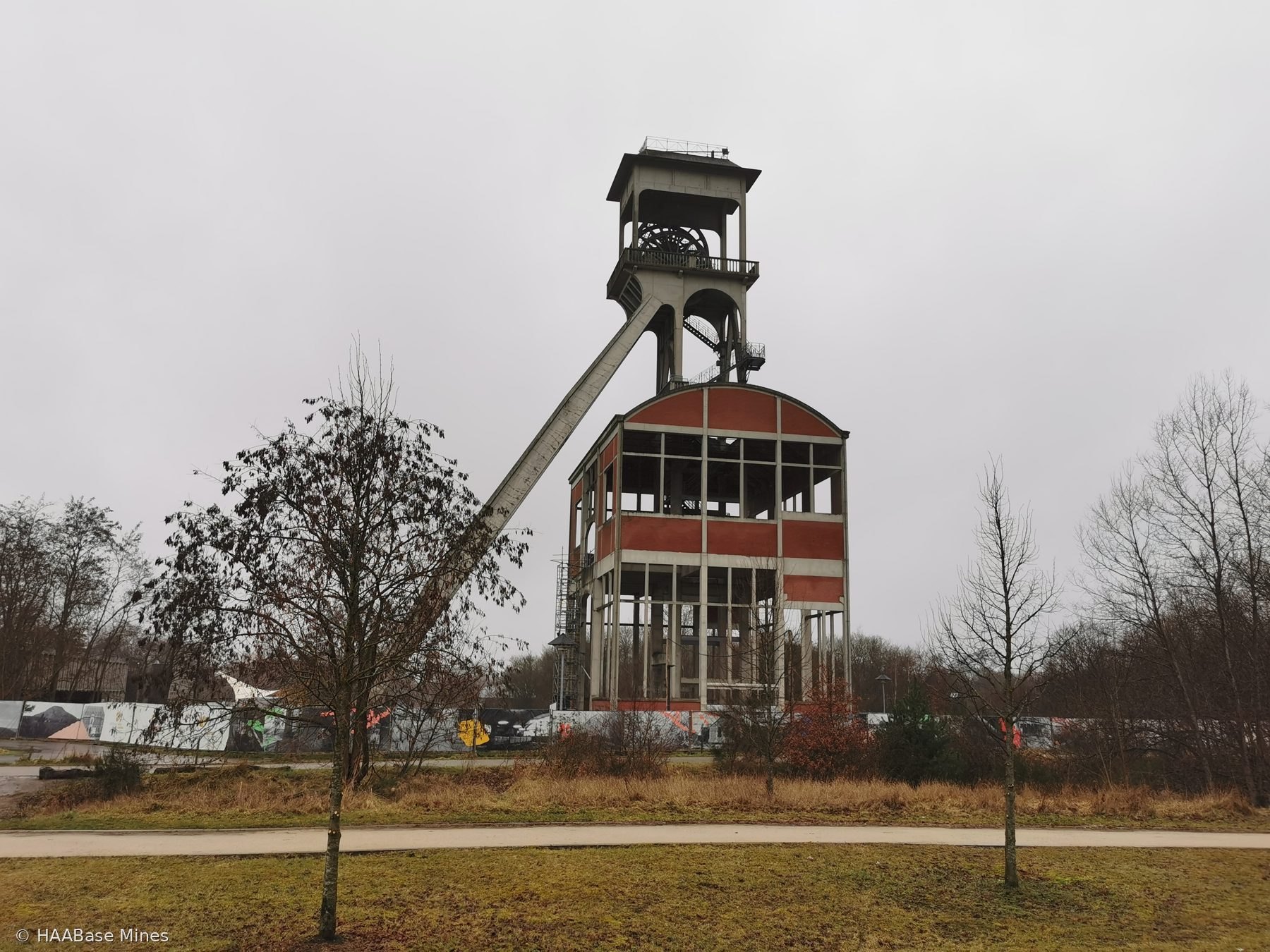
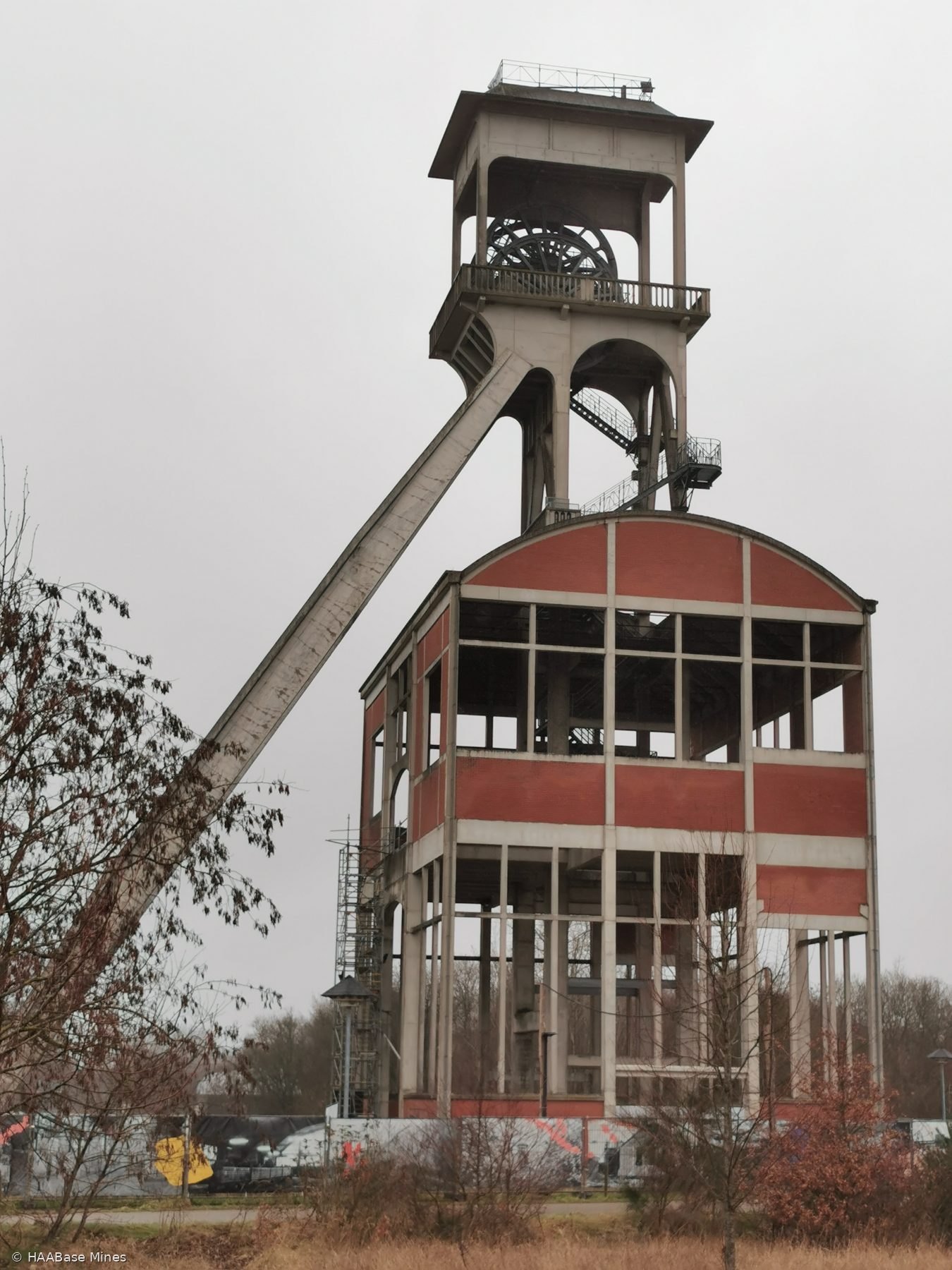
Former Eisden coal mine with original 1921 Queen’s Shaft tower, reconstructed second concrete headframe and surviving historic offices and store.
The history, timeline and surviving-site classification shown here reflect the reviewed account.
The record identifies the former Eisden colliery on Zetellaan at Maasmechelen, in the eastern Kempen coalfield. The account rests primarily on the Flemish architectural and protected-monument inventories, supplemented by researched industrial-heritage reporting and a recent conservation study of the winding equipment. These sources establish the shaft-development sequence, 1921 and 1926 headframes, their distinct subsequent fates, the documented 1957 production maximum and the surviving protected buildings.
The 1987 end of extraction and later transformation of the industrial precinct are well supported. The precise year of rebuilding the western tower, some cumulative production and workforce totals and details of relocated machine parts are less firmly documented; they are qualified accordingly. The physical-site chronology and major heritage designations have particularly strong official support.
The surviving Eisden mining core comprises two concrete headframes and associated former colliery buildings. It is classified as shafts_buildings, with mixed authenticity, and as a repurposed site with headframes and associated buildings. Schachtbok I, the 1921 Puits de la Reine, is an original protected structure; Schachtbok II represents reconstruction following the loss of the 1926 western headframe.
The 1931 offices and 1913 principal store survive in new uses, while much of the preparation plant and winding complex has gone. Protected equipment survives only in part. Coal describes the former industrial output.
Official Flemish monument notices, the site inventory and specialist industrial-heritage assessments substantiate these distinctions. Some conservation-study summaries disagree over headframe numbering; the site-specific legal descriptions and specialist historical account provide the stronger identification.
The former Steenkoolmijn van Eisden at Maasmechelen was the easternmost of the seven Belgian Kempen coal mines. Developed from the 1900s and producing commercially from 1923, it grew into a deep-shaft colliery with a major railway and canal transport network, a power plant, coal-preparation facilities and a planned garden suburb. Its most recognisable features were the two concrete winding towers: the original Schachtbok I, completed in 1921 and known as Puits de la Reine after Queen Elisabeth’s 1922 visit, and Schachtbok II, originally completed in 1926.
The mine reached a documented production peak of 1,883,420 tonnes in 1957 and closed on 18 December 1987. The preserved site includes the original eastern headframe, a reconstruction of the western tower, historic offices and the former principal store. Protected machinery survives in part, although its machine hall has gone.
The wider industrial land has become Maasmechelen Village and Terhills, forming an entrance to the Hoge Kempen National Park.
The Eisden colliery at Maasmechelen was the easternmost of the seven deep coal mines developed in Belgium’s Kempen coalfield during the twentieth century. Its origin lay in the discovery of coal at As on 2 August 1901 under the direction of the geologist André Dumont. Further boring proved seams beneath the land around Eisden, west of the Zuid-Willemsvaart canal, and encouraged the formation of industrial companies to exploit the new field. The Sainte-Barbe concession, covering approximately 2,170 hectares, was granted in 1906. The Société Anonyme des Charbonnages Limbourg-Meuse was established the following year; it began acquiring land for shafts, surface machinery, transport links and a purpose-built mining settlement. In 1919 Sainte-Barbe was united with the neighbouring Guillaume Lambert concession, forming the basis of the larger Limburg-Maas holding. Its financing involved Belgian and French industrial interests, whose influence would later be visible in the architecture of its imposing administrative buildings.
The position of the pit was selected after exploratory borings, close to boring no. 81. Schacht I was planned as the return-air shaft and Schacht II as the intake; the two were placed about ninety metres apart. Each was designed with a diameter of approximately 6.1 metres. Sinking presented enormous engineering difficulties because the shafts had to penetrate hundreds of metres of water-bearing overburden before reaching the coal measures. The contractors employed the Poetsch ground-freezing method, with freezing intended to extend to roughly 490 metres. Temporary sinking towers, boilers and workshops were installed, and the initial shallow shaft excavations had been prepared by 1911. Freezing boreholes began on 12 August that year. Water inflows were also tackled by injecting cement through four inclined boreholes into porous strata. It was not until 4 March 1914 that the frozen ground was considered ready and the actual deep sinking of Schacht I could begin.
The First World War disrupted this work almost immediately. Sinking stopped in August 1914, resumed in 1915 under German supervision and was complicated by the withdrawal of a French contractor. The Belgian firm Henricot subsequently provided cast-iron shaft lining. Work proceeded in stages, with the tubbing and surrounding concrete intended to hold back groundwater. On 30 August 1917 Schacht I reached its first coal seam; by the end of the war lining had reached approximately 519 metres. Schacht II had its freeze holes drilled before the conflict, but shortages of coal and refrigerant delayed the freezing itself until 1 December 1918. Ultimately Schacht I reached about 730 metres and Schacht II about 812 metres, with an underground connection made at the 590-metre level in 1922. These depths describe the engineered shafts; later mining horizons and inclined workings extended the accessible coalfield beyond them.
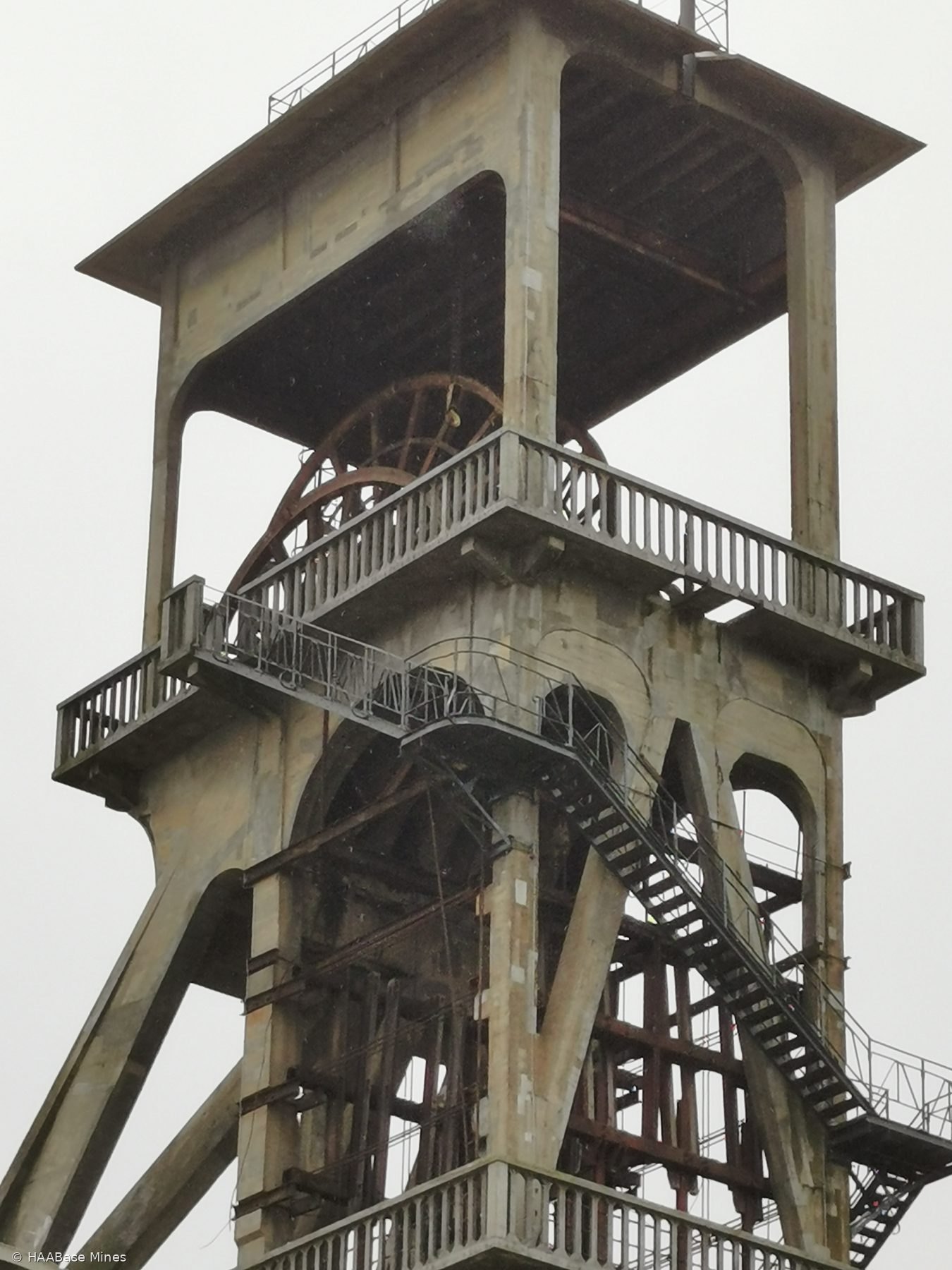
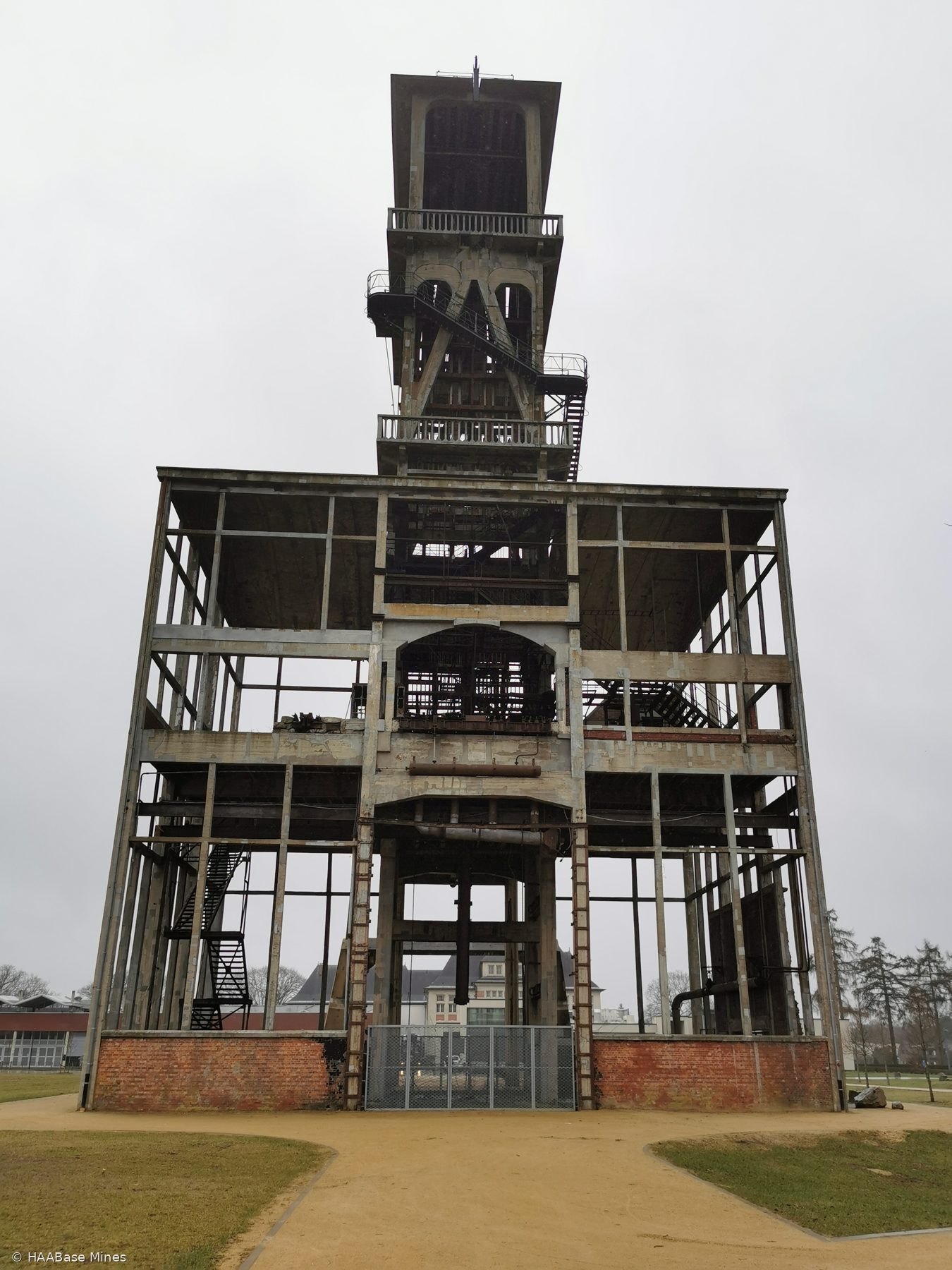
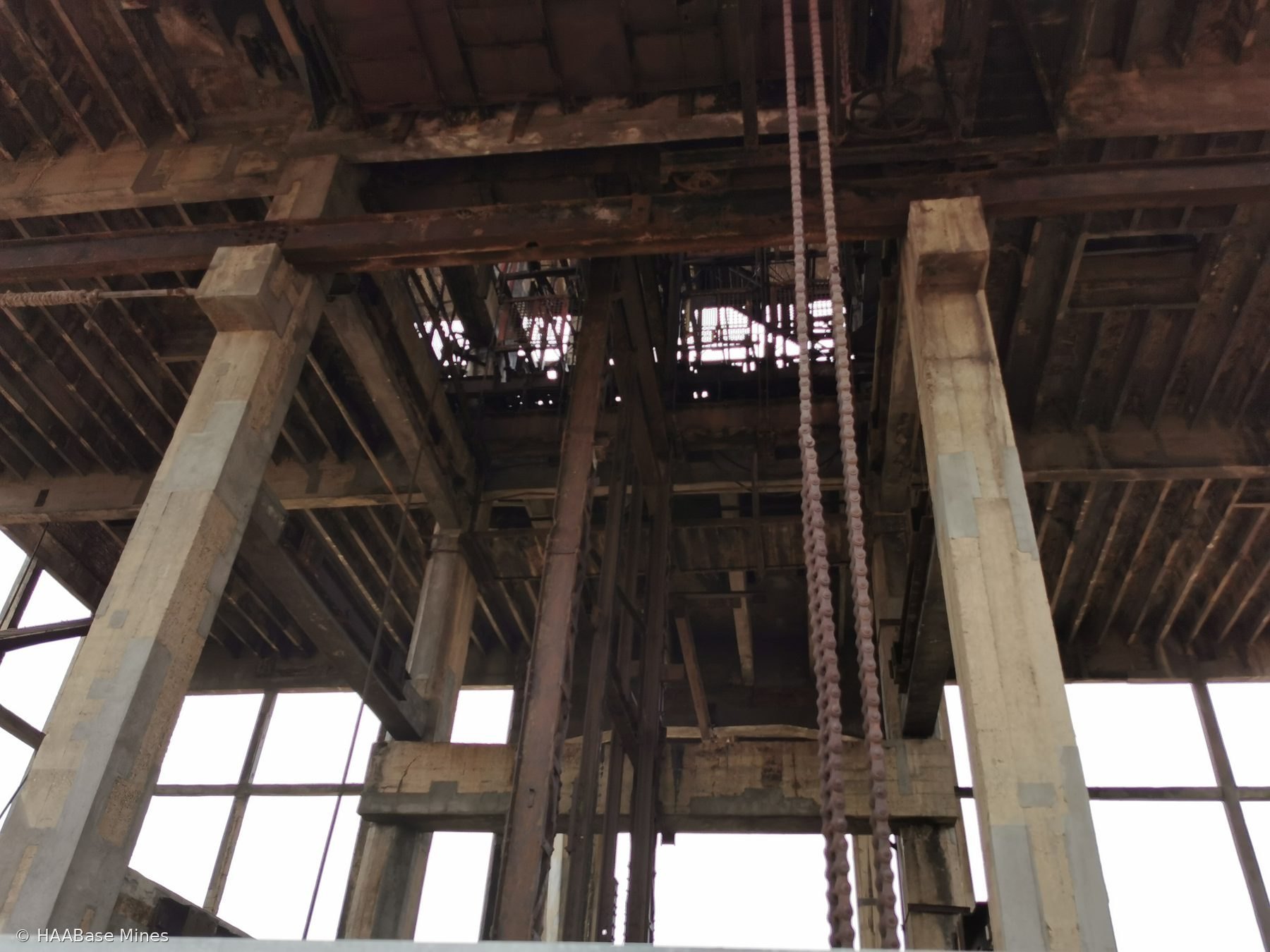
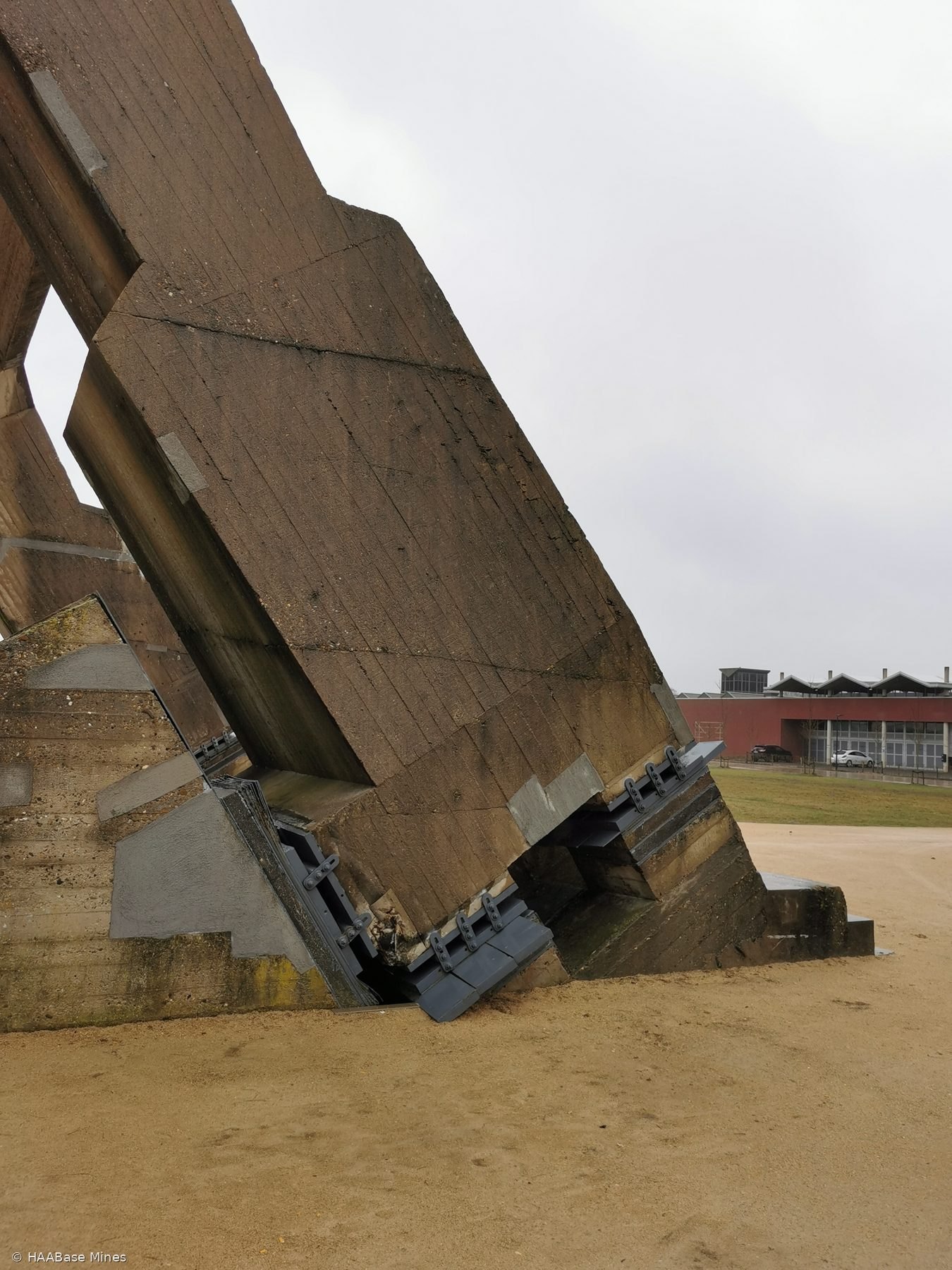
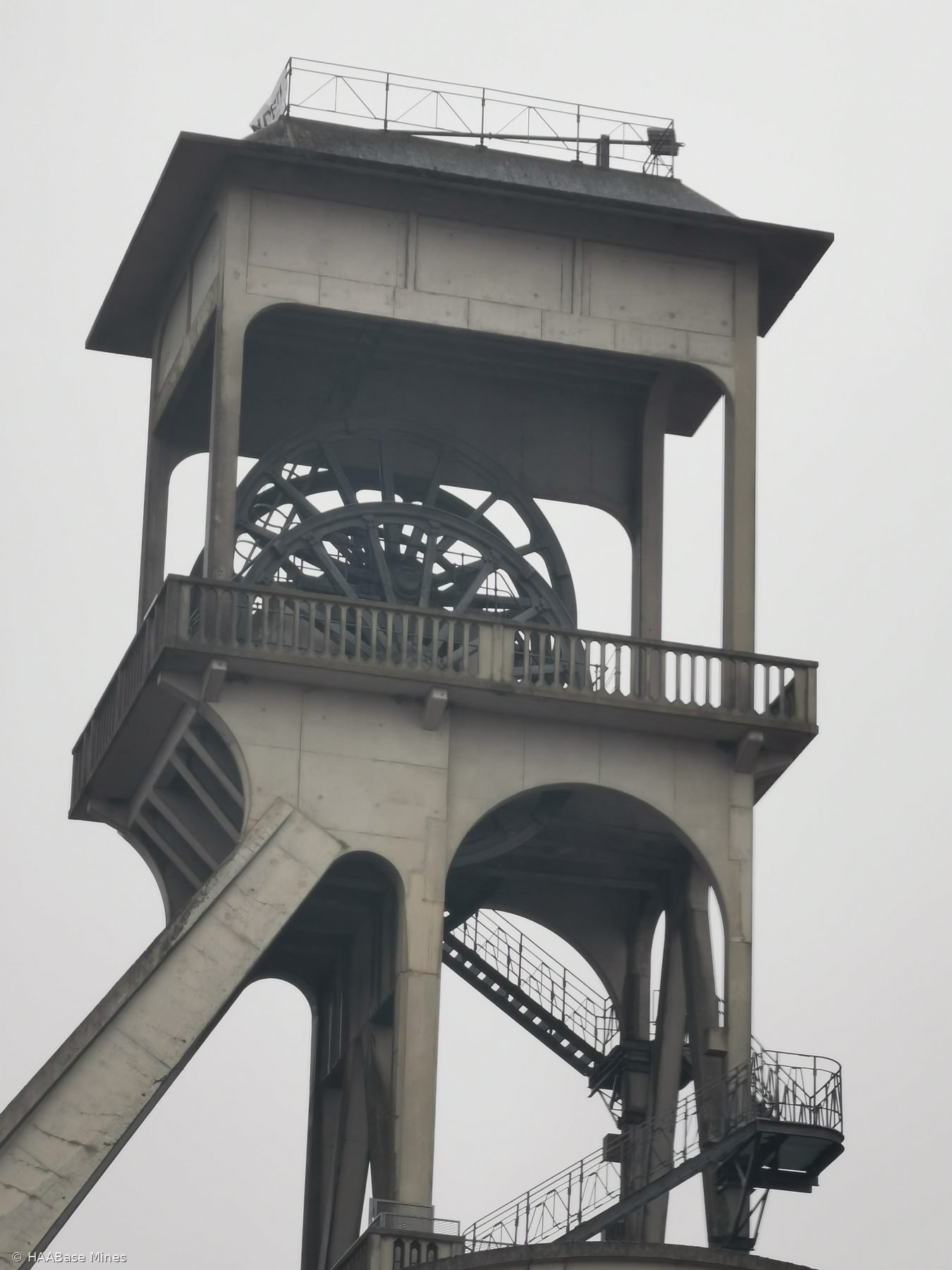
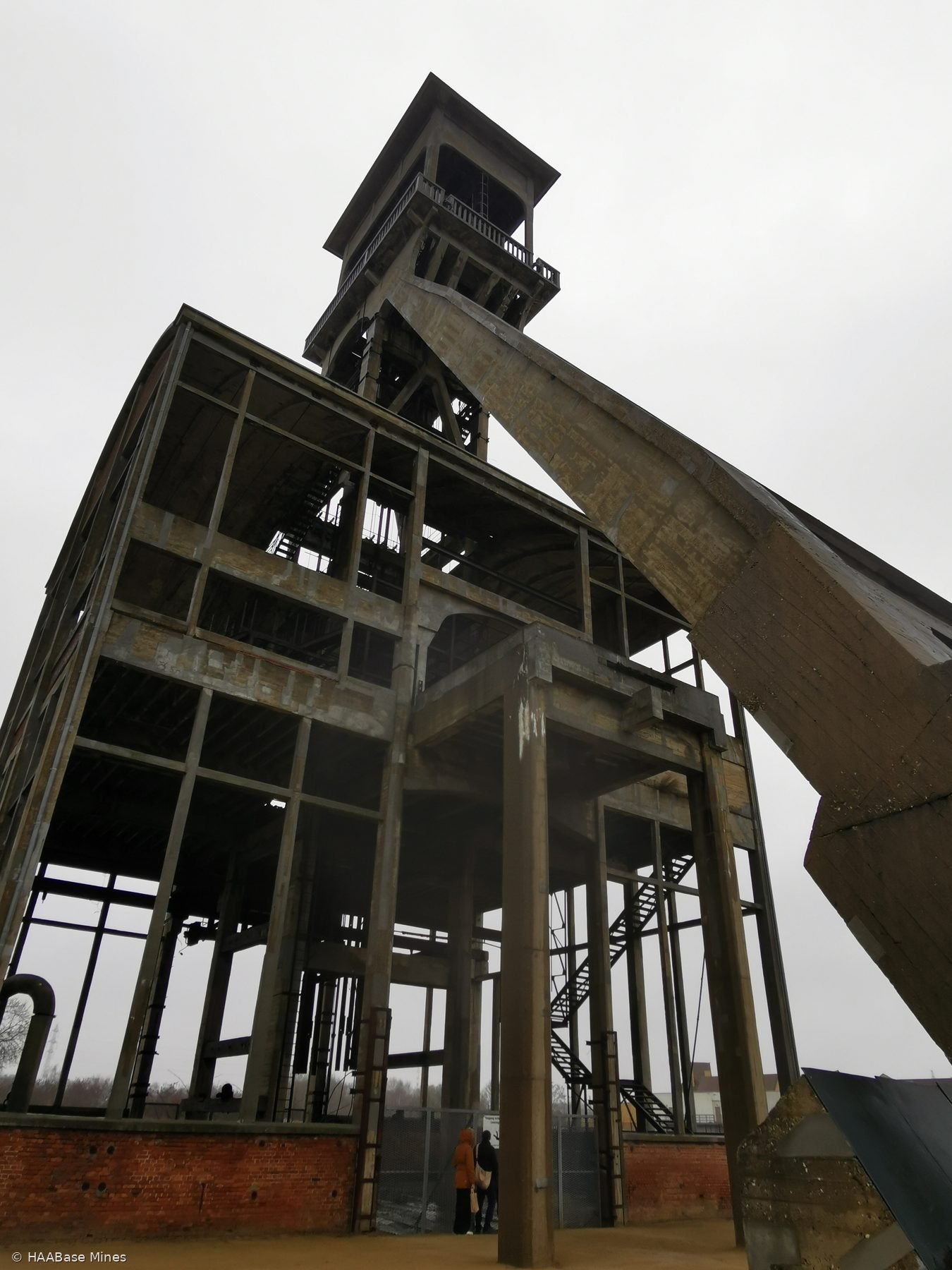
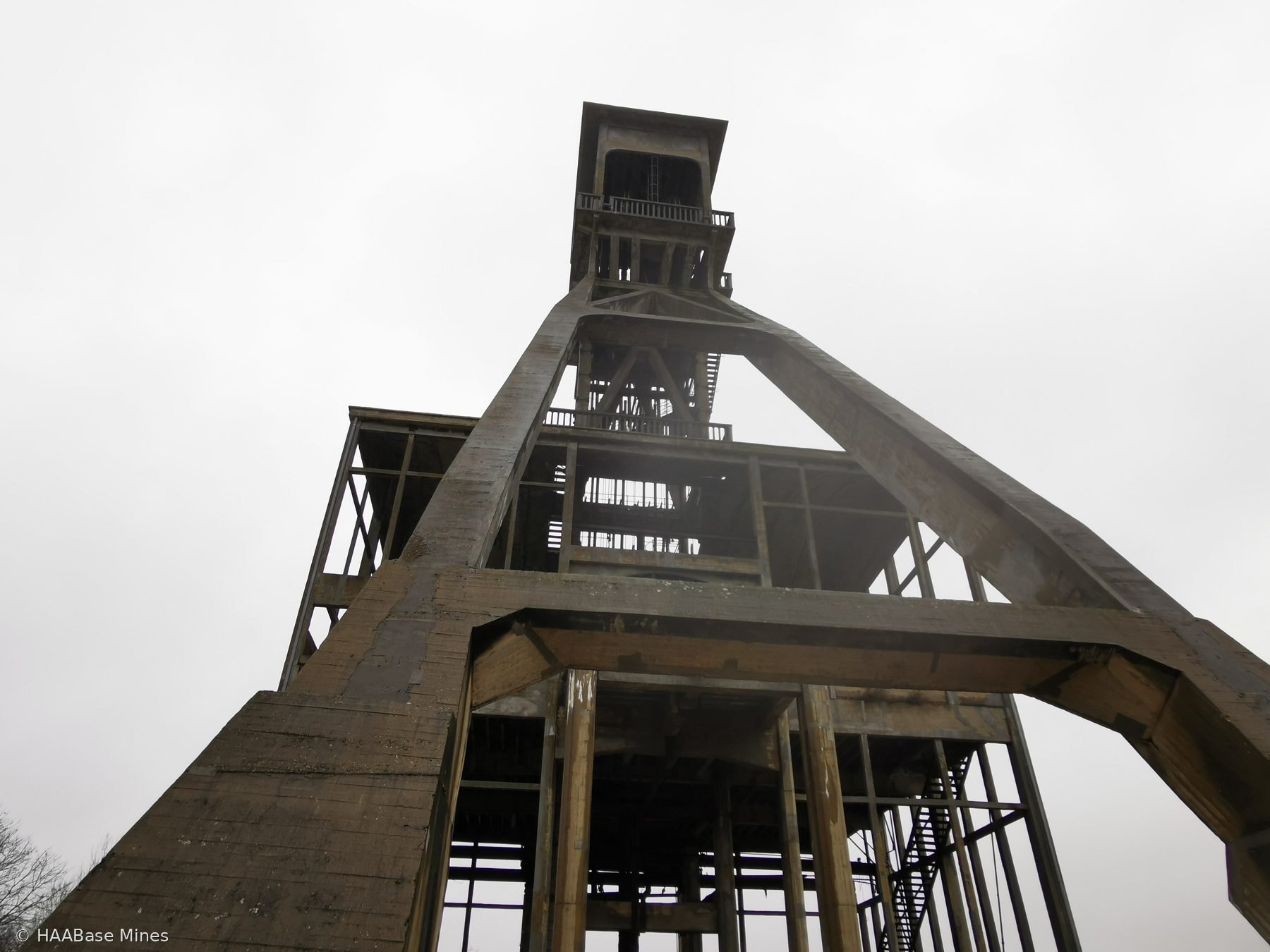
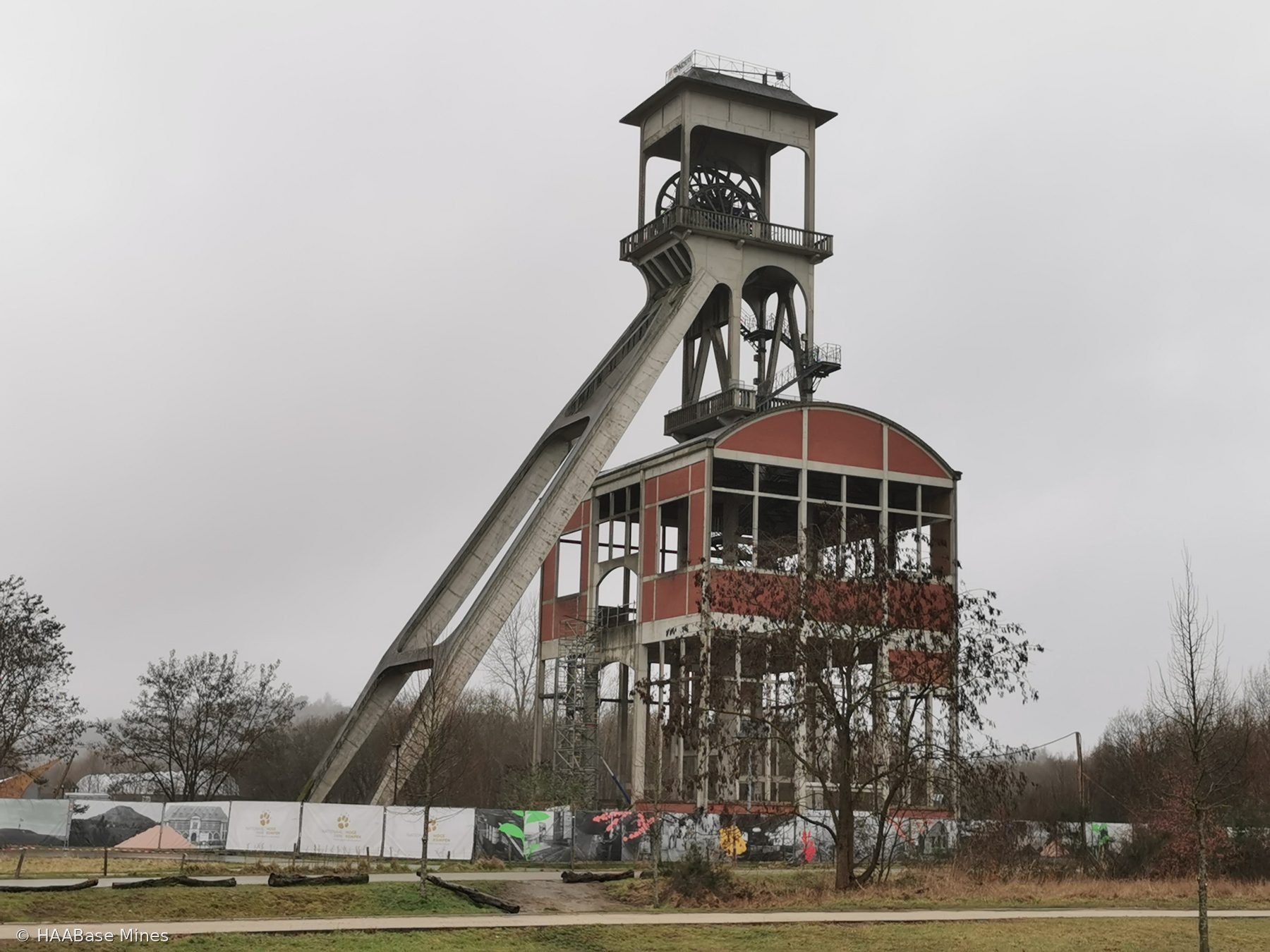
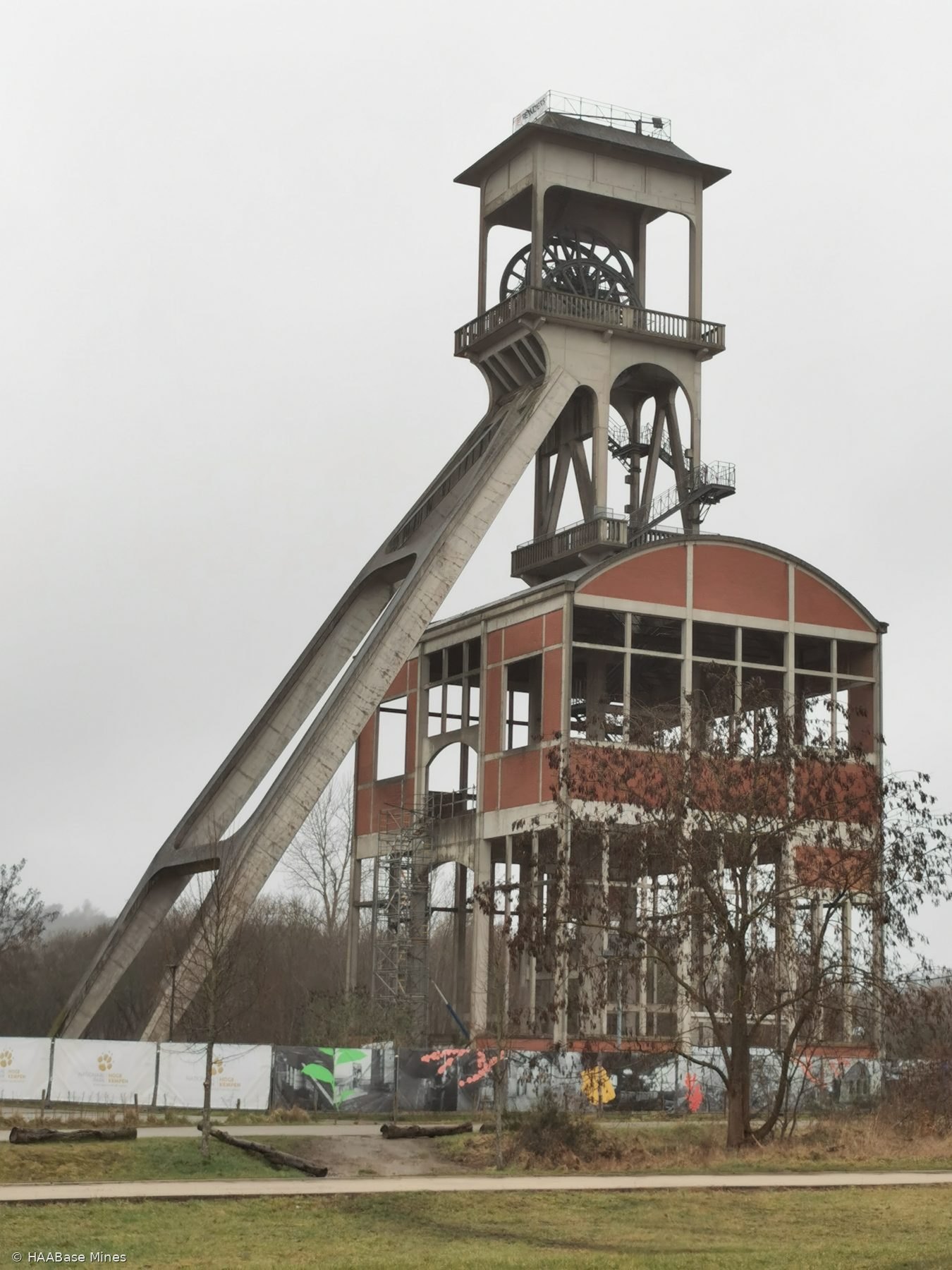
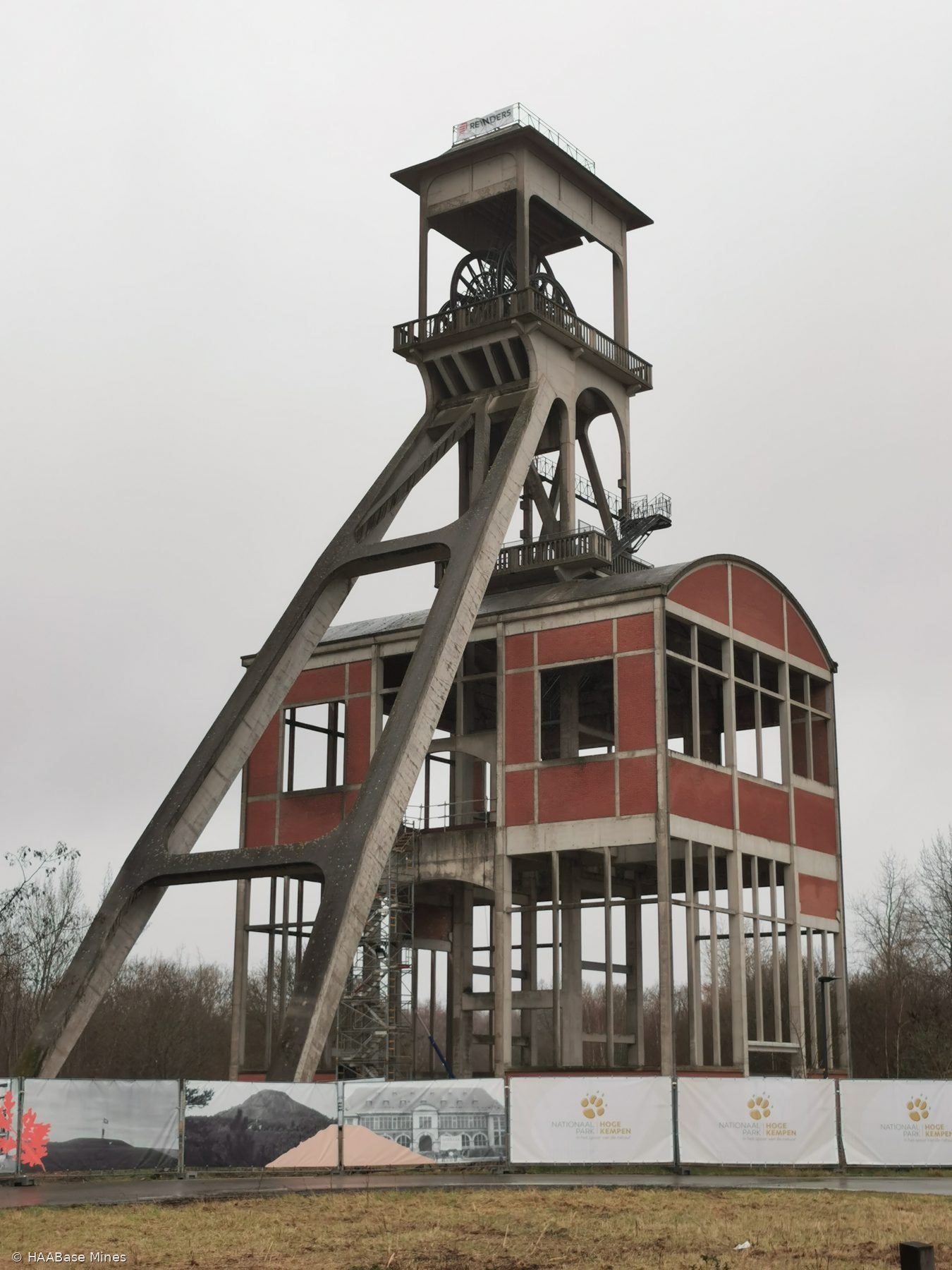
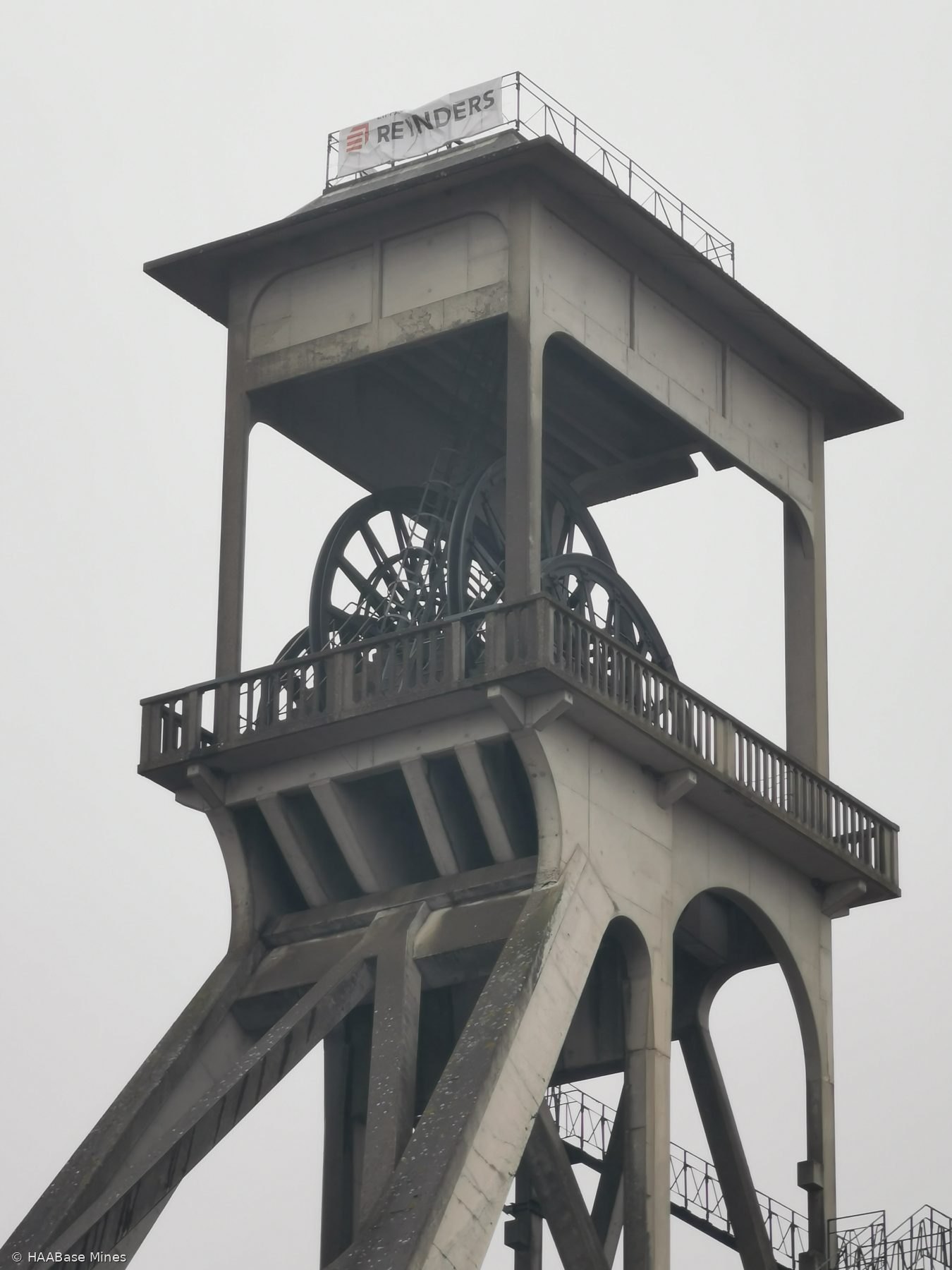
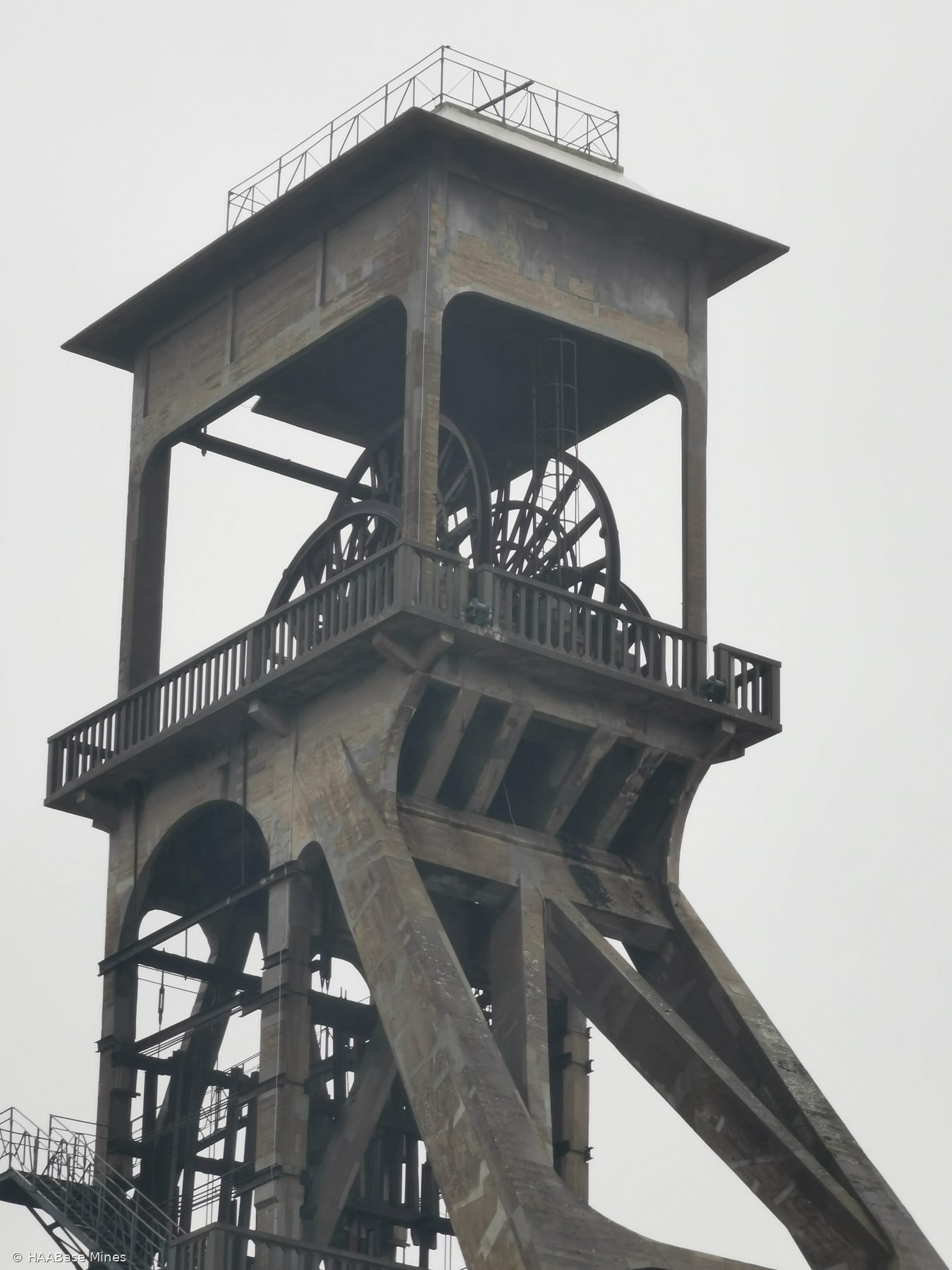
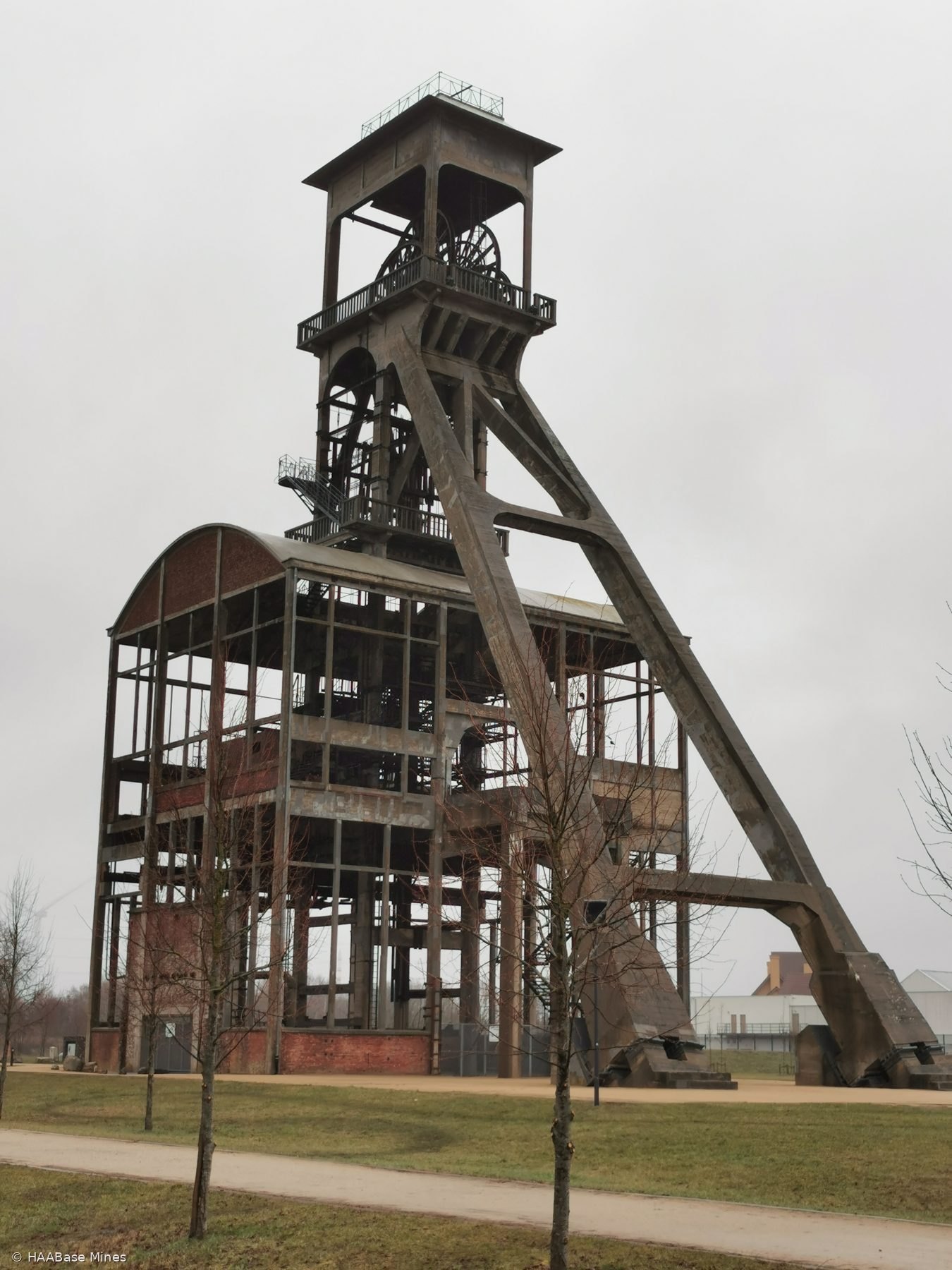
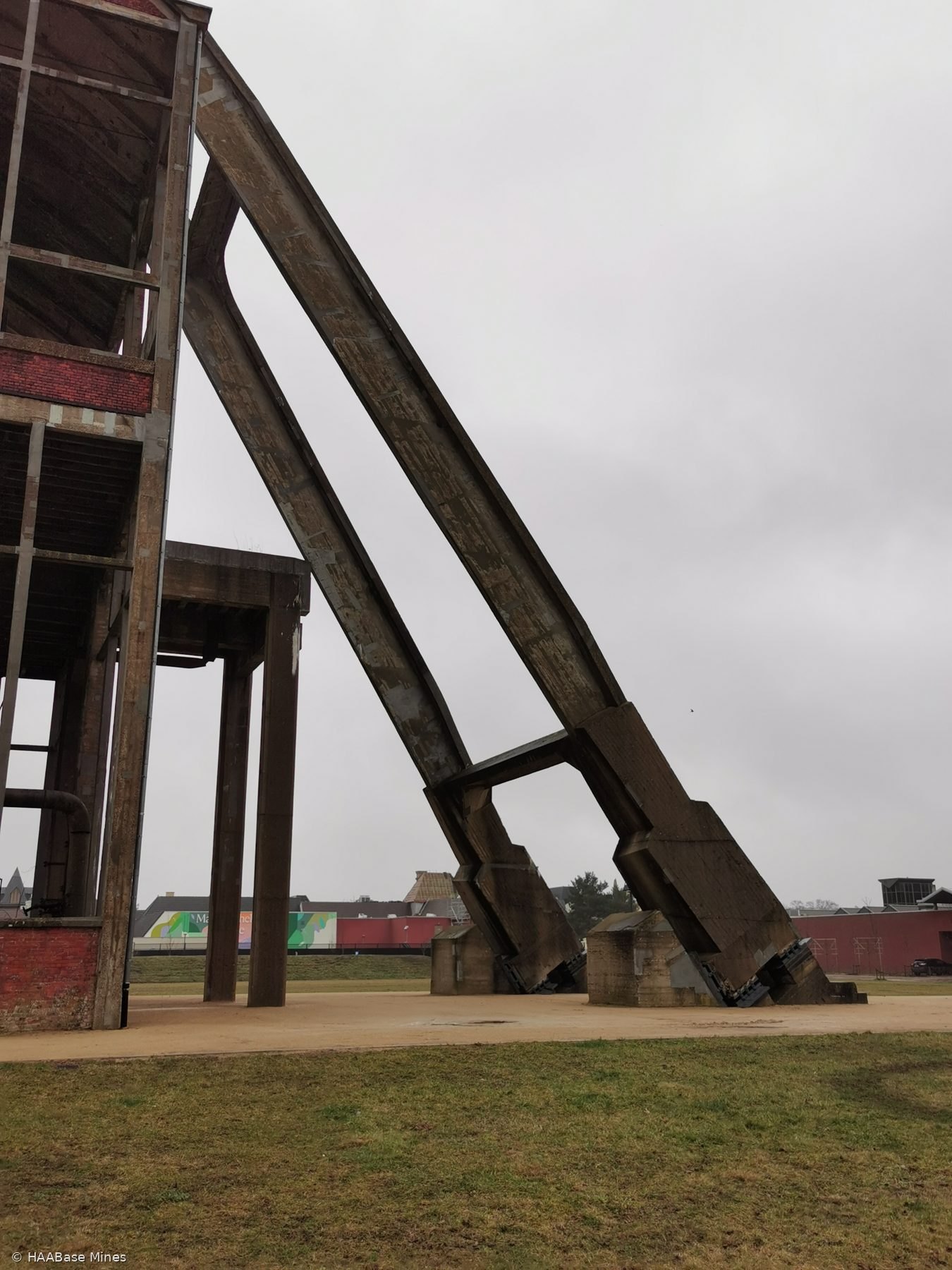
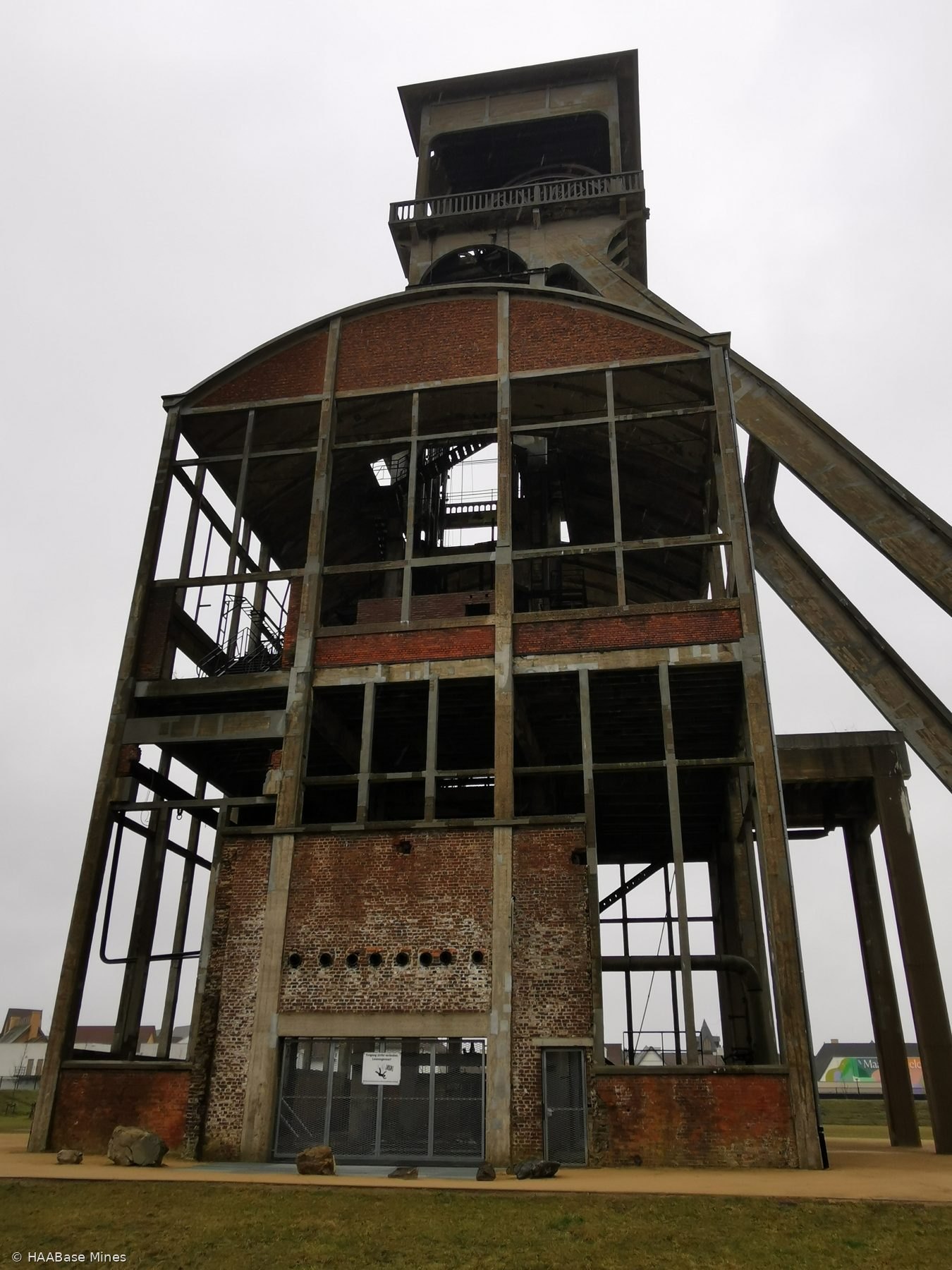
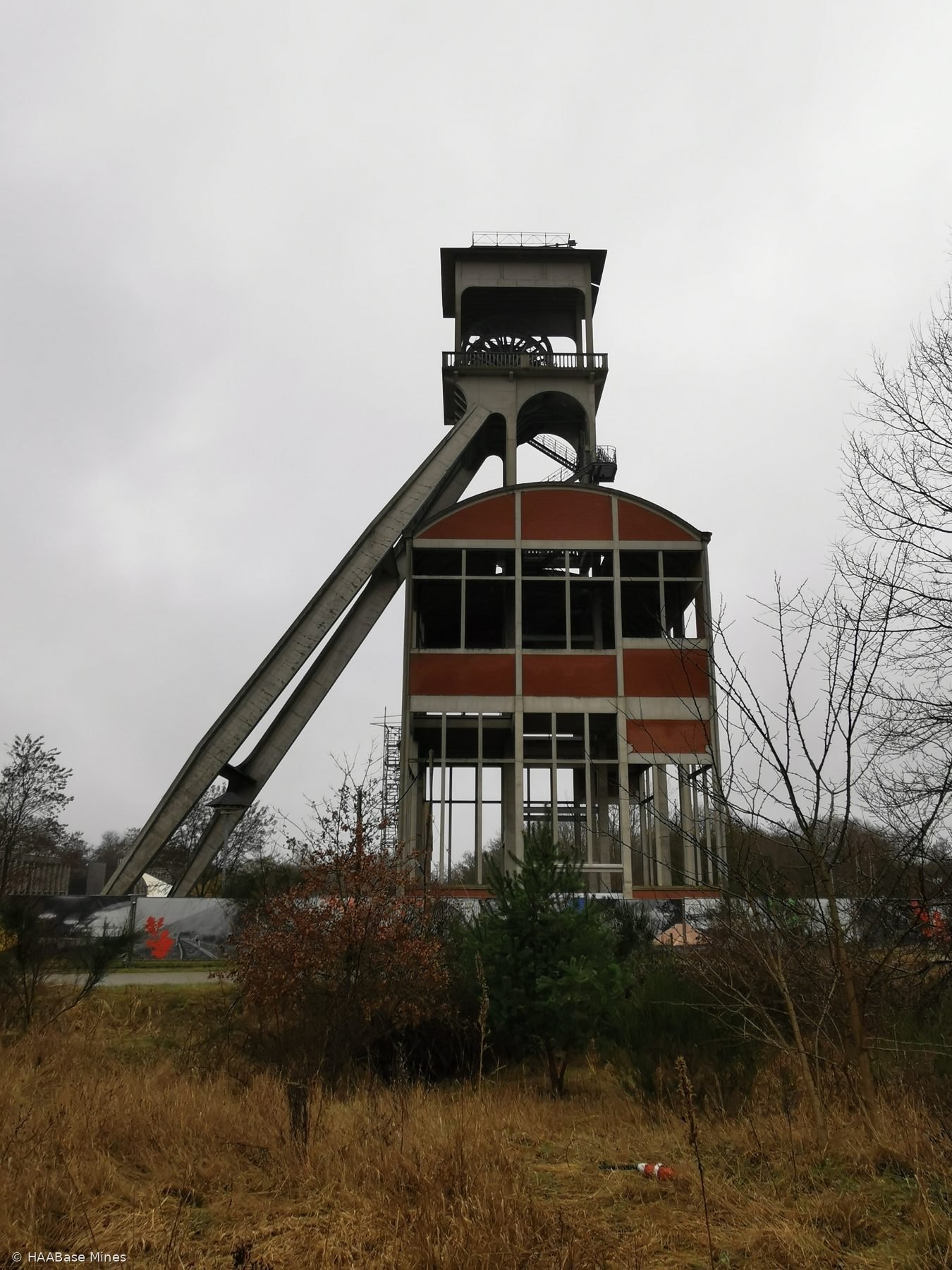
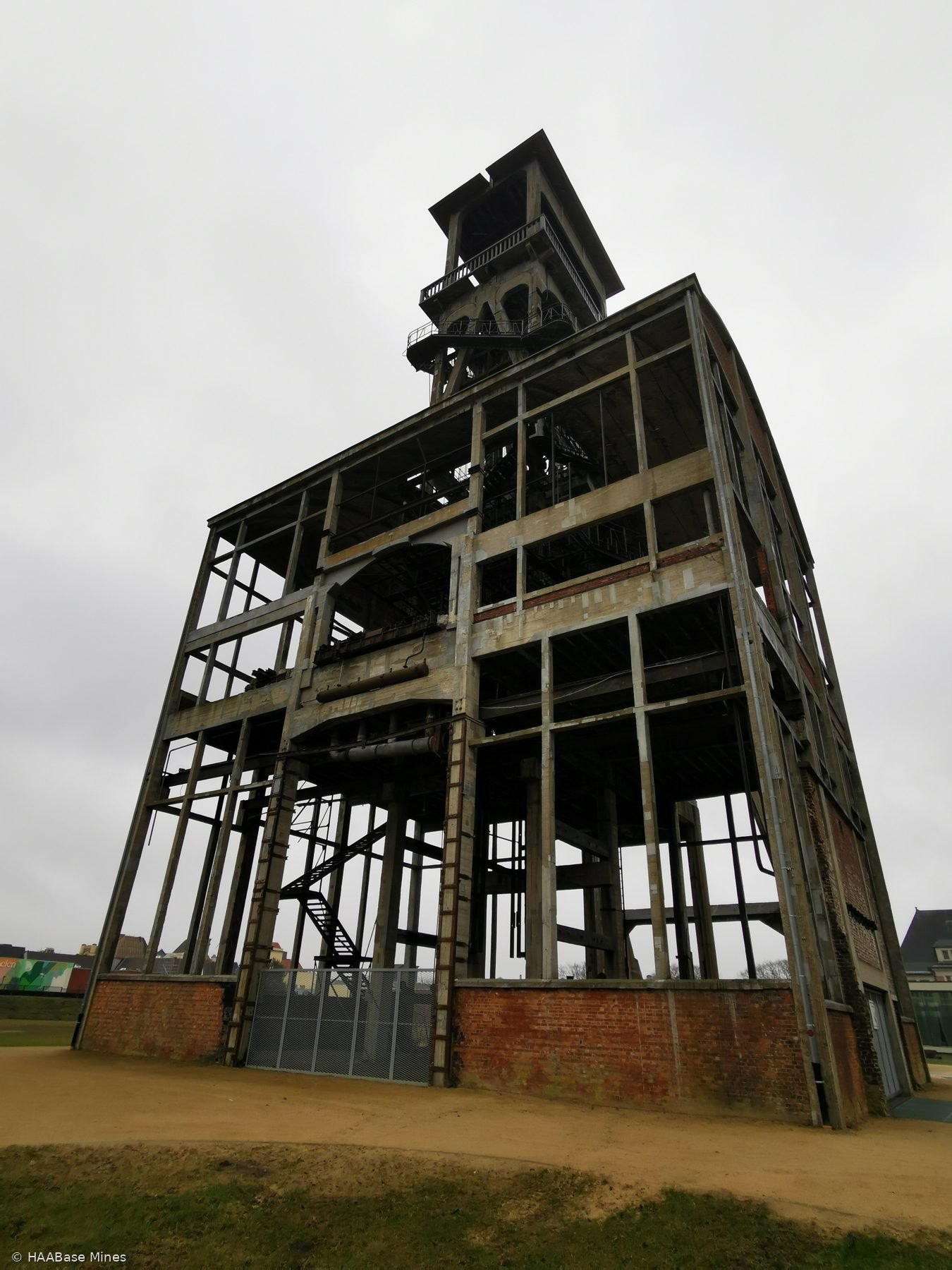
Above the two shafts the company erected a particularly distinctive pair of reinforced-concrete winding towers, associated with the Brussels firm Monnoyer. Unlike the steel headframes of most other Kempen pits, the Eisden towers used relatively slender concrete structural members. This approach was economical but, as subsequent deterioration demonstrated, less accommodating of settlement and movement. The eastern Schachtbok I was complete in 1921. It stands around 45 metres high, with its winding sheave at approximately 34.5 metres, and was surrounded by a concrete-framed loading installation developed from late 1922. Queen Elisabeth made an unexpected visit on 16 October 1922, descended underground through this shaft and impressed the workforce by negotiating the muddy and unfinished galleries. Schacht I consequently acquired the name Puits de la Reine, or Queen’s Shaft. The western Schachtbok II followed in 1926. Two loading floors and elevated passages once connected these concrete towers with the coal washery and sizing installations, giving the pithead a much more extensive industrial appearance than survives today.
Coal had been raised during the final development period, and sustained production was established in 1923, when Eisden became the third producing Kempen colliery after Winterslag and Beringen. Working levels were progressively established at approximately 600, 700 and 800 metres, while inclined underground routes allowed access to deeper seams. The mine developed a substantial transport system. A dedicated harbour on the Zuid-Willemsvaart was laid out from 1912, with a quay used for loading coal into barges. Railway and tramway connections were also part of the original plans, and by 31 July 1920 a private line of about 7.8 kilometres connected the mine to As station. Subsequent improvements in the region’s canals and waterways offered further outlets for its fuel. As production expanded, railway wagons, canal barges and the washing plant together became central elements in the movement of coal from the pit to customers.
The colliery reshaped Eisden and the surrounding area. The company’s acquisition of land was accompanied by construction of an extensive garden suburb, with its first dwellings occupied by 1911. Its planned streets, varied house types and green spaces reflected the garden-city ideas influential in industrial housing at the time. Further development accompanied the recruitment of miners and their families, including workers who arrived from elsewhere in Europe and later from beyond it. The purpose-built mining settlement, schools, community buildings and the ceremonial Koninginnelaan made coal mining the organising force in a new community. This residential district remains part of the wider cultural landscape but is geographically distinct from the surviving main shaft-and-buildings group.
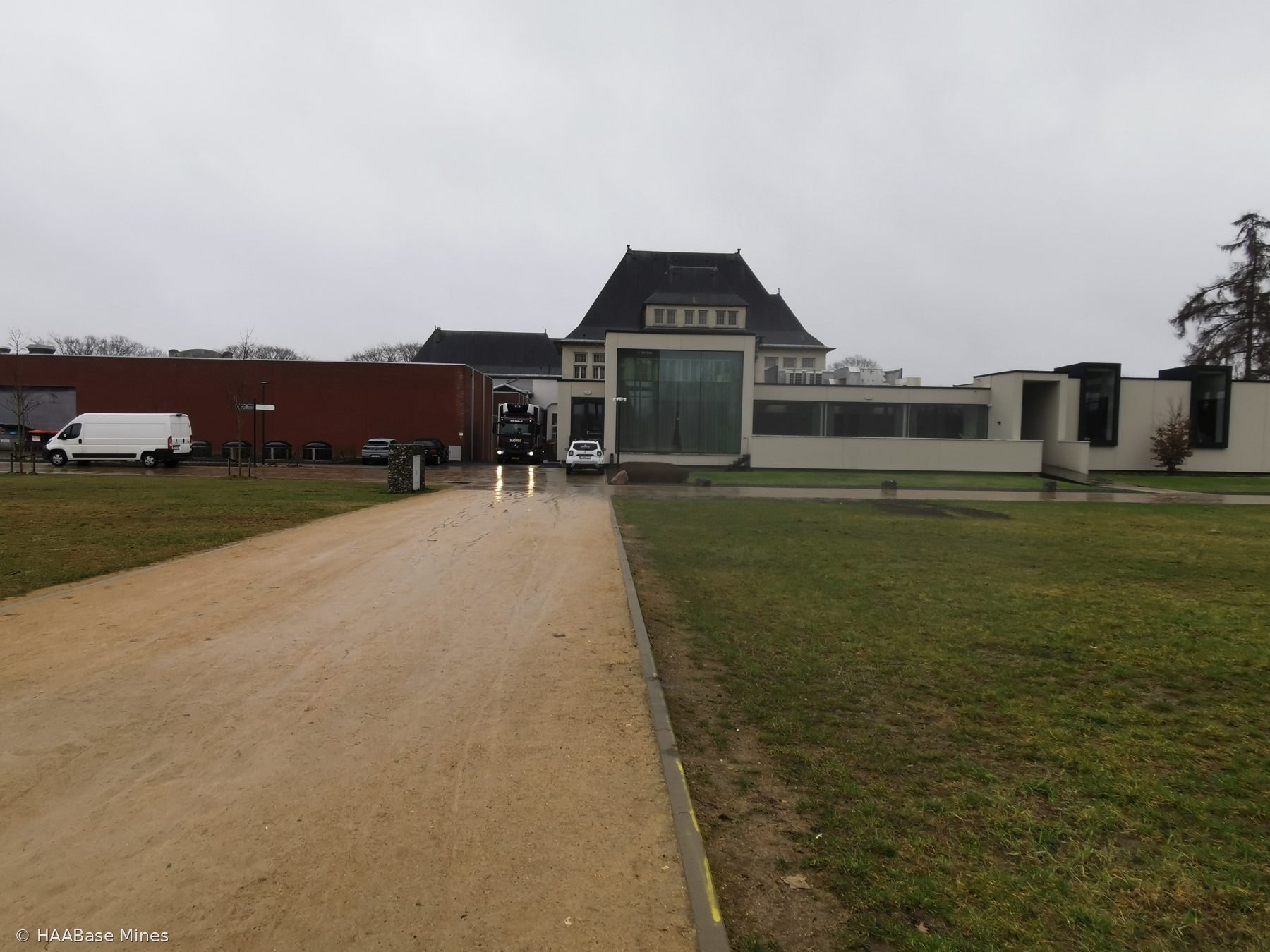
Surface architecture was as ambitious as the mine itself. The principal offices, completed in 1931, were designed in an imposing neo-classical and Baroque-influenced manner, reflecting the company’s connections with French finance and heavy industry. Nearby stood the principal store, dating from 1913, which had served successively as stables, locomotive accommodation, garage, carpentry shop, offices and stores during the mine’s working life. Coal preparation, power generation, winding and compressed-air plant occupied other parts of the extensive site. Following the Second World War the mine achieved exceptionally high output: the official Flemish heritage inventory records 1,883,420 tonnes in 1957. Specialist mine histories put the workforce at more than 7,000 in the middle of that decade. The transformation of Eisden from agricultural settlement to a major coal town was one of the most dramatic changes brought by the development of the Kempen field.
As Belgian coal faced competition from other fuels and imported energy, the future of the eastern Kempen collieries grew increasingly uncertain. Eisden survived earlier proposals for closure, but the restructuring programme of the 1980s finally brought working to an end. The colliery closed on 18 December 1987. At closure about 975 people were still employed, according to specialist industrial-heritage reporting; some remained temporarily to recover equipment and secure the underground workings. Closure was therefore not a single act of abandonment. Industrial dismantling continued over the following years and greatly reduced the extent of the once continuous pithead complex. The coal washeries, generating installations and most workshops disappeared, along with the overhead passageways that had linked the headframes to the preparation plant.
The fate of the two concrete towers illustrates the different kinds of survival on the site. The eastern Schachtbok I, dating from 1921, was retained as original mining fabric and underwent conservation in 2018–19. The western Schachtbok II, originally built in 1926, suffered serious deterioration of its concrete and was demolished after closure. A concrete replica was erected on the site of the original tower. Accounts differ on some details of the rebuilding programme, but the distinction between the authentic eastern structure and the reconstructed western one is fundamental to understanding what visitors see today. The two towers still express the scale and symmetry of the historic colliery, although they no longer operate and their former mechanical and coal-handling connections have largely gone.
Several substantial mining buildings survived and gained new uses. The main offices, sometimes called the Kolenkasteel, now accommodate a hotel and restaurant, while the former principal store houses the local academy of arts and music. Important parts of the winding and compressed-air machinery were given legal protection, but the original machine hall was subsequently demolished and the machines dismantled and moved. A conservation investigation in 2024 found that some protected components remain incomplete and that only certain machinery, notably elements of the Ward-Leonard electrical equipment, could realistically be reconstructed as a complete system. These traces reinforce the difference between the preservation of the historic structures and the continued existence of their original mechanical functions.
Formal heritage protection developed in stages. On 22 December 1993 the Flemish authorities protected the main offices, principal store, Schachtbok II and specified winding and compressed-air equipment. On 12 December 2002 the original Schachtbok I, together with its reception building, received separate monument protection. Wider landscape assessments also recognised the relationship between the former mine, its garden suburb, railway corridors, spoil heaps and adjacent heathland. The pithead buildings now sit within the greatly changed environment of Maasmechelen. The Maasmechelen Village retail development occupies former industrial land where the coal-preparation and power installations once stood, while the spoil heaps and surrounding landscape have been adapted for recreation.
From the 2010s the former mine landscape became known for the Connecterra and Terhills gateway to the Hoge Kempen National Park. The great heaps, once refuse from coal working, now form prominent walking and viewing terrain. The two concrete headframes remain the clearest landmarks, seen above the landscaped grounds and nearby commercial development. Adaptation of the reconstructed western tower as a visitor centre was under way during 2025–26, linking industrial heritage interpretation with access to the national park. The surviving Eisden complex is consequently both a record of a large twentieth-century mine and an example of how industrial structures can be conserved, reconstructed and put to new purposes after the end of extraction.

This list includes live sources already held for the record and any additional sources added or confirmed during the published fact-check review.