1911
Concession Houthalen granted
The concession Houthalen of 3,250 hectares was granted by royal decree on 6 November 1911 to three companies.
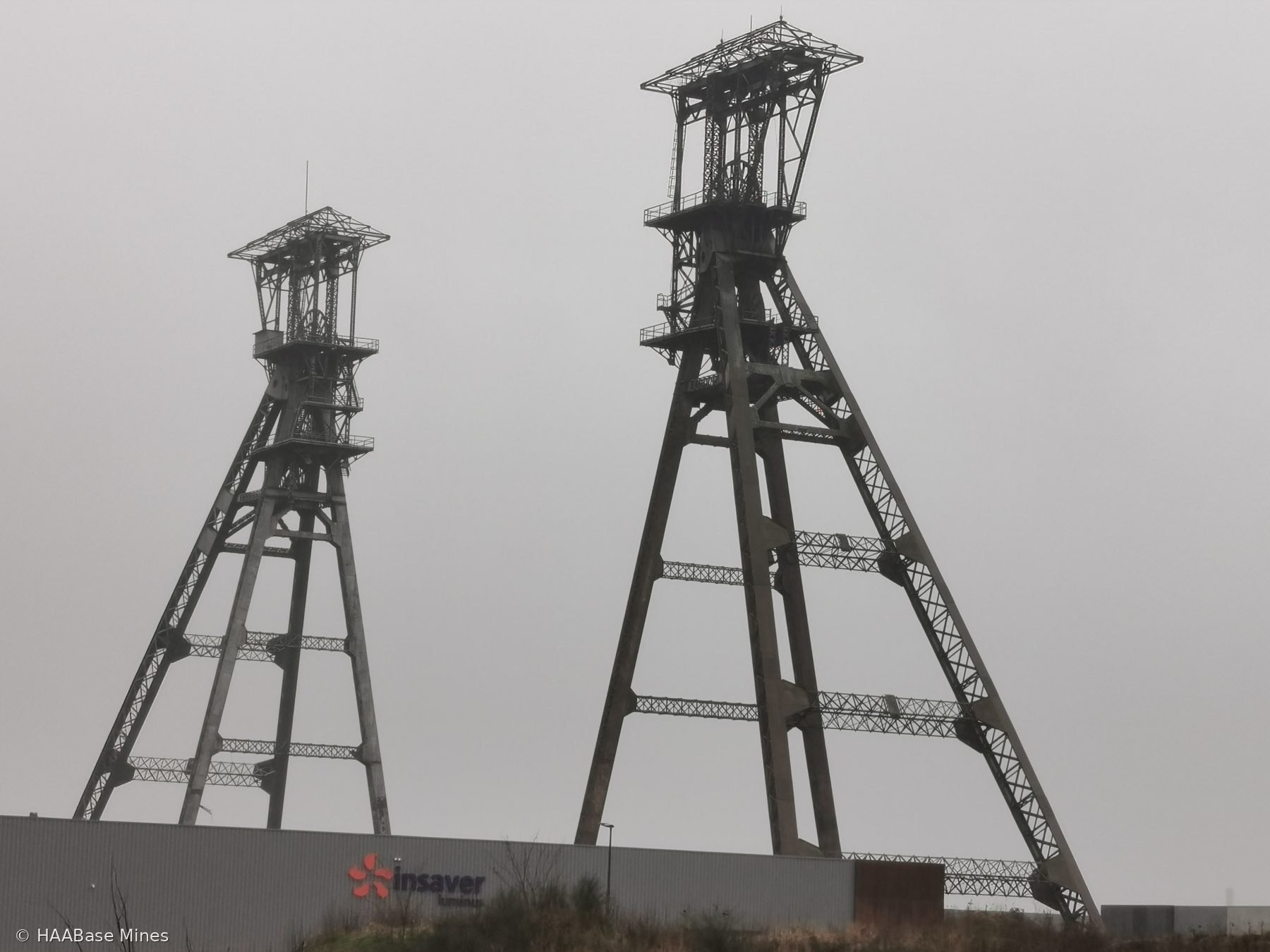
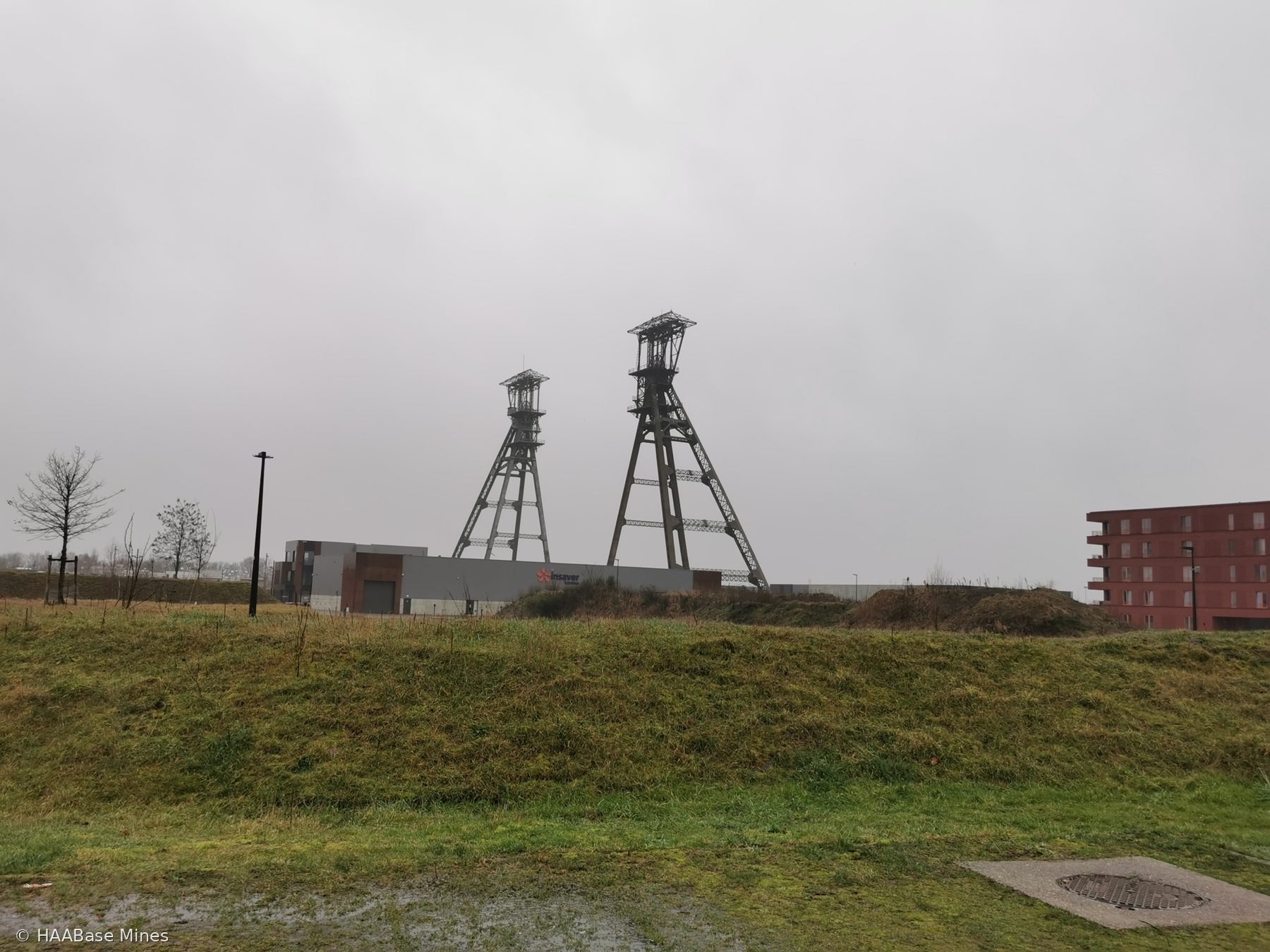
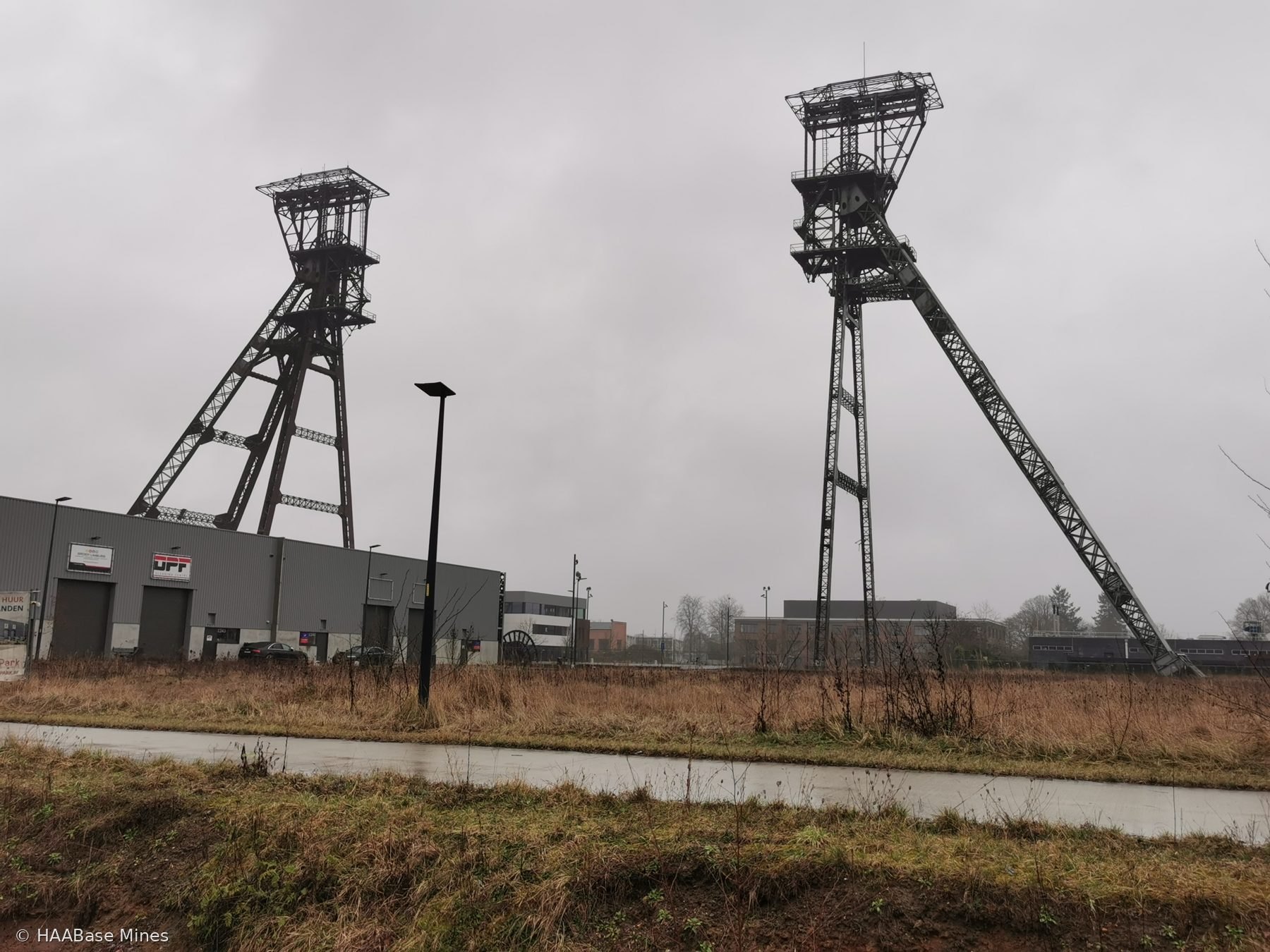
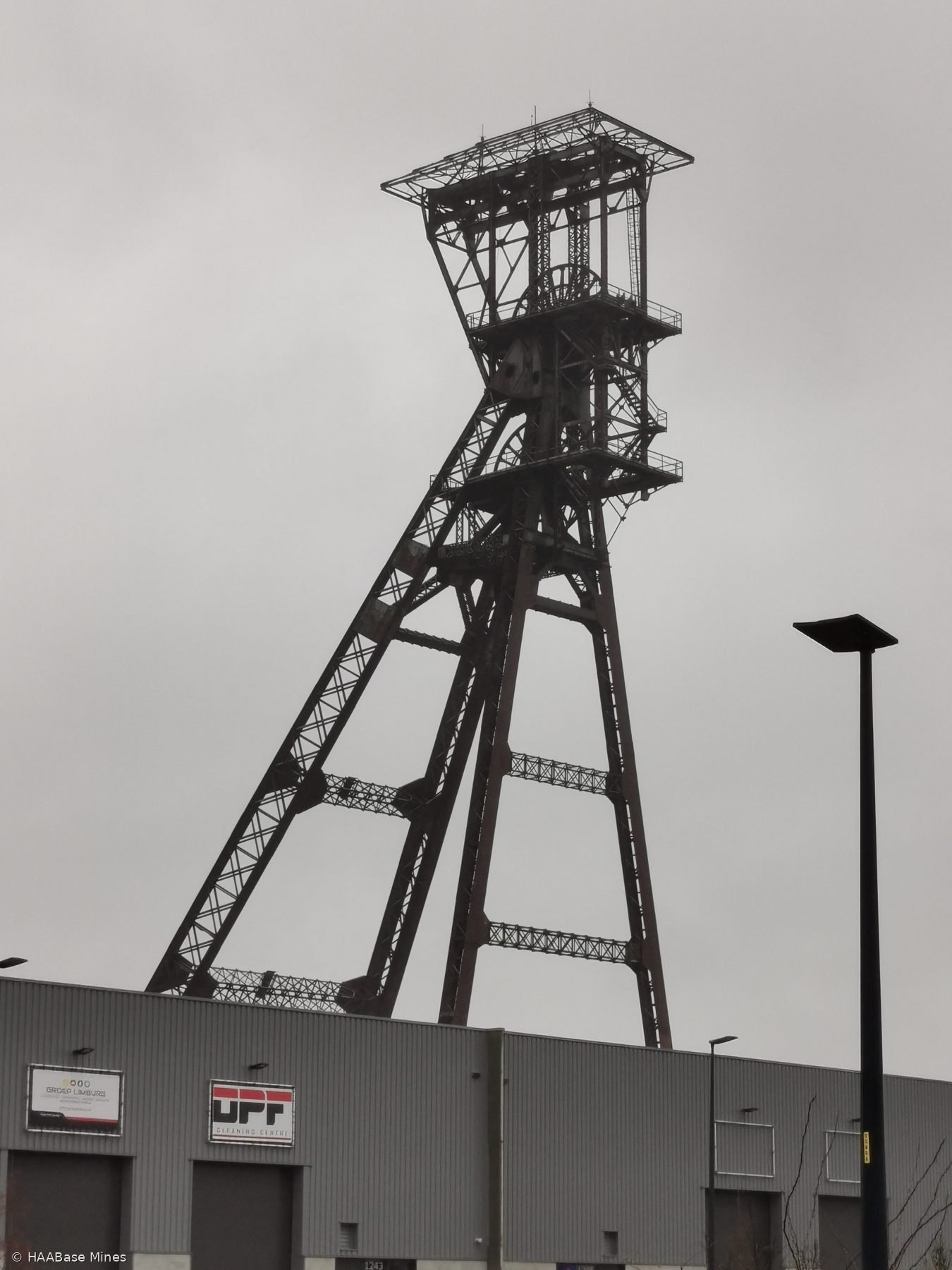
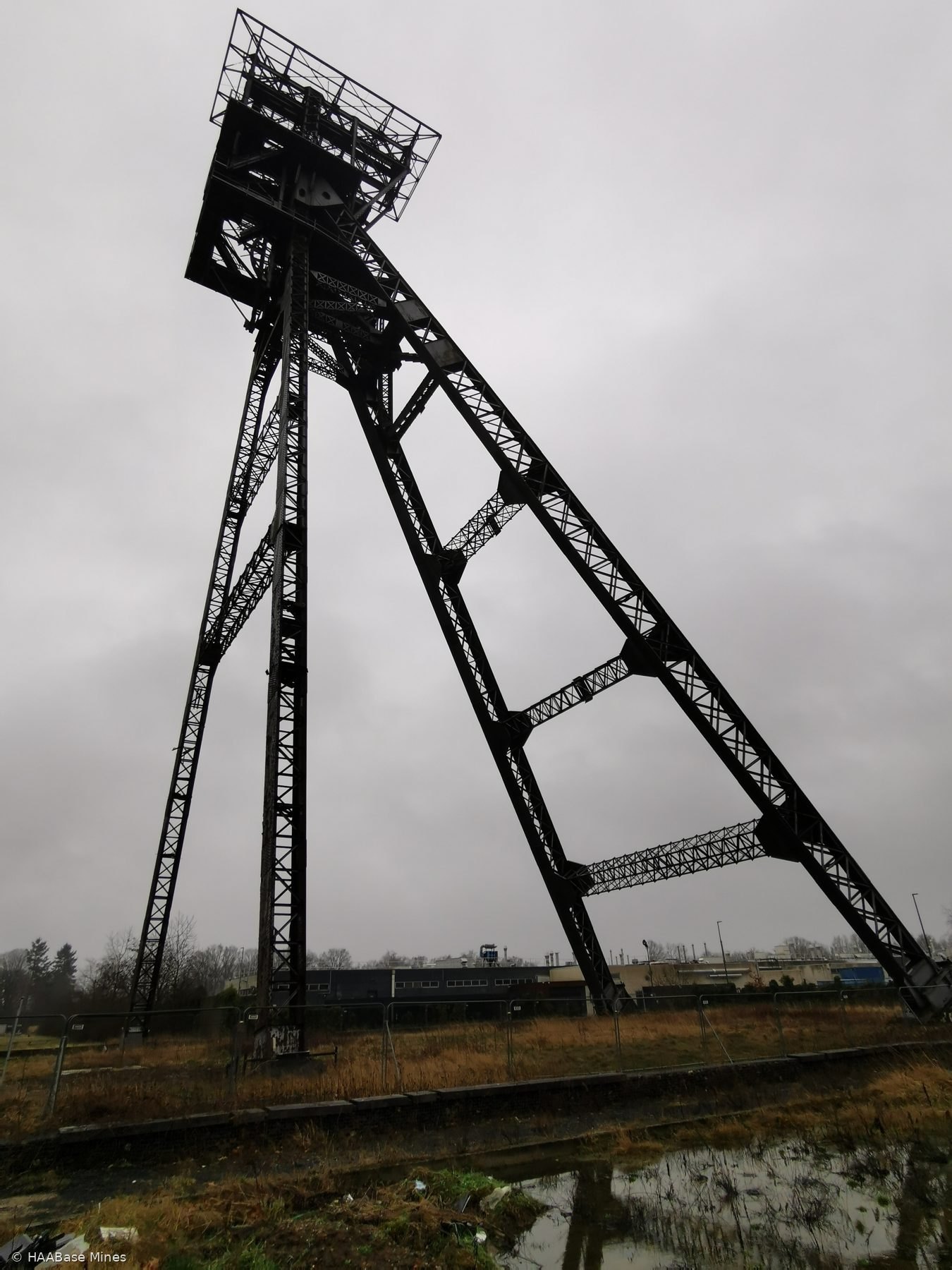
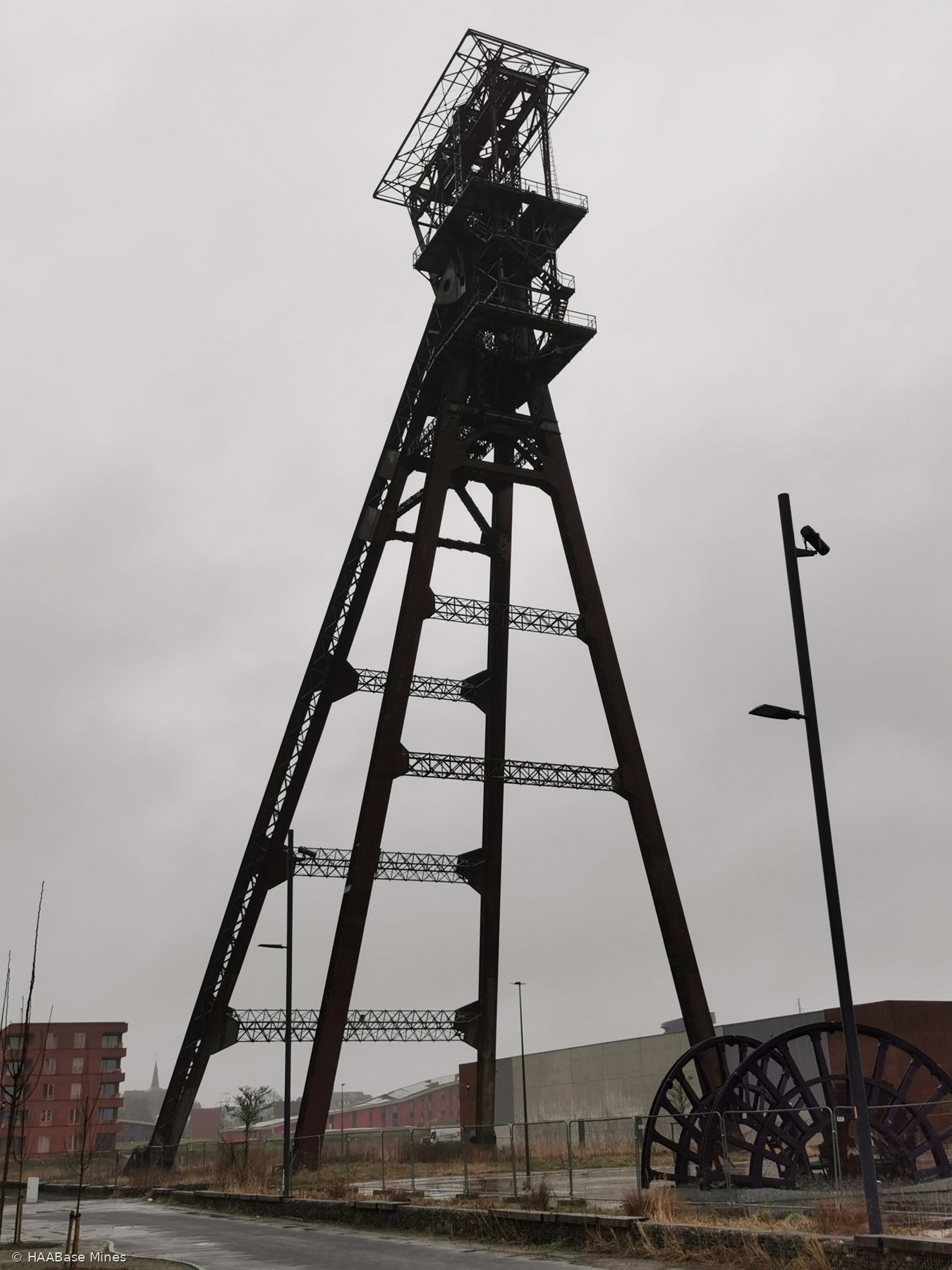
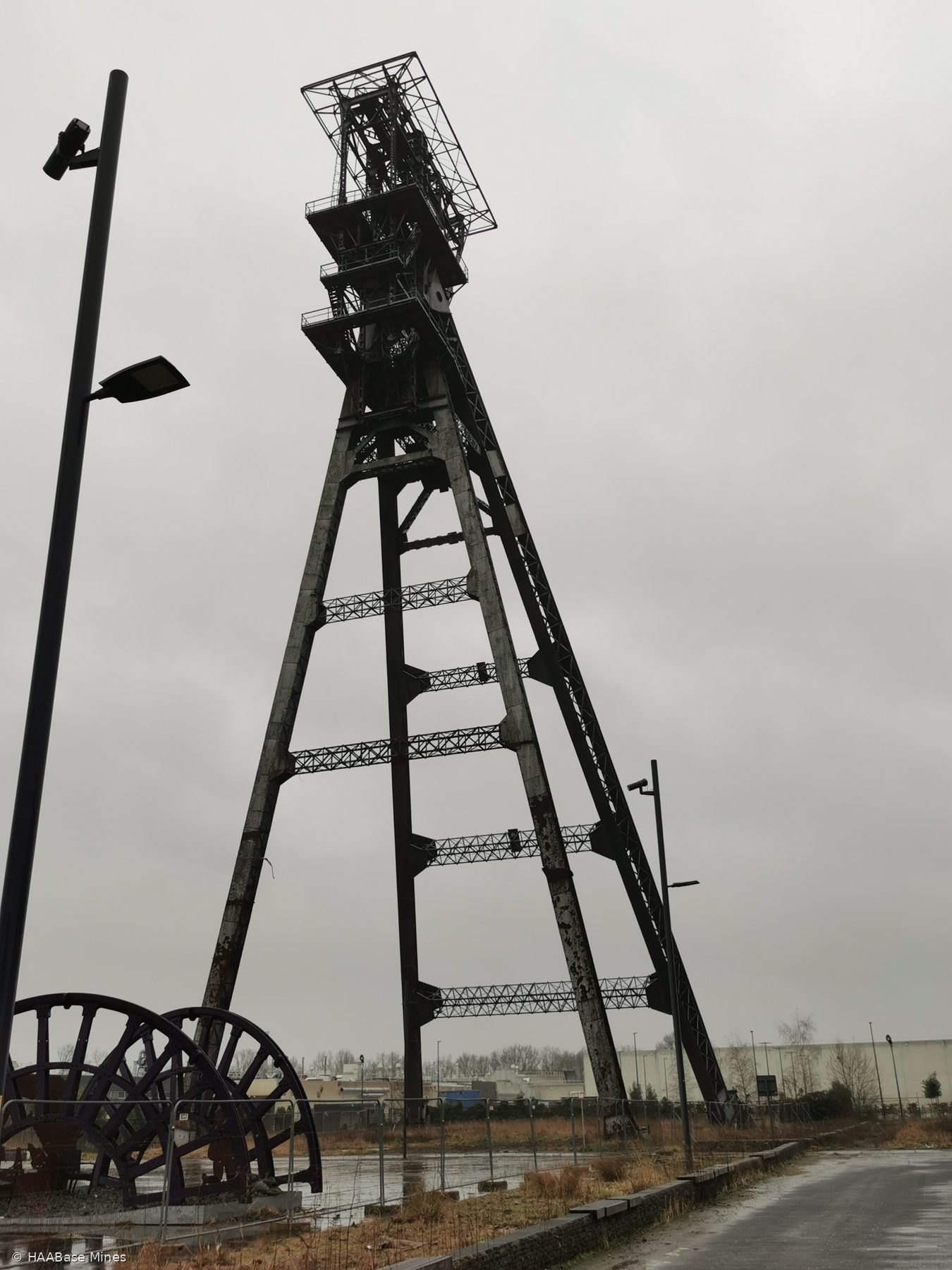
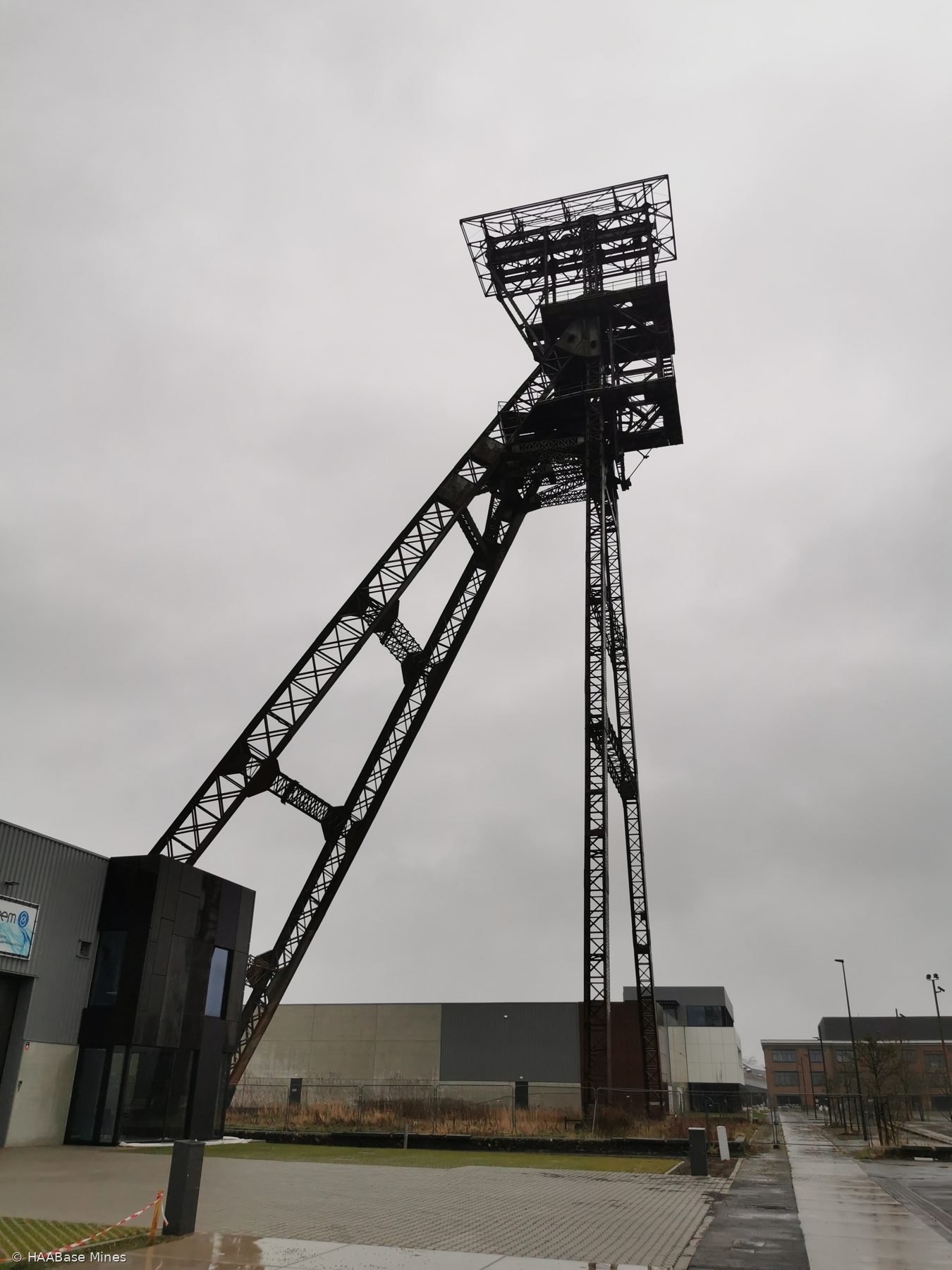
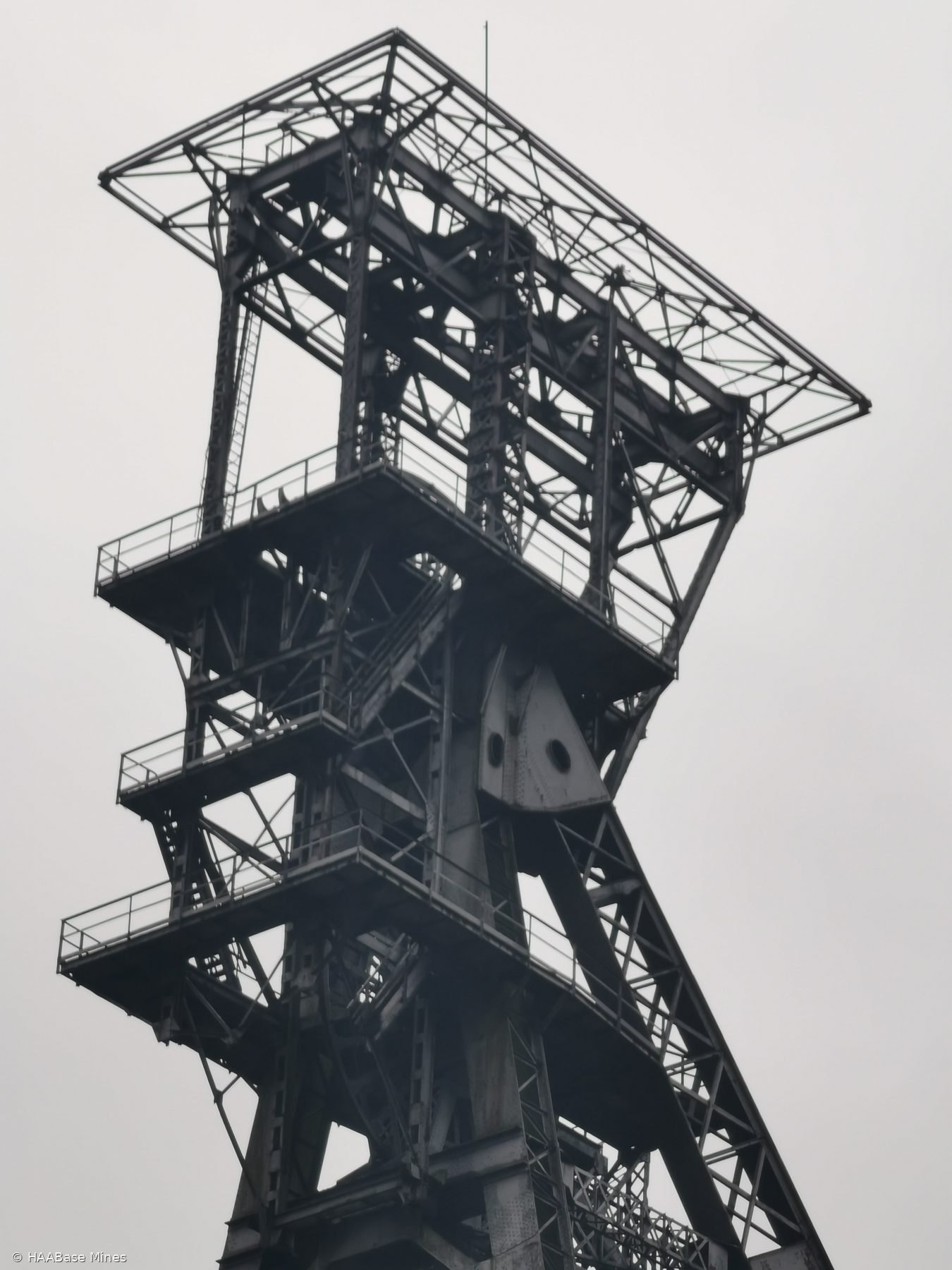
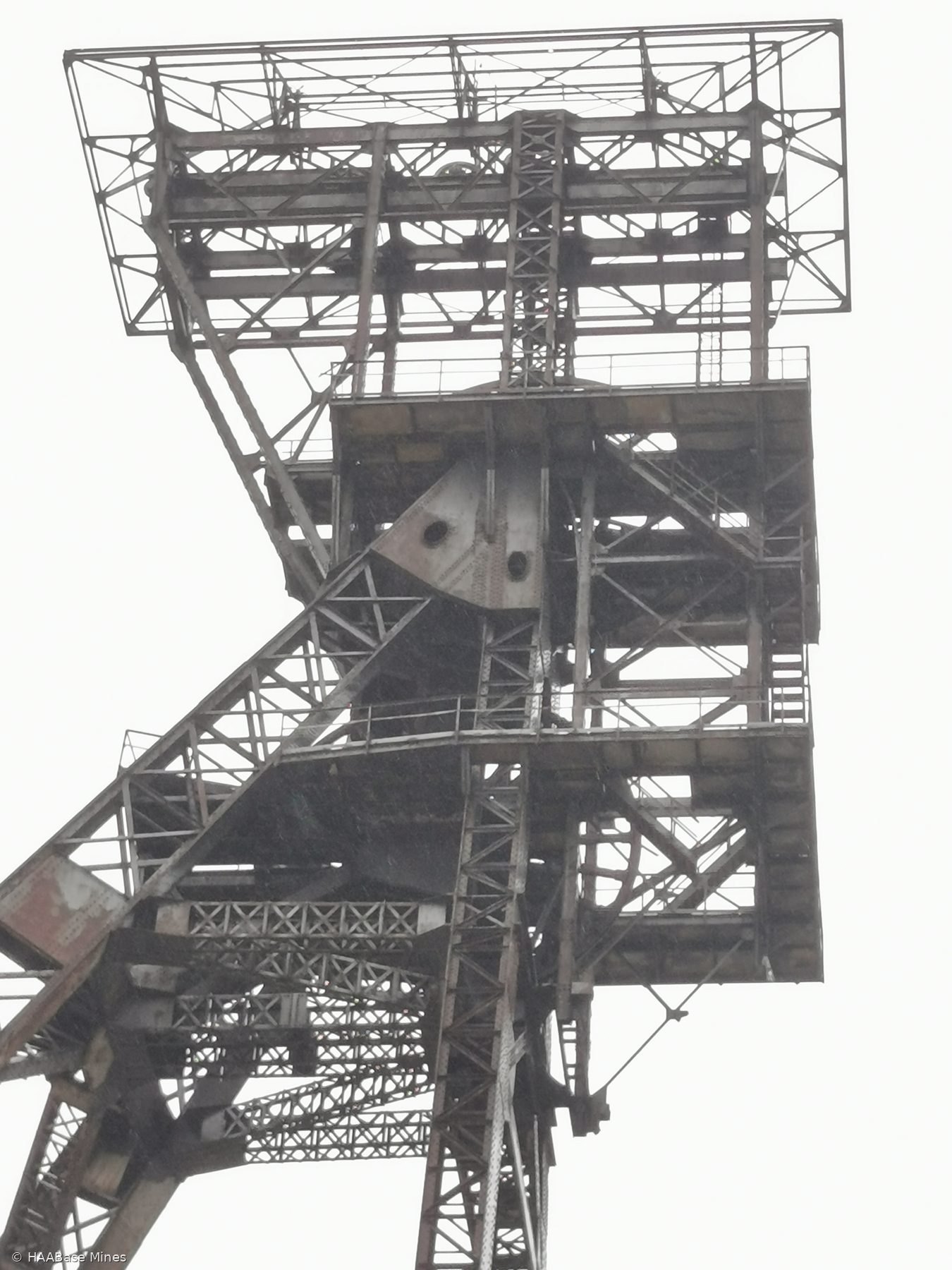
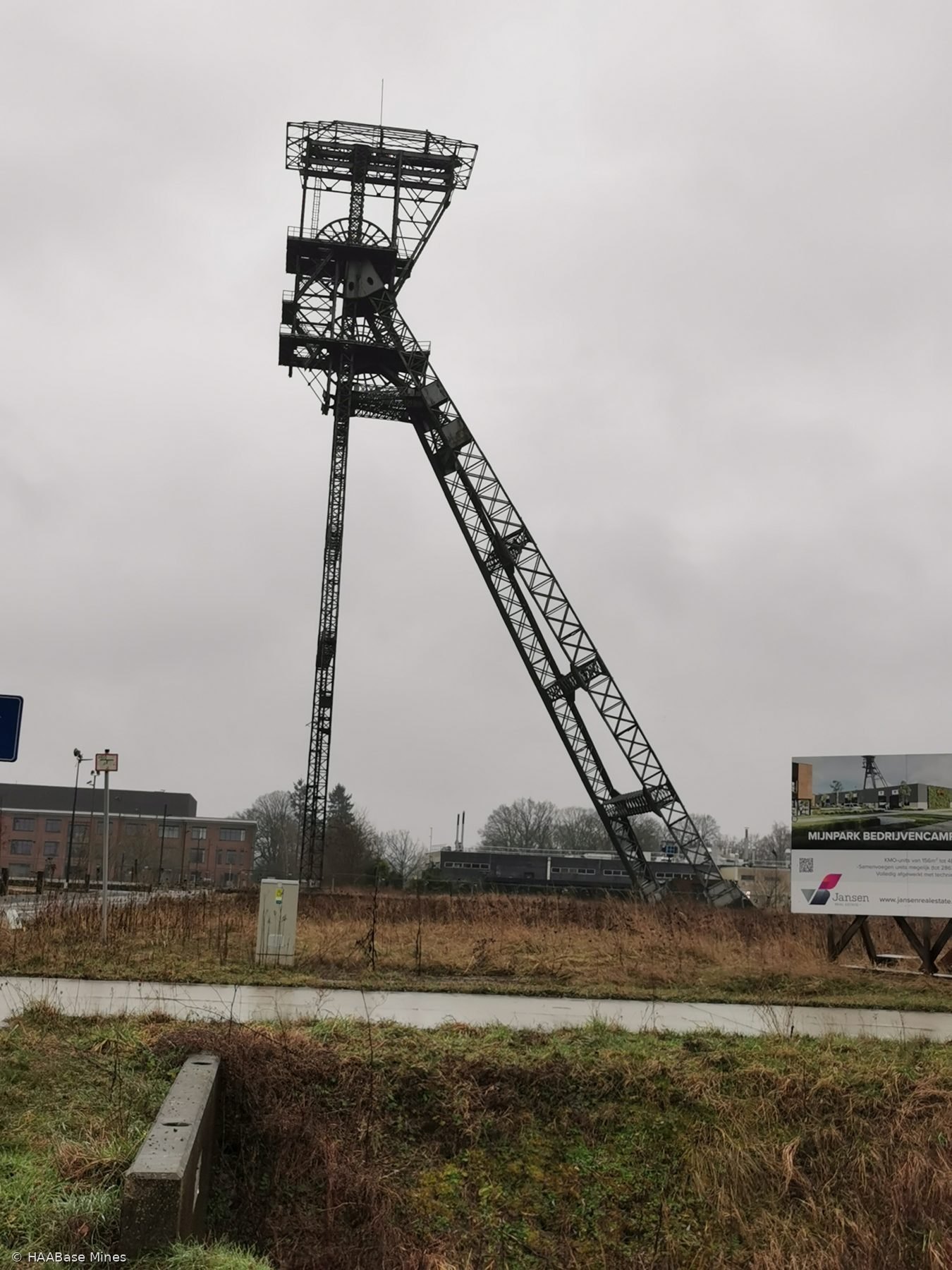
Former Kempen coal mine at Houthalen with two surviving 71-metre steel headframes, the main building, and a new municipal administrative centre on the site.
The Steenkoolmijn van Houthalen was one of seven collieries in the Belgian Kempen coalfield, situated in Houthalen, now part of the commune of Houthalen-Helchteren in the province of Limburg. It was the last of the seven Kempen mines to begin production. The concession Houthalen of 3,250 hectares was granted on 6 November 1911.
The S.A. des Charbonnages de Houthalen was founded in 1919, with the Société Générale de Belgique as the largest shareholder. Shaft sinking began in 1930 using the freezing method, achieving a world record by freezing to 658 metres in a single phase. The two shafts reached depths of approximately 869 and 840 metres.
Production began in 1939, making Houthalen the Kempen mine with the shortest independent existence. Peak employment before the merger stood at 4,908 workers in 1957 and peak pre-merger production at 1,281,400 tonnes in 1956. Independent production totalled approximately 21,677,000 tonnes.
The mine merged with the Steenkoolmijn van Zolder on 29 May 1964 and continued operating in a supporting role until the closure of Zolder in 1992. The two 71-metre steel headframes and the main building survive. The southern headframe was protected as a monument in 1997, the northern in 2001.
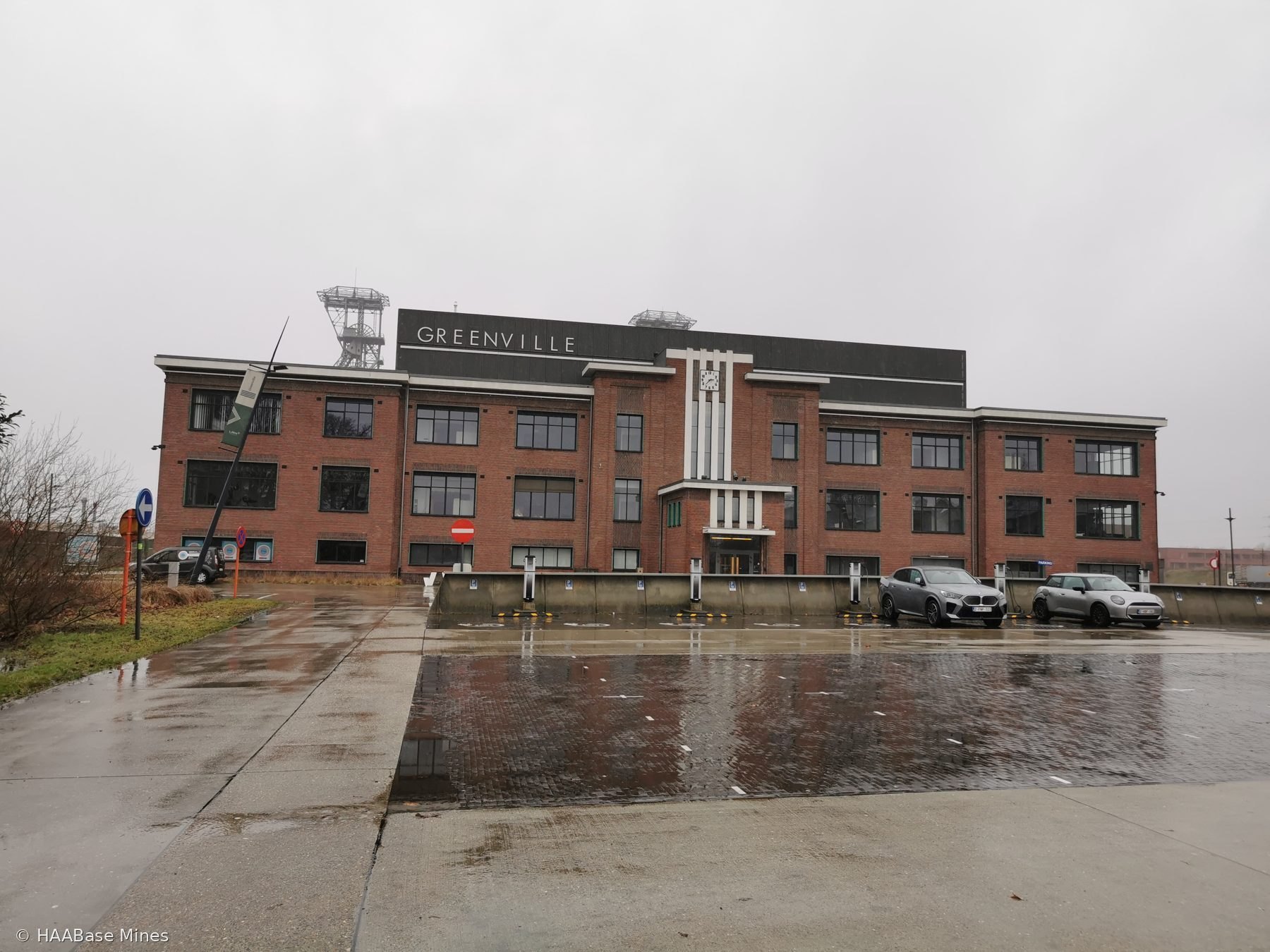
The Steenkoolmijn van Houthalen was the last of the seven Kempen collieries to come into operation, and the one with the shortest independent existence before merger. In 1902 a control boring led by André Dumont confirmed the presence of coal at Houthalen. The concession Houthalen, covering 3,250 hectares, was granted on 6 November 1911 to three companies. These companies ceded their exploitation rights in 1919 or 1920 to the S.A. des Charbonnages de Houthalen, with the Société Générale de Belgique as the dominant shareholder. In 1919 approximately 100 hectares of land were purchased in Meulenberg, now a neighbourhood of Houthalen. Work to identify the definitive shaft location continued until 1927, when the final choice was made for a site along the Grote Steenweg. Speculating landowners forced the company to acquire the land through compulsory purchase at 15,000 Belgian francs per hectare.
From 1927 two wooden drilling towers were erected. It was not until 13 June 1930 that freezing began in a single phase — unlike other Kempen mines where freezing was applied in two phases. The firm Foraky, responsible for the freezing, established a world record by boring continuously from the surface to 658 metres in one operation. Shaft sinking began on 6 December 1931 for Schacht I and on 29 October 1932 for Schacht II, advancing to 686 and 712 metres respectively within three years. From 1934 to mid-1936 works were halted due to financial difficulties and a coal surplus, but they resumed after a capital increase and change of shareholders. The coal seam was struck at 599 metres depth in Schacht II. Both shafts were ultimately deepened to 869.68 and 840.75 metres, each with a diameter of five metres — relatively small for a Kempen colliery, each served by a single extraction machine with only two cable sheaves.
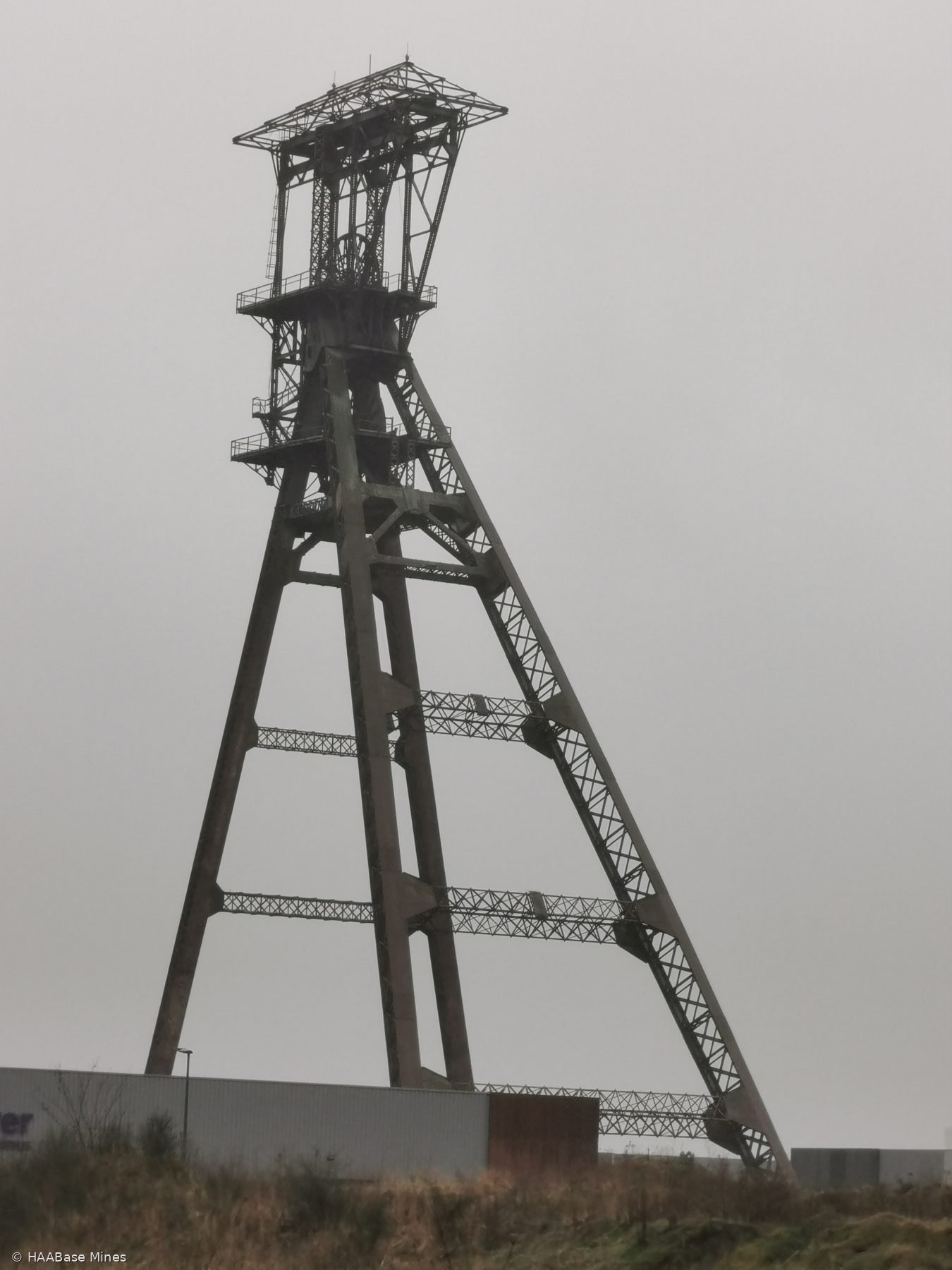
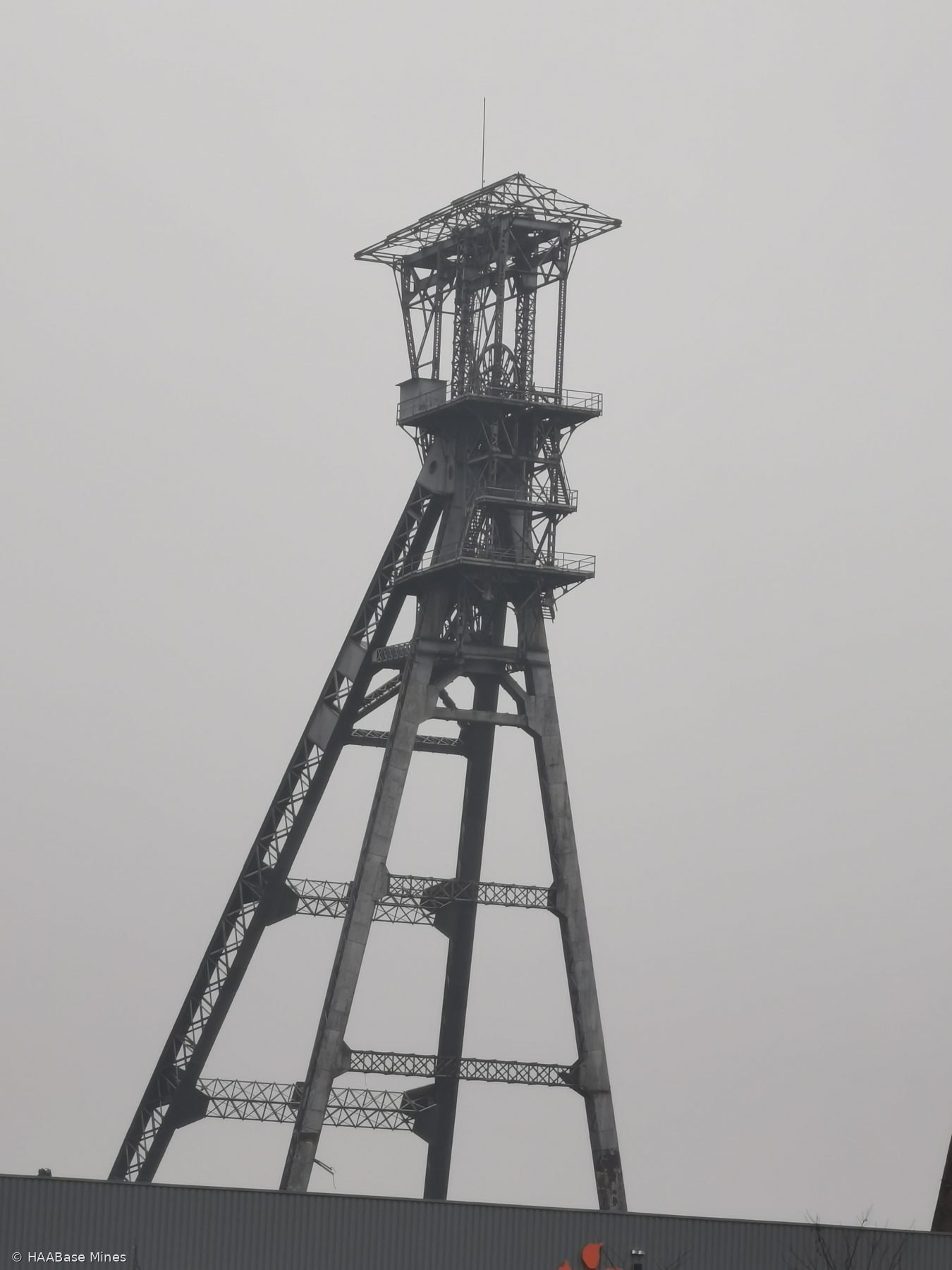
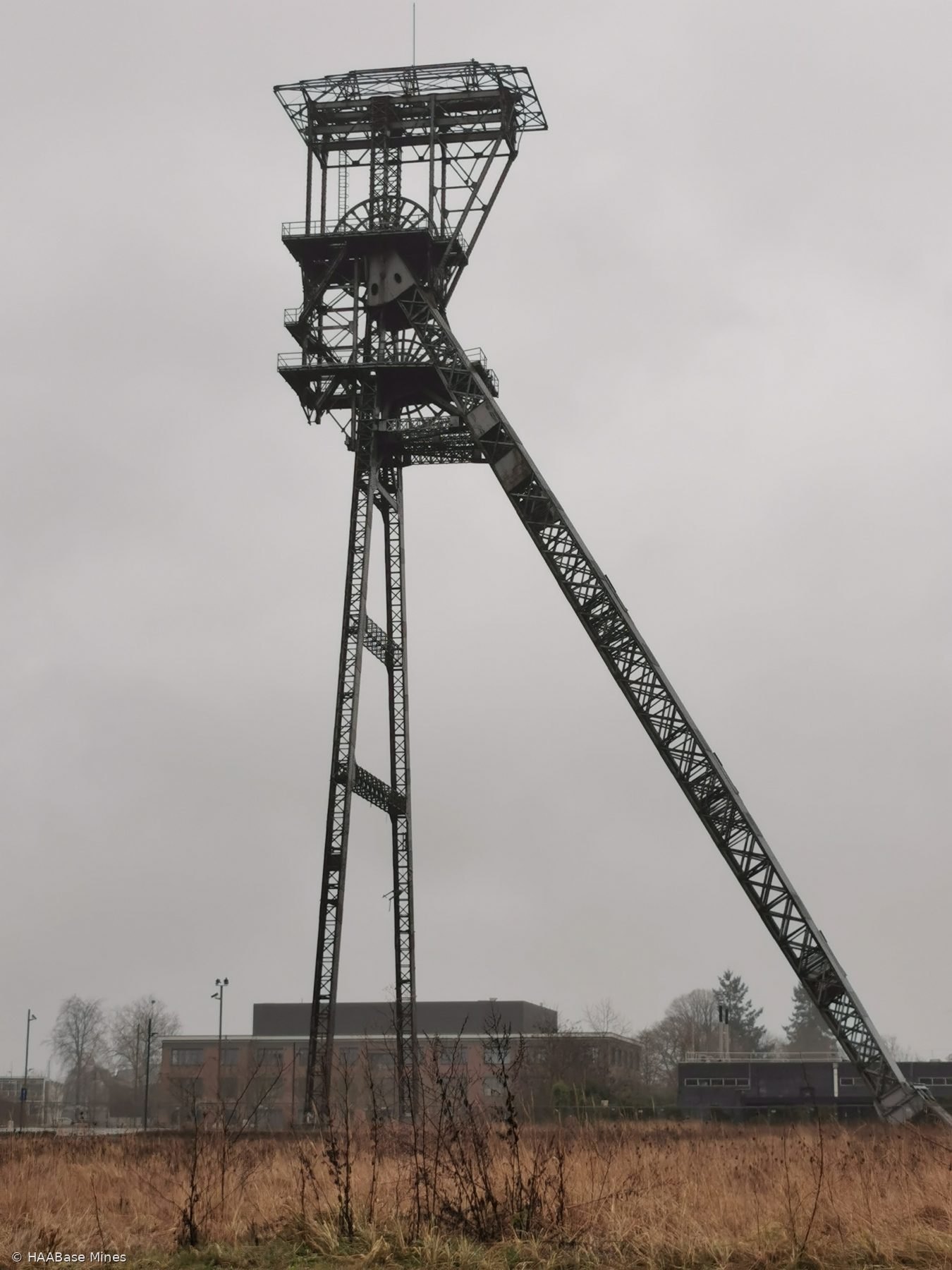
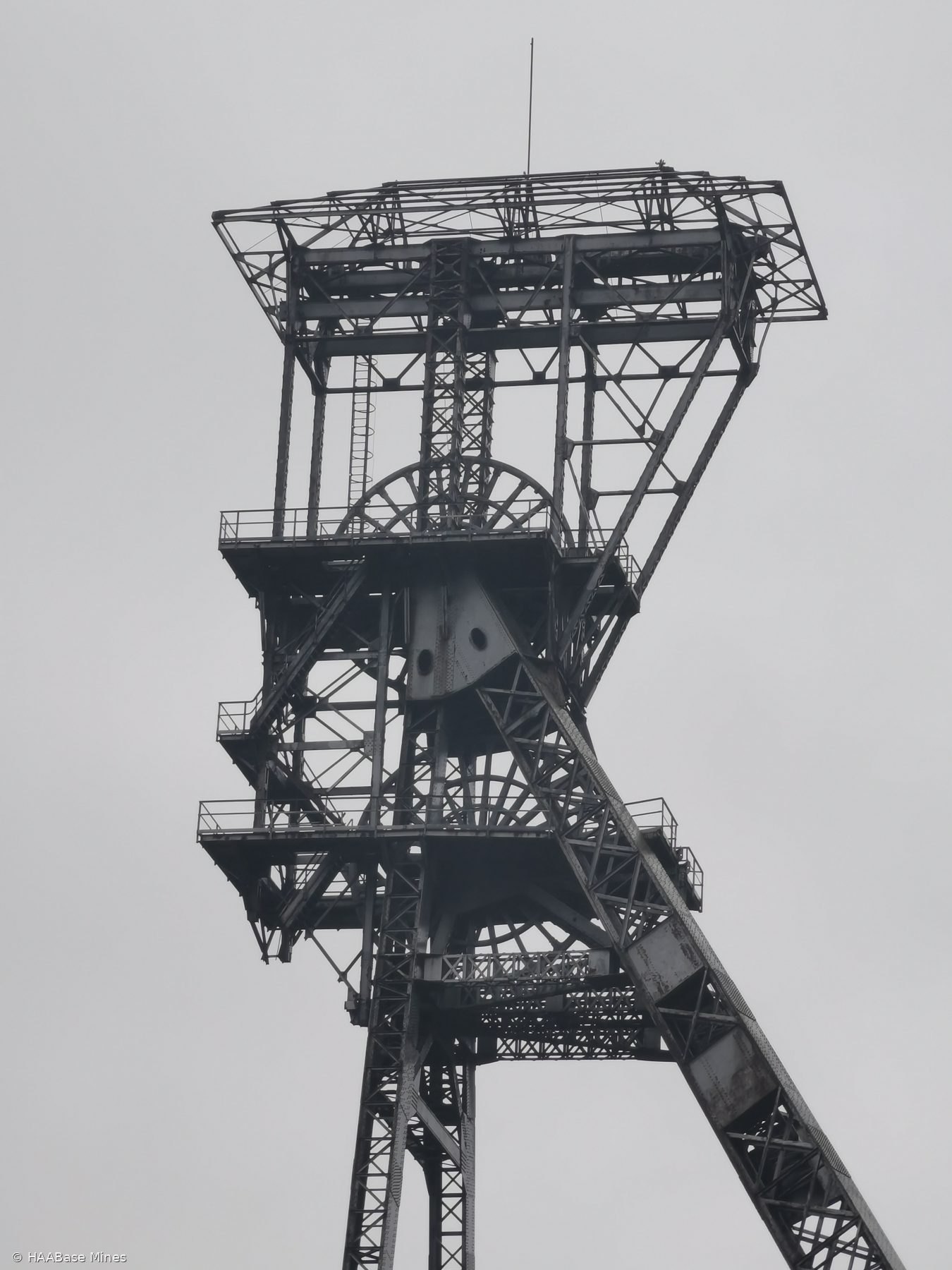
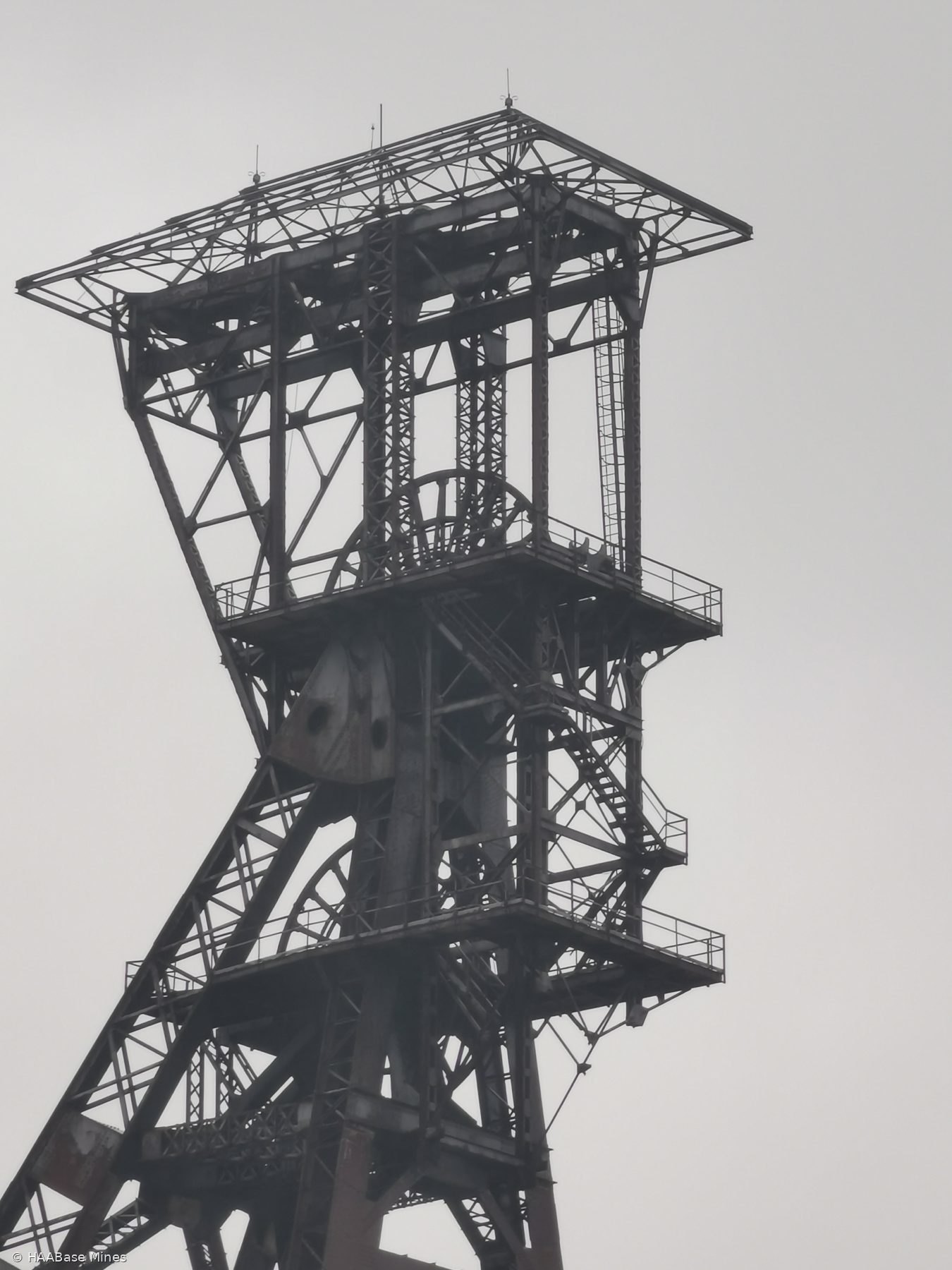
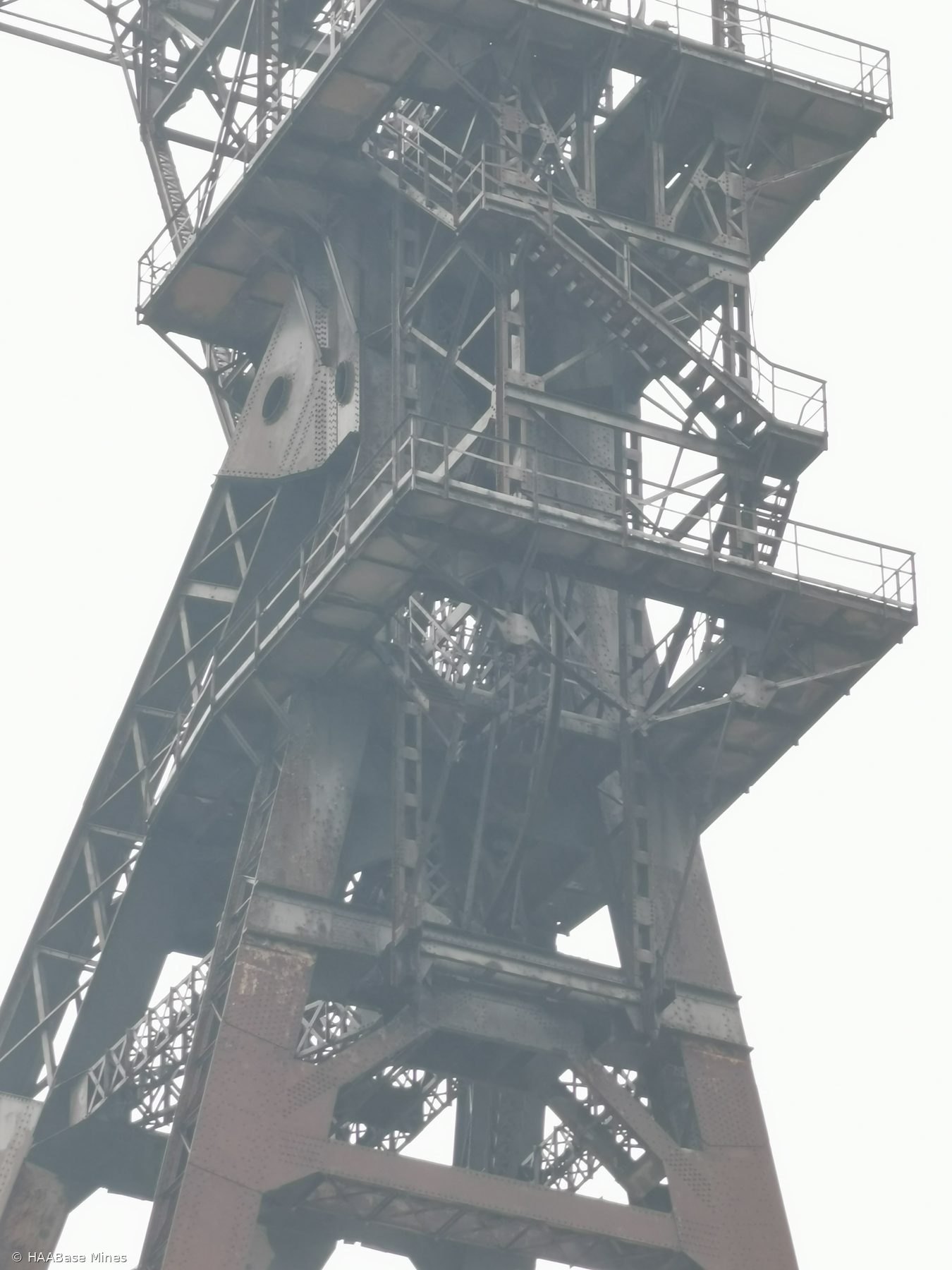
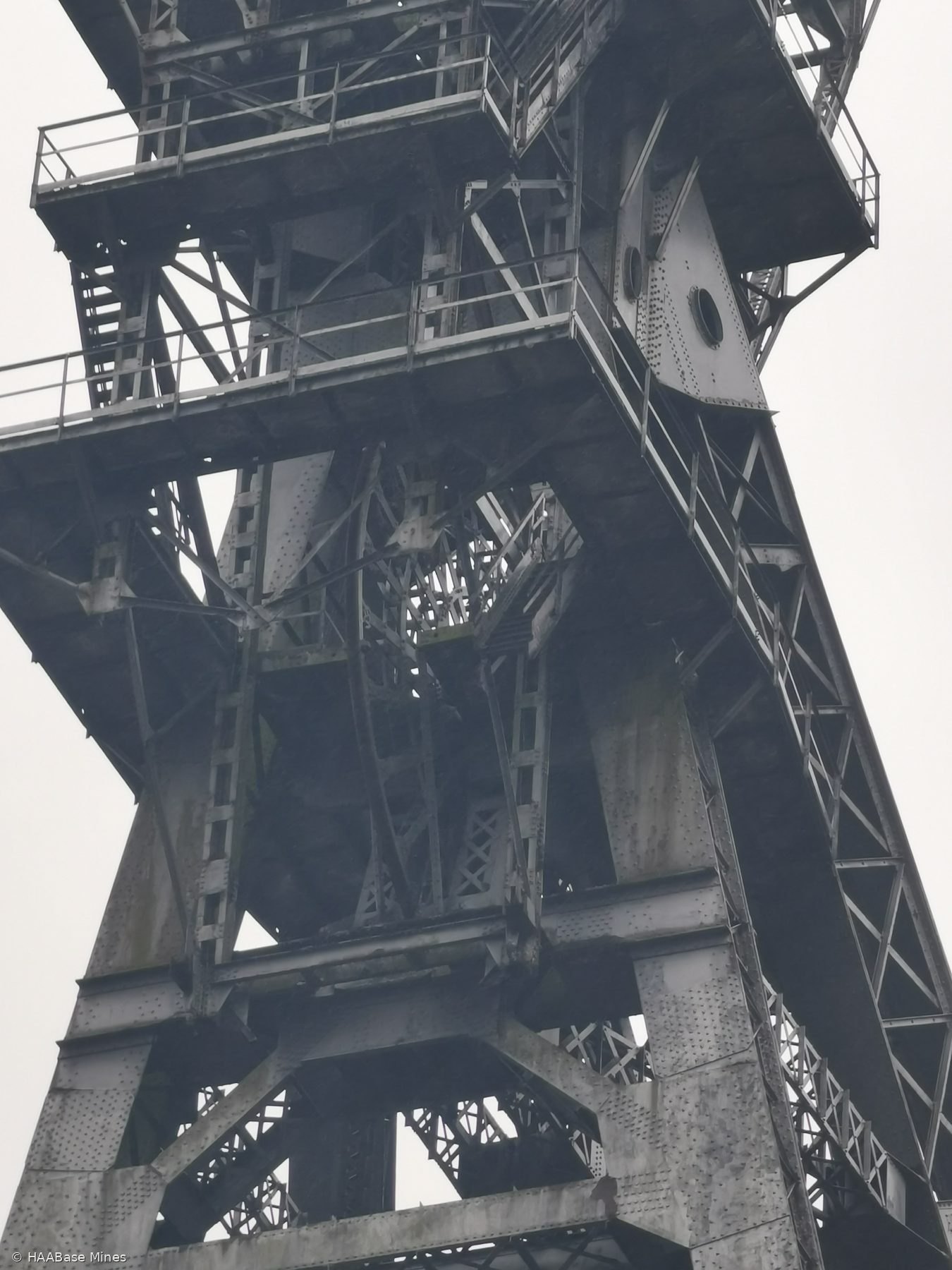
The two steel headframes, each 71 metres tall, were designed by engineer E. Nicaise and constructed between 1937 and 1939 by the Belgian firm La Brugeoise (Nicaise en Delcuve). They are open constructions in riveted structural steel sections with fixed pivots between the four shaft legs and the cable sheave platform. Production at Houthalen began in 1939. The mine had three production levels at 700, 810, and — added after the merger — 1,050 metres, with Schacht I deepened to 1,102 metres.
In the first phases of independent production, workers included Belgians alongside migrants from Central and Southern Europe. After the Marcinelle disaster of 1956, Turkish and Moroccan workers also arrived. Peak pre-merger employment was 4,908 workers in 1957. Peak pre-merger annual production was 1,281,400 tonnes in 1956. In its twenty-five years of independent operation, Houthalen raised a total of approximately 21,677,000 tonnes. In 1949 it was observed that the mine's spoil tip had begun to move; it was too tall relative to the ground area.
Since both Houthalen and the neighbouring Steenkoolmijn van Zolder were owned by the Société Générale, and since Houthalen's coal reserves were assessed as limited, a merger was decided. The merger took effect on 29 May 1964. After the merger, the Houthalen shafts remained operational for lowering personnel, supplementary air supply for Zolder, materials handling, and the raising of waste rock. From 1967, following two years of vacancy, the main building of the Houthalen colliery served as the headquarters of the N.V. Kempische Steenkoolmijnen, the new consolidated Kempen mining company. The Houthalen installations continued in this supporting role until the closure of the Zolder mine on 30 September 1992.
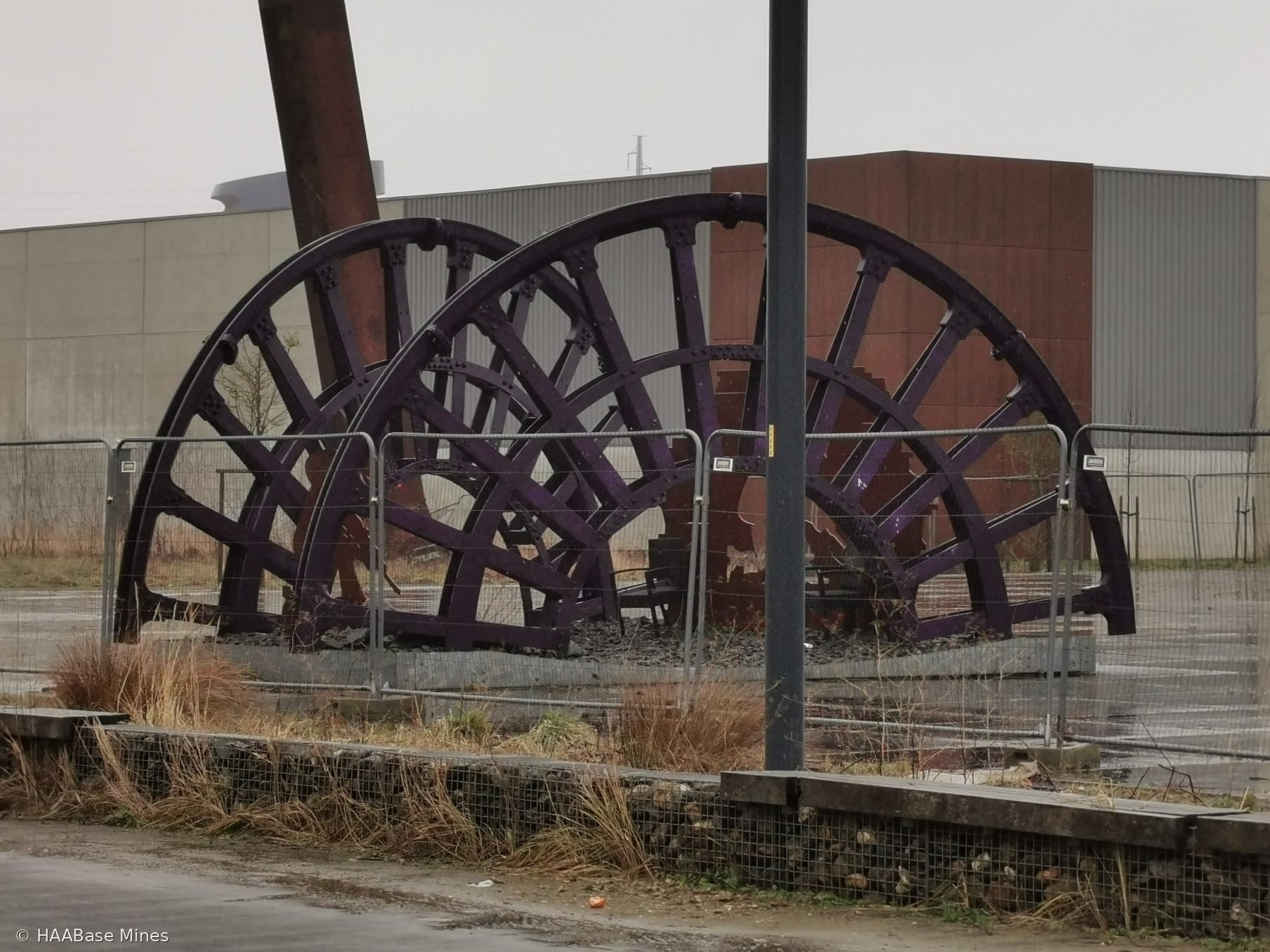
After closure the commune began acquiring the mine grounds from 1973 onwards, and also acquired the casino, the children's welfare facility, the spoil heap, and the Tenhaagdoornheide nature area. In 1994 and 1997 several buildings were demolished. The winding house enclosures, the cage guides, and the reception floor structures of both headframes were removed, leaving the bare steel tower structures standing. The main building and the old printing works of the mine were preserved. The southern headframe was listed as a protected monument on 26 May 1997; the northern headframe followed in 2001. In 2012 a new municipal administrative centre (NAC) opened on the site, housing a range of municipal services. By the end of 2023 it was announced that the two surviving headframes would be restored.