The Waterschei colliery took its name and identity directly from the geologist André Dumont, who on 2 August 1901 drilled the first coal in Belgian Limburg at As. Dumont filed applications for more than 5,000 hectares of concession, and in 1903 his company's rights were transferred to the newly formed Société de Recherche et d'Exploitation Eelen-Asch. This company received by royal decree of 1 June 1906 the concession designated André Dumont-sous-Asch, initially covering 2,950 hectares under the communes of As, Niel, Opglabbeek, Mechelen-aan-de-Maas, and Genk. Extensions in 1909 and 1912 enlarged the concession to 3,080 hectares.
The S.A. Charbonnages André Dumont-sous-Asch was formally constituted in Brussels on 18 June 1907. Unlike the other Kempen operating companies, its initial capital came exclusively from Belgian industrial and financial interests: the Société Générale, Solvay & Cie, the Cristalleries du Val-Saint-Lambert, the Laminoirs et Forges de Marchienne-au-Pont, the Volksbank van Leuven, and personal capital from baron Goffinet, Coppée, Jourdain, and Léon Guinotte. Capital increases of 1912, 1920, 1923, and 1924 maintained this predominantly Belgian character. The colliery was placed at the extreme western edge of the concession because the commune of As had refused to allow the surface installations on its territory; this eccentric positioning would later create ventilation problems underground.
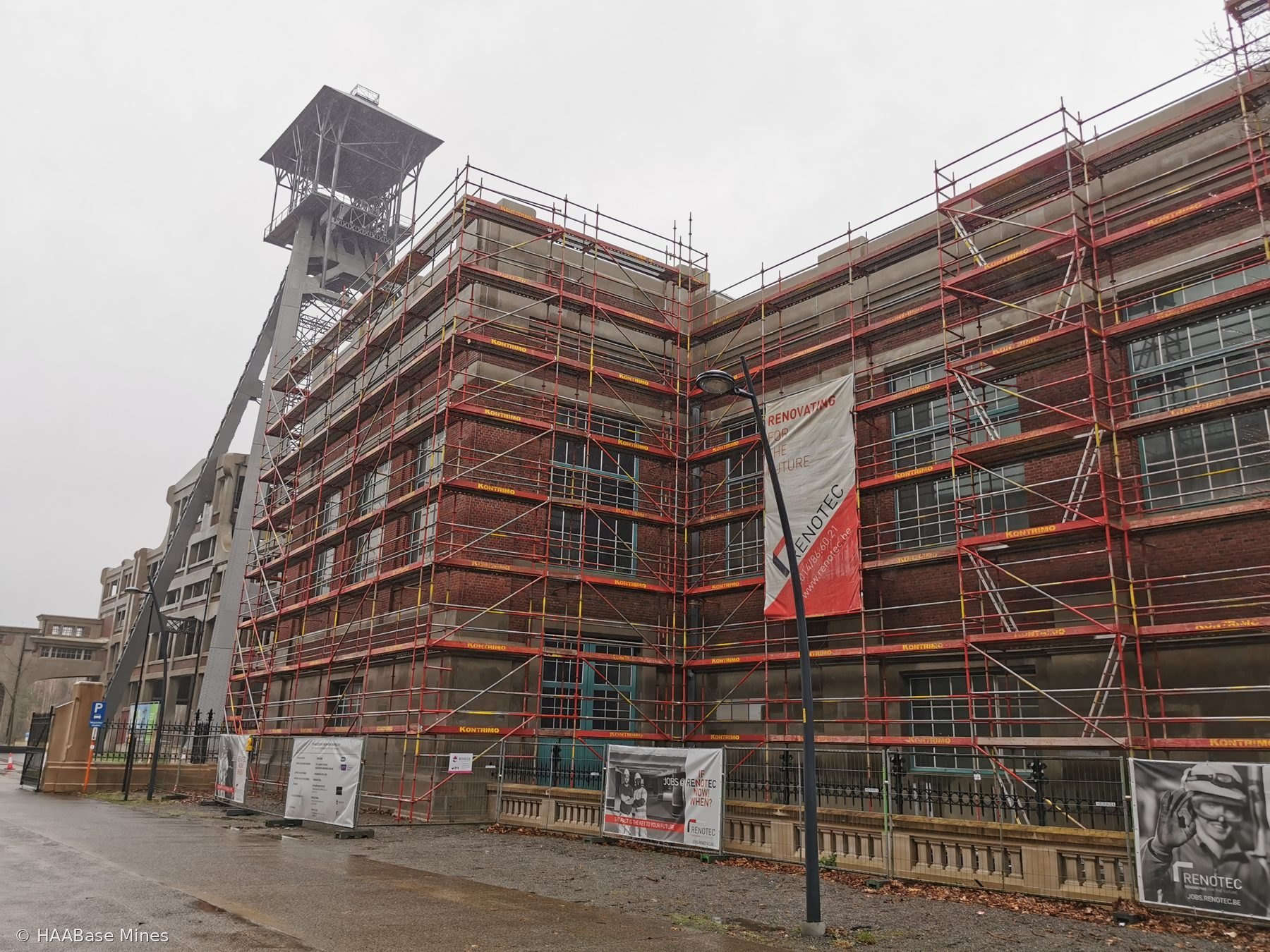
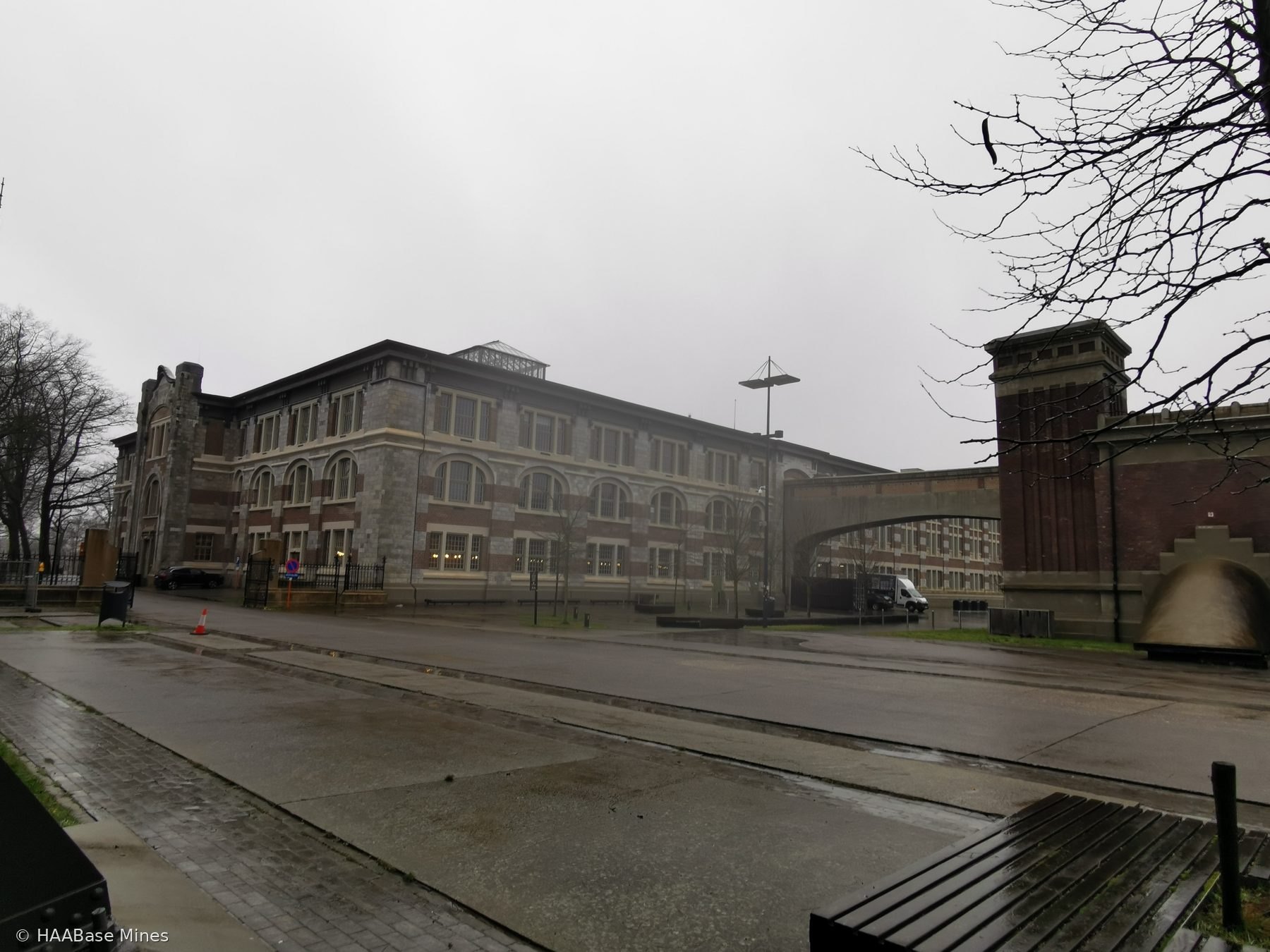
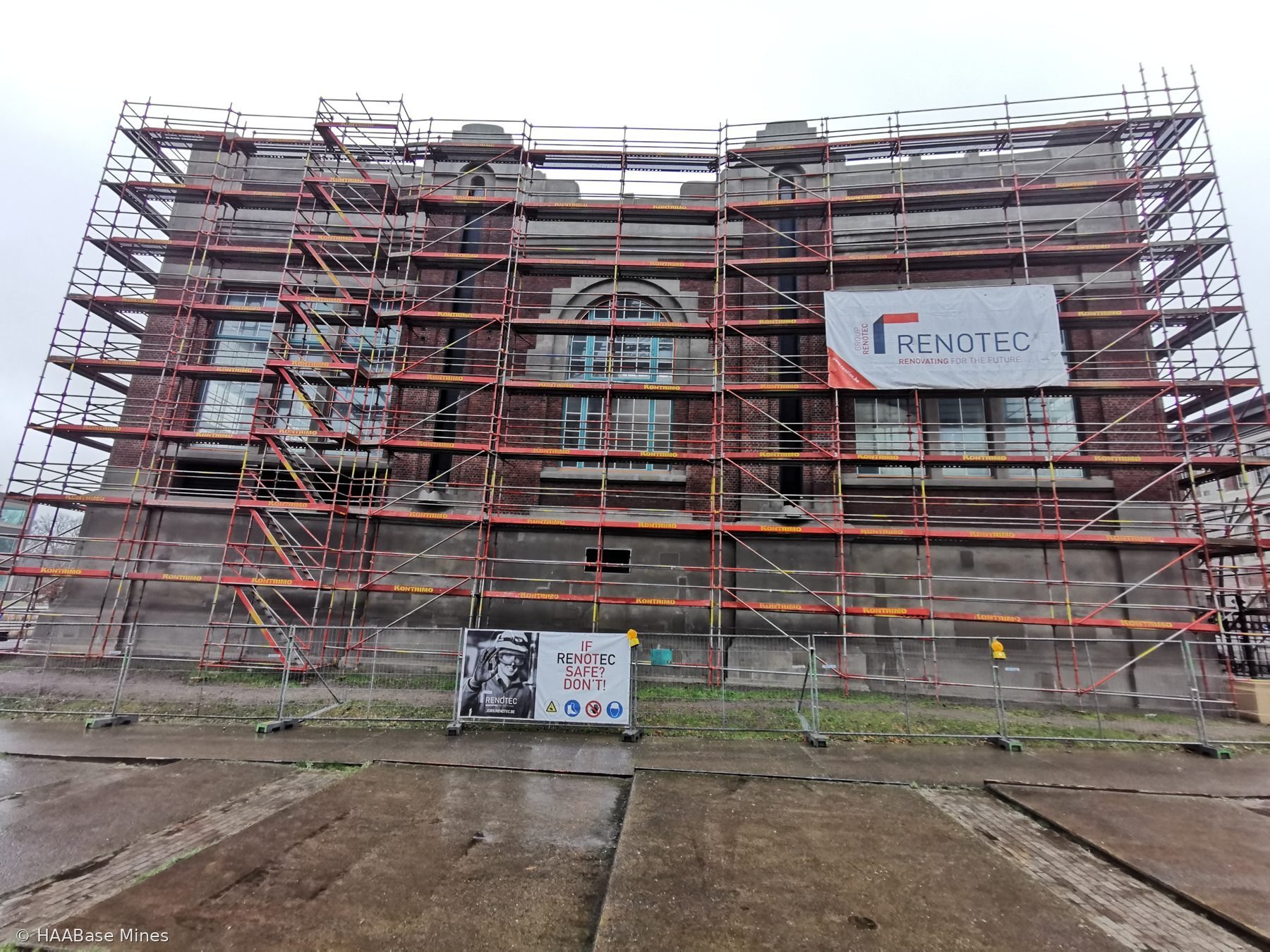
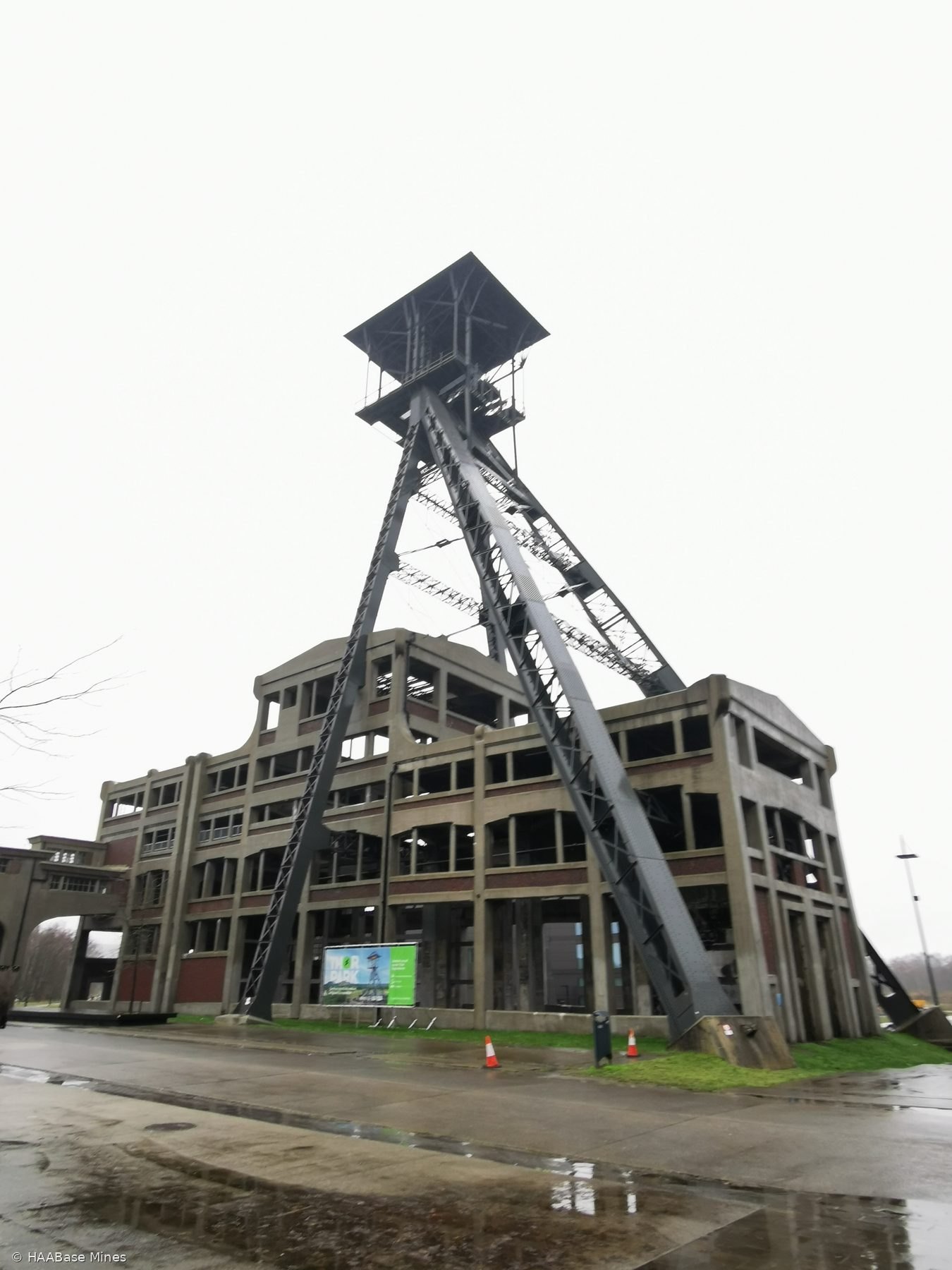
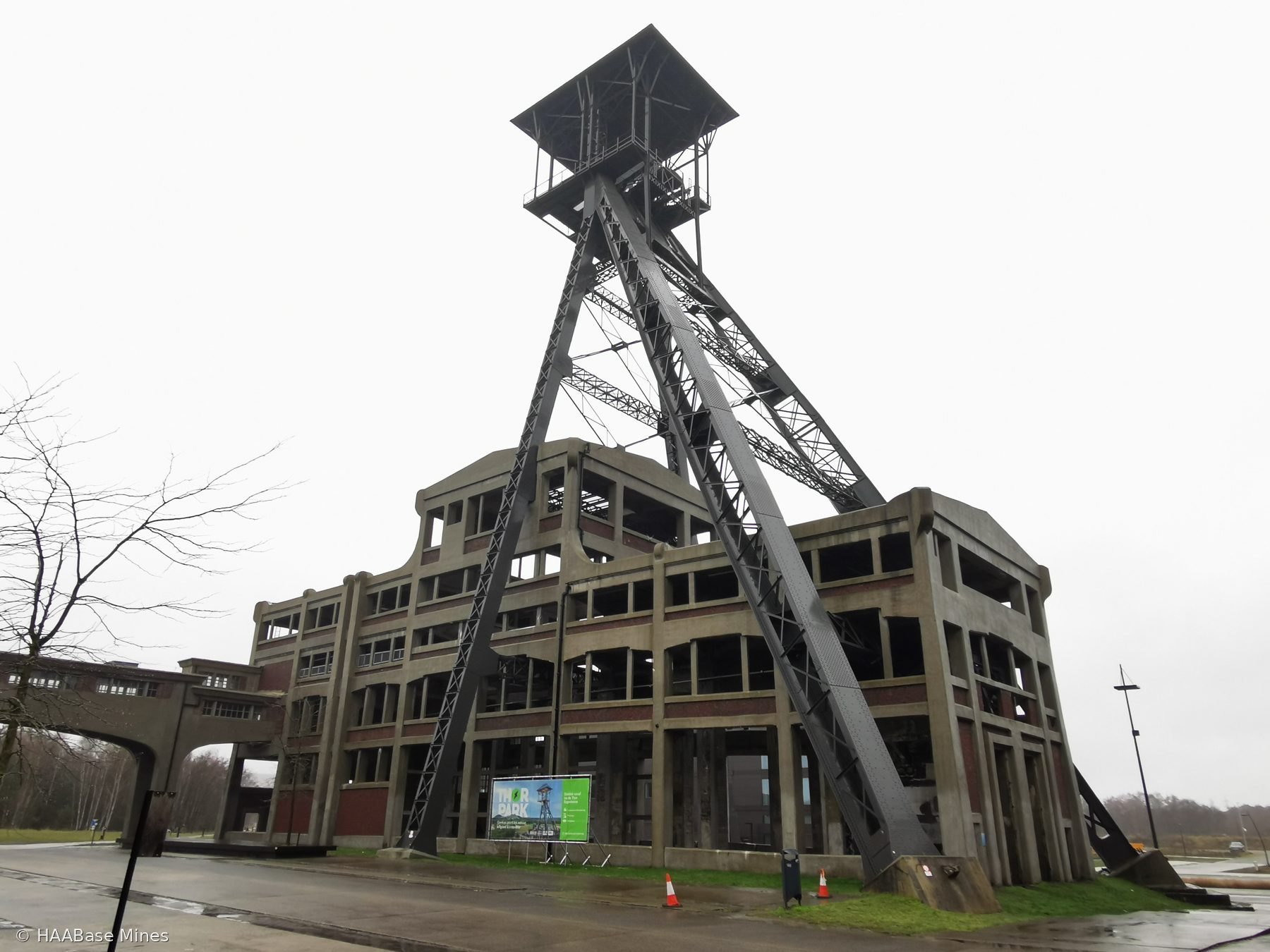
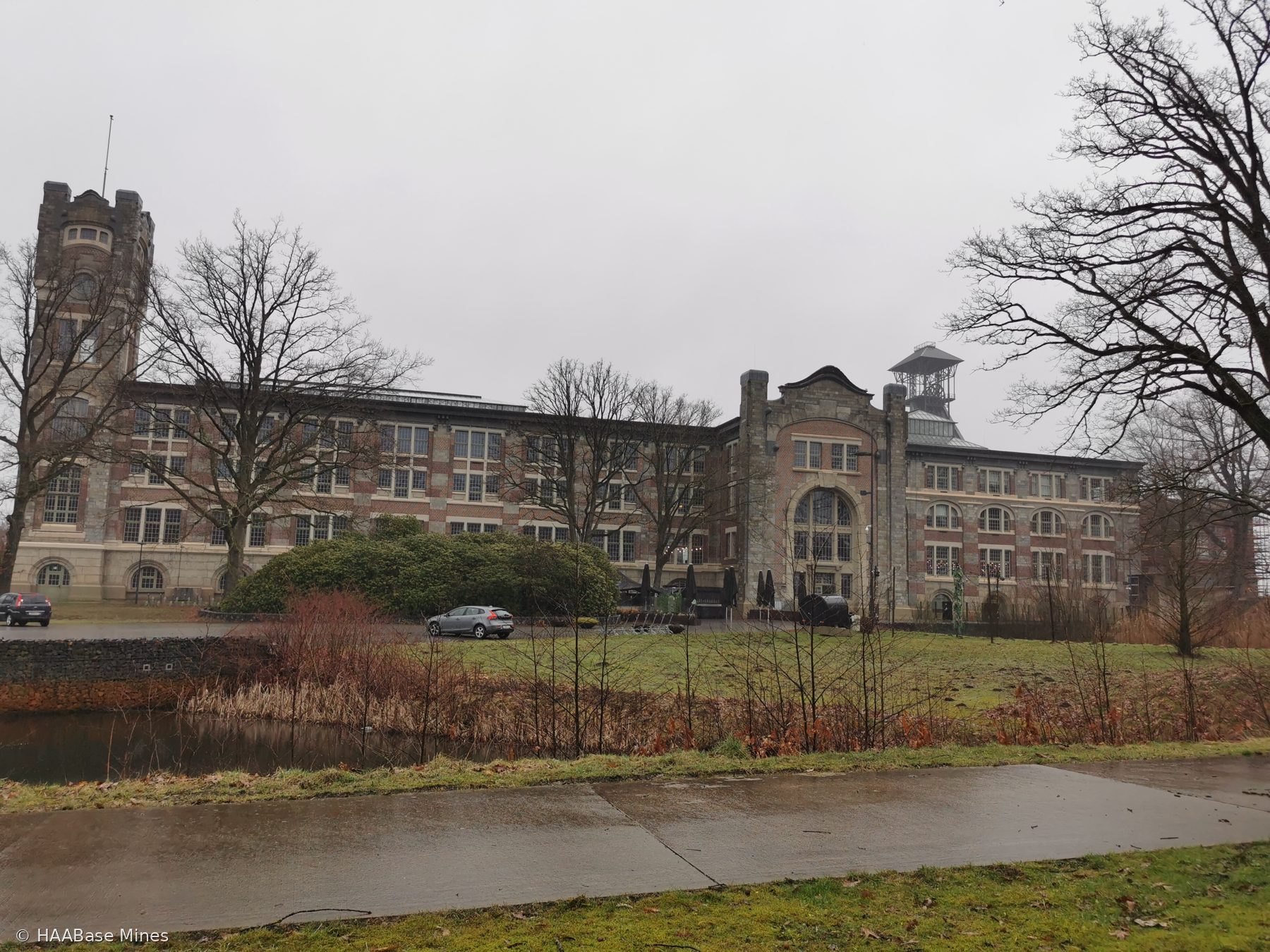
The main administrative building, one of the most architecturally distinguished structures in the Kempen coalfield, was designed by the company's own engineering office under architect Parein and constructed between 1920 and 1924. It is a four-storey reinforced concrete structure using the Hennebique system, housing administrative offices, a monumental reception hall, the Saint-Barbara hall for underground workers, changing rooms, showers, and technical services. Shaft sinking, started before the First World War, was a technically demanding undertaking. The engineers adopted a gradual freezing approach in three phases: a first freezing cycle to 380 metres, followed by advance cement injection, and a second freezing cycle between 466 and 543 metres to reach the Carboniferous coal measures at 560 metres. In December 1913, shaft sinking was interrupted to investigate the 12-metre layer of Hervian quicksand above the coal measures; a water breakthrough on 9 January 1914 flooded Schacht I, requiring intensive pumping. By 4 August 1914, the date of the outbreak of the First World War, Schacht II had reached 300 metres without major difficulty. From October 1916, the company was placed under German sequestration, bringing the work to a halt. Resumption of freezing operations in Schacht I was only possible from 27 October 1920, with deepening recommencing on 7 March 1921.
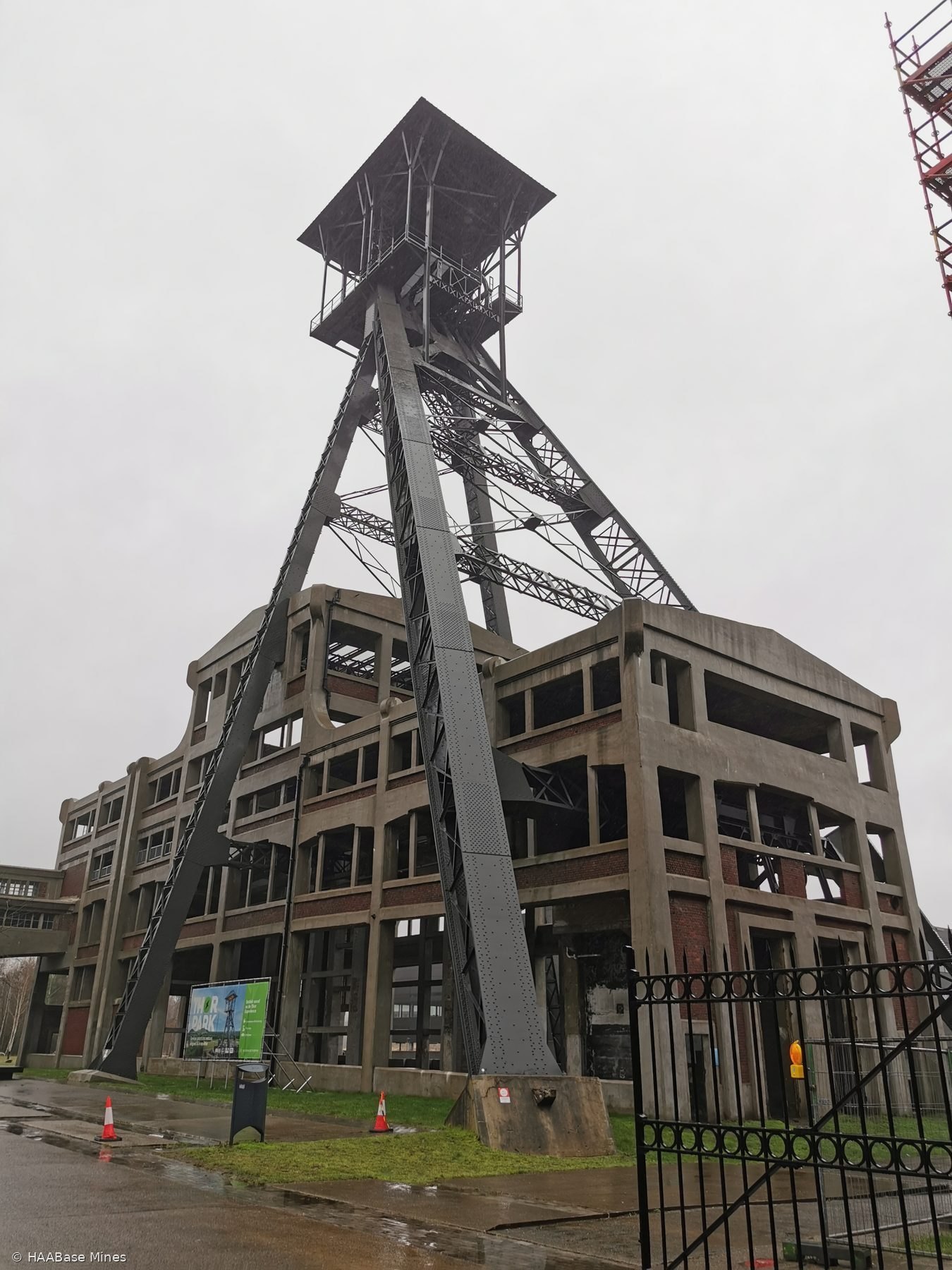
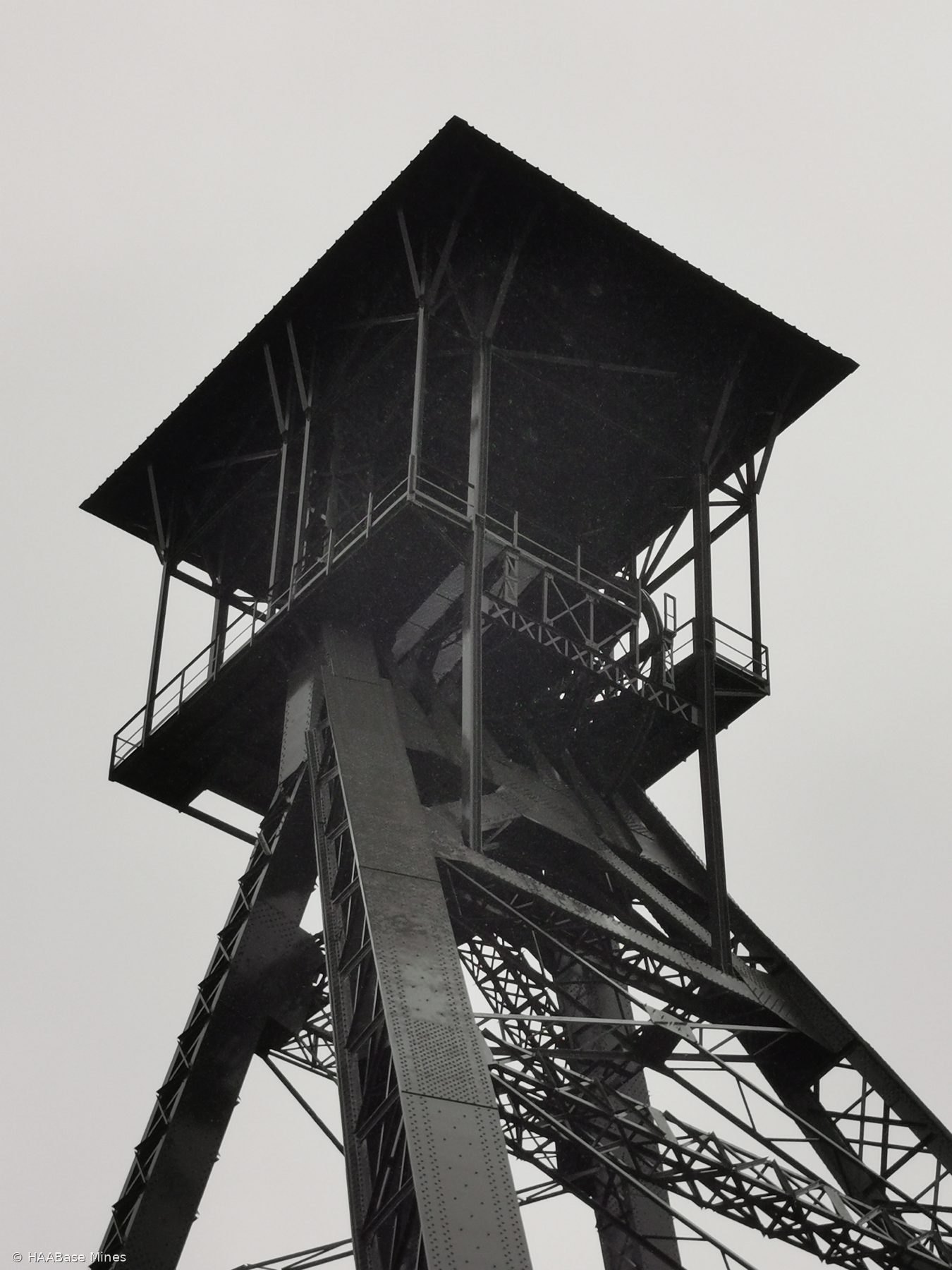
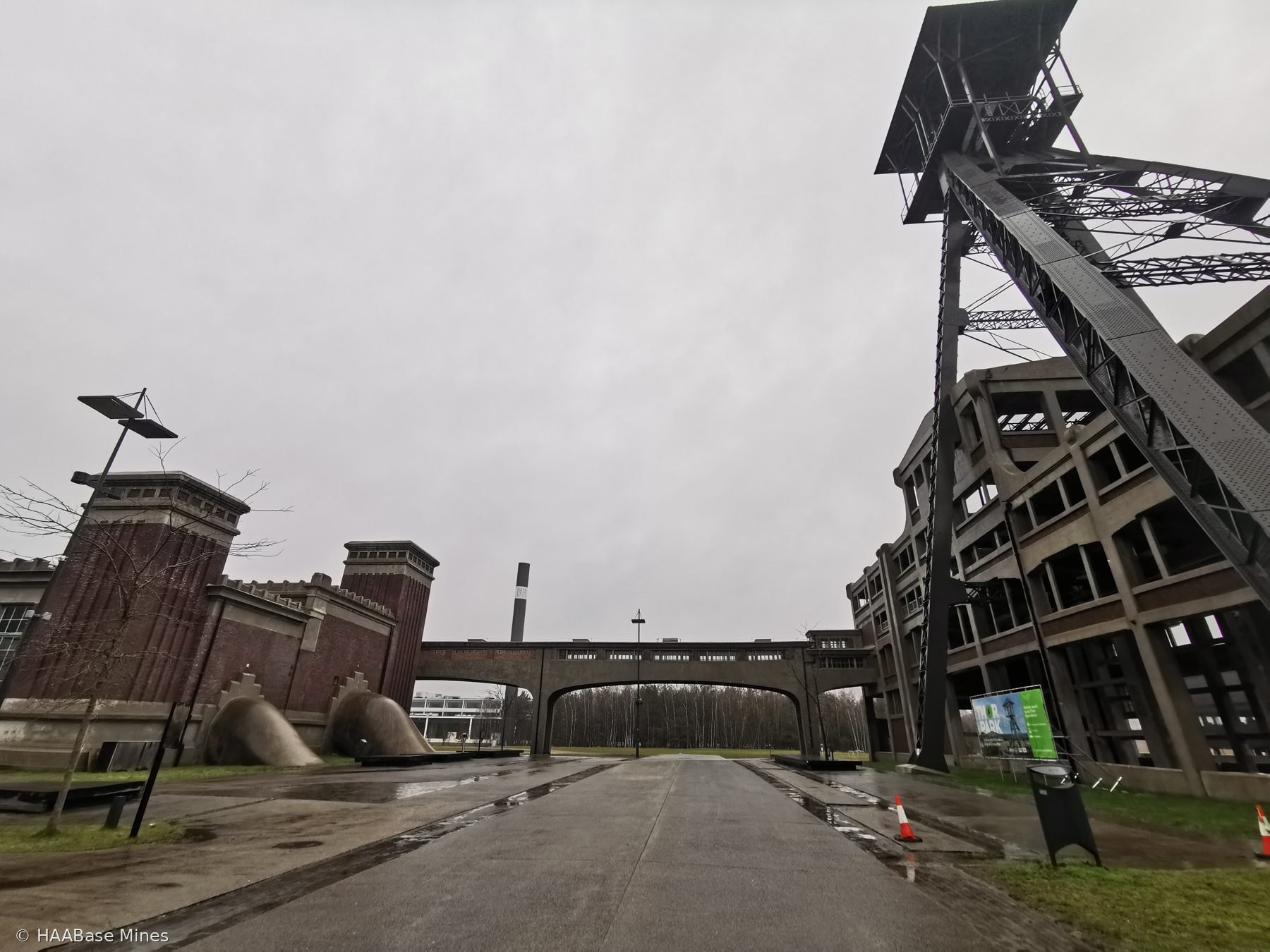
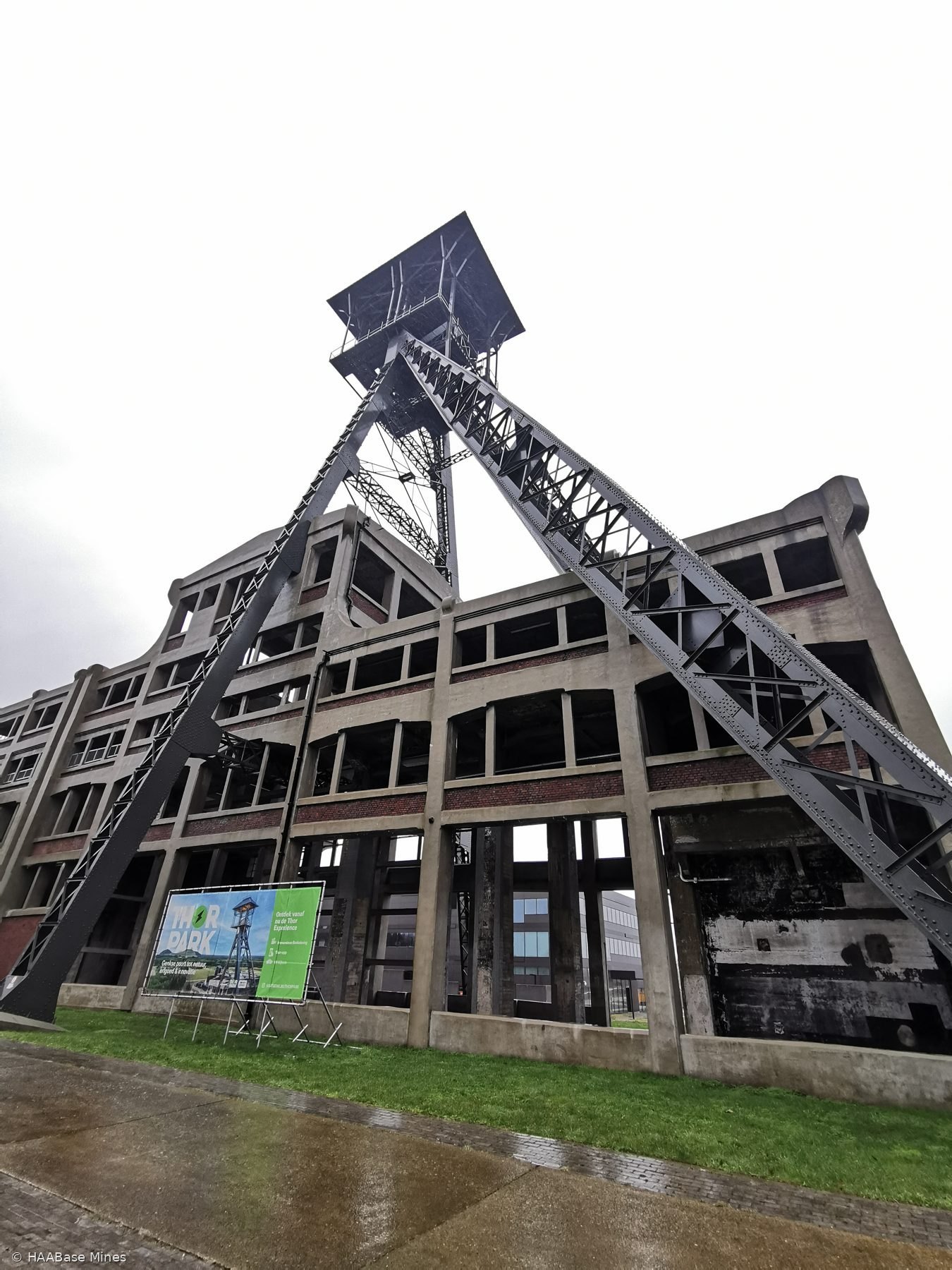
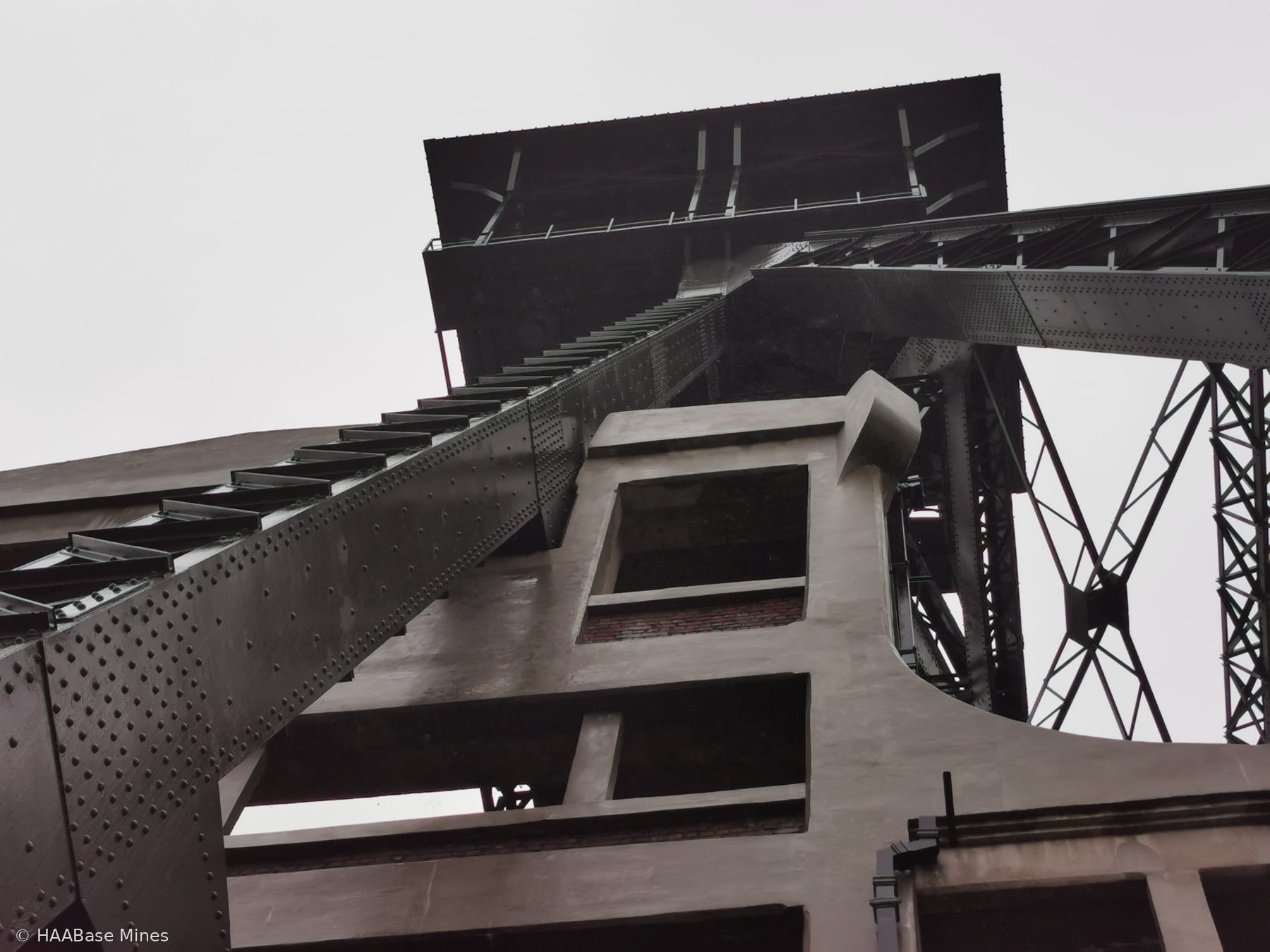
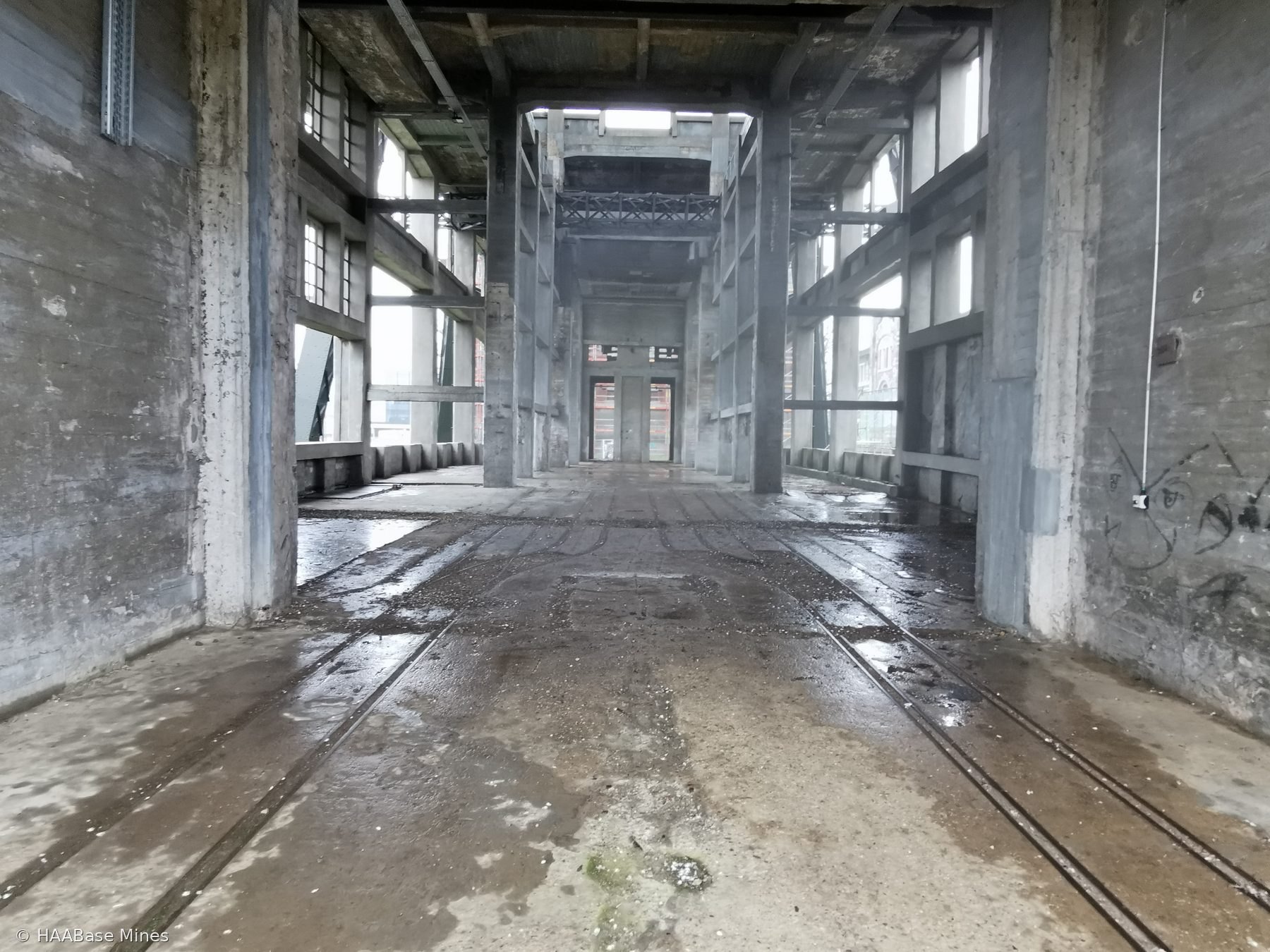
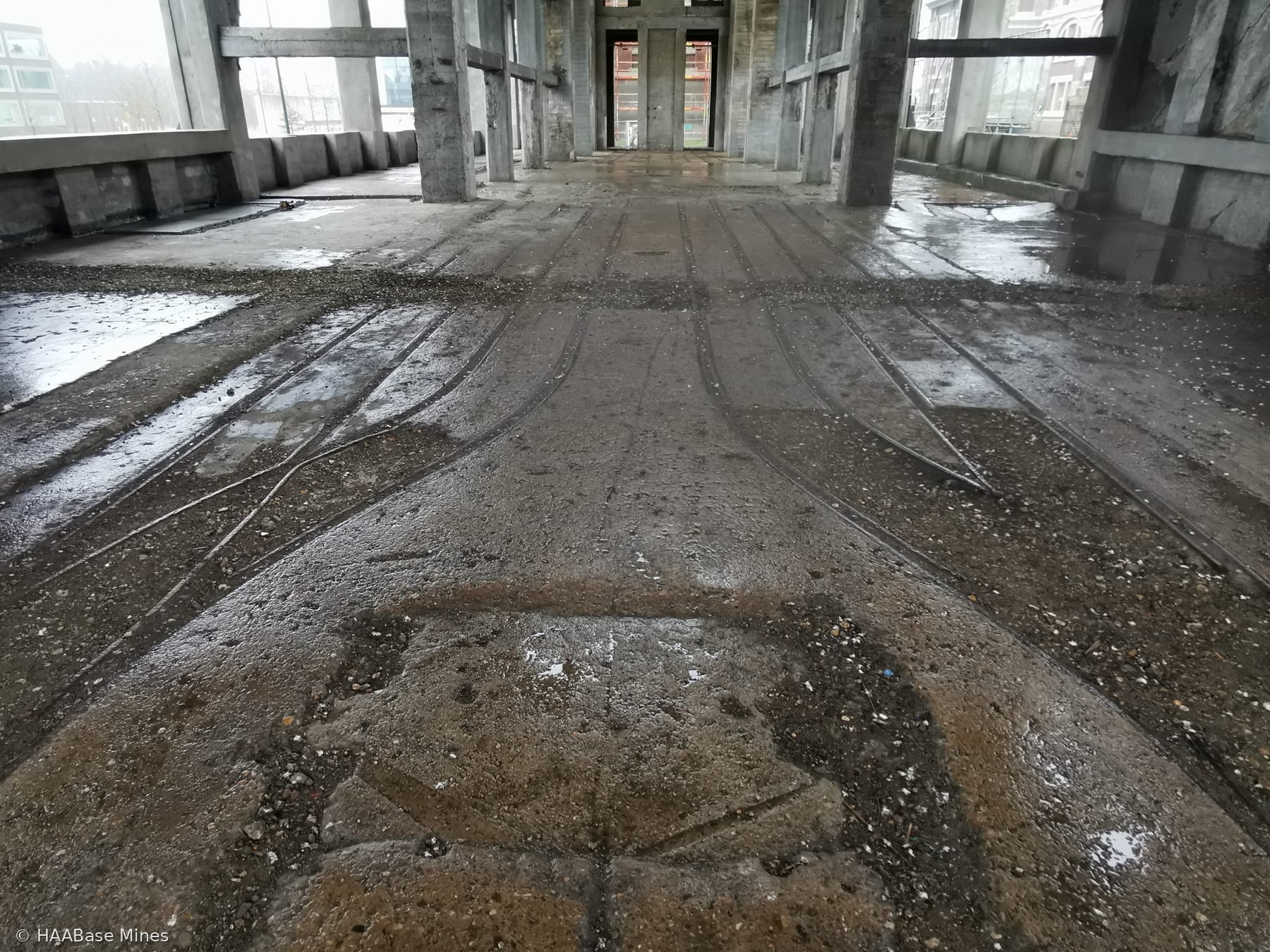
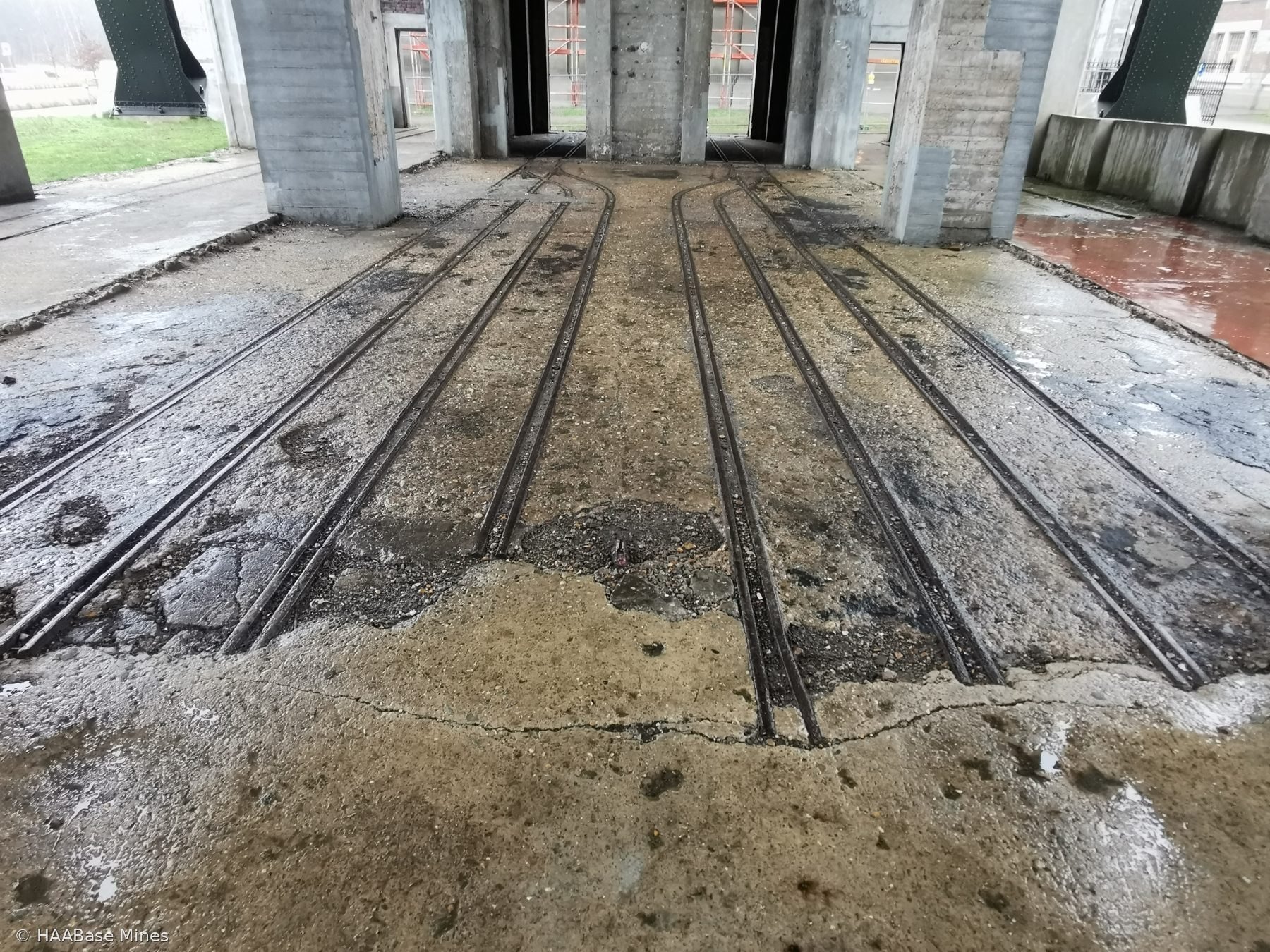
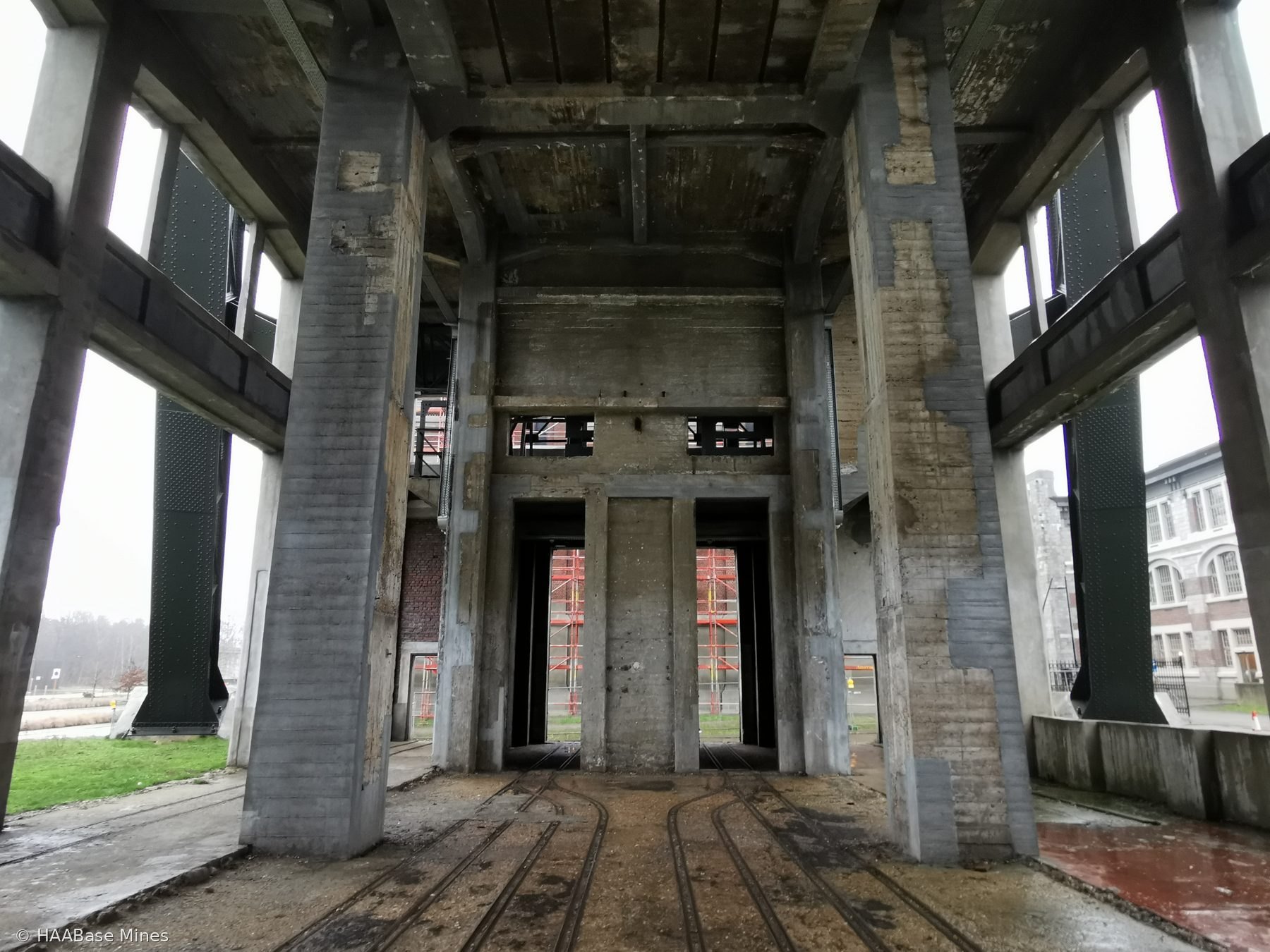
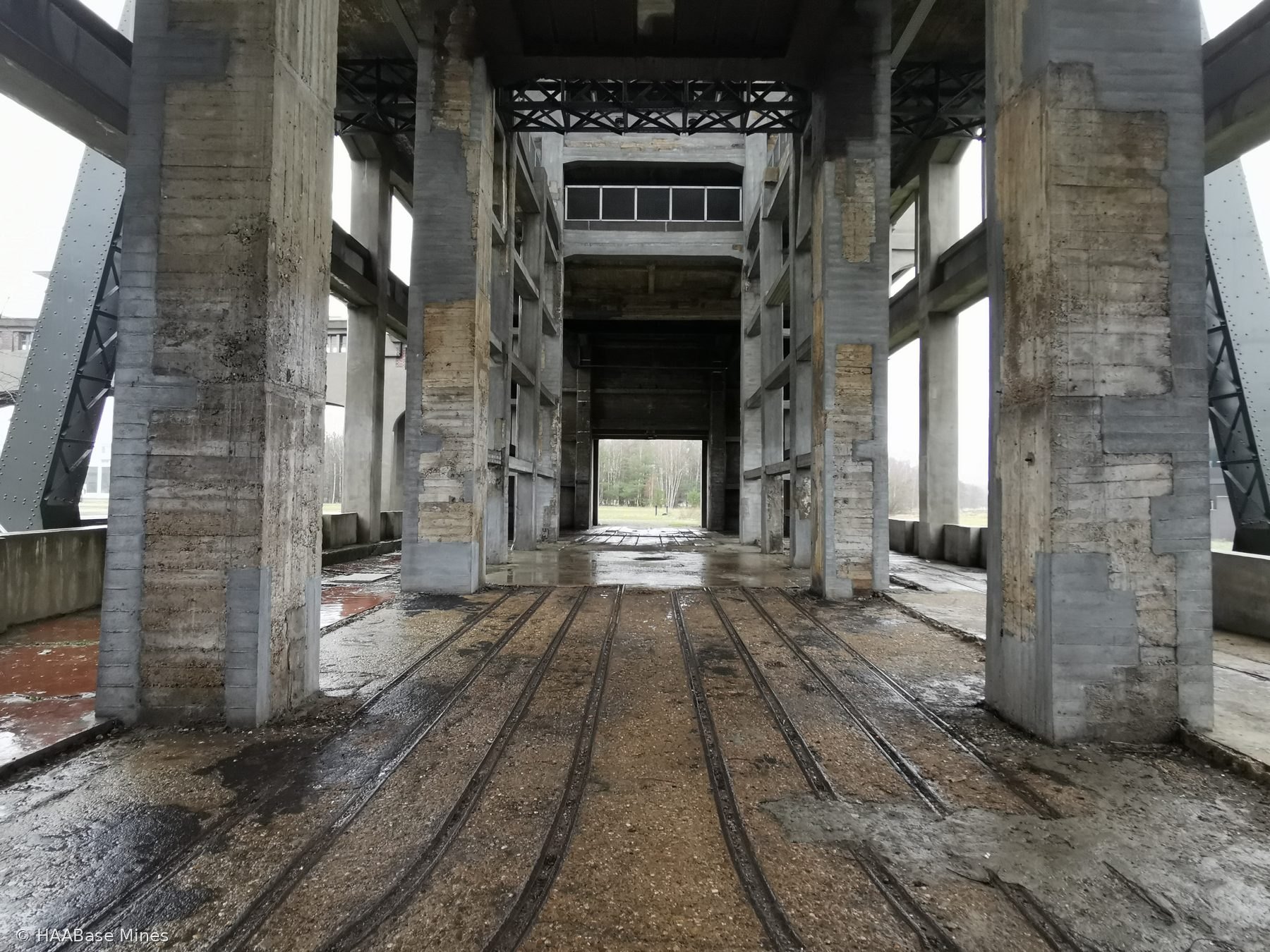
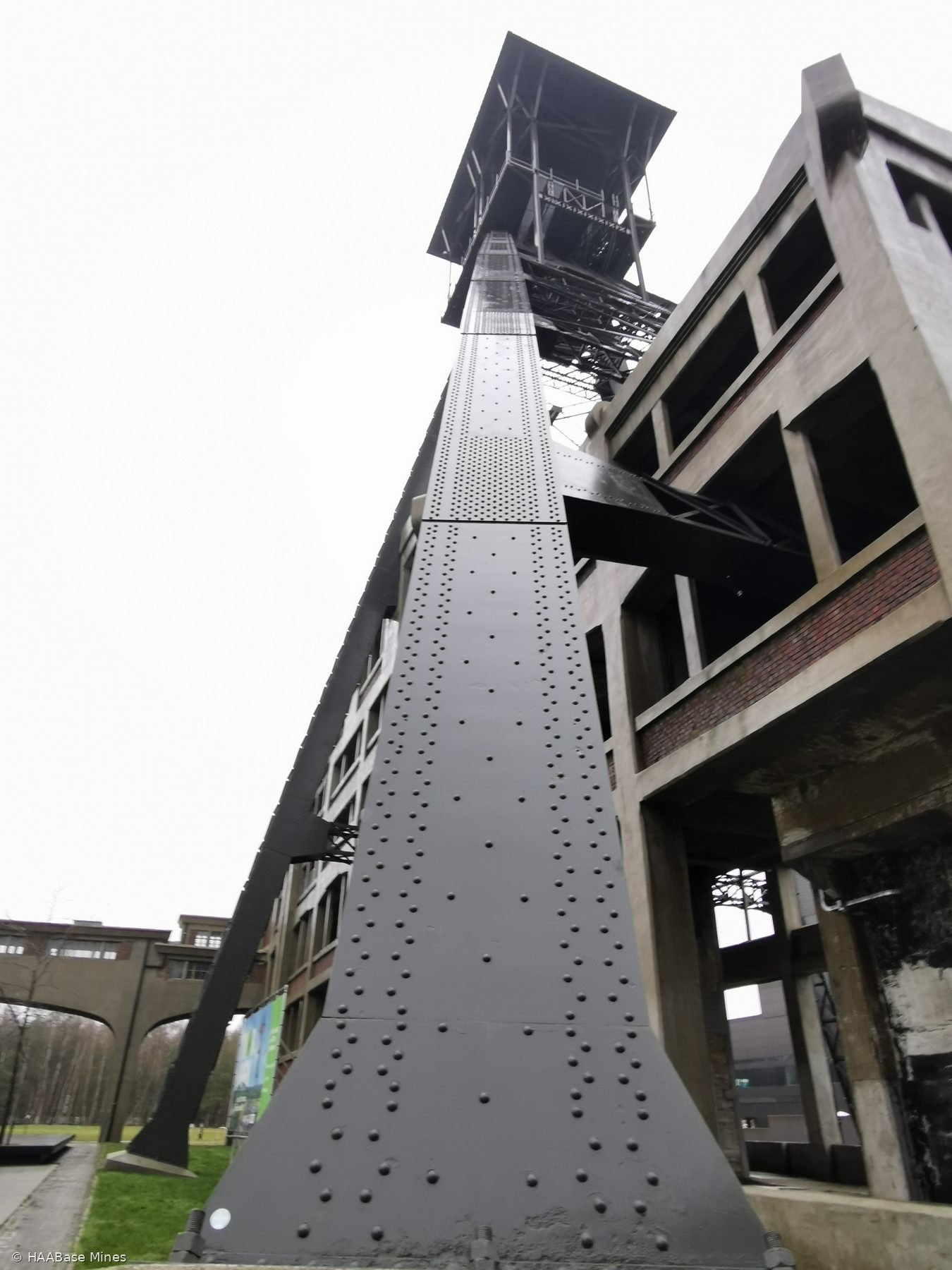
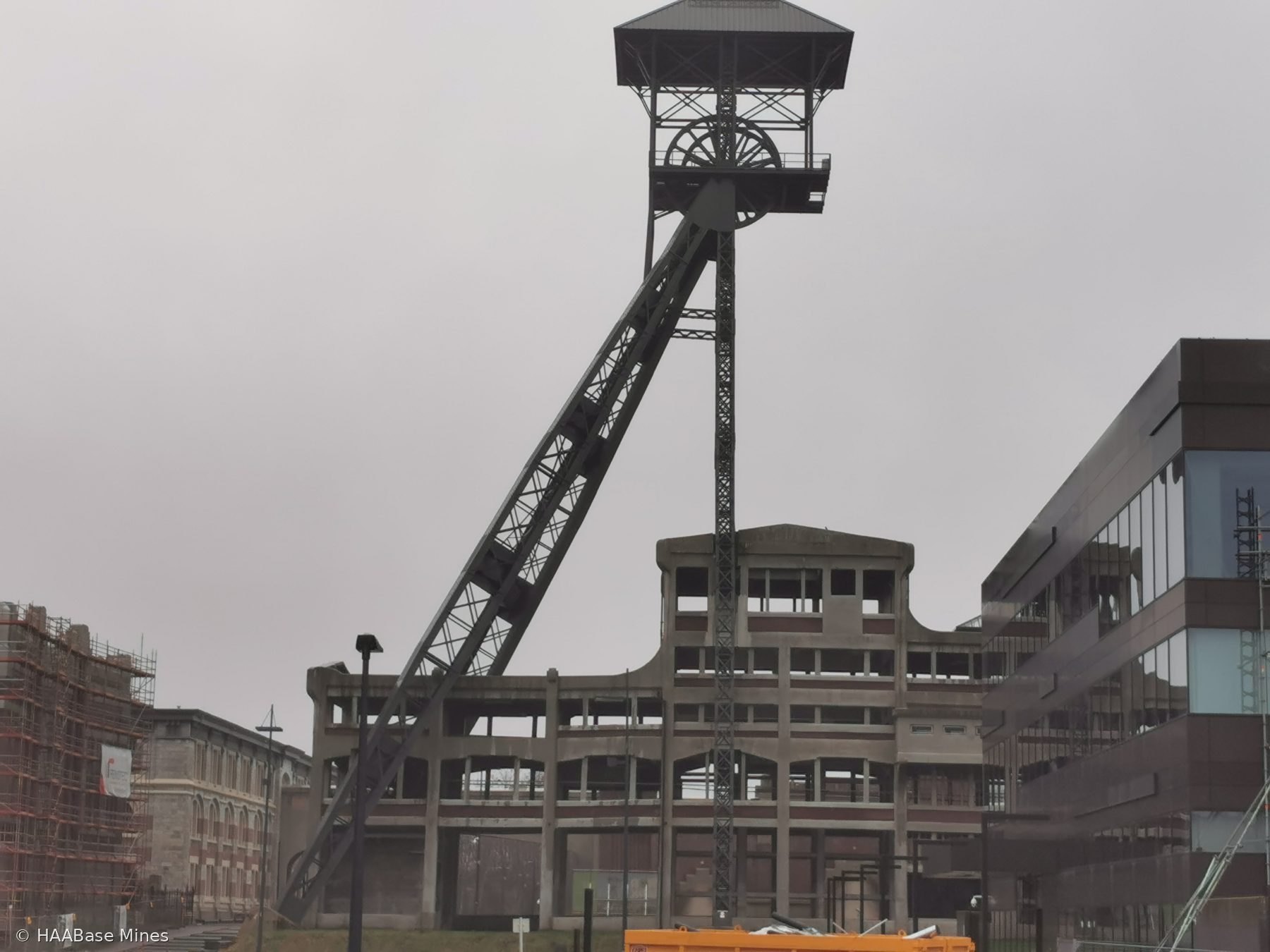
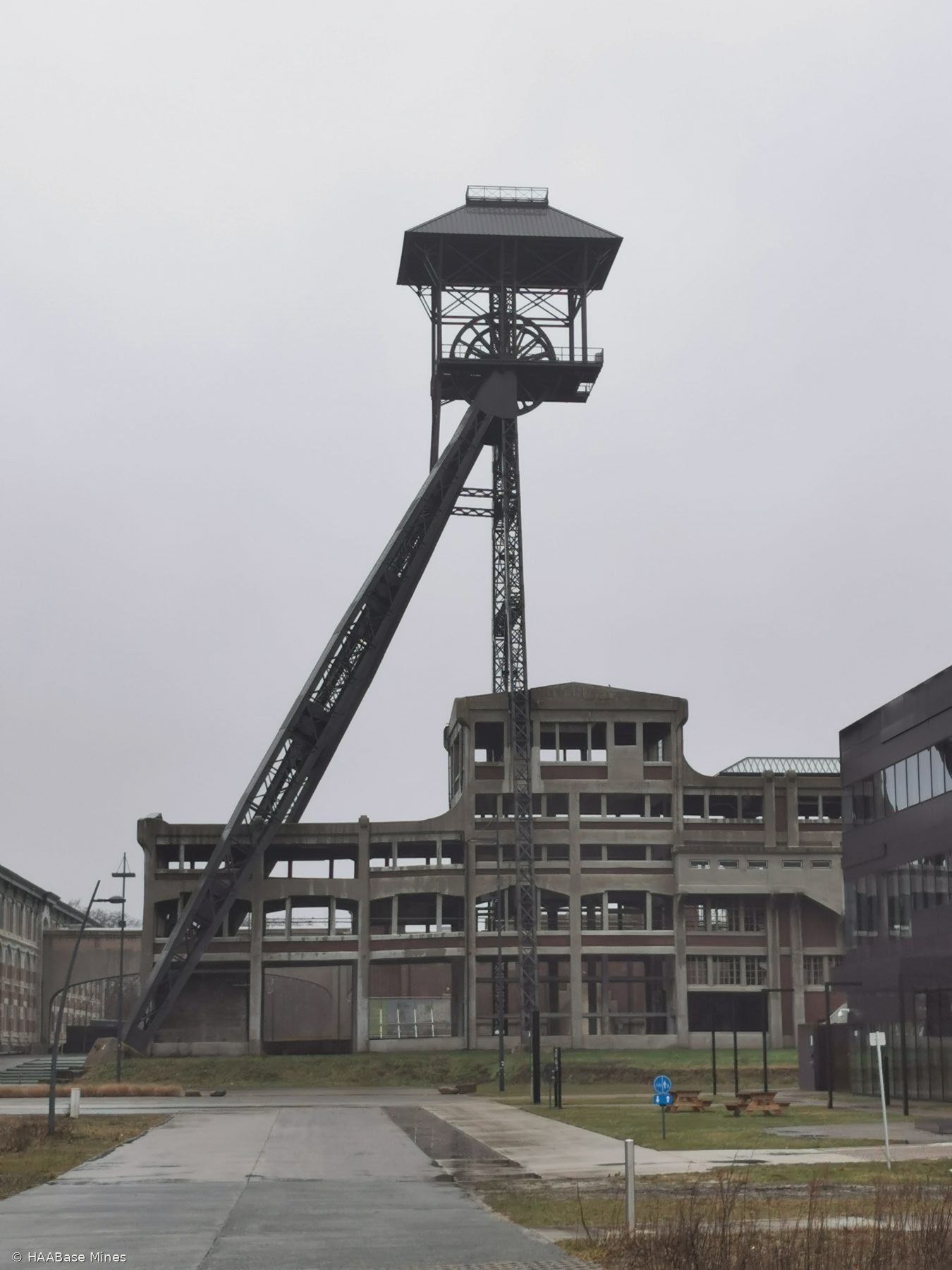
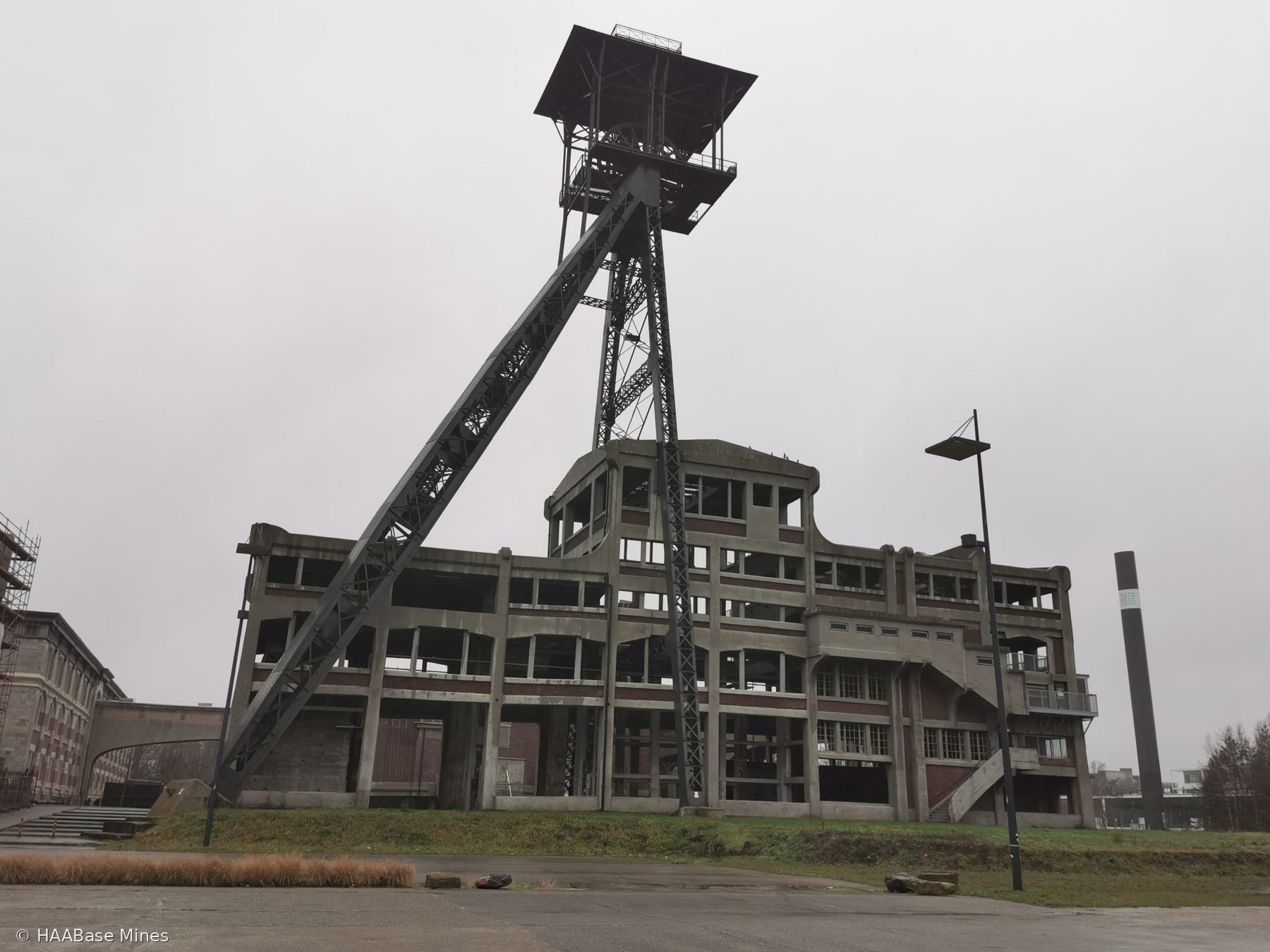
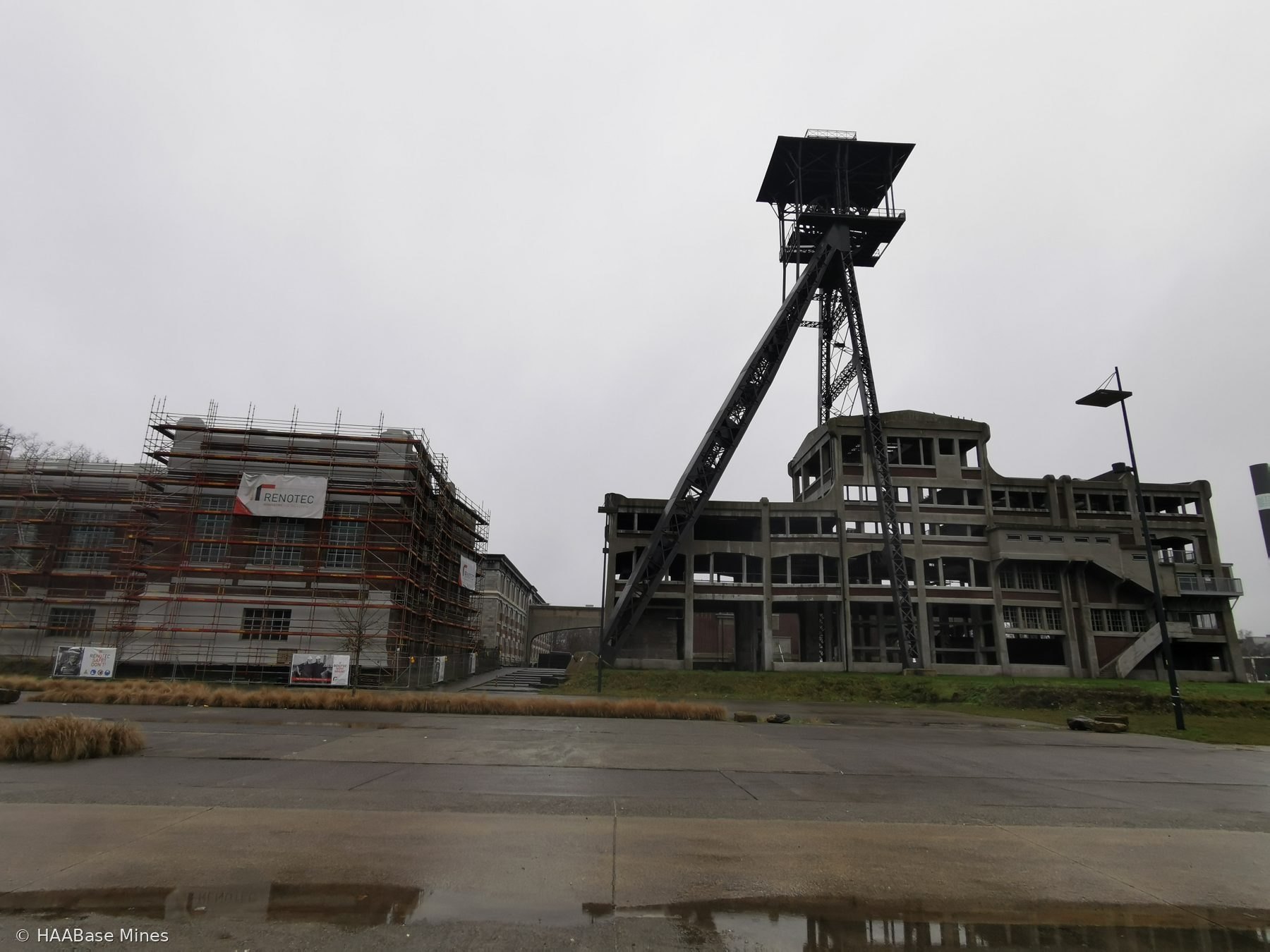
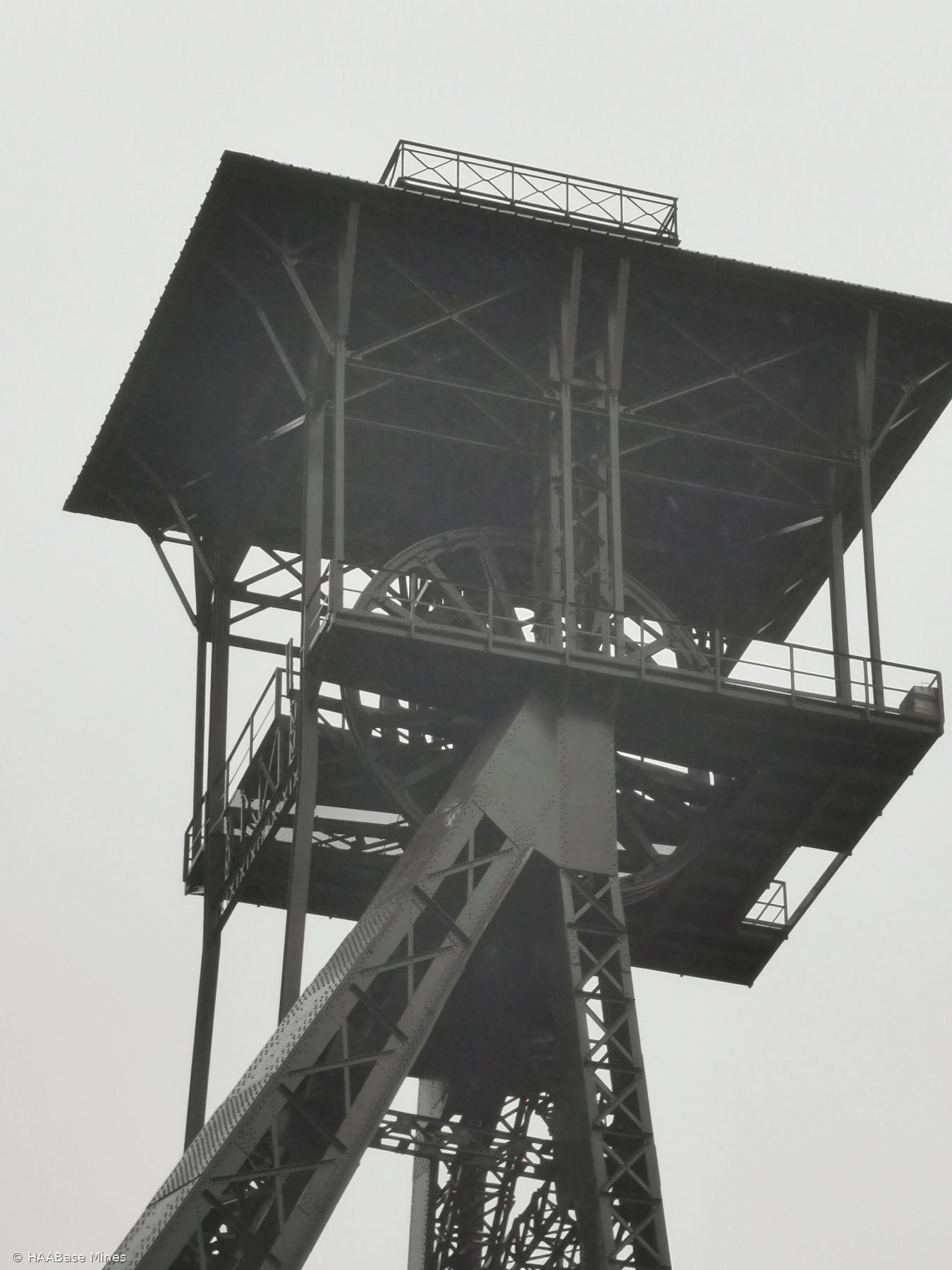
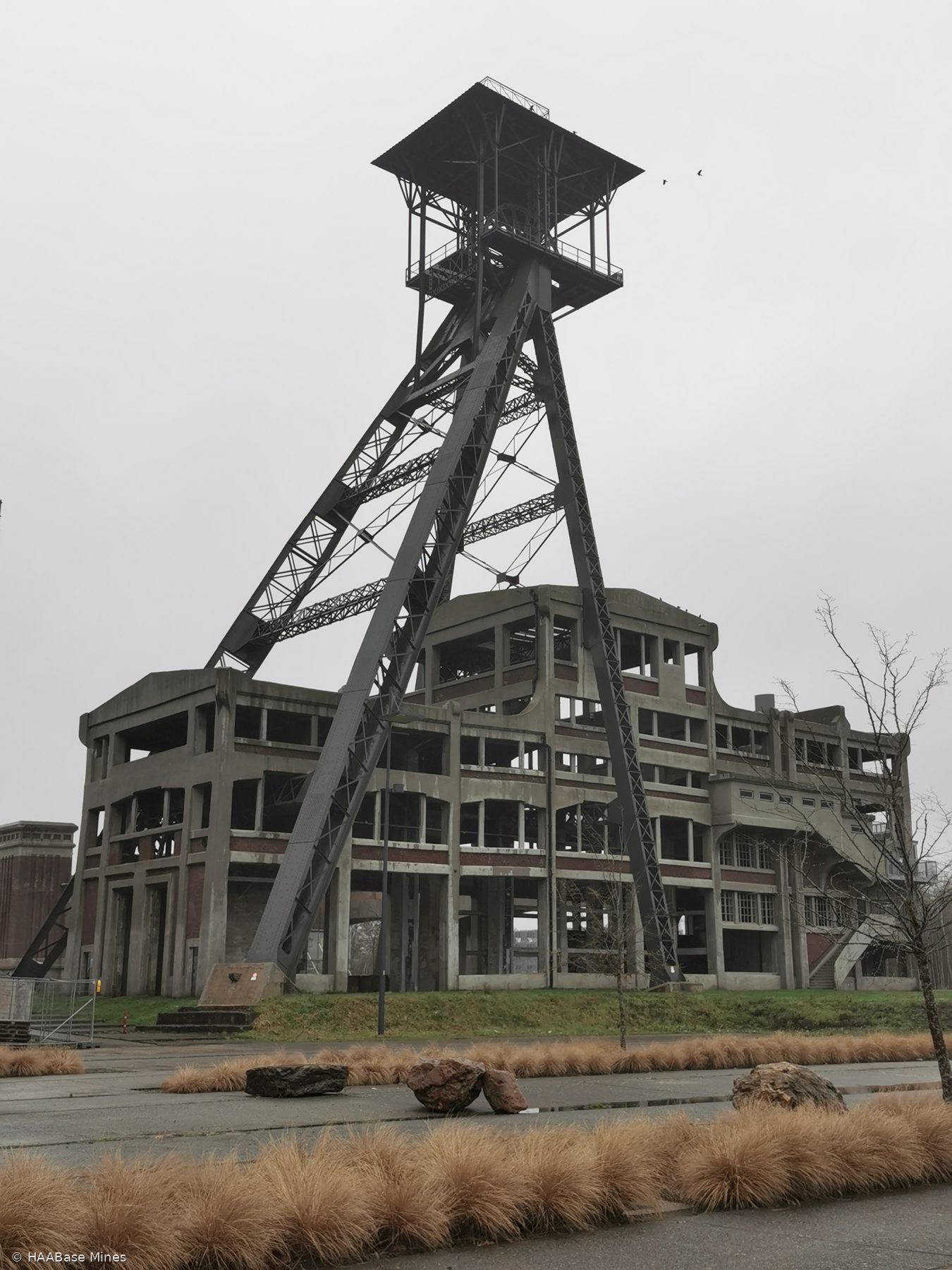
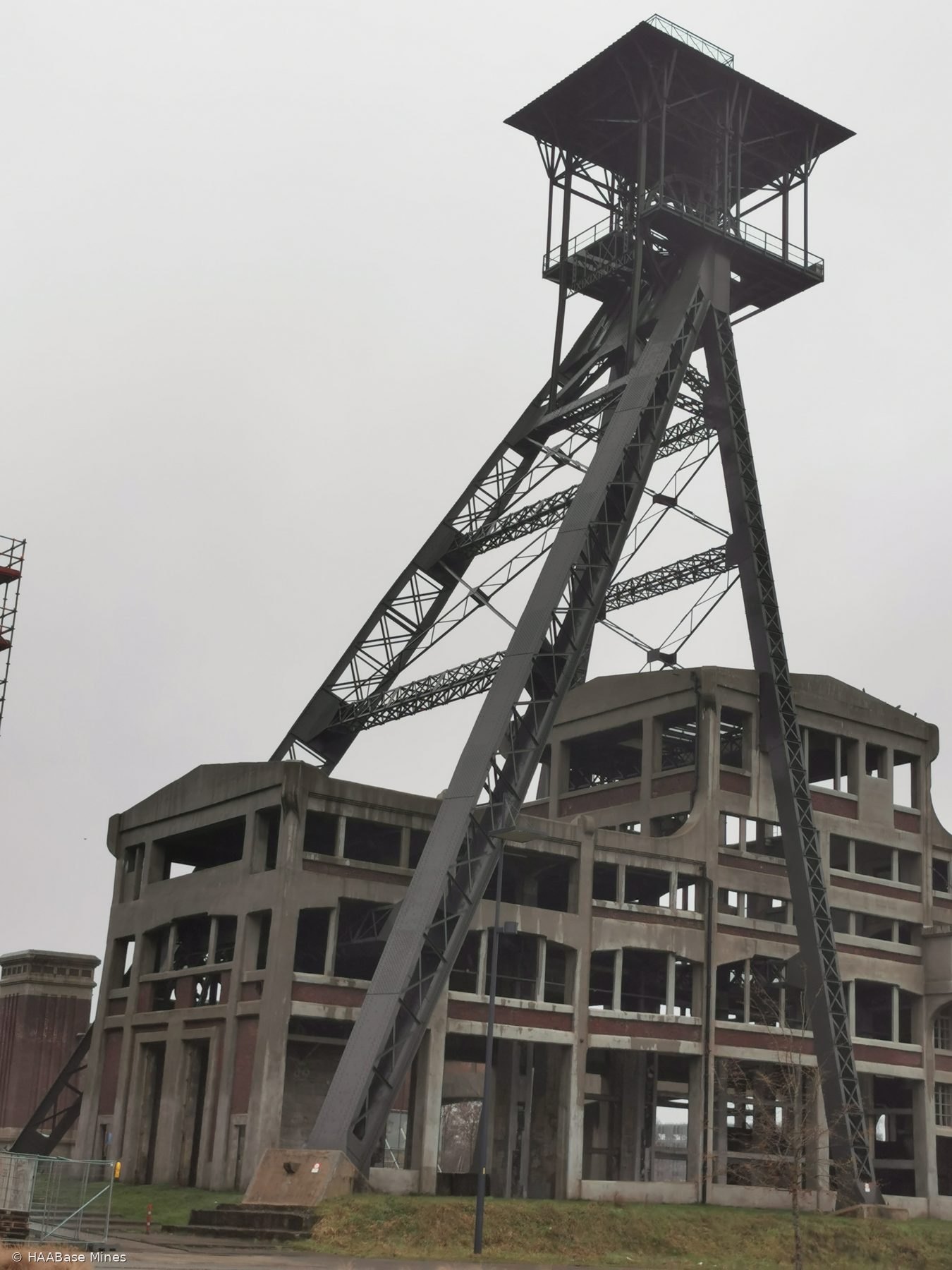
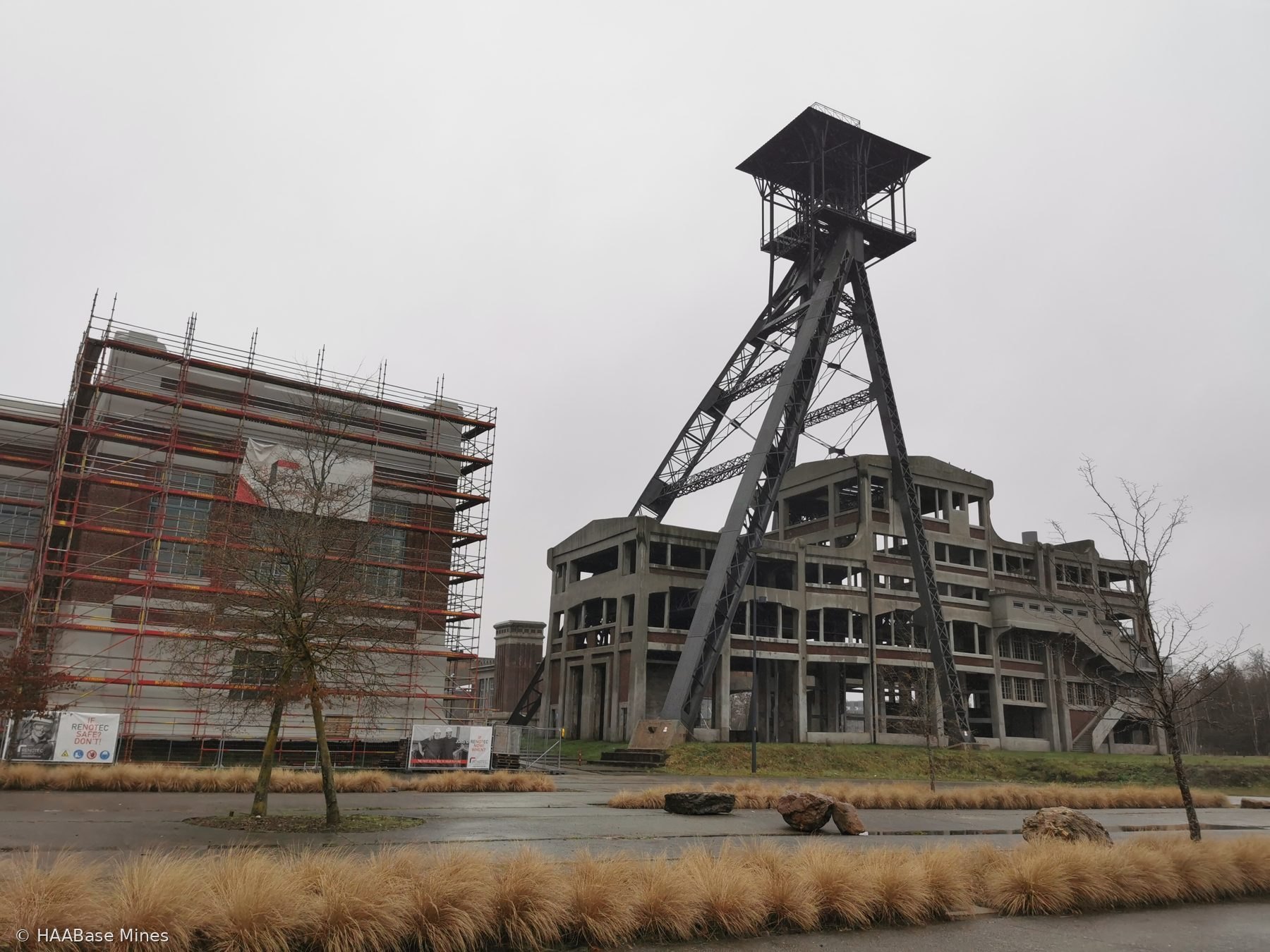
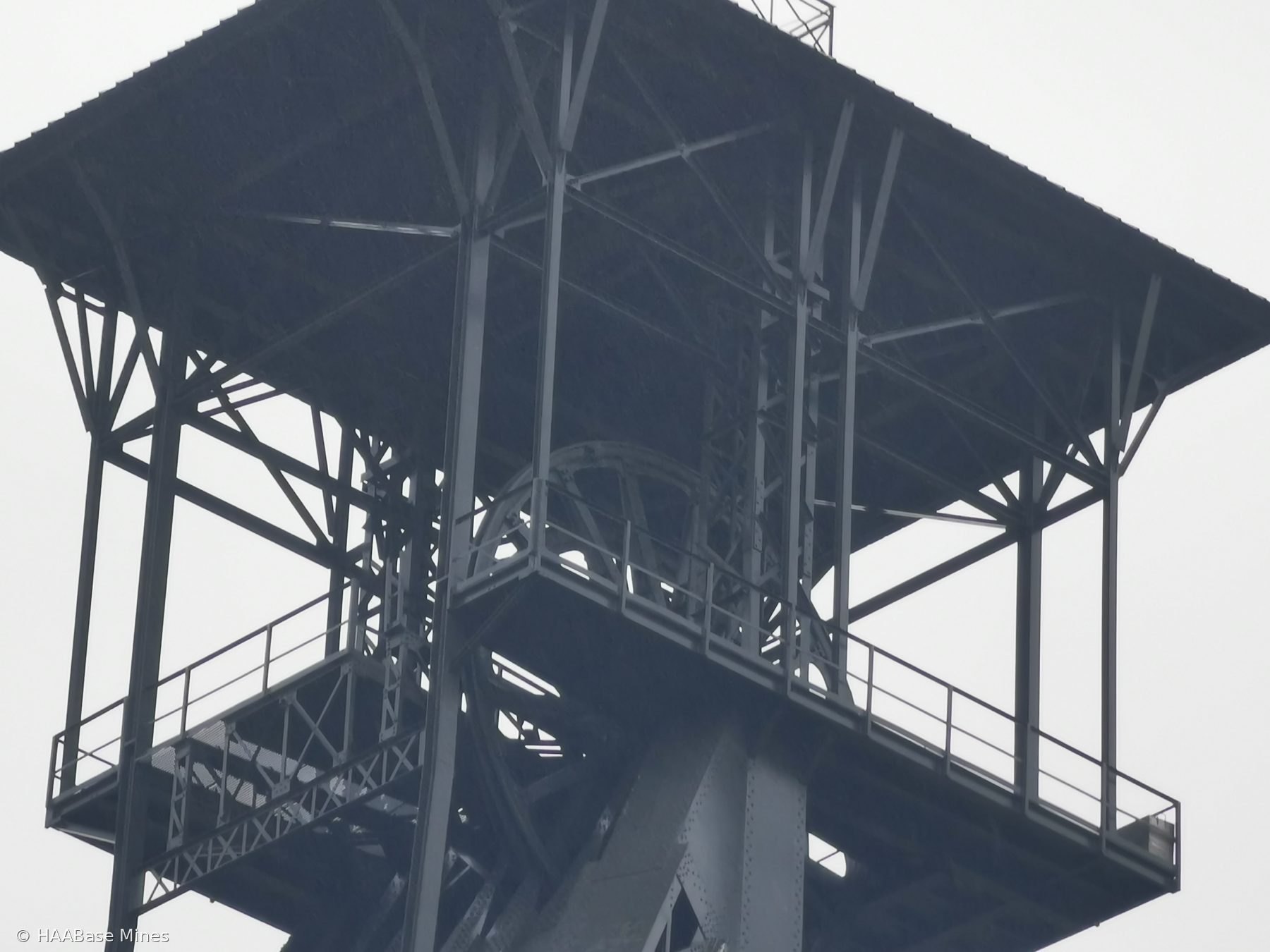
The two identical steel headframes, both of the böck type with four cable sheaves, were erected in 1922 by the S.A. de Construction en de Chaudronnerie d'Awans at Bierset-Awans. Each stands 54 metres tall with the cable sheave axis at 45 metres. Adjacent winding houses of reinforced concrete were built in 1927 and 1928, each with two separate machine rooms. The reception building under and between the legs of Schacht II, designed by architect Voutquenne and completed in 1925–1926, features architecturally distinguished reinforced concrete framing. Four concrete cooling towers were constructed between 1923 and 1941.
Production commenced via Schacht I in May 1924, working coal on levels at 560, 647, 700, 807, 920, 980, and 1,040 metres depth. The concession was geologically complex, with many faults and subsidences of coal seams of up to 170 metres, causing greater than average problems with water infiltration and methane. An underground connection to the Eisden colliery was later made to ensure adequate ventilation of the workings. From approximately 1960 the cage lifts of Schacht I were converted to an automatic Koeppe skip system.
On 30 March 1929, a firedamp explosion caused by the detonation of explosives at a gallery face killed between 21 and 25 miners and left a number severely injured, in the worst accident in the colliery's history. In 1984, a further explosion killed seven young workers. Plans to build a second production shaft in the eastern part of the concession were prepared in the 1950s but abandoned when the coal crisis of 1958 began. During the 1980s, coal from the nearby Winterslag colliery was also processed in the Waterschei coal washing plant; the combined operation was referred to as the mijnzetel Genk.
Peak employment of 6,834 miners was recorded in 1949. Peak annual production of 1,490,700 tonnes was achieved in 1968. Total production over the mine's operational life reached approximately 72,453,000 tonnes. The mine closed on 10 September 1987. The coal washing plant and power station were demolished shortly after closure. The eastern headframe over Schacht I was also demolished. Schacht II's headframe survived.
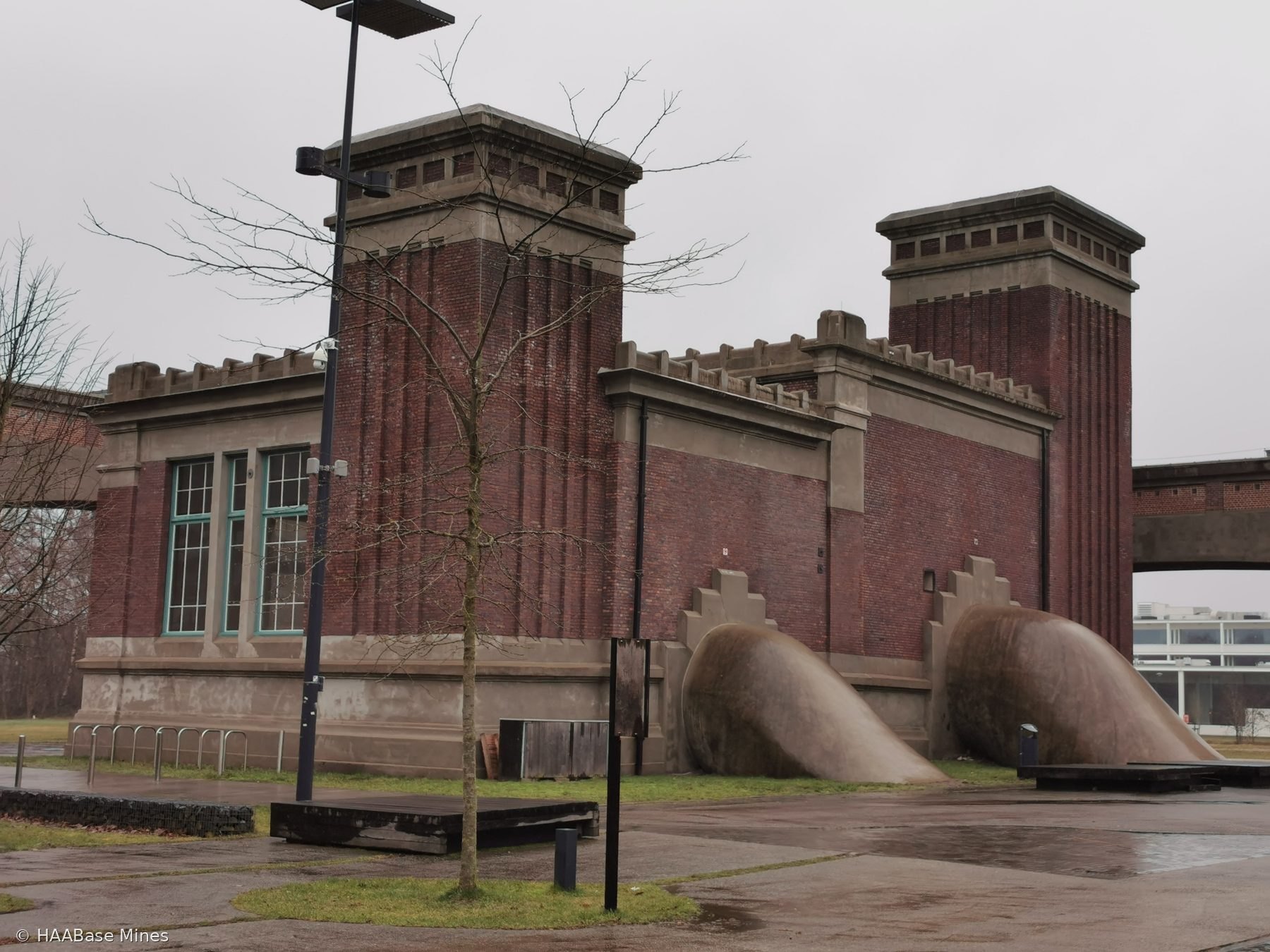
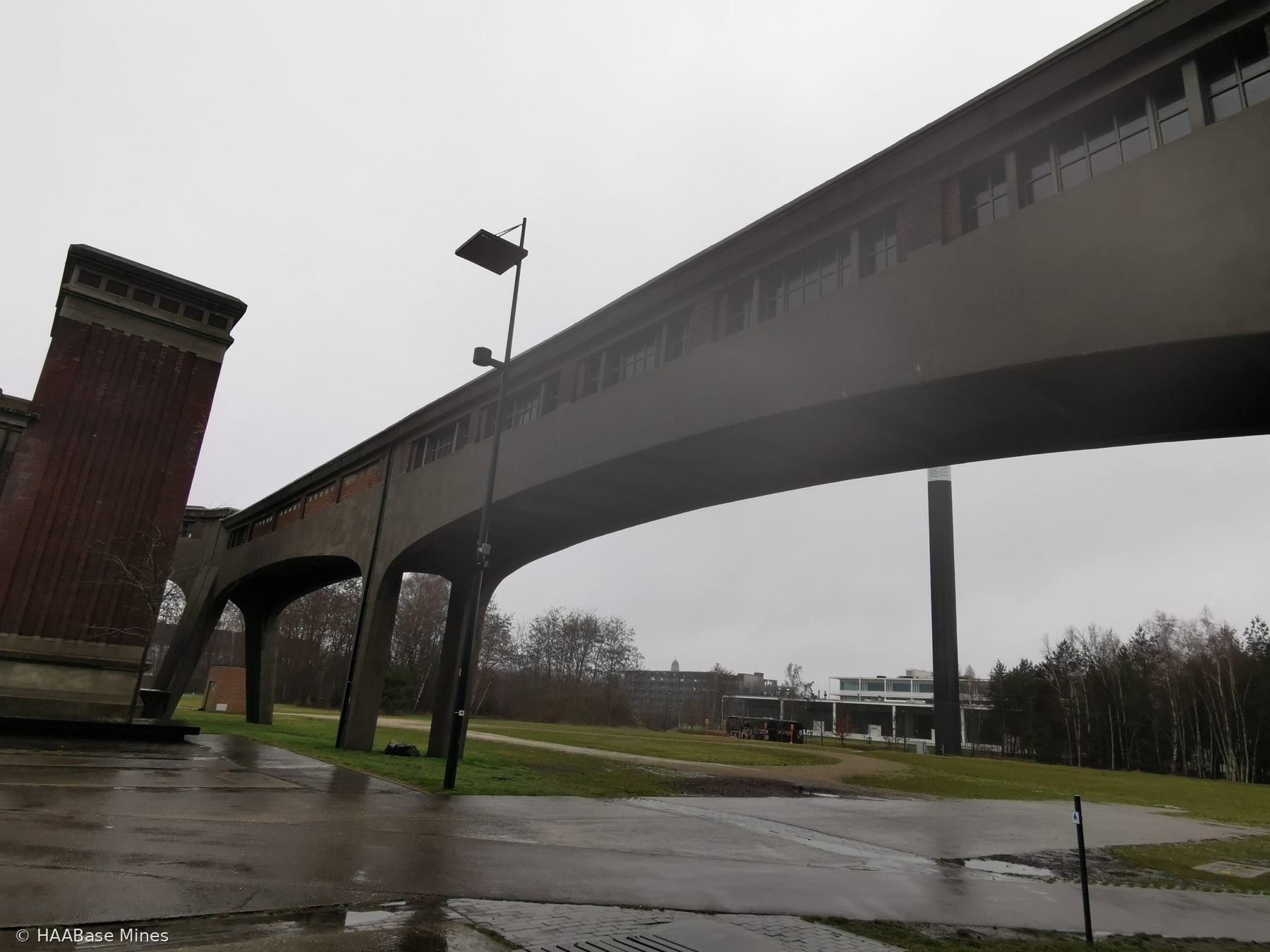
The main building was given monument protection in 1993. The remaining headframe, its winding house, the walkway connecting the main building to the winding house, and the ventilation building received formal monument protection on 22 December 1993. The city of Genk concluded a multi-year agreement with the Flemish Government for the restoration of the surviving buildings between 2014 and 2020, covering seven successive phases: the main building, the winding house, the ventilation building, the walkway, the shaft building, the machines, and finally the painting of the headframe. Restoration subsidies funded by Flemish Minister of Heritage Matthias Diependaele completed the final phase. The spoil heap was designated a protected landscape in 1999.
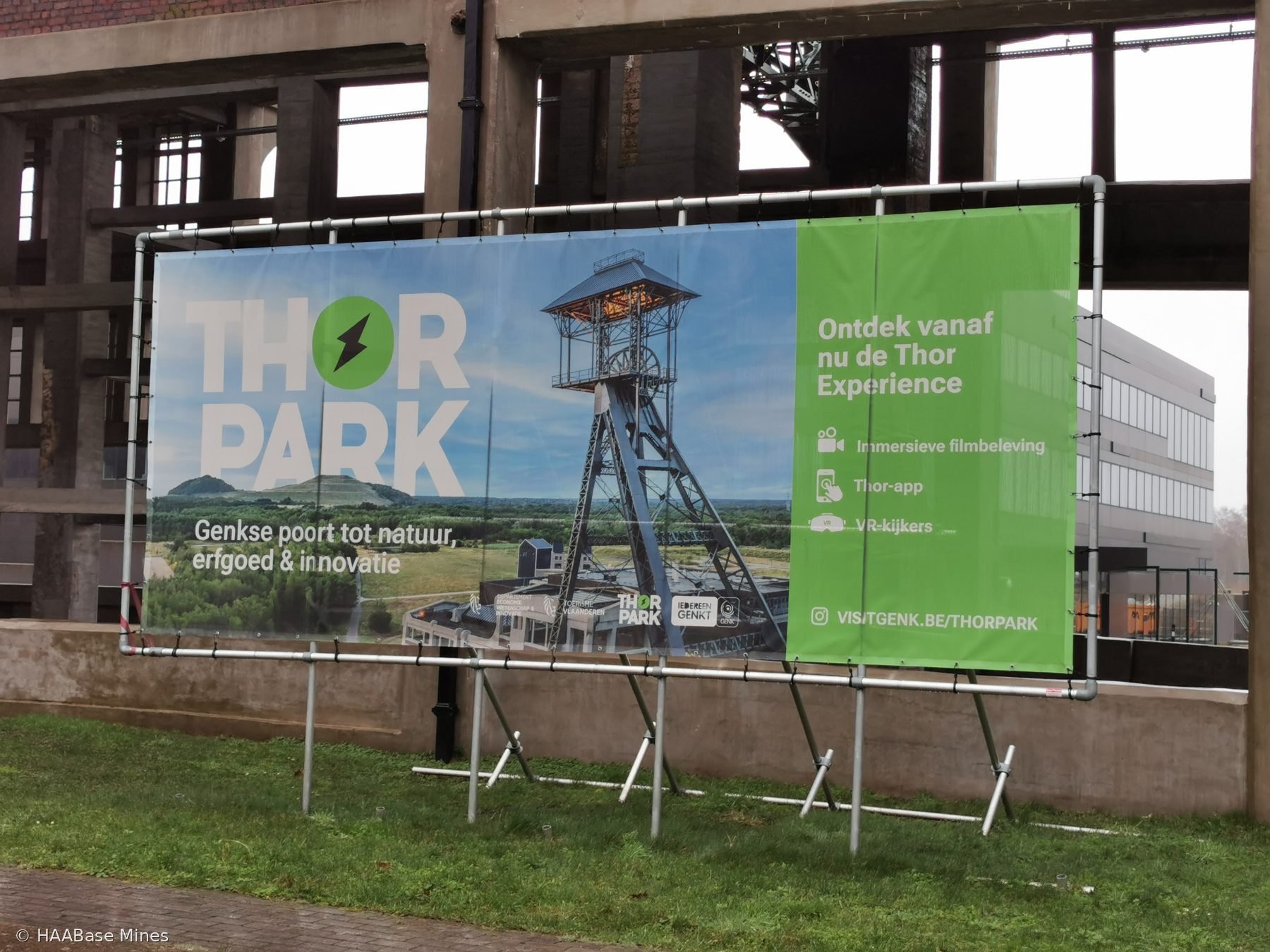
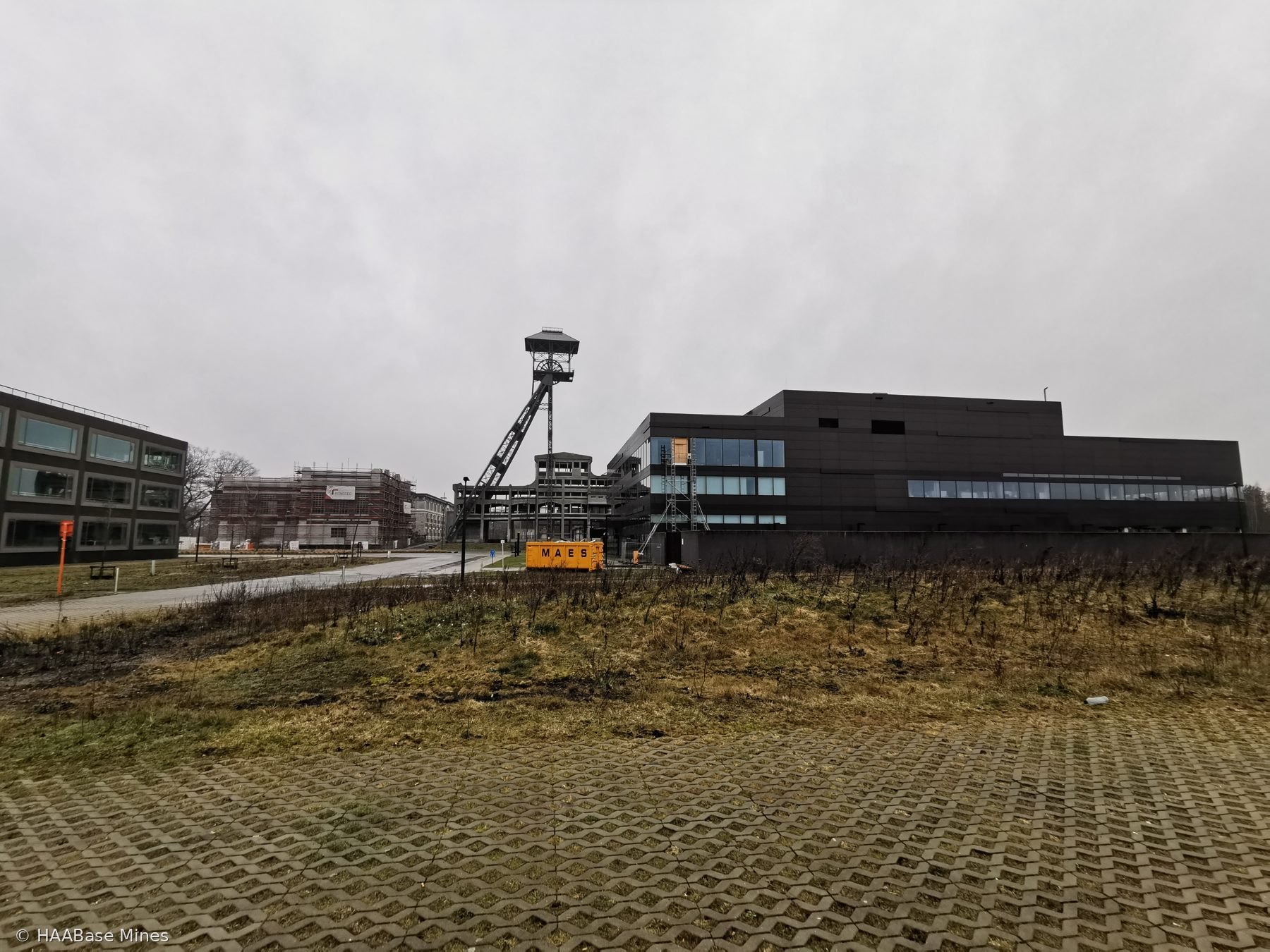
The former mine site is now developed as Thor Park, a 93-hectare technology, energy, and innovation campus operated by the city of Genk and LRM (Limburgse Investeringsmaatschappij). The main building, Thor Central, serves as a conference and innovation hub. The Mijndepot museum, established by former Waterschei miners in the former warehouse, displays machinery and tools from the underground workings and offers guided tours by ex-miners. The site forms part of the Hoge Kempen National Park.