1779
Trembleur concession granted
Gaspard Corbesier received the Trembleur concession in 1779, establishing the legal predecessor of the later Argenteau–Trembleur undertaking.
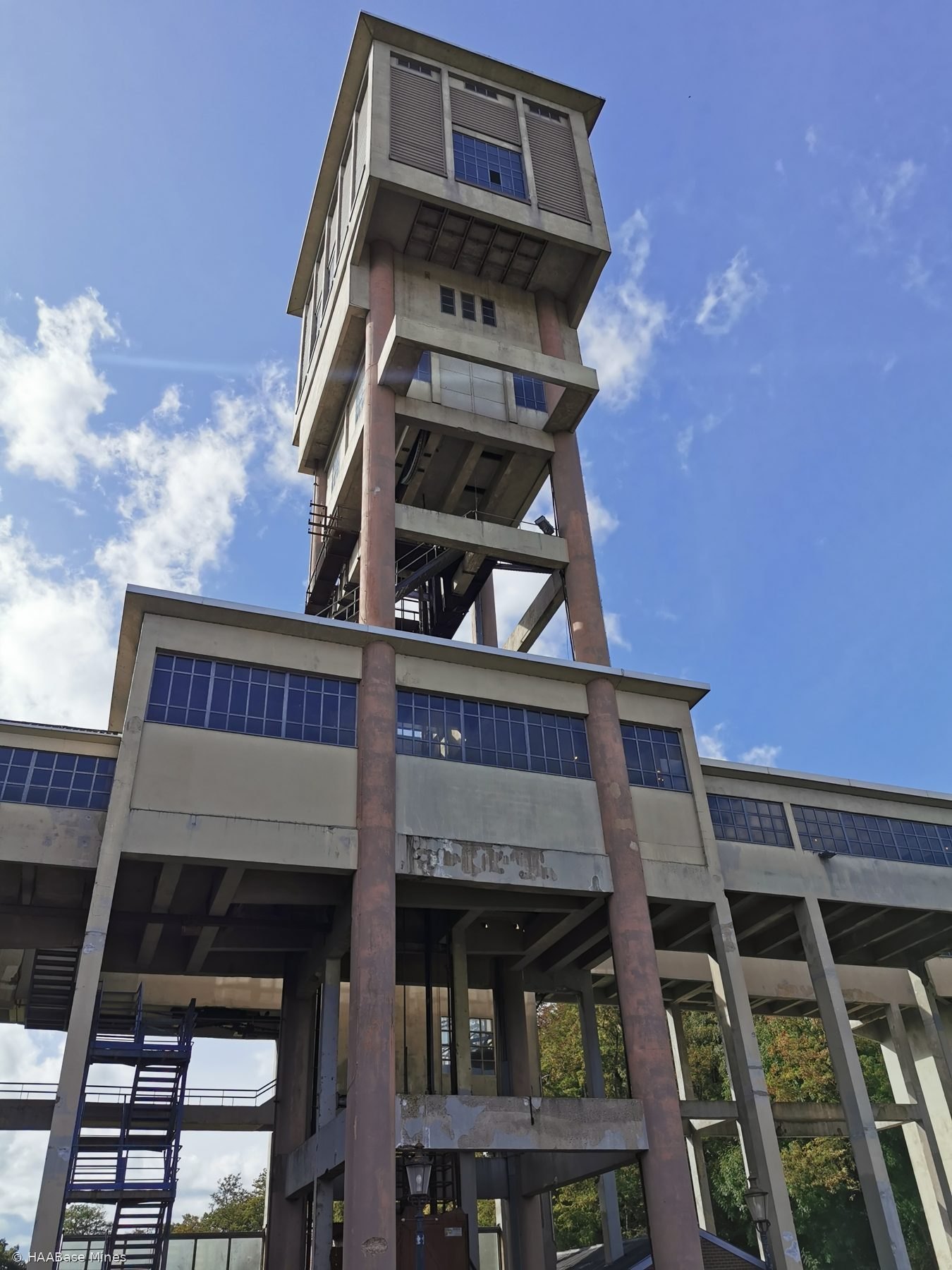
Preserved Liège coal mine and UNESCO World Heritage component, with Puits Marie metal headgear, a 45-metre concrete winding tower, historic washery and underground visitor access.
The history, timeline and surviving-site classification shown here reflect the reviewed account.
The record identifies Blegny-Mine as the former Argenteau–Trembleur colliery near Liège, with a nineteenth-century Puits Marie complex and a twentieth-century Puits n°1 reconstructed after wartime destruction. Its chronology and fabric are principally supported by the museum’s own historical account, the official Walloon monument description, UNESCO listing and ICOMOS site assessment. These sources establish the 1887 closure of the earlier undertaking, the 1919 revival, the 1942–48 rebuilding, peak 1970 production, closure on 31 March 1980, rapid conversion to underground visiting, 2011 heritage protection and 2012 World Heritage inscription.
The surviving technical equipment and pithead ensembles are very well documented. Some narrower early corporate dates, shaft-depth figures and accounts of the exact last winding shaft still require primary archival confirmation; they are not stated as established facts in the history.
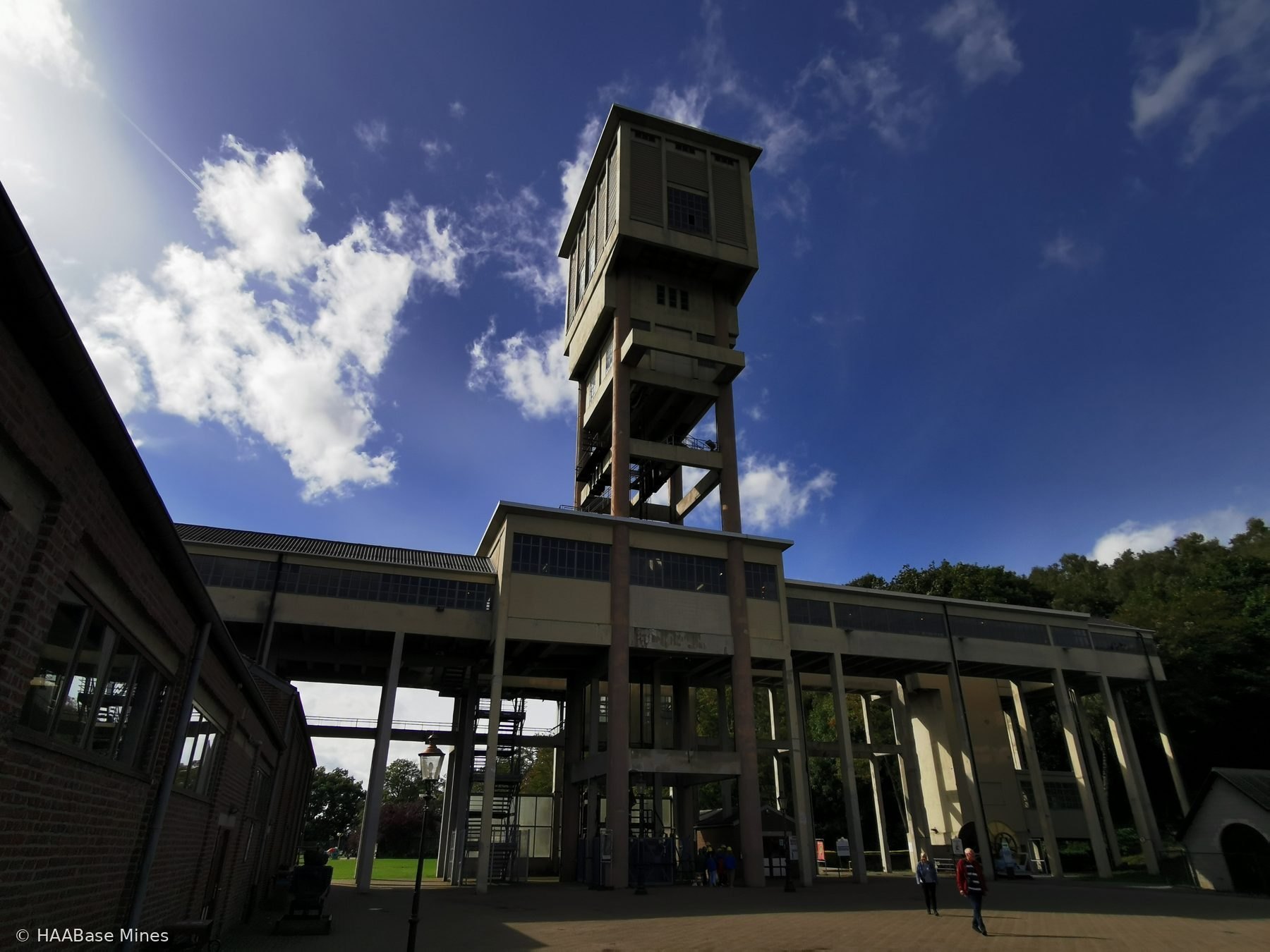
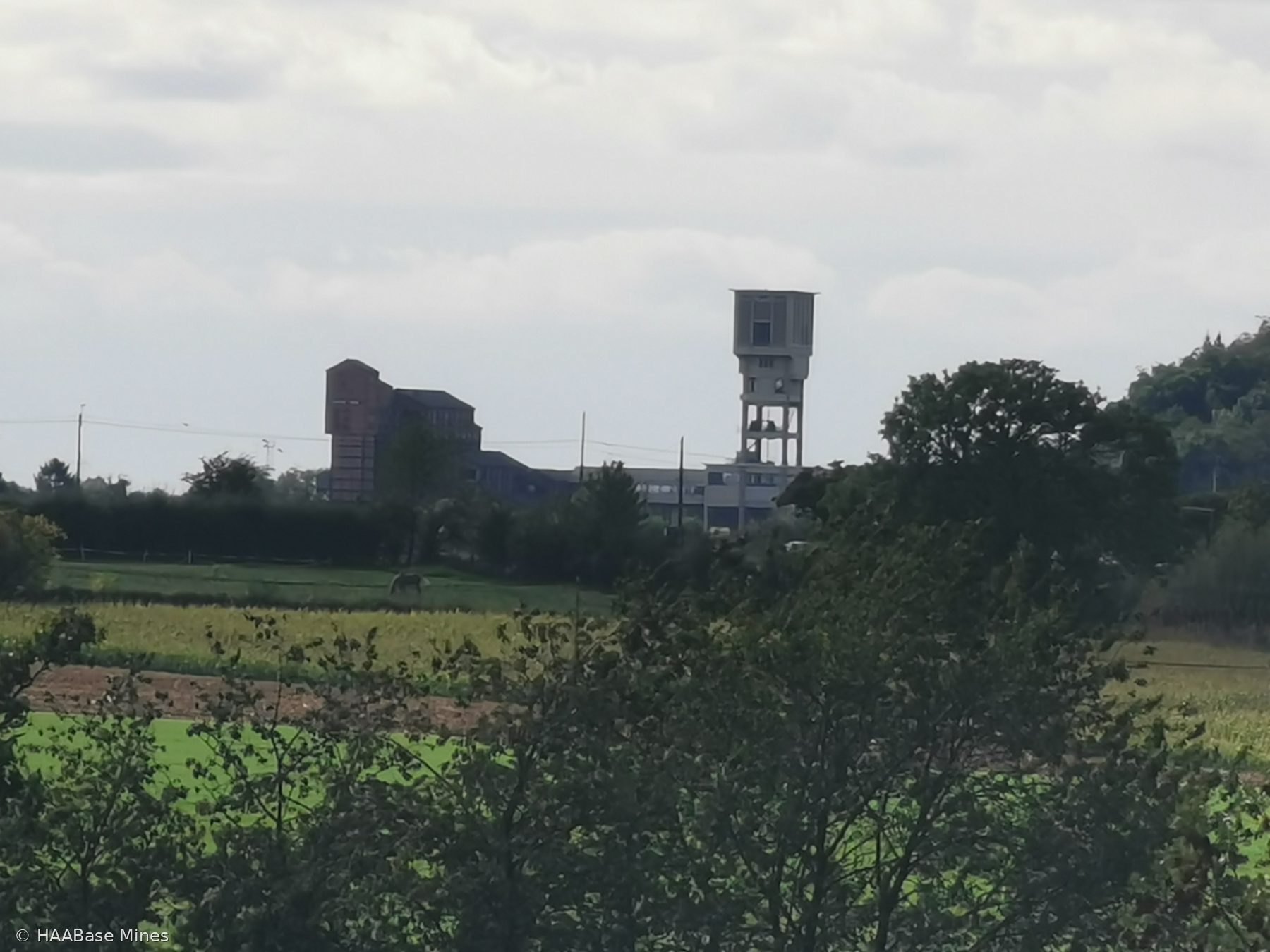
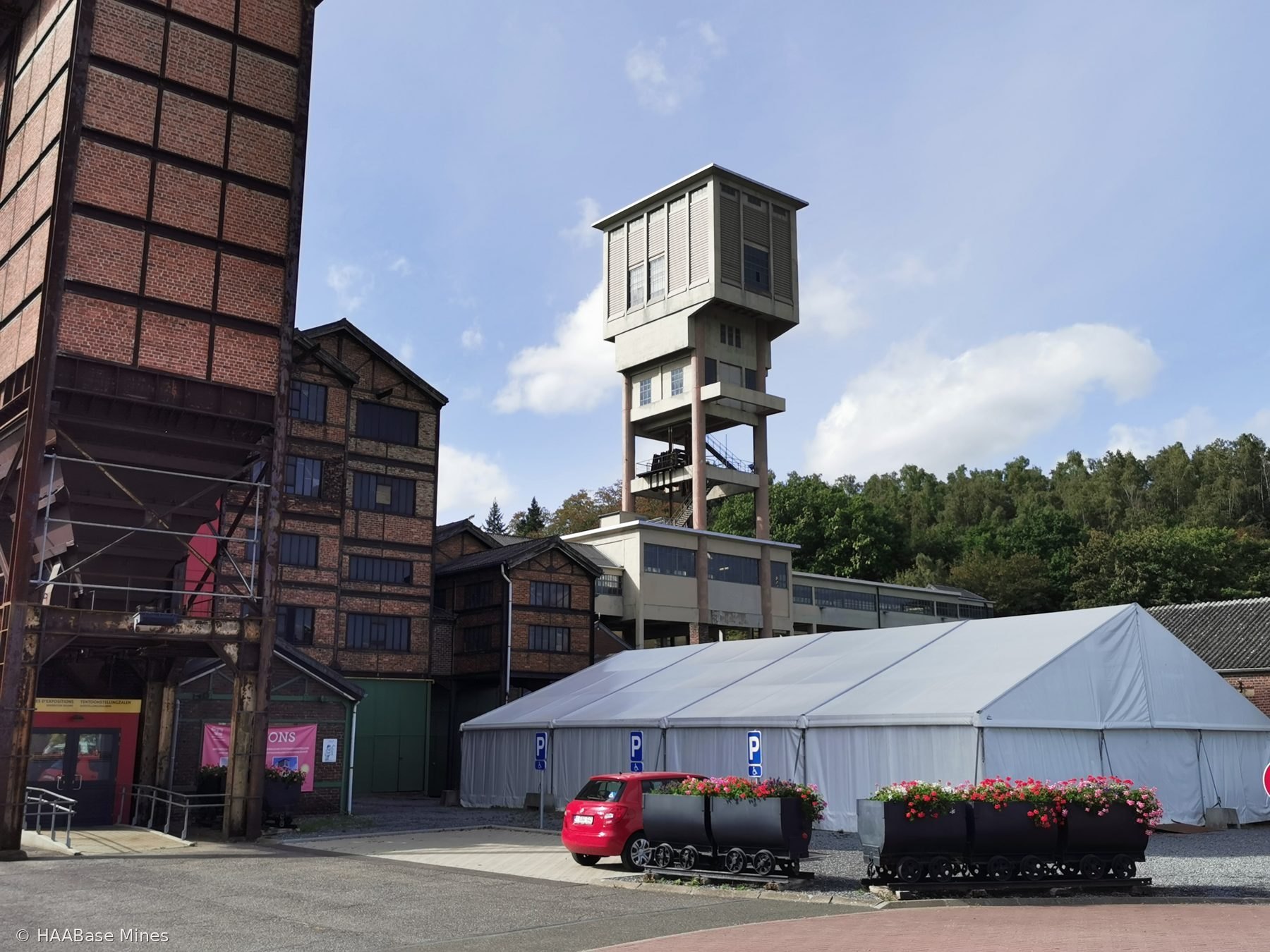
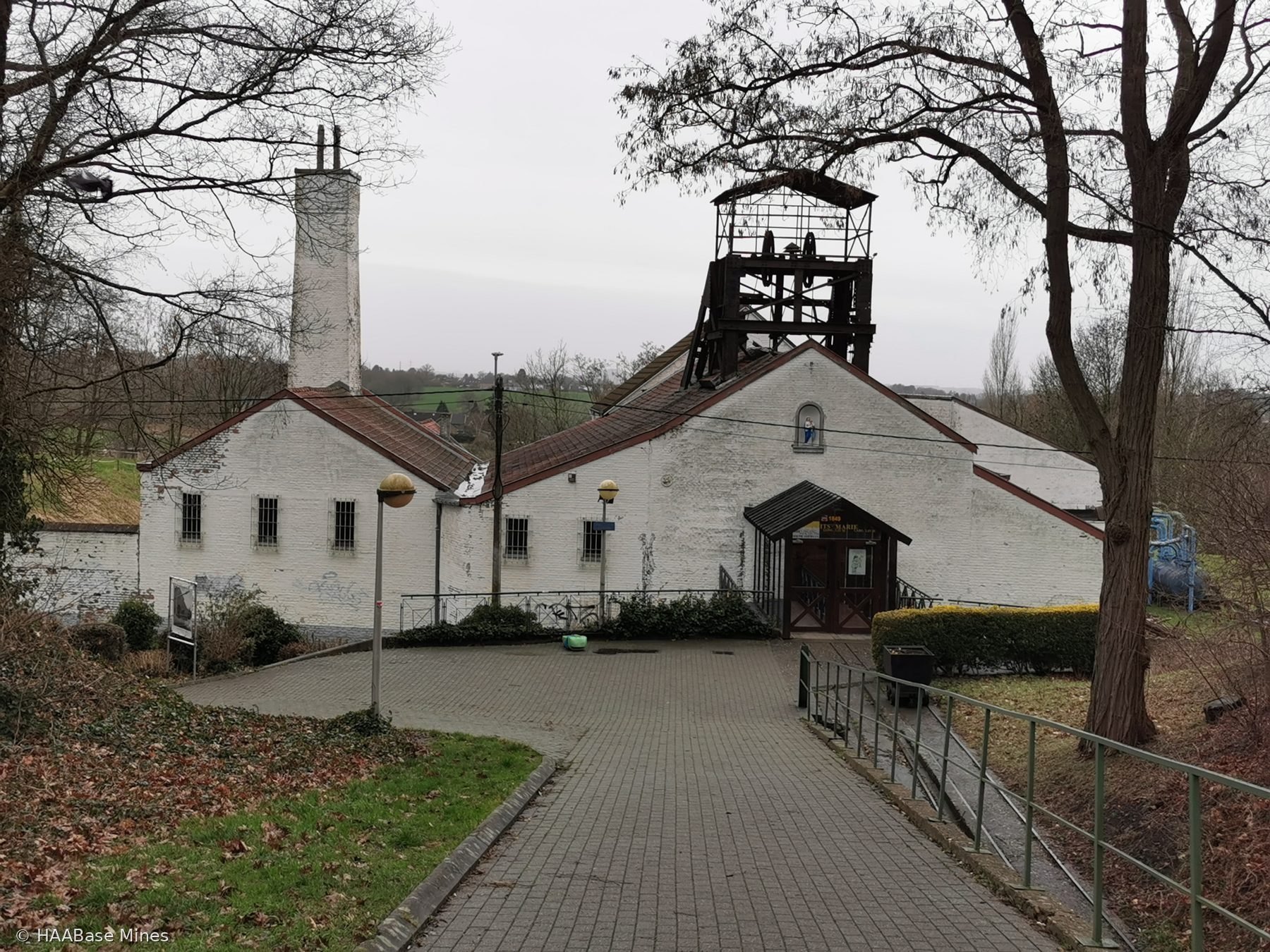
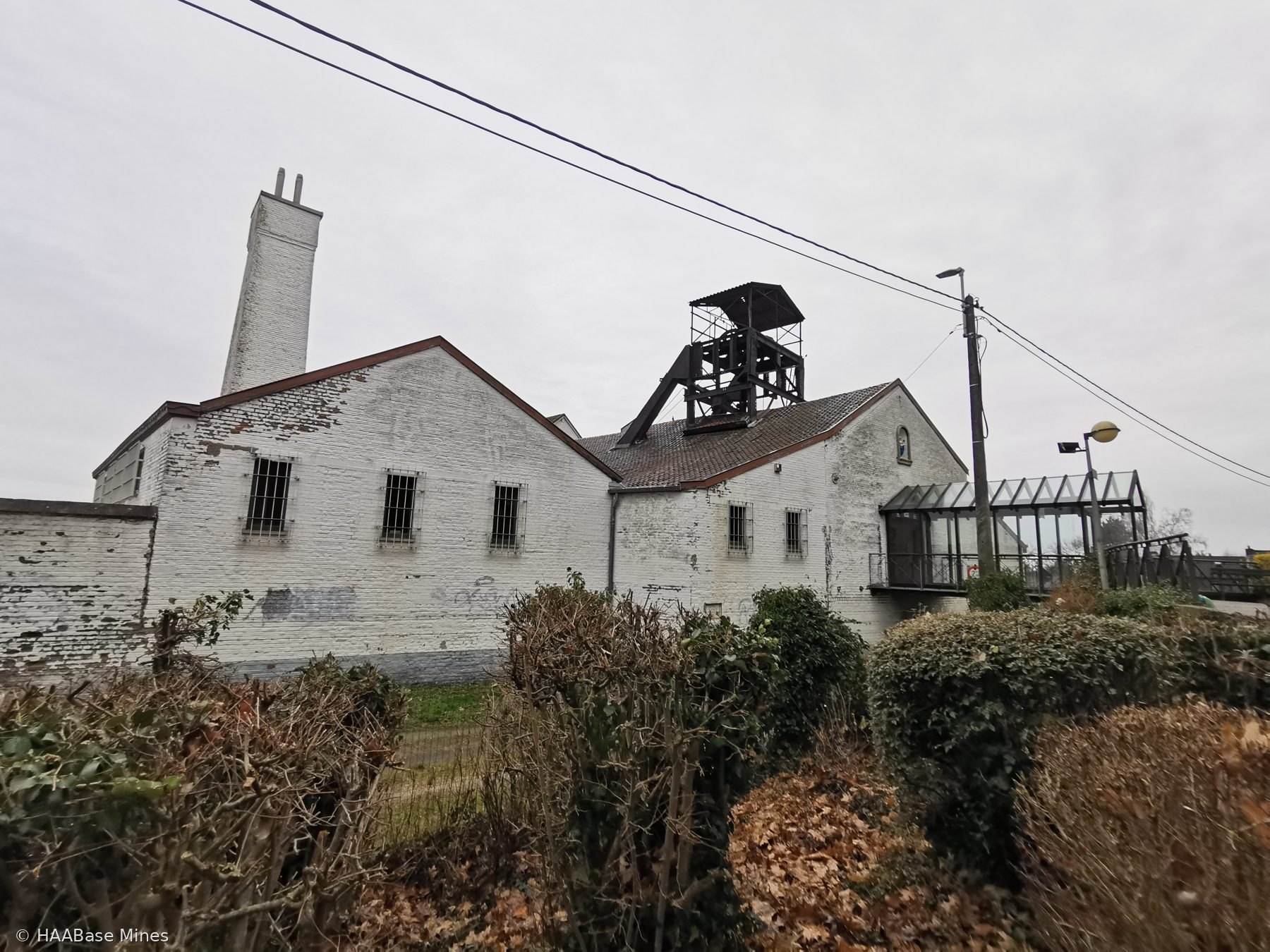
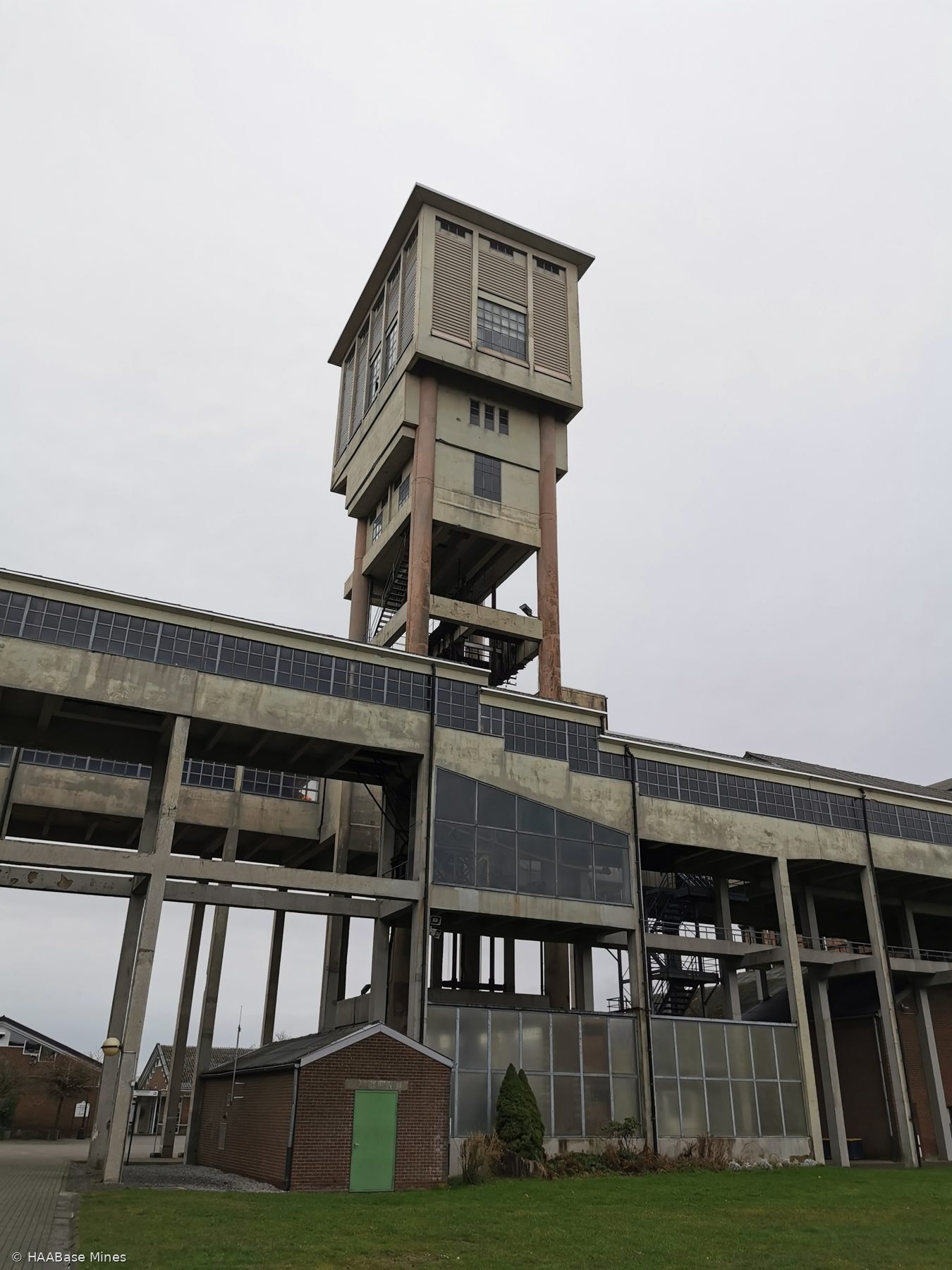
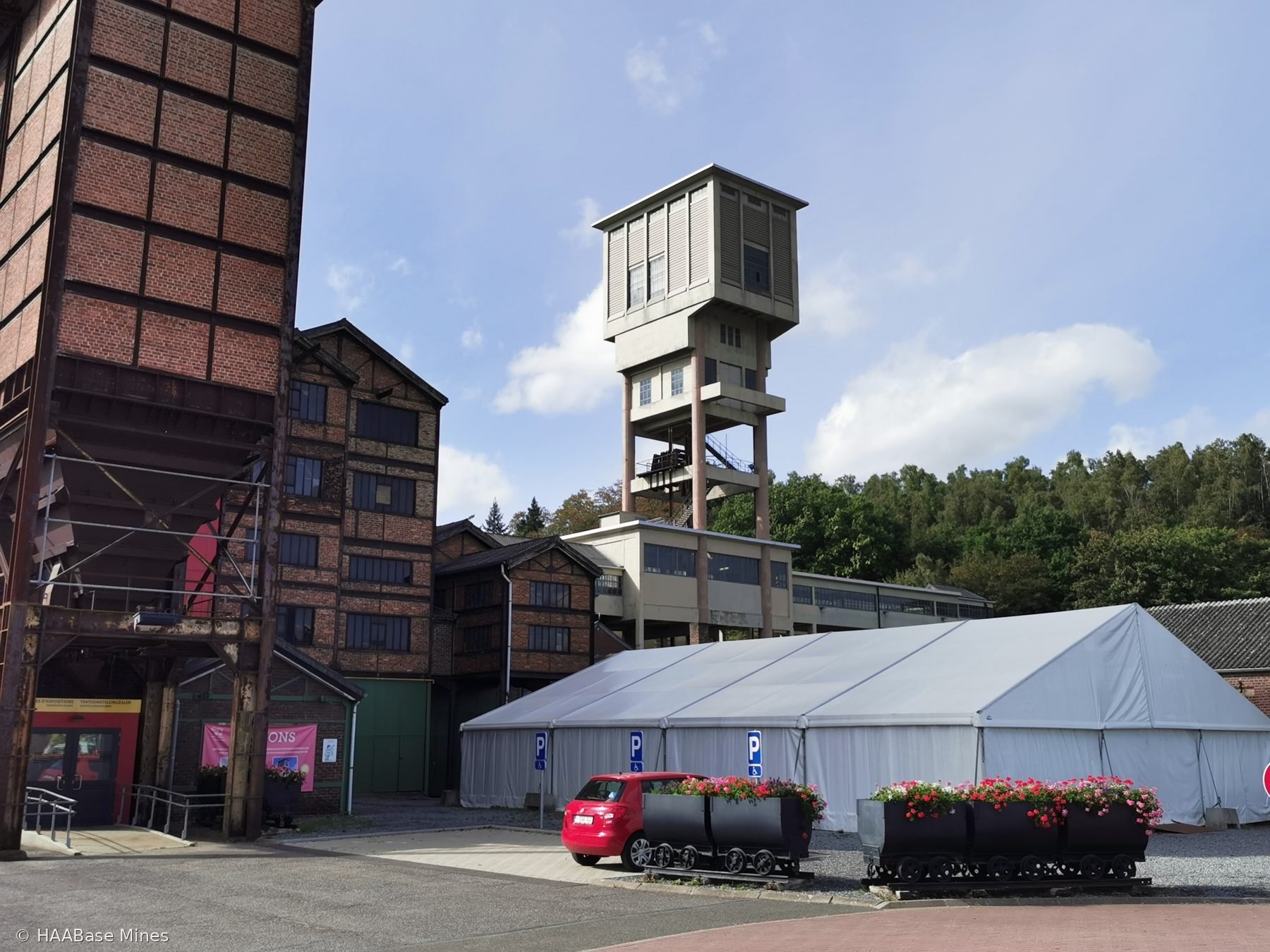
The surviving former Argenteau–Trembleur colliery comprises the nineteenth-century Puits Marie building and metal headgear, the 45-metre reinforced-concrete Puits n°1 winding tower, historic winding and ventilation machinery, workshops, offices, the Evence Coppée sorting and washing plant and two spoil heaps. Its shafts and extensive pithead buildings justify the shafts_buildings descriptor and Museum site - headframes and extensive buildings character. Authenticity is mixed because much historic industrial fabric is original to its respective construction or post-war rebuilding phase, while the site also incorporates museum interpretation, restored machinery and adapted visitor routes.
Puits Marie is filled; underground access uses Puits n°1. The Walloon heritage authority, the museum operator and the ICOMOS assessment document these distinctions. Coal is the former output; no coal is now produced.
Blegny-Mine occupies the former Argenteau–Trembleur coal mine at Trembleur, near Blegny in the Liège basin. The mine developed from early workings associated with the Abbey of Val-Dieu and the Trembleur concession of 1779. Puits Marie was established in 1849 and survives with its metal headgear and a suite of machinery rooms. After the nineteenth-century colliery was liquidated in 1887, extraction resumed under a new company established in 1919. The later Puits n°1 became the principal winding shaft; its present 45-metre concrete tower and the Evence Coppée coal sorting and washing plant largely reflect reconstruction between 1942 and 1948 following wartime destruction. Output reached 232,000 tonnes in 1970, before the colliery closed on 31 March 1980, the last in the Liège area.
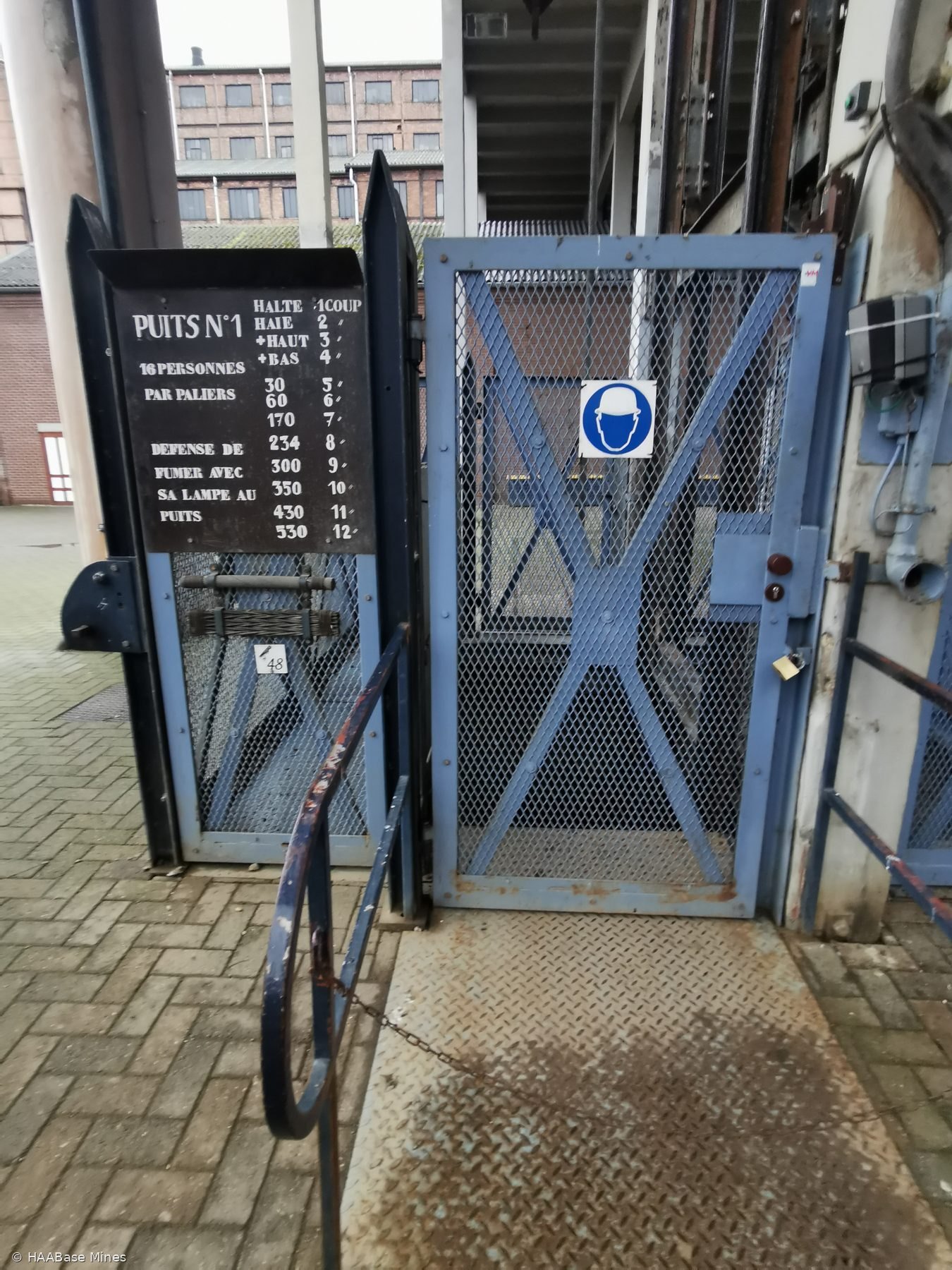
Preservation began immediately: underground visitors were admitted from June 1980, and the historic pithead was progressively adapted into a museum. The Puits Marie shaft is now filled, but its original building, metal headgear and machinery remain; visitors descend via Puits n°1 to mine galleries at 30 and 60 metres depth. The complex also contains workshops, offices, sorting and washing equipment and two spoil heaps. Protected as a monument and site in 2011, it became one of the four Major Mining Sites of Wallonia inscribed by UNESCO in 2012.
Coal has been worked around Trembleur, on the high ground north-east of Liège, for centuries. The presence of seams cropping out in the countryside encouraged early exploitation on land belonging to the Abbey of Val-Dieu, which Blegny-Mine traces to the fifteenth century. The site stands within the eastern part of the Liège coal basin, where modest shallow workings developed into deeper mining as demand for fuel grew. The workings later known as Argenteau–Trembleur were, however, not one continuous enterprise: mining was interrupted and the pit underwent substantial rebuilding during its long history.
The concession of Trembleur was granted to Gaspard Corbesier in 1779. The family subsequently acquired the adjoining Argenteau concession, together amounting to approximately 879 hectares. This was the setting for the nineteenth-century Puits Marie, established in 1849 and today the oldest major part of the surviving complex. The mine developed with the increasing use of mechanical winding, pumping and ventilation, although output in the nineteenth century was modest compared with its later scale. In 1883 the Argenteau and Trembleur concessions were formally united. The operating company nevertheless struggled financially and went into liquidation in 1887, after which coal extraction stopped for about thirty years.
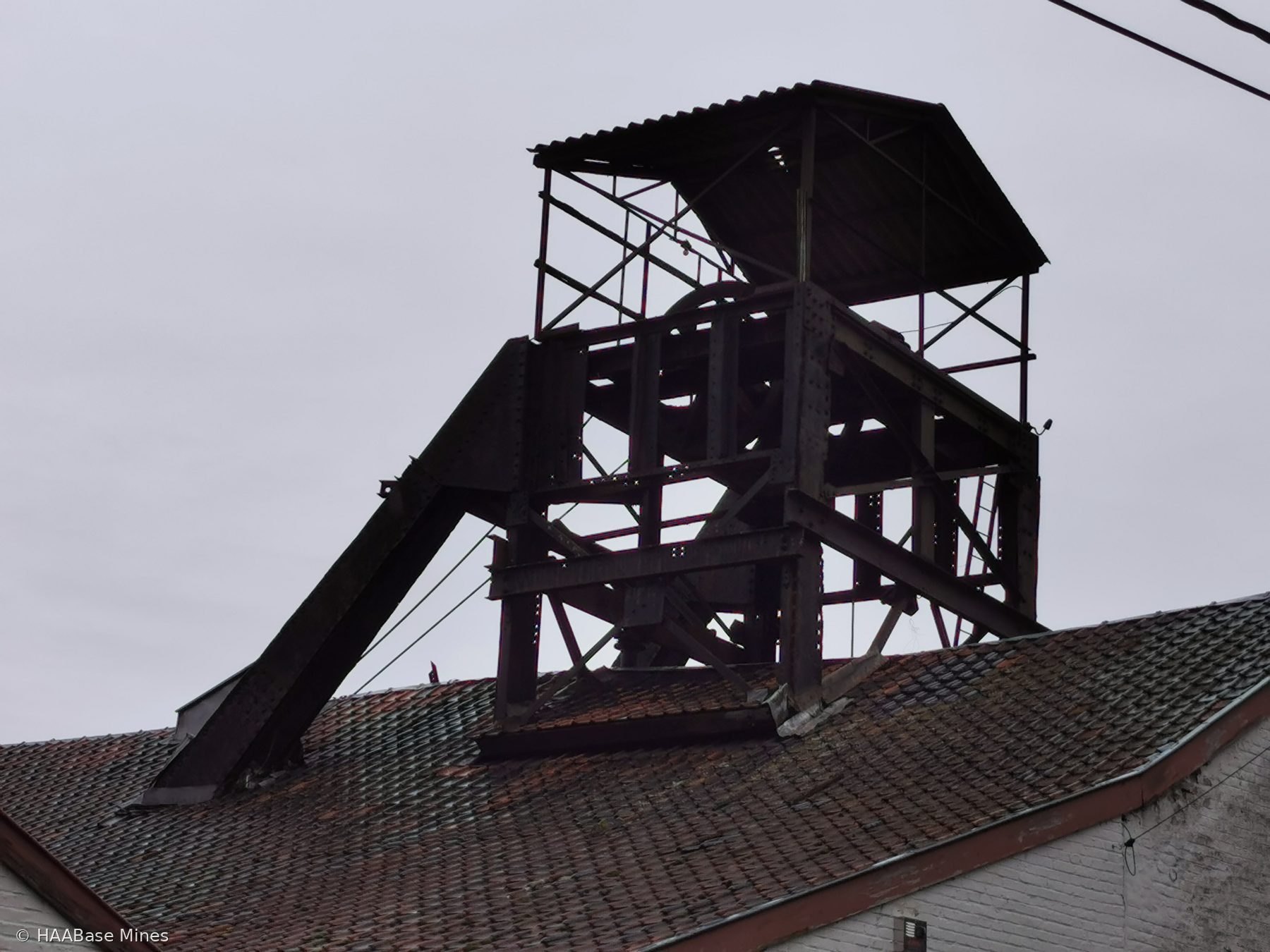
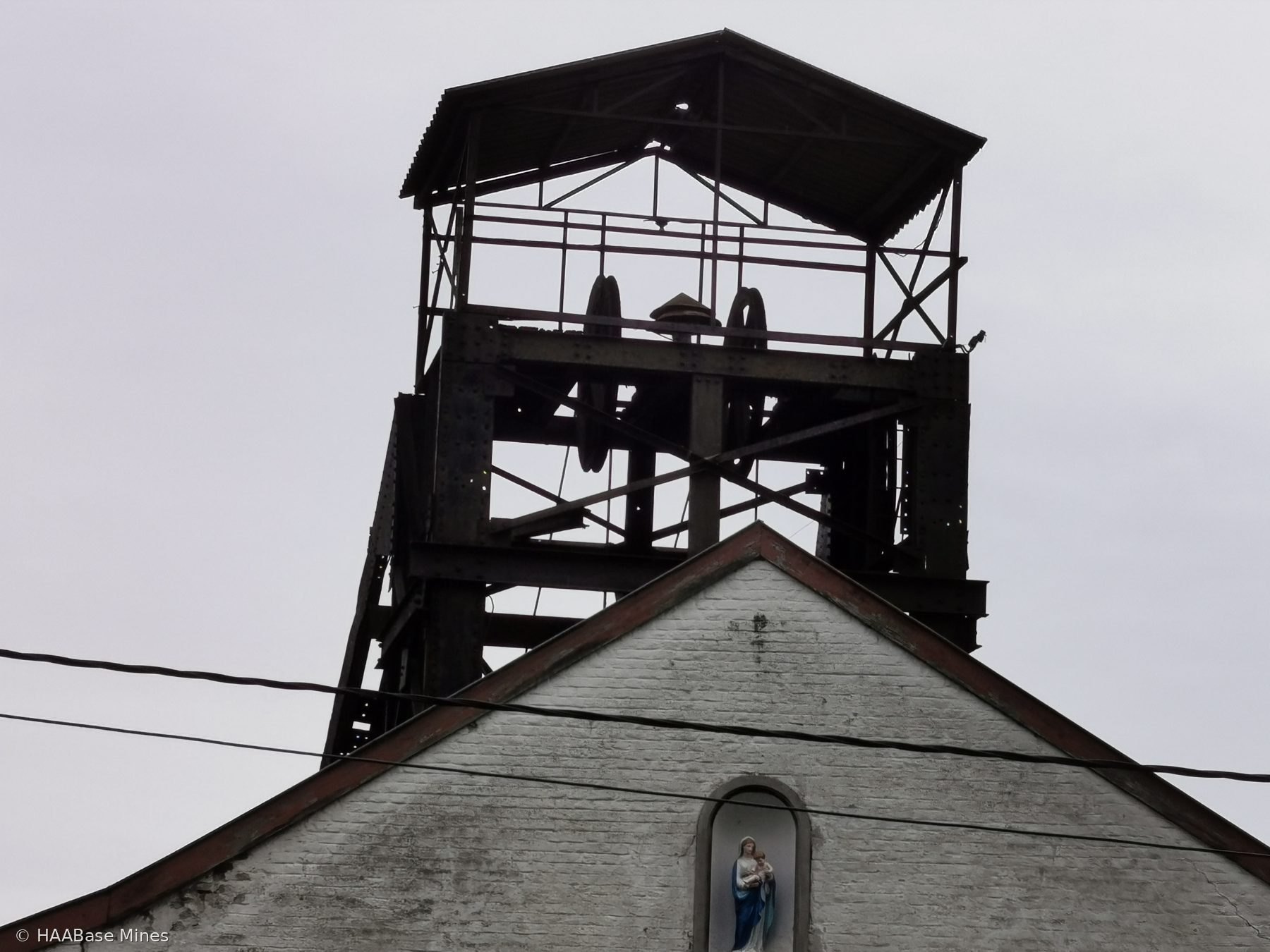
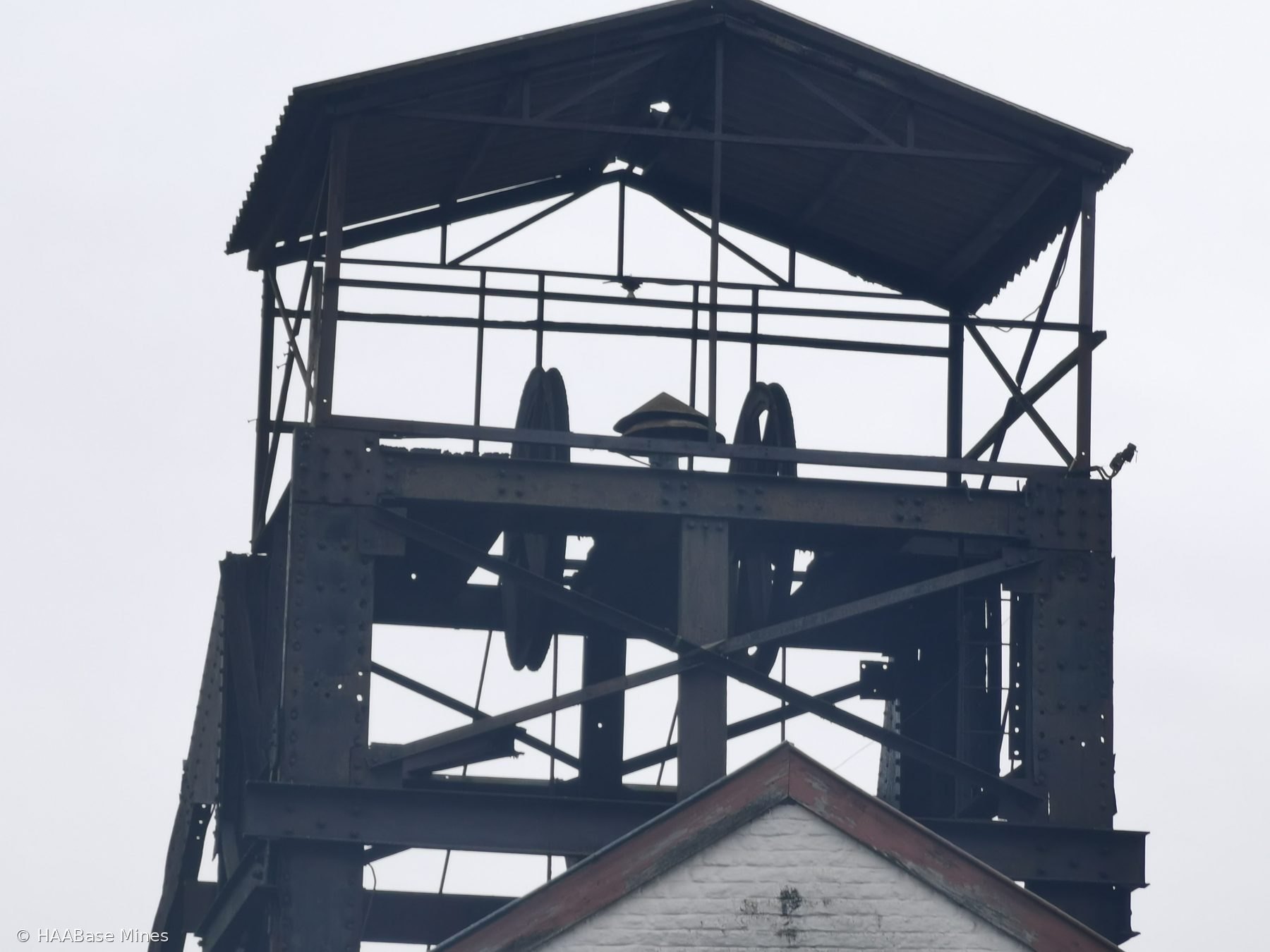
The old Puits Marie deserves particular attention because its industrial role changed several times. It was initially the principal shaft and ultimately reached a depth of 234 metres. With twentieth-century development it became part of the ventilation and auxiliary infrastructure, retaining the characteristic metal headgear and a collection of technical rooms. It continued in a ventilation role into the early 1980s. The shaft itself has since been filled. Its building and machinery, rather than access through the old shaft, are now central to the site's interpretation of nineteenth- and twentieth-century pit operations.
After the First World War a new enterprise, the Société anonyme des Charbonnages d'Argenteau, was established in 1919 and soon came under management associated with the Ausselet family. Extensive reconstruction began around 1920, providing new workings and modern pithead installations alongside the older Puits Marie. The principal twentieth-century shaft, Puits n°1, became the main extraction facility, equipped with its own winding tower and coal preparation plant. As the coalfield recovered its markets, output rose substantially: by 1931 it had reached about 84,000 tonnes a year, compared with approximately 10,000 tonnes before the previous stoppage. The coal, including anthracitic grades, supplied the local economy and wider markets through a period of change for Walloon industry.
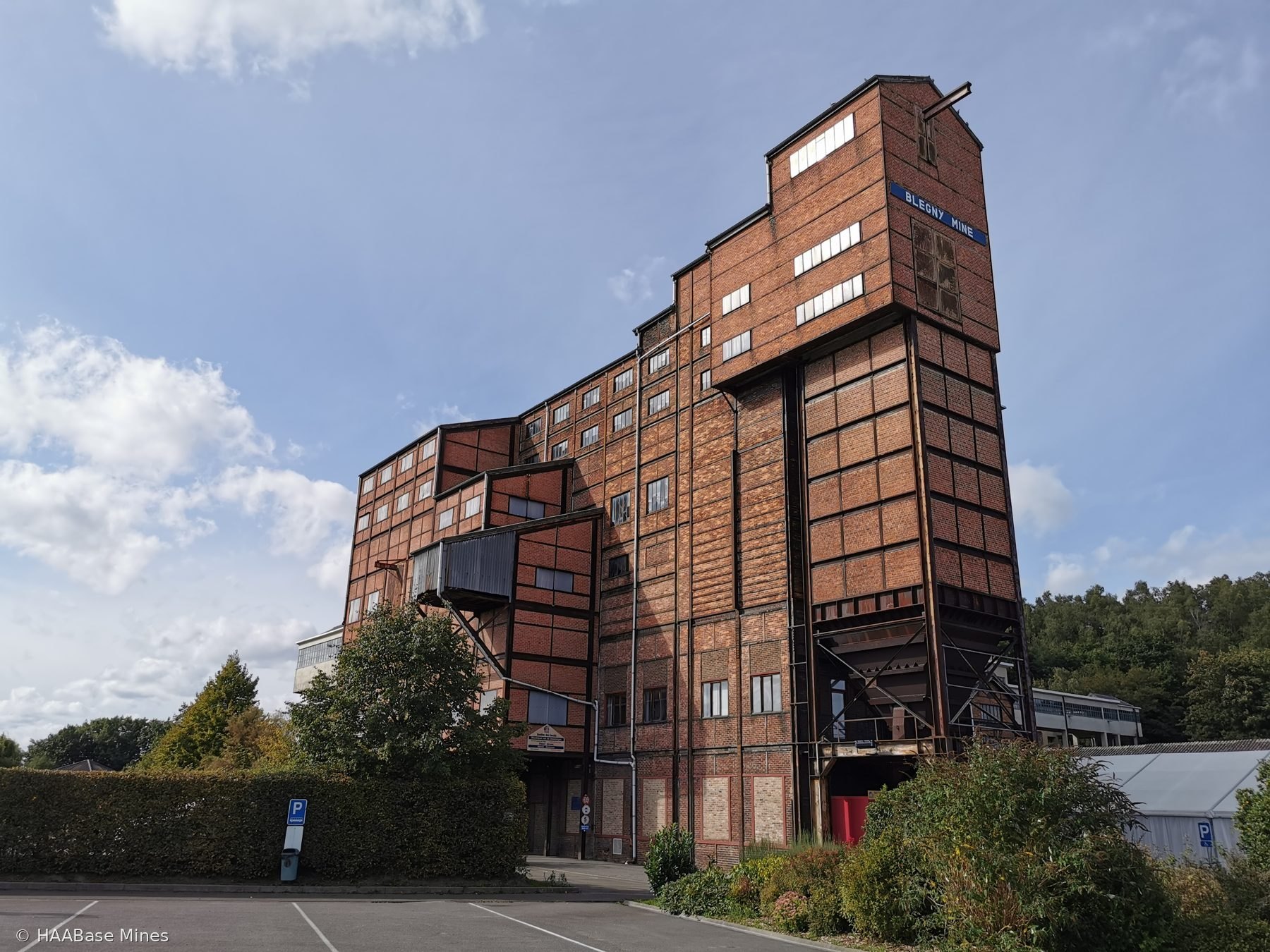
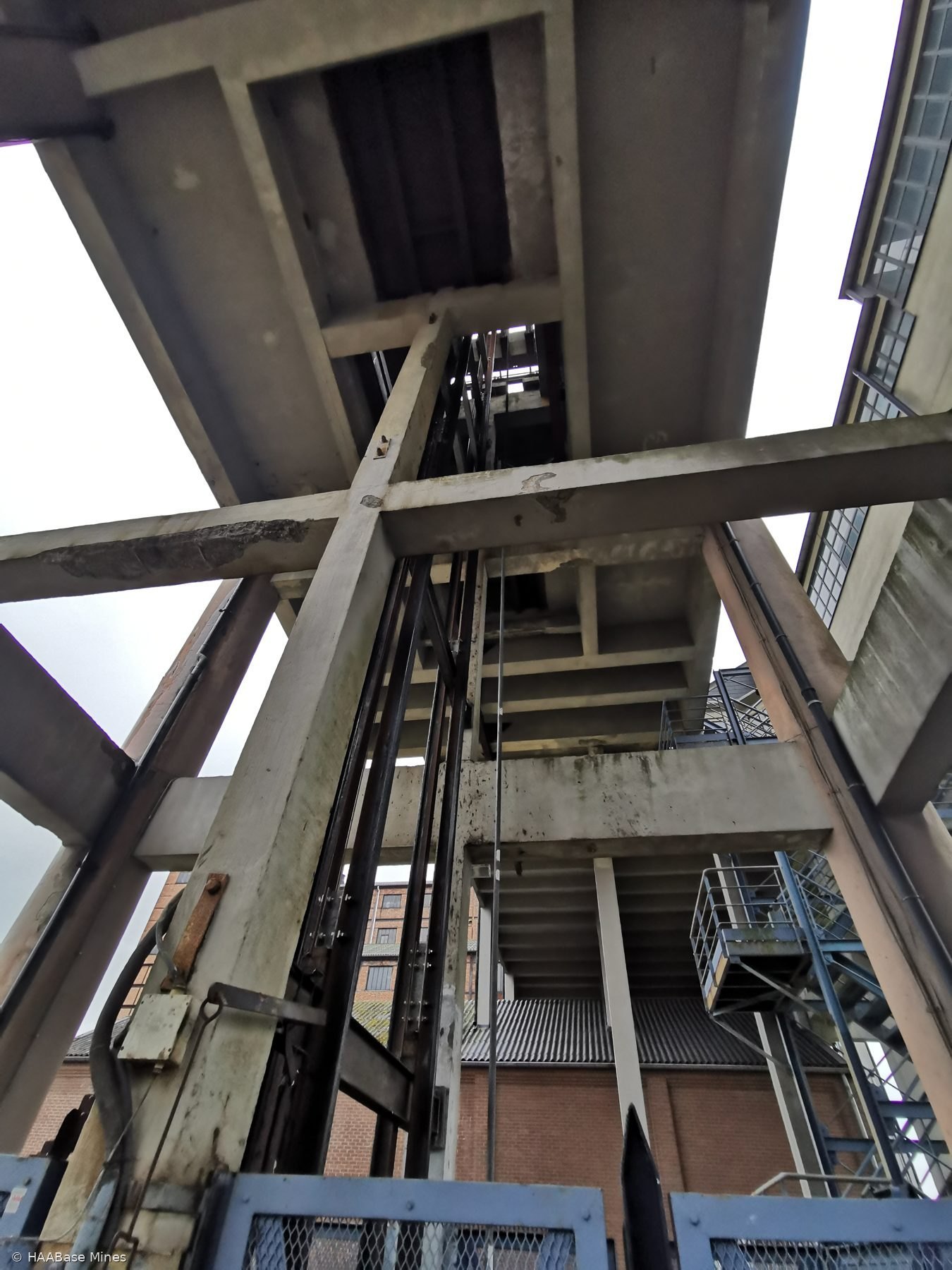
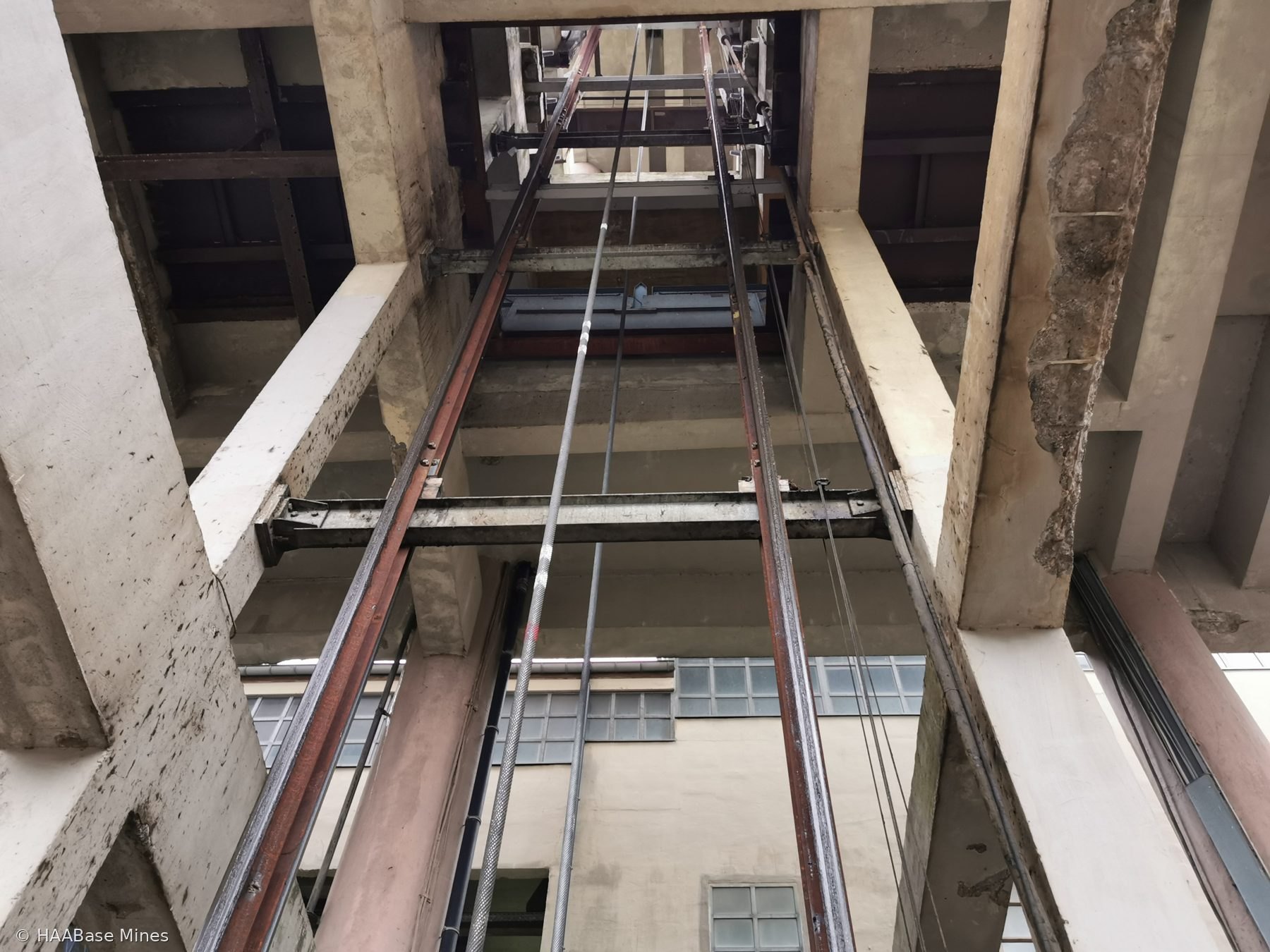
The Second World War caused another sharp interruption. The main winding tower over Puits n°1 and the washery were destroyed during the 1940 fighting, and coal winding was temporarily carried on through Puits Marie at a much reduced rate. The damage was not confined to a minor outbuilding; it removed the principal means of raising and preparing production. Reconstruction began in wartime and continued afterwards. Between 1942 and 1948 a new extraction tower and a rebuilt triage-lavoir took shape, giving the site much of its surviving appearance. The 45-metre tower at Puits n°1 is of reinforced concrete, unlike the older metal headgear of Puits Marie. The coal sorting and washing installation, built mainly between 1942 and 1946, used brickwork and a metal frame and embodied the Evence Coppée system. Its extensive surviving equipment is one reason Blegny is of exceptional industrial-archaeological interest.
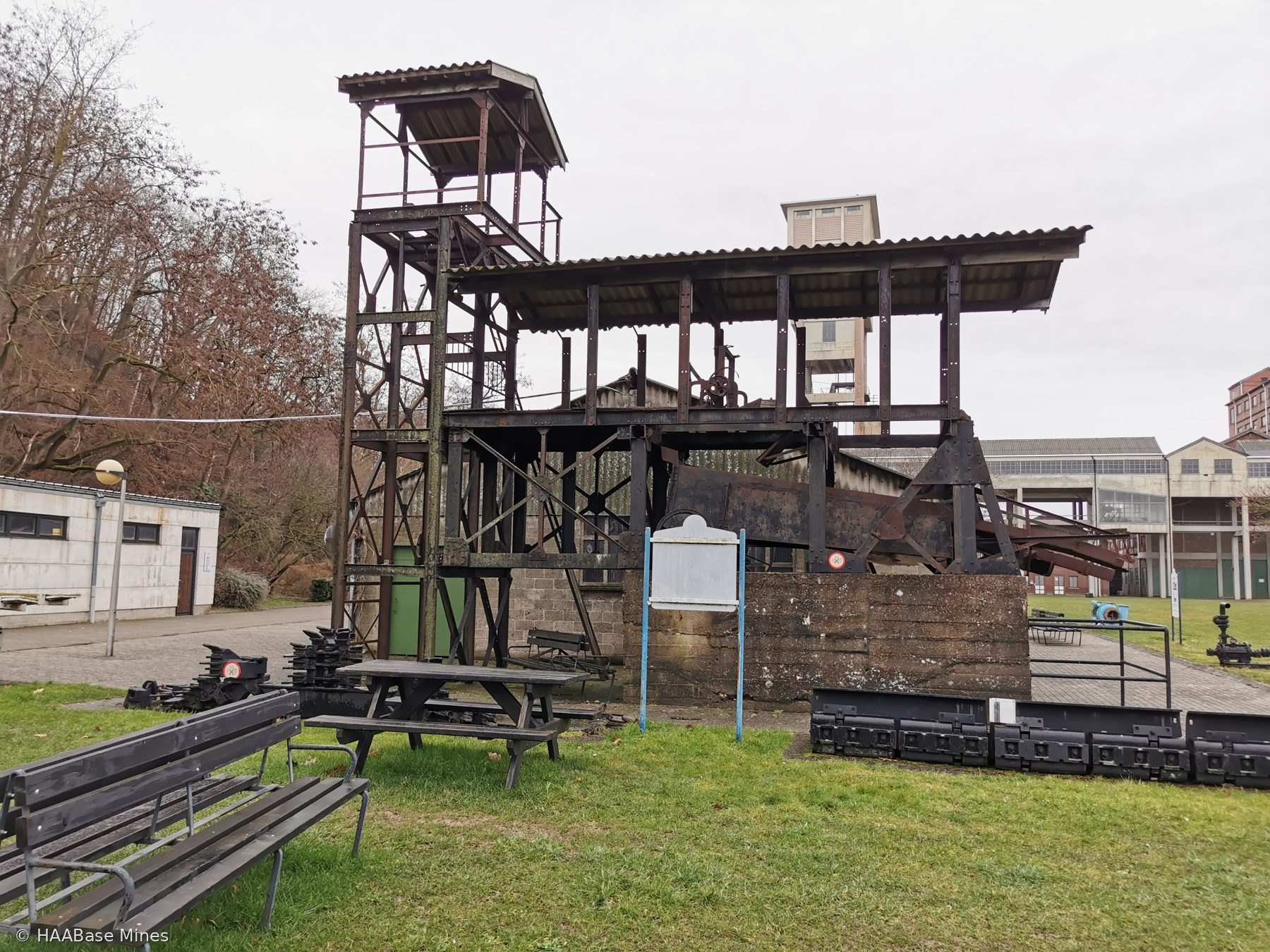
From the post-war decades the pit operated with its two contrasting shaft groups and associated machinery. Around Puits Marie were ventilation equipment, compressors, electrical and service rooms and the lamp store; the winding apparatus and auxiliary machinery reflect several generations of technological change. The large Puits n°1 tower, with its winding equipment and cages, was linked to the shaft landing, forge, workshops and sorting plant. Offices and other service buildings completed the surface group. Behind them lay two tips, rising approximately 37 and 55 metres above their original surroundings, one retaining a tipping mechanism. The layout makes clear how underground haulage, winding, preparation and waste disposal depended upon a closely integrated group of buildings.
In the later decades production increased despite the mounting economic pressures on Belgium's coal industry. Blegny-Mine records the colliery's peak output in 1970 as 232,000 tonnes, with a workforce of approximately 680. Working conditions remained physically demanding, and the surrounding mining community was shaped by generations of miners and their families, including workers who had come to Belgium from elsewhere. Even as equipment and organisation evolved, the relatively shallow seams of Argenteau–Trembleur distinguished it from the deeper collieries of some other coalfields. The present visitor system still reaches actual underground galleries at 30 and 60 metres below ground, though these represent only a portion of the former workings.
The mine's end was governed increasingly by national industrial policy. In 1975 the Belgian ministerial committee responsible for economic and social coordination decided to withdraw state support from Walloon collieries. Other pits around Liège closed in succession. Argenteau–Trembleur was the last to continue, finally ceasing extraction on 31 March 1980. Yet its future was being considered even before the last working day: in 1978 the decision had been taken to develop a tourism and memorial complex that would preserve the working environment rather than clear the structures and forget the industry.
The Province of Liège acquired the site in 1980 and entrusted its management to a local association. Visitors began descending underground in June that year, scarcely two months after mining had stopped. The conversion was not without serious practical difficulties. Problems with underground water threatened access and the viability of visits, until investment in 1983 allowed the visitor circuit to be raised and reorganised. The preserved machinery and the actual descent through Puits n°1 gave the project a character that a conventional display of detached objects could not have achieved. The former mine increasingly became a place where visitors could follow the route of coal from the workings to the surface sorting and washing plant.
The museum in Puits Marie now occupies a building dating to 1849, interpreted through approximately twenty rooms. It includes the ventilation engines, showers, lamp room, compressors, electricity equipment, infirmary and other working spaces. The machinery covers several generations: the collection includes ventilation equipment first installed in the 1920s and later supplemented, compressors from different periods and historic winding equipment. At Puits n°1, the concrete extraction tower continues to provide a shaft descent to preserved underground galleries at the 30- and 60-metre levels. The complex therefore brings together authentic pithead buildings, functioning heritage equipment and interpreted underground working areas.
From 1990, European Regional Development Fund support helped improve the museum's visitor facilities and exhibitions, building on backing from the province and public authorities. Blegny-Mine reports that its annual attendance reached 100,000 around that time and has since commonly been in the range of 130,000 to 160,000 visitors. Its protection as a monument and site, with a surrounding protection zone, was confirmed on 22 August 2011. In July 2012 Blegny-Mine was inscribed on UNESCO's World Heritage List as one of the four Major Mining Sites of Wallonia, alongside Grand-Hornu, Bois-du-Luc and Bois du Cazier. The designation recognises the unusual completeness and historical range of the industrial remains, together with their testimony to the working and social history of Belgium's coalfields.
Blegny-Mine remains distinctive because visitors encounter a real colliery whose fabric has been retained and put to use. The metal headgear of Puits Marie, the tall concrete tower of Puits n°1, the brick-and-steel preparation plant, the workshops, technical rooms and spoil heaps have survived through successive periods of operation and adaptation. The continued descent through the original working shaft connects these buildings to the underground environment that once gave them their purpose, preserving something of the experience and organisation of a Liège coal mine long after commercial extraction ended.
This list includes live sources already held for the record and any additional sources added or confirmed during the published fact-check review.